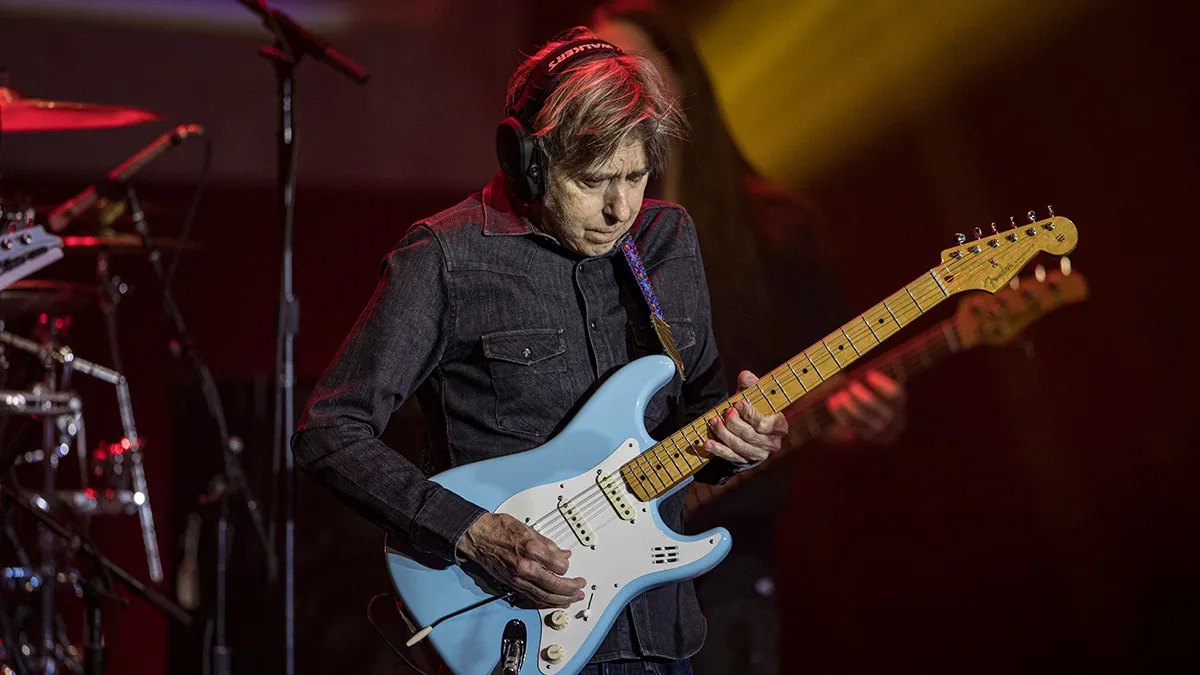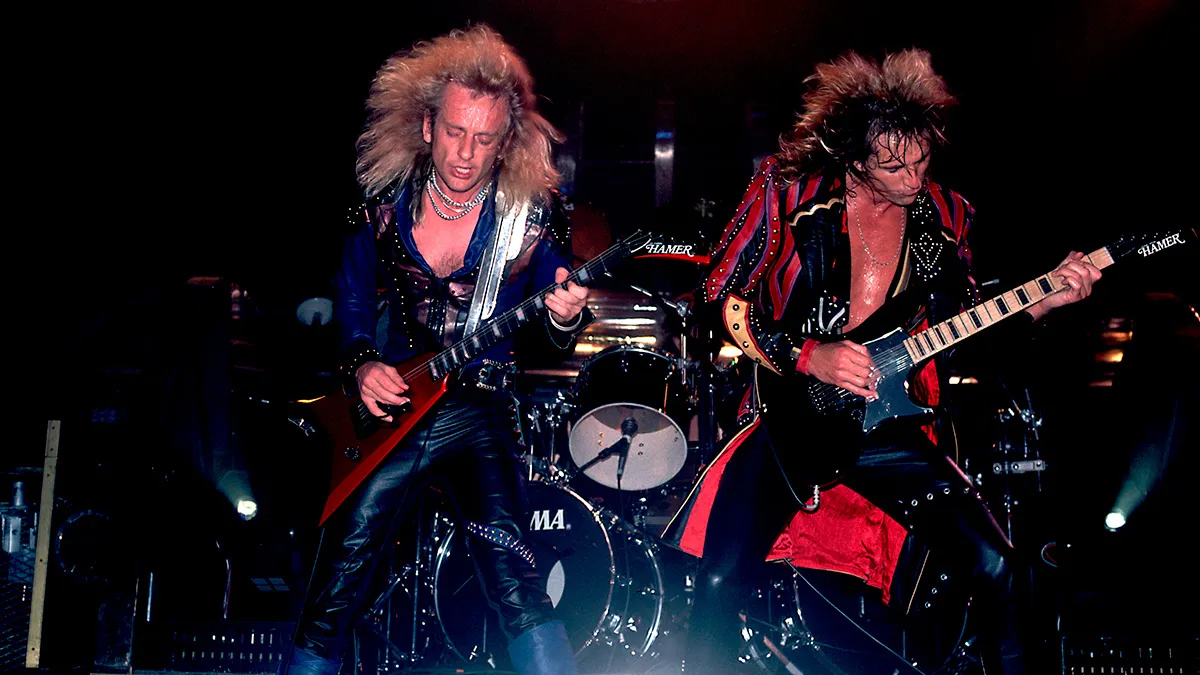
Chet Atkins made countless recordings as a studio musician, producer and solo artist. Many of his recordings — particularly those of the artists he produced in Nashville, like Elvis Presley, Roy Orbison and the Everly Brothers — laid the foundation for early rock and roll.
This month, I'd like to address an essential point of focus for every good metal player: how to best strengthen the pick-hand technique. The examples I'm going to show you cover a wide variety of pick-hand techniques, from using all downstrokes the alternate picking to economy picking and more, offering a systematic approach to building up these different techniques that will allow you to play with more expression, control and power.
One thing I like to teach my students at GIT is the lively rumba flamenco rhythm, which has gained a lot of popularity in mainstream music as of late. What follows is not necessarily the original and only way that flamenco players play this rhythm, but that’s okay. If you analyzed the rumbas of three great flamenco guitarists, you would likely find that they each strummed them a little differently.
With his monolithic chops and die-hard work ethic, Broderick has emerged as the scariest monster shredder on the planet. As he makes clear in the above quote, Broderick has a deep respect for both music and musical performance and has pushed himself relentlessly in the pursuit of technical proficiency and musical freedom. No less an authority than Dave Mustaine calls Broderick “the greatest guitar player Megadeth has ever had.”
Stevie Ray Vaughan’s distinctive playing style is earmarked by equal parts pure power, intensity of focus, razor-sharp precision and deeply emotional conviction. And then there’s his tone—probably the best Stratocaster-derived sound ever evoked from the instrument.
One of my favorite things to do is take a classically flavored chord progression, like the one shown in FIGURE 1, and use it in a rock guitar context. This particular progression is based for the most part on what is known as the cycle of fourths, in that the root note of each of the first five chords is the interval of a fourth above the previous root note.
I’d like to focus on an approach to chord playing inspired by Johann Sebastian Bach’s chorales. The chorale originated as a vocal hymn of the Lutheran church, often constructed in four-part harmony wherein the top voice is the melody. Bach composed many chorales of incredible beauty; the way he harmonized for four voices was impeccable, and his chorales served as the textbook for studying Western harmony for over 100 years.
One of the most common alterations you will come across as a beginning and intermediate jazz guitarist is the 7#11 chord. Built by taking a normal dominant 7 chord, R 3 5 b7, and lowering the 5th by a 1/2 step, R 3 #11(b5) b7, these chord symbols come up time and again in big band charts and standard tunes.
Hey, this is Gabe from Reggae Guitar Lessons. Here's a beginner lesson on a few basic reggae guitar strumming patterns. The video lesson covers how I learned to play reggae guitar in New York City, then gets into right-hand and left-hand technique and some strumming exercises in 4/4 time.
Early last month, California-based heavy metal band Holy Grail premiered a new song called "Dark Passenger," which is set to appear on the band's upcoming new album, Ride the Void.