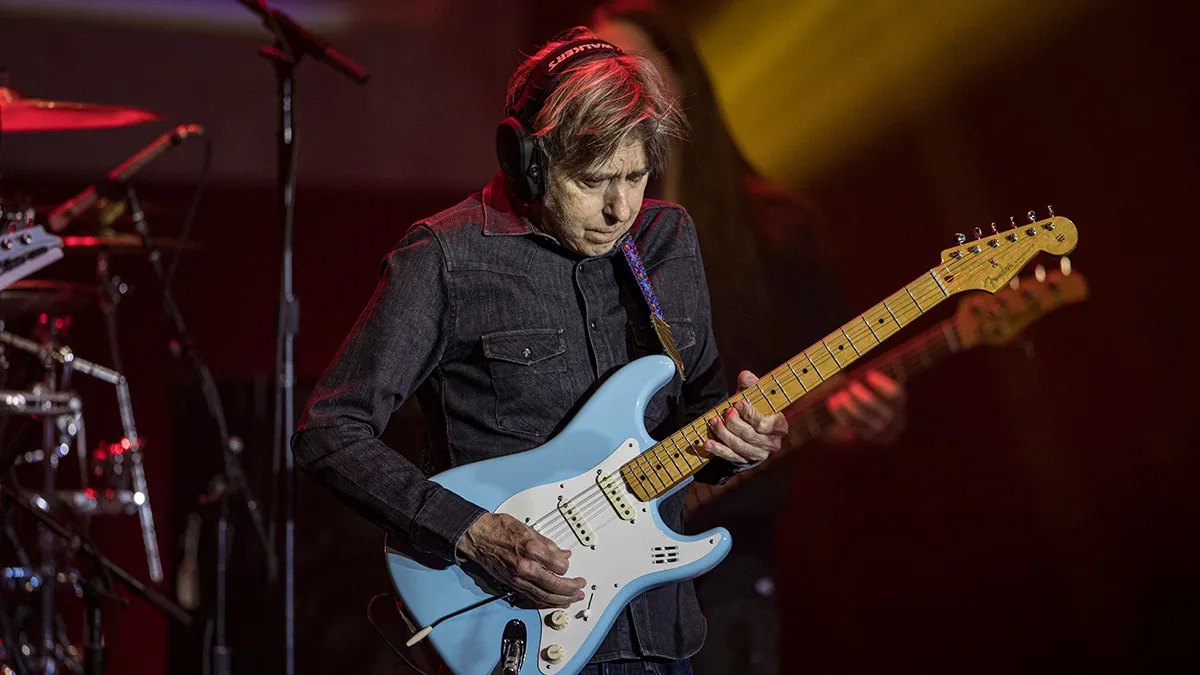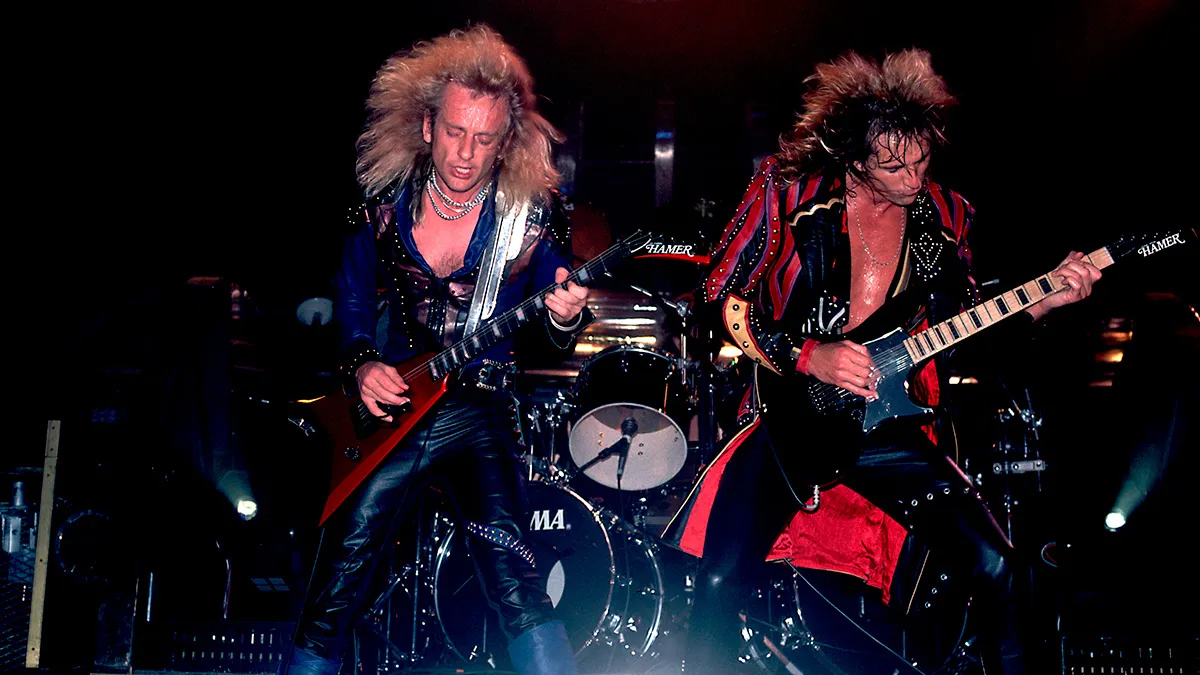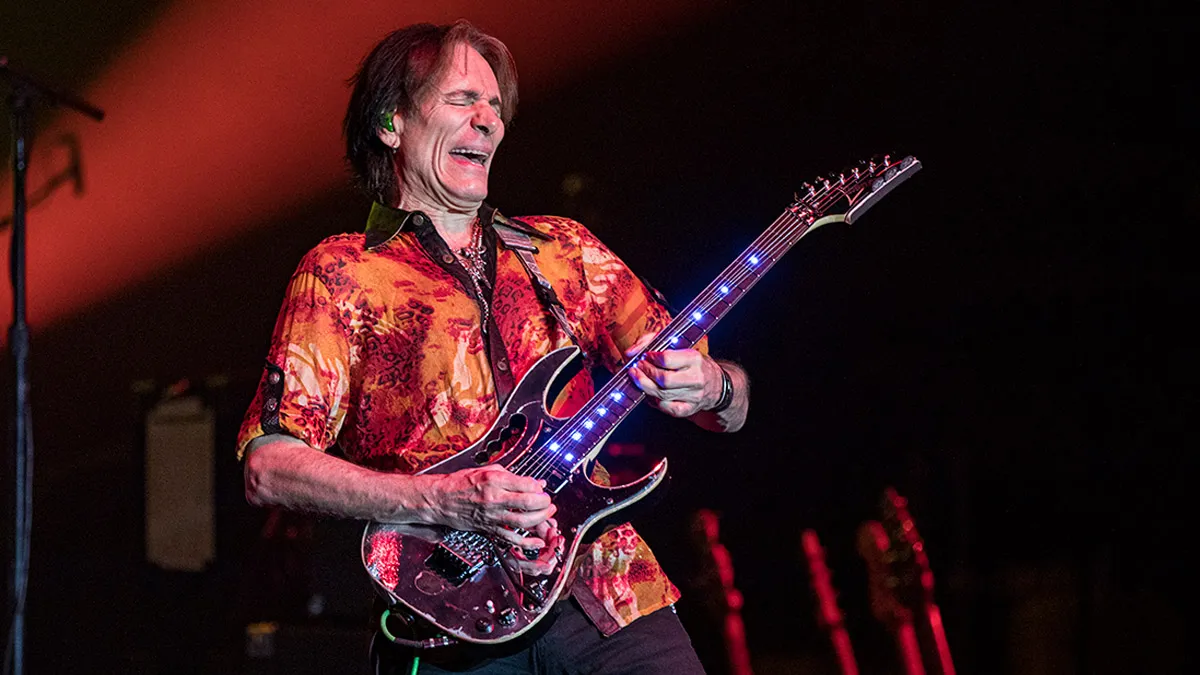
Fretboard tapping has earned a bad name in certain sectors of the guitar community. Some players dismiss it as a technique suitable only for perpetrating the worst possible kind of overblown, unmusical histrionics, preferably played through a wall of amps that “go to 11.”
The notion of sweeping (or raking) the pick across the strings to produce a quick succession of notes has been around since the invention of the pick itself. Jazz players from the Fifties would use the approach in their improvisations, and Chet Atkins was known to eschew his signature fingerstyle hybrid-picking technique from time to time and rip out sweep-picked arpeggios.
One of the first scales many guitarists learn is the minor pentatonic scale. Though it is a staple of the rock and blues worlds, many guitarists tend to leave this scale behind when they begin to explore the jazzier side of the music world. While there are a number of scales and modes one needs to learn when studying jazz guitar, we don’t need to forget the material we’ve learned in our rock and blues playing when jumping the fence to the jazz world.
Today, GuitarWorld.com presents an exclusive lesson video with New York City's Resolution15. The song in the video is "Mr. Dark," which is from the band's new album, Svaha. You might notice that the video lacks guitars. That's because Resolution15 is a metal band that uses violins instead of guitars in their thrash, punk and hardcore-influenced music.
In this Guitar World exclusive, we’ve gathered together Mustaine and his Megadeth coguitarist, Glen Drover, Lamb of God’s Mark Morton and Willie Adler, Arch Enemy’s Michael Amott and Fredrik Akesson and Trivium’s Matt Heafy and Corey Beaulieu to teach you the essential skills of modern shred.
The focus of this lesson will be on ornamentation in Celtic music. Most ornamentations are notated as grace notes. A grace note is performed by playing the note(s) as fast as you can, ending on the target melody note. Grace notes are notated as smaller notes preceding the target note.
I often get asked about my chord work, particularly about the voicings I use. My chord style initially developed as a result of my dissatisfaction with the way traditional guitar voicings, particularly triads, sounded.
After learning a handful of stock chord shapes in first and second position — what are commonly referred to as “open” chords or “cowboy” chords — it can be liberating for your fretting hand to venture beyond the first three frets, move up the neck and get acquainted with the sweet sounds of chords played in the higher positions.
In this series of videos, Guitar World's Andy Aledort explores the classic Jimi Hendrix track "Freedom," as heard on The Cry of Love. After discussing Hendrix's tuning, Andy jumps into the intro, the verses and the solos.
For this blog, I would like to talk about applying the altered dominant scale over a dominant seventh chord in a minor chord progression. The altered dominant scale (sometimes referred to as super locrian) is the seventh mode of the melodic minor scale. It is a widely used favorite among jazz guitarist because of its eerie dissonant tension on the dominant chord creating a pleasant resolution to the tonic chord.