


Fender has fired back at Thomann’s lawsuit against the guitar company by suing the musical instrument retailer for copyright infringement.
In a statement, Fender announced it had responded to the Declaration of Non-Infringement action by filing a formal infringement action against the Harley Benton owner.
Fender says its own infringement action is “the expected next step in the legal process” and a result of the legal proceedings instigated by Thomann.
Last month, Thomann sued Fender after it sent cease-and-desist letters to Harley Benton, Yamaha, PRS Guitars, LsL Instruments, and other firms it believed to be producing Stratocaster “copies”.
Thomann said it was acting on behalf of other prominent brands and smaller manufacturers, specifically naming companies including Tom Anderson, Suhr, Pensa and Maybach.
Fender argues that Thomann’s in-house Harley Benton guitars copy the Stratocaster, and that Thomann initiated litigation in a bid to obtain legal protection to continue selling such designs.
Fender says it attempted and failed to “discuss practical ways to differentiate products while respecting Fender’s intellectual property” with Thomann, leading to the legal filing and Fender’s subsequent countersuit.
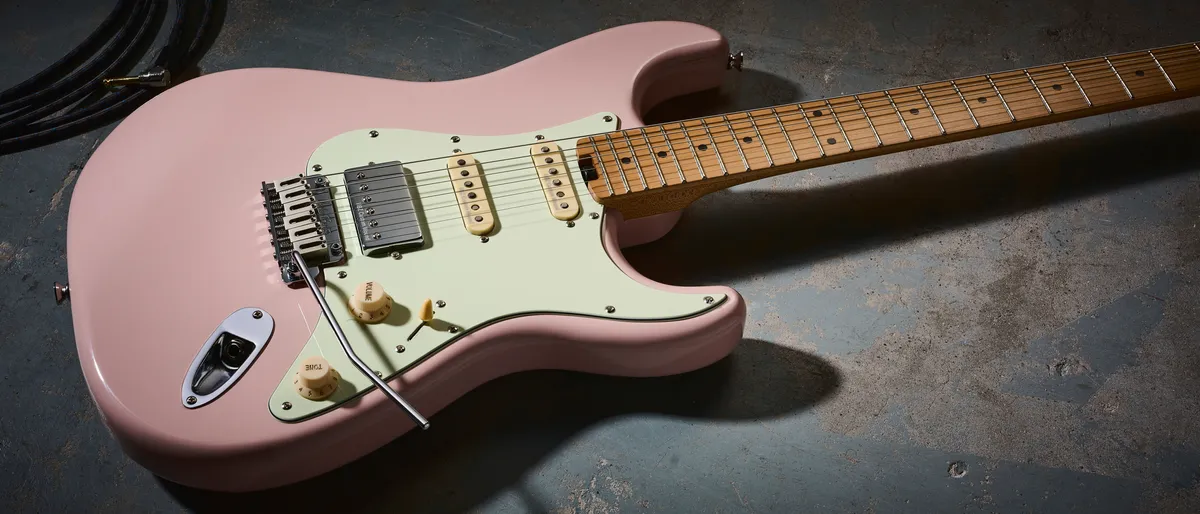
“Thomann isn't a small independent guitar builder,” Fender argues in response to Thomann’s claim it’s suing Fender for the good of the industry.
“It is one of the world's largest musical instrument retailers, one of Fender's largest retail partners, and the owner of Harley Benton, one of Europe's largest guitar brands.
“Our preference has always been dialogue and practical solutions – not litigation. Unfortunately, Thomann chose a different path.
“Rather than continuing that dialogue, it initiated legal proceedings asking the court to determine that it can continue selling guitar body designs that Fender believes copies the iconic Stratocaster. Today's filing is Fender's response and the expected next step in the legal process.”
In its own statement issued alongside its Declaration of Non-Infringement, Thomann asserted it had sued Fender “for the many manufacturers, dealers and guitar makers who have shaped our industry for decades and continue to shape it”.
“We urge Fender to stop issuing cease and desist demands against manufacturers, distributors and dealers and to return to a fair, cooperative partnership,” the retailer said.
However, Fender continues to argue that cooperative partnership is at the heart of its legal strategy, previously seeking to frame its actions as “working directly with companies to find practical paths forward”.
The company now says it has already experienced success in working with other builders to differentiate certain designs from the Stratocaster.

“Our preference has always been to resolve these matters through direct dialogue rather than litigation,” Fender continues. “In many instances, companies have chosen to work collaboratively with us to explore practical solutions, including design modifications that clearly differentiate their products while continuing to serve musicians. This matter is different.”
It’s the latest development in the ongoing copyright dispute surrounding the Stratocaster. Events were set in motion when Fender scored a default ruling in German court, which granted “enforceable rights against any guitars using the Stratocaster body shape” in the EU.
Thomann has been approached for comment.
You can read Fender’s full statement below:
Fender's statement in full
Following Thomann's recent Declaration of Non-Infringement action, Fender today filed its infringement action in the Regional Court of Düsseldorf in response to the litigation Thomann chose to initiate.
Earlier this year, the Regional Court of Düsseldorf recognized copyright protection for the Fender Stratocaster® body shape as a work of applied art under European law. Following that decision, Fender engaged manufacturers, distributors, retailers, and online marketplaces across Europe whose products feature body designs that Fender believes are confusingly similar to the protected Stratocaster design. Our objective has been straightforward: protect Fender's intellectual property, reduce consumer confusion, and explore practical solutions—including modifications that clearly differentiate products from the Stratocaster.
Those conversations continue today, and our preference has always been to resolve these matters through direct dialogue rather than litigation. In many instances, companies have chosen to work collaboratively with us to explore practical solutions, including design modifications that clearly differentiate their products while continuing to serve musicians.
This matter is different.
Thomann isn't a small independent guitar builder. It is one of the world's largest musical instrument retailers, one of Fender's largest retail partners, and the owner of Harley Benton, one of Europe's largest guitar brands.
From the beginning, our goal was simple: have a conversation. Like many other companies across Europe, we reached out to Thomann to discuss practical ways to differentiate products while respecting Fender's intellectual property. Our preference has always been dialogue and practical solutions—not litigation.
Unfortunately, Thomann chose a different path. Rather than continuing that dialogue, it initiated legal proceedings asking the court to determine that it can continue selling guitar body designs that Fender believes copies the iconic Stratocaster. Today's filing is Fender's response and the expected next step in the legal process.
For more than 70 years, the Stratocaster has been one of the most influential and recognizable guitar designs in history. It has inspired generations of musicians, helped shape modern music, and become an enduring symbol of creativity around the world.
Fender has proudly served as the steward of one of the most iconic instrument designs in music history. We don't take lightly our responsibility to protect that legacy. We believe that responsibility extends beyond Fender itself—to the artists, players, dealers, builders, partners, employees, shareholders, and the broader music community who have made the Stratocaster an enduring part of music history.
Let's be clear: competition isn't the issue. Fender has competed—and thrived—for nearly 80 years because musicians have choices. We welcome companies that challenge convention, develop new technologies, and create original instruments that inspire players. That's how this industry grows.
What doesn't move the industry forward is copying someone else's iconic design instead of creating the next iconic design. We believe the guitar industry is strongest when innovation flourishes, musicians have meaningful choices, and companies compete by bringing new ideas to players around the world.
We're proud of what the Stratocaster has meant to generations of musicians, and we believe it's worth protecting. At the same time, we believe the future of the guitar industry depends on original thinking, bold ideas, and the next generation of great instruments. That's the future Fender has always believed in—and it's the future we'll continue to support.

