





Guitar World Verdict
This is a hard-to-put-down Les Paul with bags of character, not least if your tastes lie with those earlier ’Burst-like tones.
Reasons to buy
- +
Crisp build and finishing.
- +
Beautiful light weight.
- +
Spot-on setup and tuning stability.
- +
A no-issues ’Paul.
Reasons to avoid
- -
Limited colors and no binding. But do we really care?
You can trust Guitar World Our expert reviewers spend hours testing and comparing guitar products so you can choose the best for you. Find out more about how we test.
What is it?

With no end to limited editions and artist models costing more than many of us are able to spend, it’s easy to forget that Gibson’s start-up maple-topped Les Paul is still the Studio, which – as you can see here – is far from overpriced.
For many, its reputation as almost a proper Les Paul has relegated it to outside of the Premiership, but it’s arguably one of the best-value and potentially super-sounding ’Pauls, especially if you don’t need ‘fancy’.
But even Gibson sometimes seems to overlook this gem. For example, the Studio Modern ushered in the returning level, and no sooner had the actual good ol’ standard Les Paul Studio returned to the USA line-up in late 2024 than an up-spec’d option, the Studio Session, appeared and grabbed the headlines. But at least this new Double Trouble release (technically a limited edition, we’re told) shines a spotlight on what might well be an overlooked gem.
The Double Trouble name, of course, refers to the ‘Double Classic White’ uncovered pickups (which are actually the same cream hue as the pickup mounting rings and fingerboard binding, slightly darker than the single-ply pickguard).
Cover and bobbin colour aside, they’re the same Burstbucker Pro humbuckers we find on the regular Studio and, in all honesty, that really is the only change here: as we said, you get the vibe of the full-fat Standard Double Trouble but with a saving of $/£900. So, what else are we missing?
The most obvious visual change is the lack of binding around the top edge of the plain maple top. Technically, the body depth is around 3mm slimmer here, but you probably wouldn’t notice that. What you do notice is the weight.

This Studio, like the original we evaluated from 2024, is very far from a boat anchor. It uses Gibson’s most hollow Ultra Modern weight relief, and while plenty of die-hards will be saying, ‘That’s not a Les Paul!’, well, plenty of others find the trimmer bulk quite engaging. To be honest, that includes us.
But with those exceptions the Studio is pretty much identical to the upper-market Standard DT, not least the fingerboard binding, which wasn’t always a part of the Studio’s recipe but here is pretty nicely done – as ever, the binding forms the fret-ends, the so-called ‘nibs’.
Hardware is typical for the Modern guitars, too: a wider-travel Nashville tune-o-matic and lightweight aluminium stud tailpiece, Gibson Deluxe tuners with keystone buttons, and the well-cut nut is by Graph Tech.
Specs

- PRICE: $1,599 | £1,599 | €1,539 (inc soft case)
- ORIGIN: USA
- TYPE: Single-cutaway, solidbody electric
- BODY: 2-piece mahogany with centre-joined carved maple plain top and Ultra-Modern weight relief
- NECK: 1-piece mahogany, SlimTaper profile, glued-in
- SCALE LENGTH: 629mm (24.75”) (NB: measured scale length is shorter)
- NUT/WIDTH: Graph Tech/43.6mm
- FINGERBOARD: Cream bound Indian rosewood, acrylic trapezoid inlays, 305mm (12”) radius
- FRETS: 22, medium jumbo
- HARDWARE: Nashville tune-o-matic bridge, aluminium stopbar tailpiece, Gibson Deluxe tuners w/ keystone buttons – chrome/nickel plated
- STRING SPACING, BRIDGE: 50.5mm
- ELECTRICS: Uncovered ‘Double Classic White’ Gibson Burstbucker Pro humbuckers (neck and bridge), 3-way toggle pickup selector switch, volume and tone for each pickup (each volume with pull-switch ‘coil-tap’)
- WEIGHT (kg/lb): 3.45/7.59
- OPTIONS: The standard non-limited Les Paul Studio ($/£1,599) uses nickel-covered Burstbucker Pros
- LEFT-HANDERS: Not this model
- FINISHES: Dirty Lemon Burst (as reviewed) Cherry Sunburst – gloss nitrocellulose
- CONTACT: Gibson
Build quality, usability and sounds

There’s very little here to moan about. The crisp finishing and fretwork suggests it’s a higher ticket model than it is; the SlimTaper neck profile feels familiar, a shallow ‘C’ with a hint of a flat back.
The 3.45kg (7.59lb) weight is a game-changer if your experience tells you all Les Pauls have to be a lot heavier. String height and setup is good; there’s no need to tweak the neck and tuning stability is spot on.
There’s very little here to moan about. The crisp finishing and fretwork suggests it’s a higher ticket model than it is
It would be a huge disappointment if what we hear didn’t reflect what we see and feel. But, again, we’re smiling. There’s beautiful depth at the neck, and clarity, too. Meanwhile, the bridge isn’t over-sharp and has good bite that begins to earn its stripes with a little crunch, and the pickup outputs are nicely matched with no adjustment necessary.
Above all, it’s not overly thick-sounding. Yes, there’s some smooth cream, but that’s balanced with clarity. In this lower gain setting you can clearly hear the ‘coil-tap’ effect, too: slightly rounder in terms of attack, marginally (if anything) quieter and, in reality, it’s a subtler option, rather than the more distinct full humbucker to single-coil switching that’s used by so many makers (and also erroneously called a ‘coil-tap’ by some).

It’s certainly fun with both pickups on, and applying the coil-tap to the bridge pickup, for example, just helps pull back the crisp highs that are no doubt enhanced as there are no covers on these pickups.
It sounds a lot more ‘vintage’, if we’re honest – a little played in. Very dynamic and expressive. Also, the Burstbuckers don’t sound potted, which adds to the old‑school appeal.
Verdict
Verdict: ★★★★½

Guitar World verdict: This is a hard-to-put-down Les Paul with bags of character, not least if your tastes lie with those earlier ’Burst-like tones.
Then there’s the weight, which you simply won’t find outside of the real vintage deal or the higher end of the Gibson Custom range. We’re not saying the weight relief doesn’t change the response, but playing and living with a ’Paul of this weight is simply a pleasure.
Granted, not everyone will accept the lack of body binding, and we’re not spoiled for choice in terms of finish options, but when a guitar plays and sounds this good, we’re not sure we care.
Hands-on videos
zZounds
Mountain Music Exchange
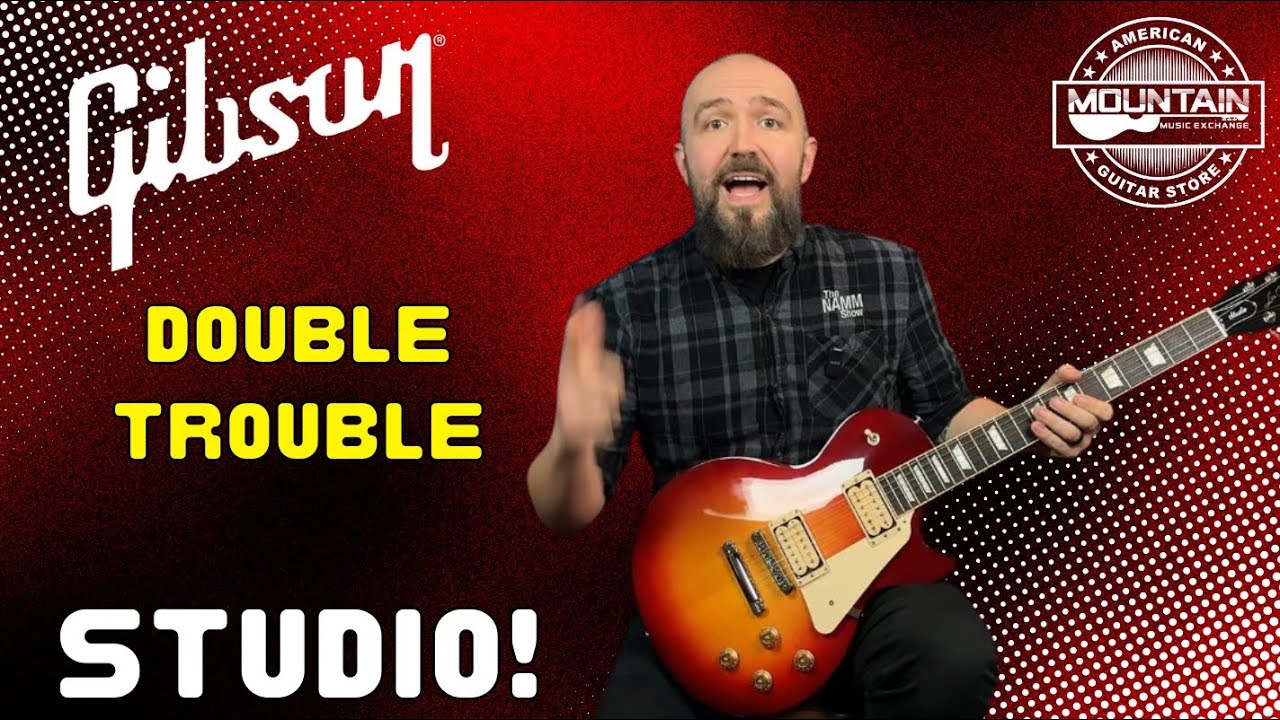
Play And Trade Guitars

- "A traditionally spec'd, workhorse machine that sounds like a Les Paul should while offering some limited-edition aesthetics": Gibson Les Paul 60s Double Trouble review
- This article first appeared in Guitarist. Subscribe and save.

