



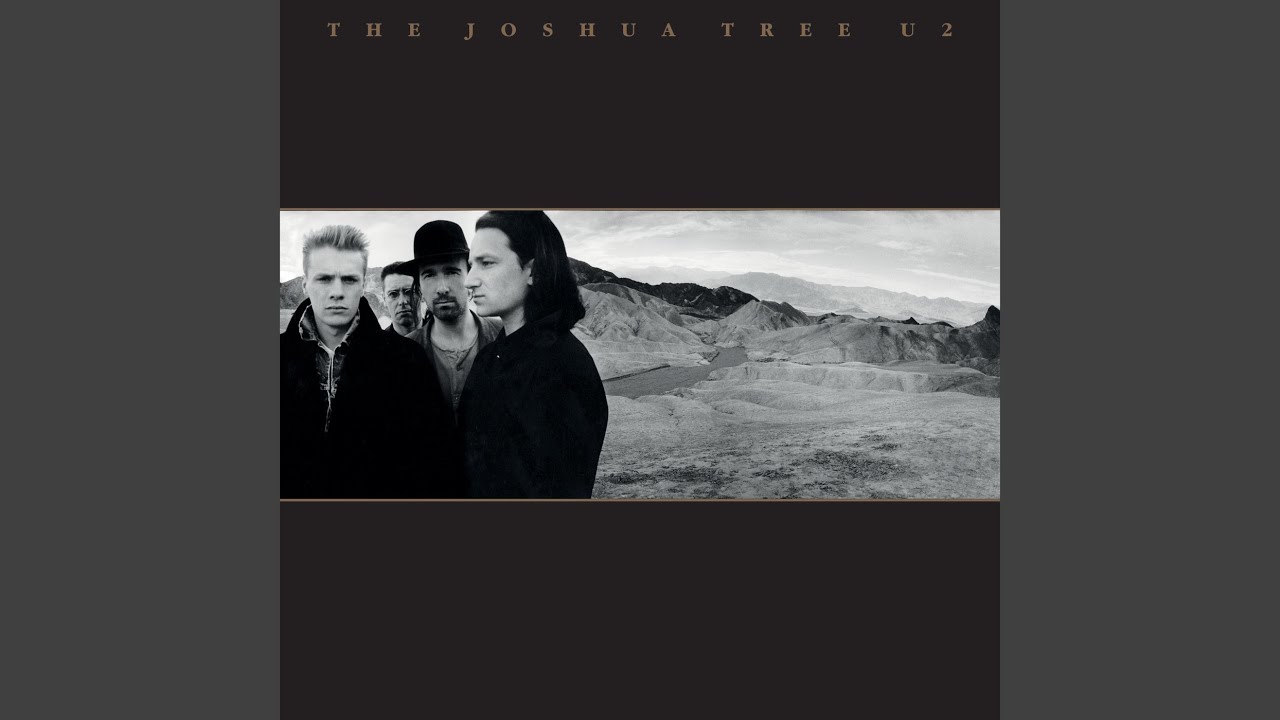
2026 marks four decades since U2 entered the bona fide rock-star club. But while other top-drawer rockers learned their craft in bedrooms and bars – playing for friends and forgiving fans – Adam Clayton’s evolution as a bassist took place on the world’s biggest stages.
“Even up through our first few records we got by on very little, at least musically,” he told Bass Player back in December 2000. “But we were always able to make something of it, just in the way we played together.”
Of course, superstardom was never the point. The three Dublin schoolboys who answered drummer Larry Mullen’s ad for bandmates simply wanted to find out what it was like to stand onstage and bash out three-minute songs – and, at first, they were terrible. That all changed when they began writing their own material.
“On the early records, it was really just a case of Edge and Larry struggling to keep the whole thing together. We were all surviving on minimal technique, and the formula in those early days was 4/4 bass over a relatively complex beat from Larry, with Edge doing his arpeggios over the top.
“But by the time we got to War, the songs were more structured, and the bass sound was featured more. Also, I suppose by then I could actually play things in time – and in tune – so I was able to be a bit more melodic.”
As elemental basslines like With or Without You and New Year's Day gave way to the Jamerson-style bounce of Angel of Harlem and Sweetest Thing, Clayton went from struggling to hold together simple eighth-note grooves to incorporating bass influences from Motown to reggae into his ever-evolving style.
“It's always depended on the tune with us, so as our songwriting became more developed and there were better chord progressions, I found I would fall into more interesting things.
“I wouldn't literally know where I was headed when I started out, but Larry’s drums have always told me what to play, and then the chords tell me where to go. Because of this, my parts are very much created as the song is evolving.”

Does the whole band compose this way?
We do write in an unconventional way, I suppose. If we try to arrange a song that's already been worked out on acoustic guitar, it's hard for us. But if we start with a few bits and then work around each other to develop the song, we seem to go to more interesting places.
Bullet the Blue Sky is a great example; it’s really just one musical moment, extended in time. Larry started playing that beat, and I started to play across it – as opposed to with it – while Edge was playing something else entirely.
Bono said, ‘Whatever you’re doing, don't stop!’ So we kept playing, and he improvised that melody.
Is it true you were U2's musical leader in the beginning, back in the late ‘70s?
Perhaps – but that's only because punk rock had just happened, so it wasn't really important that you knew how to play so long as you had some equipment!
I’d simply decided I was going to be a musician, so I got this Ibanez copy of a Gibson EB-3 and a Marshall head, and I guess those crucial ingredients made the others figure I knew a bit more about music. I did know a thing or two about my equipment, but I certainly didn't know anything about playing.
What were the band's goals in those days?
The ambition was just to end the song together! We had these interminable rehearsals where we would never actually get to the end of the song. But we also wanted to be a part of what we felt was going on.
It was a time of throwing off the idea that people who played guitars in bands were these rock gods who were to be obeyed and saluted. We got off on the idea that you could play a three-minute song with a few basic chords as fast as you possibly could, and that was a good enough reason to be onstage.
It meant that you had a life right now – that you didn't have to spend three years in your bedroom trying to figure out how to play Stairway to Heaven.
