


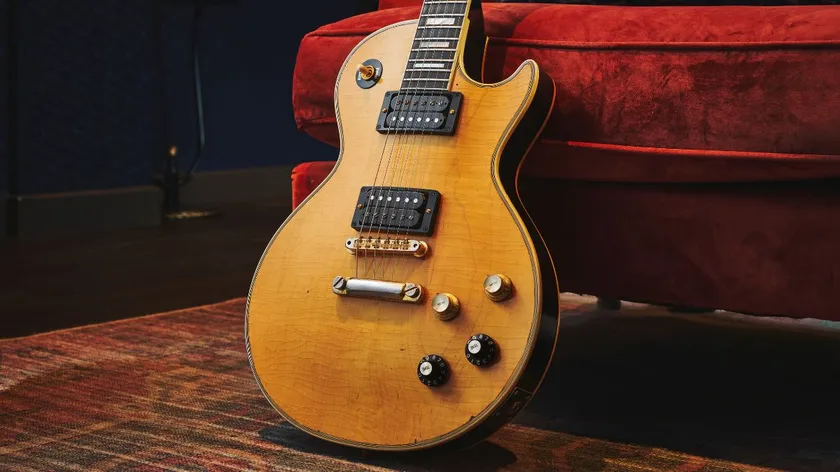


Paul Reed Smith is always on the lookout for innovation, and that was his ethos from the very beginning.
After building a custom guitar for Peter Frampton in 1976 and knocking on doors to get noticed, a handful notable players, including Ted Nugent, Al Di Meola, and Carlos Santana, started to embrace what was to become Smith’s legacy: PRS Guitars.
In the ’80s, as the fresh-faced guitar builder sought to compete with the likes of Fender and Gibson, his next step was refining his initial designs.
Not only did he aim to make them stand out from the crowd, but, perhaps more importantly, he wanted to maximize each guitar’s performance. This is where overhauling the specs, specifically the scale length, came in.
“We changed the headstock. We changed the body shape,” Smith says on the zZounds podcast.
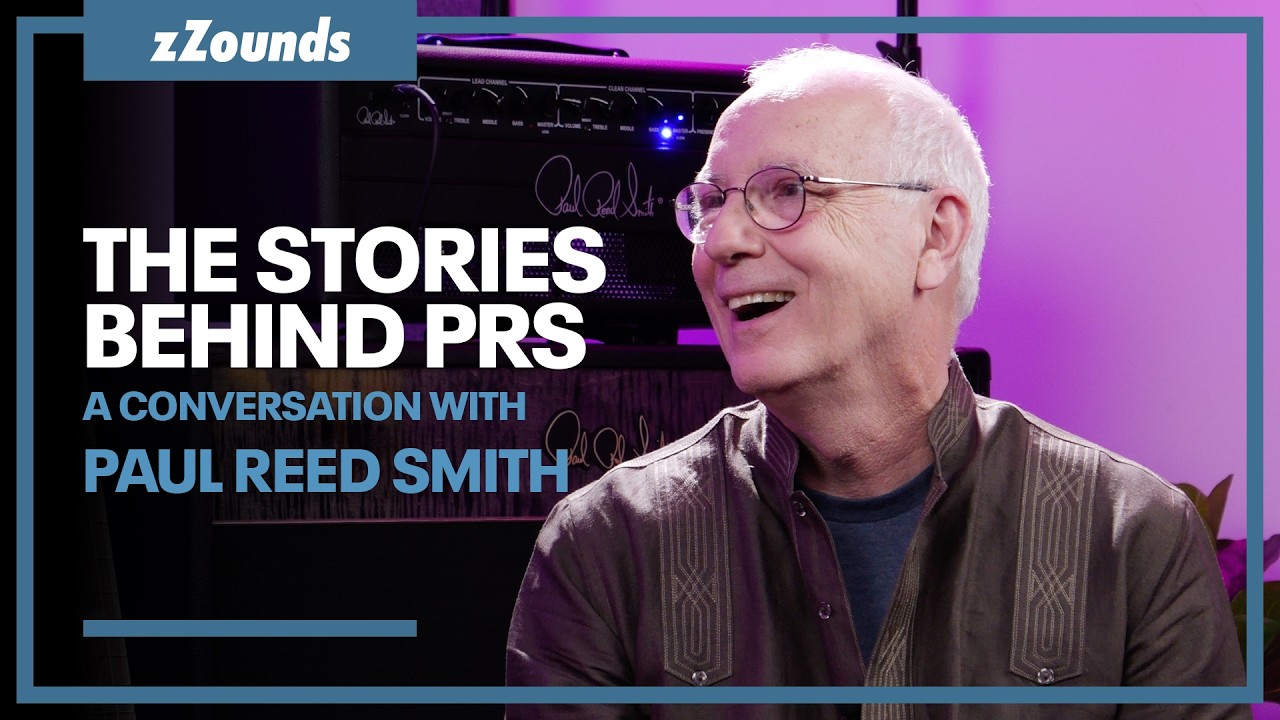
“We made the horn stick out farther. We changed it to a 25" scale, which was in between 24 13/16", which is what an old Gibson is [24 13/16" is within the range associated with vintage Gibson instruments, although 24 3/4" is the conventional nominal Gibson scale length], and 25 1/2" on a Fender, and I was putting it in the middle.”
Aside from crafting a model with a unique scale length to compete with the guitar giants, tuning stability and accuracy were front of mind.
“The problem with a set of .009s at the time, which was industry standard, [was] when you hit a .042 hard on a 24 1/2", [it] goes sharp [before settling in]. Whereas on a Fender guitar, it didn't go sharper. It just played the note,” he explains.
“So when I extended the scale a little bit to 25", that set of .009s going sharp on the low E ended. I did it for the tuning of the guitar. I didn't do it for the feel.”
Smith goes on to say that if someone was used to Fender and Gibson’s scale lengths, they could easily “play something in the middle,” which also helped attract more players. All these decades later, a 25" scale length is still the primary choice for PRS models – although other considerations were in the mix.

“The reason I didn’t go all the way to 25 1/2" is because Hendrix and SRV were tuning guitars down to Eb or D because the strings were too tight when tuned to pitch,” he detailed in an interview with Premier Guitar.
Smith went on to assert that it “was an experientially based decision, not a compromised guess,” and its continuing popularity continues to astound him to this day.
“I’ve always been surprised at how well it worked – especially when I saw other companies building 25" scale fret-slotting machines,” he said.
“Another problem with either the 24 3/4" or 25 1/2" scale-length instruments is that if somebody grew up on a short-scale guitar, they wouldn’t play a longer one and vice-versa.”
“With the 25", I was getting a simple ‘yes,’” the builder-turned-businessman concluded.

