


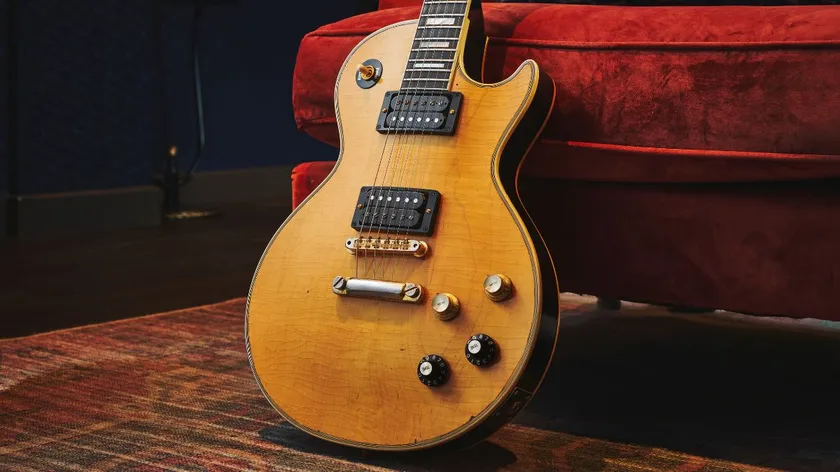


Ritchie Blackmore may be forever associated with stacks upon stacks of Marshalls. However, it turns out that, at least at the beginning of his Deep Purple years, his Marshalls were actually Voxes – a fact he says Marshall wanted to keep on the down-low.
“I really loved my Vox sound, but I wanted to change to Marshalls for the look,” he told Guitar World in a 2018 interview.
Being a regular at Jim Marshall’s shop in Ealing, London, gave Blackmore the unique opportunity to spend hours tweaking his tone.
“I’d go to the Marshall factory in Bletchley, where I met Ken Bran and Dudley Craven, who devised the circuit for me in a Marshall setup. They’d be there with their soldering irons, and I’d be batting away on the guitar trying to get the amp to sound like a Vox.
“I’d be playing so loud that all the women there, who were doing the construction of the amps, would storm out together, saying, ‘We can’t work with that loud nonsense going on.’ 60 people or so working there would leave the factory,” he admitted.

To accommodate Blackmore, Marshall went so far as to devise a soundproof room for the Deep Purple guitarist to use.
“I was there so often looking for this sound,” he recalled. “One of the secrets that they will deny to this day – ’cause they told me they would – was that they could not come up with the sound that I wanted.
“I wanted this Vox sound which was very distorted and very cutting, but seemed to have a bass resonance. And they just couldn’t get that. So in the end they said, ‘What we’re going to do is get one of our combo amps, and we’ll take out the innards and put in the Vox innards. So you’ll actually be playing a Vox, but it’ll say Marshall.’ That was the big secret of the day.”
Despite this workaround, the Marshall team were “determined” to get the right sound for Blackmore, so that he eventually became arguably the loudest guitarist of that era.
“What they did was put an extra output stage into one of their 200-watt amps [the Major], which gave it a fatter sound, a bit more distorted,” he explained. “This extra output stage basically made the 200-watt into a 280-watt.
“So for the first probably five years of Deep Purple – ’70 to ’75 – I did have the loudest amp in the world. Although I’m sure it’s dwarfed now by people who have a million watts. You know how it is. Everyone’s got to have one more, one more.
“Going up to – what? – 11 now, I guess,” he quipped.

