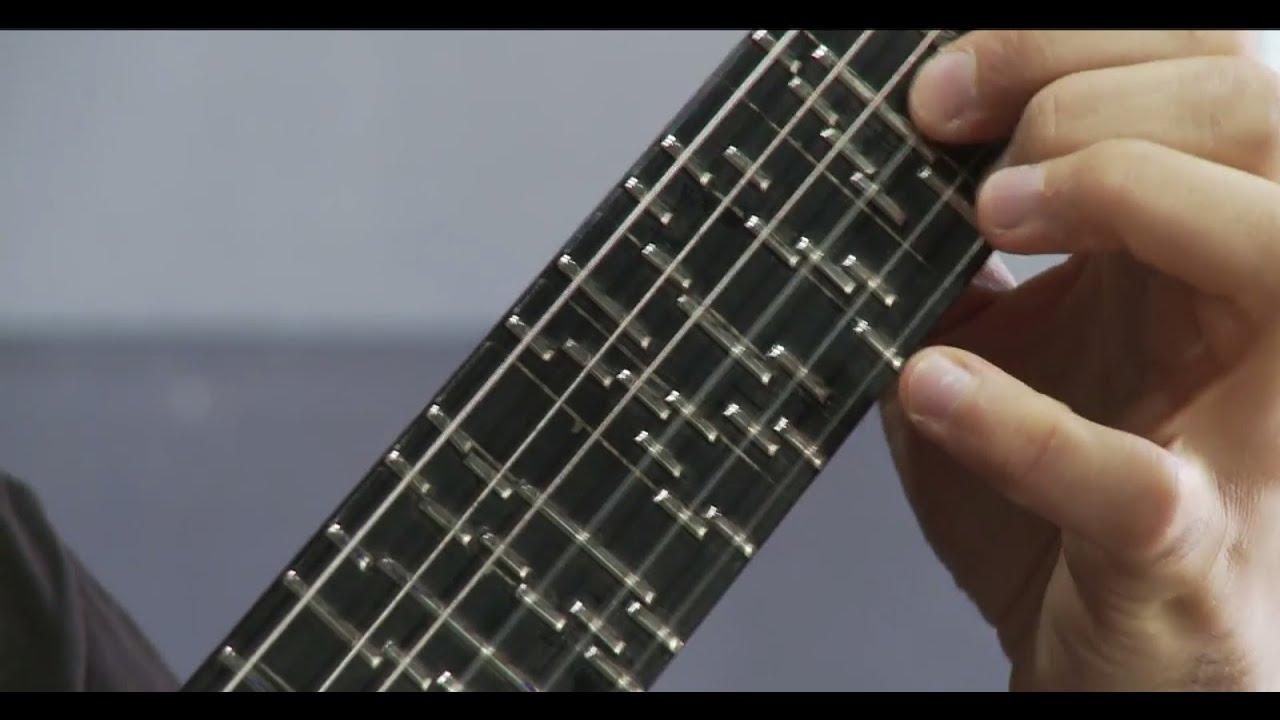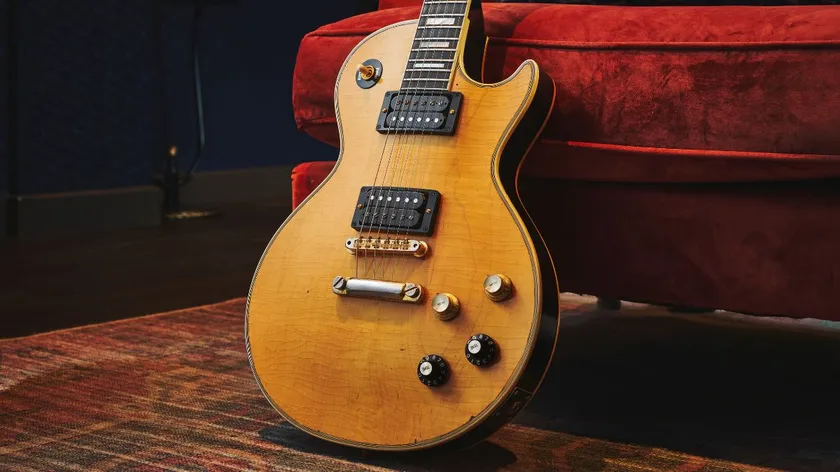


With sonic explorers Angine de Poitrine starting their sold-out US tour this week, the guitar world’s most viral two-piece will no doubt have everyone talking about their mind-bending microtonal guitar tones once again. Alongside King Gizzard & The Lizard Wizard, they're reshaping the idea of what modern guitar players can do thanks to the use of microtones.
As well as getting into the gear, I’m going to take you through everything you need to know about microtonal music. In this article, we'll take a journey through the history of music itself, dabble in some mathematics, and come out at the other end with a much better understanding of why microtonal guitar sounds so weird to the Western ear.
By the time you get to the end, you'll have learned some music theory and, if I've done my job correctly, expanded that Western mindset way beyond the constraints of the frets on your electric guitar.
Standard tuning
Let’s start with standard tuning on a guitar. Western music is built on something called the 12-tone equal temperament system (12-TET). On the guitar, you can find this by playing every note in sequence from the open string to the 12th fret on the low E. That’s every note in the 12-TET system, and pretty much every major pop, rock, blues, funk, or heavy metal song was built on those 12 notes.
This isn’t all the notes that exist in music, though. It’s just what Western music evolved to become thanks to the adoption of the 12-TET system – more on which in the history section.
There are many more notes in between the 12 core tones we use in Western music. It’s like colors: you have your reds, blues, and yellows, but there are countless shades in between that you can use to paint a picture.
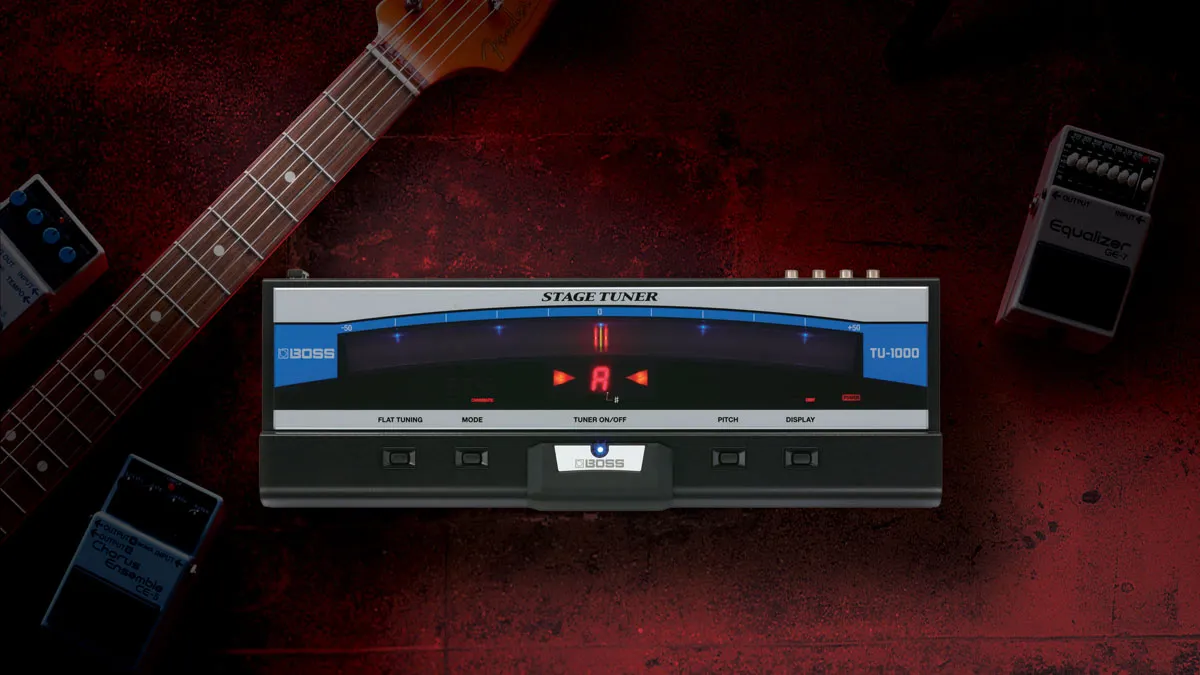
To keep things simple when we get into the math of this, it’s easier to look at the notes as cents rather than as a frequency (Hz). If you’ve used a guitar tuner, you’ll have come across cents before. They’re a measure of pitch, broken down into little sections. There are 100 cents per fret on a guitar, with 1,200 for a full octave, and 50 for the quarter tones currently being utilized by King Gizzard and Angine de Poitrine.
The notes between the notes
In nature, sound isn’t split up into sections; it’s just one continuous note that rises. Technically speaking, there are infinite notes available to us. The problem is we can’t hear all of them. A trained ear can distinguish roughly 240 distinct pitch changes within a full octave; that’s an accuracy of about 5 cents. This varies depending on where you are in the frequency range, as the human ear is more accurate in the midrange and less so in the low and high-end.
With microtonal music, you’re playing those notes in between the 12 we’re used to. Bands like Angine de Poitrine and King Gizzard use guitars with extra frets to access these smaller intervals, called quarter tones, giving them additional sounds you can’t easily play on a normal electric guitar. Where a normal guitar neck has 12 frets per octave, a microtonal one can have 24.
Here's a demonstration of this using cents. Imagine your open guitar string is 0 cents. The 3rd fret would be 300, and the 4th 400. That quarter tone in between? That’s 350 cents. It sits exactly between major and minor, and to a Western ear, it sounds like an unresolved note because we’re so used to hearing music in the 12-TET system. For a Middle Eastern or Indian musician, these in-between notes have been a core part of their music for thousands of years.
The history: how the West lost the in-between notes
Microtonal music isn’t the exception to the rule we think it is. For most of history, microtonal music was just music. When humans first began to sing, blow into tubes of bone, or pluck animal gut-derived strings, there was no system of notes to abide by. Sound was already in the world; we just created ways to imitate it.
Here’s one scholar’s reconstruction of one of the oldest known melodies in human history. It comes from a Babylonian text of a musical system based on tuning in fifths:
Before we get to microtonal music specifically, it’s important to understand more about how Western music developed into the 12-TET system we use today. This is pretty math-heavy stuff, so make sure you’ve got your thinking cap on.
The Pythagorean Comma
Legend has it that Pythagoras first discovered the mathematics of musical tuning by stretching a piece of string along a block of wood, somewhere around the year 500BCE. His device, now called a monochord, had a movable bridge, and by using this, he realized you could divide that string into intervals that sounded pleasing to the human ear.
To give you a real-world example of this, just pick up your guitar. If you take any string and divide the length exactly in half, you get an octave. This is the 12th fret on your guitar. Similarly, if you divide the string into thirds, the first third of your string will be the 7th fret of your guitar. Known as the perfect fifth, this note comes from the remaining two-thirds of the string that vibrates. You’ll note these are natural acoustic sweet spots where harmonics ring out nicely.
Using Pythagorean tuning, the idea was that if you stacked 12 perfect fifths on top of one another, you would be on the same note you started on, just 7 octaves higher. Fast forward to the Renaissance and Baroque period, however, and we run into a big issue with tuning in perfect fifths.
The keyboard had been invented, and composers were making music on organs and harpsichords with multi-part harmonies and complex chords. When they tried to tune them using pure fifths, they sounded completely out of tune after a certain point.
Here’s the problem:
- Moving up 7 octaves: An octave is 1,200 cents, so you add 1,200 seven times in a row. That gives you 8,400 cents.
- Moving up 12 perfect fifths: A Pythagorean perfect fifth is 701.955 cents, so you add that twelve times in a row. That gives you 8,423.46 cents.
That’s a difference of just under 24 cents, nearly a quarter of a fret, which, as we discussed earlier, is a difference pretty much anyone can hear. Because we’re adding a set of even numbers against a set of odd numbers, there’s no way their paths would ever cross in order for them to align perfectly.
This gives us what is now known as the Pythagorean Comma. If you tune an instrument in mathematically perfect fifths using the string length, you will eventually overshoot the octave and sound out of tune. It also affects the tunings of other intervals, like thirds. Don't worry, though; humans will solve this problem in a few thousand years.
Two solutions, one problem
As music evolved throughout the years and became more complex, musicians started to encounter this issue with tuning in 5ths. There were a few solutions to this.
India & the 22 shrutis
Ancient Indian music mapped the octave out into 22 ‘Shrutis’ somewhere around 200BCE and 200CE. This comes from the Natya Shastra, a treatise on the performing arts which was highly influential in the evolution of Indian music.
Keeping it to stringed instruments, a great example of this approach is the Veena, a relative of the sitar. Unlike the fretted instruments of the West, the frets on a Veena weren’t glued into the neck; they were tied on or attached by wax. This meant players could move them to wherever they needed to suit the microtones and scales of the piece they were playing.
Indian classical music is also notable for another feature of microtonality: string bending. Western stringed instruments used gut strings, and these bent so easily they were unpredictable. They could stretch out of tune, and the low action of instruments of the time also contributed to the difficulty with accurate string bending.
The frets on a Veena were curved and made from metal, allowing players to bend the strings into those spaces in between the notes. They also were well above the neck wood, like you’d find on a scalloped guitar neck. This allowed players of the time to bend up to five semitones from a single fret.
Here’s a great example of bending a 'meend' on a sitar:

The Arab world and the Maqam
In the Middle East, musicians took a different approach entirely. The Maqam came about gradually, evolving from the Islamic Golden Age, when scholars began translating Greek texts of Pythagoras. Less a scale and more a set of rules to follow, the Maqam tells the musician which notes to emphasize and how to phrase a sequence, but it’s more based on improvisation than rigid rules.
Safi al-Din al-Urmawi, an Iranian musician, encountered the same problem that Western musicians did with the Pythagorean Comma. Middle Eastern musicians went along a different path, though, choosing to keep stacking perfect fifths, ending up with a 17-tone system. To play these microsteps, they relied on instruments like the oud, which allowed players to hit all the correct notes required in a 17-tone system.
Al-Urmawi’s system meant that a whole step wasn’t two notes as we have with the 12-TET system. Instead, a step was broken down into three unequal micro-steps. To envision this on your guitar neck, imagine you’ve got 17 frets, but they’re all spaced out differently. Some would be closer together, and others further apart.
These frets would equate roughly to 90 cents, 90 cents, and 24 cents on a modern guitar neck. This concept still exists today in the Baglama (or Saz), a traditional Turkish instrument, which, as we’ll find out, is one of the major influences in microtonal guitar music of the modern age.
The oud goes to Europe

There’s one other important subject we need to touch on in order to fully understand microtonal music, and that’s the oud. The first ouds were around in the 8th century and were fretless instruments, which were needed to play the Maqams of the time using the 17-tone system. This allowed players to hit those microtones and execute vibrato and slides that mimicked the sound of the human voice.
The oud was introduced to Europe during the Moorish occupation of Spain beginning in 711CE. Europeans loved the instrument, but as mentioned earlier in the article, they wanted polyphony. If you’ve ever tried to play a chord on a fretless instrument, you’ll know it’s incredibly difficult to keep the whole thing in tune.
To get around this, they took thick pieces of gut string and tied them around the neck of the oud to create frets. This allowed them to play chords, but took away the microtonal capabilities of the oud. They also took the Arabic name ‘al-’ud’, which became the Spanish ‘laud’, French ‘leut’, and is how we ended up with the English ‘lute’.
The lute was popular for a time, but Western musicians didn’t love the deep body, which made it difficult to play standing, as well as preventing hard strumming. So instrument makers began flattening the body and pinching the waist, creating a shape that was much more recognizably close to today’s acoustic guitars.
This gave us the vihuela and the Baroque guitar. Over time, tied-on gut frets were replaced with metal ones, and strings that were grouped in courses became the six single strings we know today.
The 12-TET system
The 12-tone equal temperament system (12-TET) is the answer to the Pythagorean Comma we mentioned earlier, and is still used in modern guitar playing today. To get around the issue of perfect fifths not matching equally with octaves, Western musicians realized they needed to divide the octave into 12 perfectly equal steps.
The idea works like this. We take all 1,200 cents of our octave and divide it into exactly 12 equal steps. Every fret on your guitar is exactly 100 cents from its neighbour all the way up the neck. Of course, the distances between the frets shrink as you move up, but if you get your digital calipers out, you’ll notice that the distance between the nut and 1st fret is exactly halved by the time you get to the 12th and 13th frets.
With this system, our perfect fifth, the 7th fret, lands at exactly 700 cents. Pythagoras’ perfect fifth was 701.955 cents. It’s very difficult to hear a 2-cent difference, so to our ears they sound pretty much the same. The major difference comes from when we move further up. Twelve lots of 700 cents is exactly 8,400 cents, so our 7 octaves and 12 perfect fifths now land in the same place.
Two solutions combine
Heading back to the Middle East, musicians began to realize that the 17-tone system was difficult to teach and incompatible with Western music notation, which had become the global standard. Thus, Arabic music was standardized into 24 equal quarter tones in the 19th century. This was just for notation; the actual notes of maqams still vary by region and player, but the 24-TET system is a Western approximation of the Middle Eastern system that allows the two to interact.
Back in mid-19th century Europe, Antonio de Torres Jurado completely changed the game by redesigning the Baroque guitar. He increased the body size, added bracing to the inside, and introduced the 650mm (25.6”) scale length. The 12-TET system became a permanent feature of the guitar as we know it today, and classical guitars still have this same scale length.
Once the 20th century arrived, composers began to try and break the rules again. Julian Carrillo had microtonal guitars and harps built specially for his Sonido 13 microtonal music theory. Alois Hába wrote microtonal music in Czechia, commissioning a quarter-tone piano to be built. Harry Partch built a 43-tone intonation system and a whole orchestra of instruments in order to play it.
Electronic music then made it cheap for anyone to start using microtones. Wendy Carlos designed her own non-octave scales, famously used on ‘Beauty in the Beast’ in 1986. In Turkey, classical guitarist Tolgahan Cogulu invented the adjustable microtonal guitar with frets that slide in channels so it can be set up for maqams, 24-TET, or any other kind of microtonal tuning.
Microtonal music today

Somewhere around 2014, Stu Mackenzie of King Gizzard and the Lizard Wizard bought a Turkish Baglama, which shared the lineage with the instruments al-Urmawi would have used back in the 1200s.
Enamoured by its sound, he got his luthier friend to combine the electric guitar with the baglama, resulting in the instrument we now know as the Flying Microtonal Banana. The rest of the band bought cheap guitars and retrofitted them with extra frets, resulting in multiple albums written and recorded in the 24-TET system.
Angine de Poitrine have taken this idea to a new plane. A double-necked microtonal guitar and a Boss looper pedal, alongside a look only a mother could love, have taken microtonal music almost into the mainstream.
Interestingly, we’ve essentially come full circle. Microtonal music was the norm in ancient times; it was categorized and systematized via mathematics, and now musicians are breaking down the walls again.
Is it a rallying cry for real music against the incoming onslaught of AI slop? Or a rebellion against music tuned and gridded to within an inch of its life? Maybe it’s just the natural progression that stems from an abundance and easy access to information for all, and our natural inclination as guitar players to experiment.
Whatever it is, hopefully this newfound popularity encourages more guitar players to experiment with sounds less popular in the Western hemisphere.
How to play microtonal music
Bending
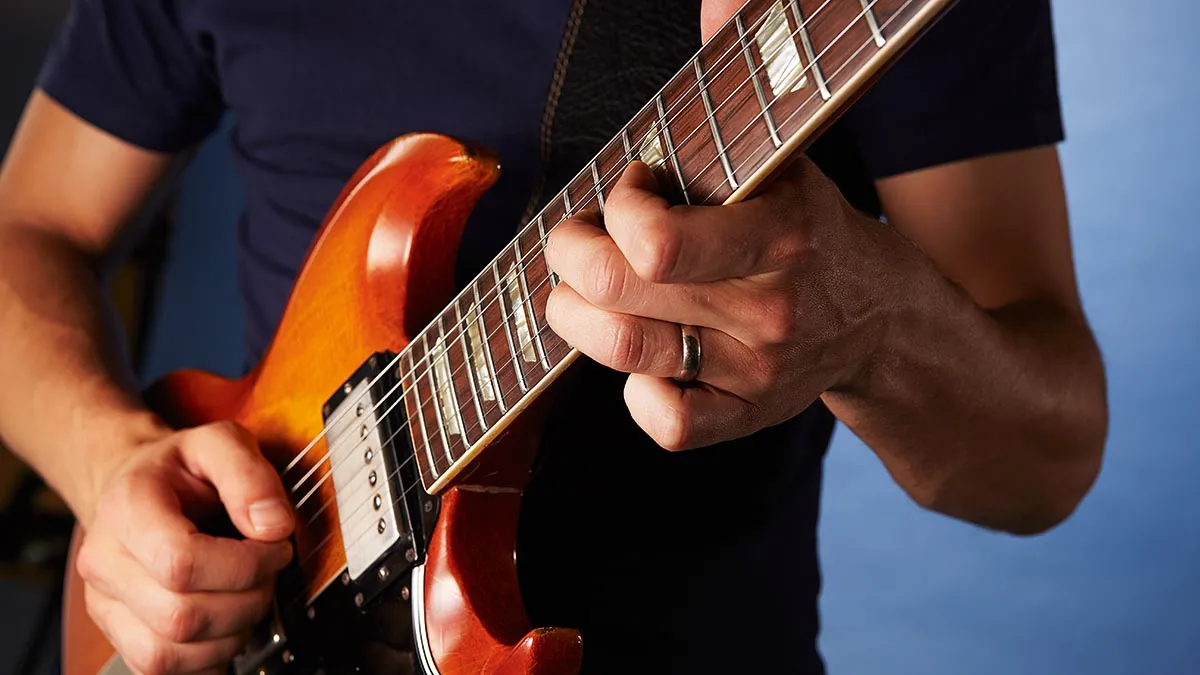
Something that should already be within most guitar players' repertoire. We don’t think of it as microtonal, but the blues note, or quarter-tone bend, has defined electric guitar for a long time, and it’s a microtonal note. If you need assistance with this, do it with your guitar tuner engaged, and aim for the space halfway between one note and the next.
Slide
Using a guitar slide essentially turns your guitar into a fretless instrument. Every pitch on the string is suddenly available, giving you the same freedom that fretless oud players have. Try landing on these positions between the frets rather than sliding through them to add some maqam-style flavour to your licks.
Detune a single string
Some clever folks on the internet have realized you can play some of Angine de Poitrine’s music on a regular guitar by detuning a couple of strings by a quarter tone. Example video below:

Pitch-shifting pedals

Any pitch shifter that gives you a treadle for continuous movement can be used to create microtones. Not every pitch shifter or octave pedal lets you do this, but those like the Digitech Whammy, or the EHX Pitch Fork and Boss PS-6 paired with an expression pedal, can help you unlock those in-between sounds.
Microtonal guitars & necks
Due to the Angine hype, you can now preorder microtonal guitars on the Eastman Guitars website. They also have necks you can stick on a guitar you already own, and even a double-necked instrument similar to what everyone’s favorite Quebecer duo uses.
Most good luthiers will also be able to turn any regular guitar into a microtonal one by adding new frets in between the existing ones. This is how King Gizzard got hold of multiple microtonal instruments, and it is a great way to repurpose an old guitar you're not using anymore.
You can also purchase custom microtonal necks on Etsy from JLJInstruments.
Top microtonal guitar tracks
Totally new to microtonal music? Here are some top tracks and interesting videos to get you started.
King Gizzard & The Lizard Wizard
Angine de Poitrine

Julian Carrillo
Harry Partch
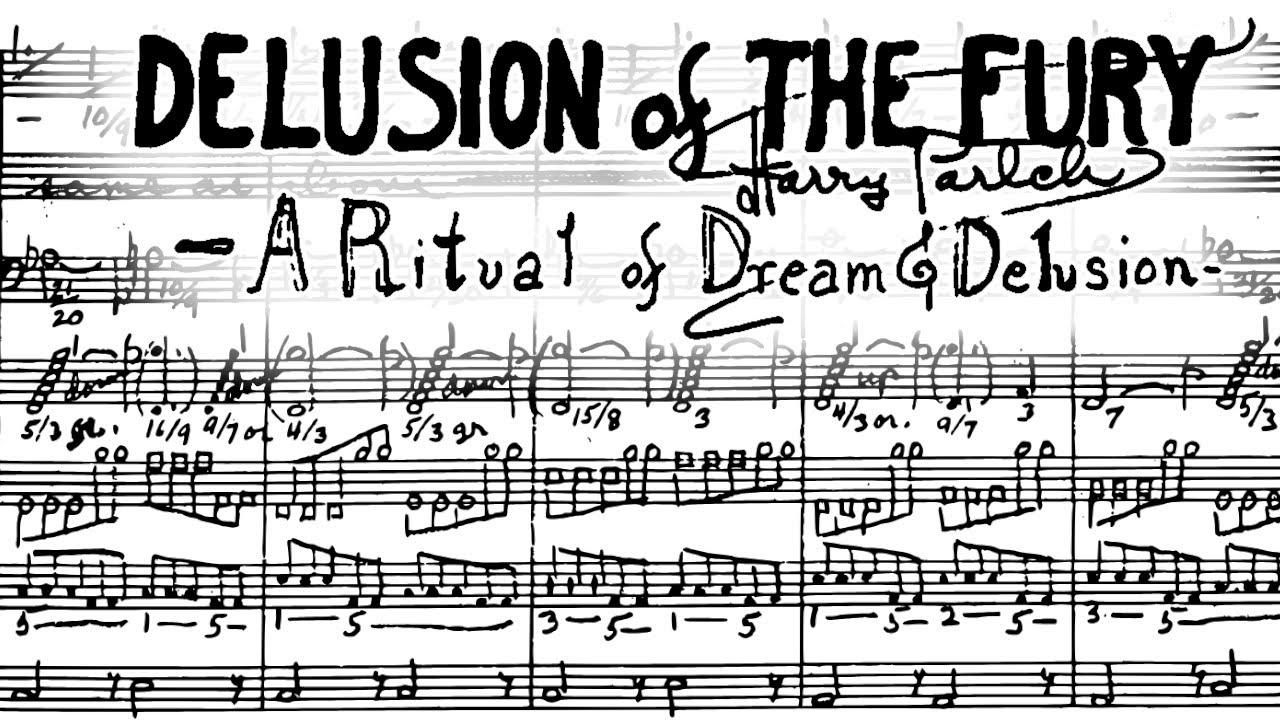
Jon Catler
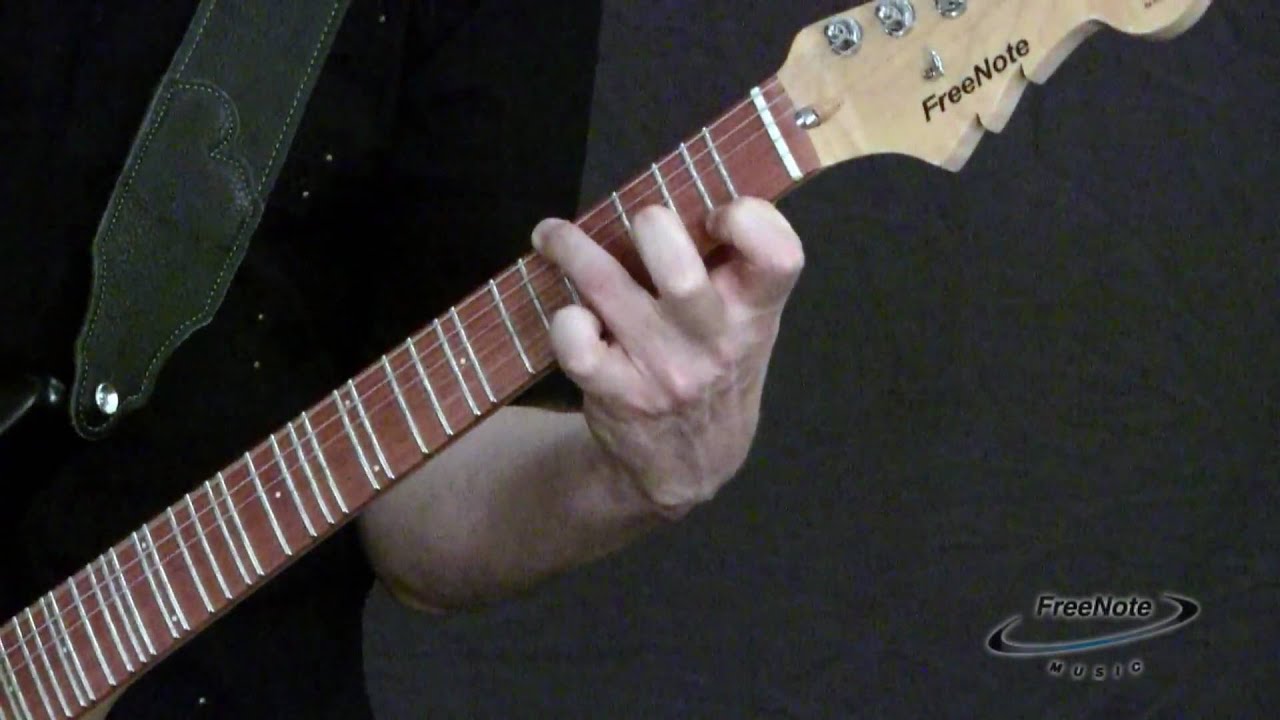
Brendan Byrnes

Tolgahan Çoğulu