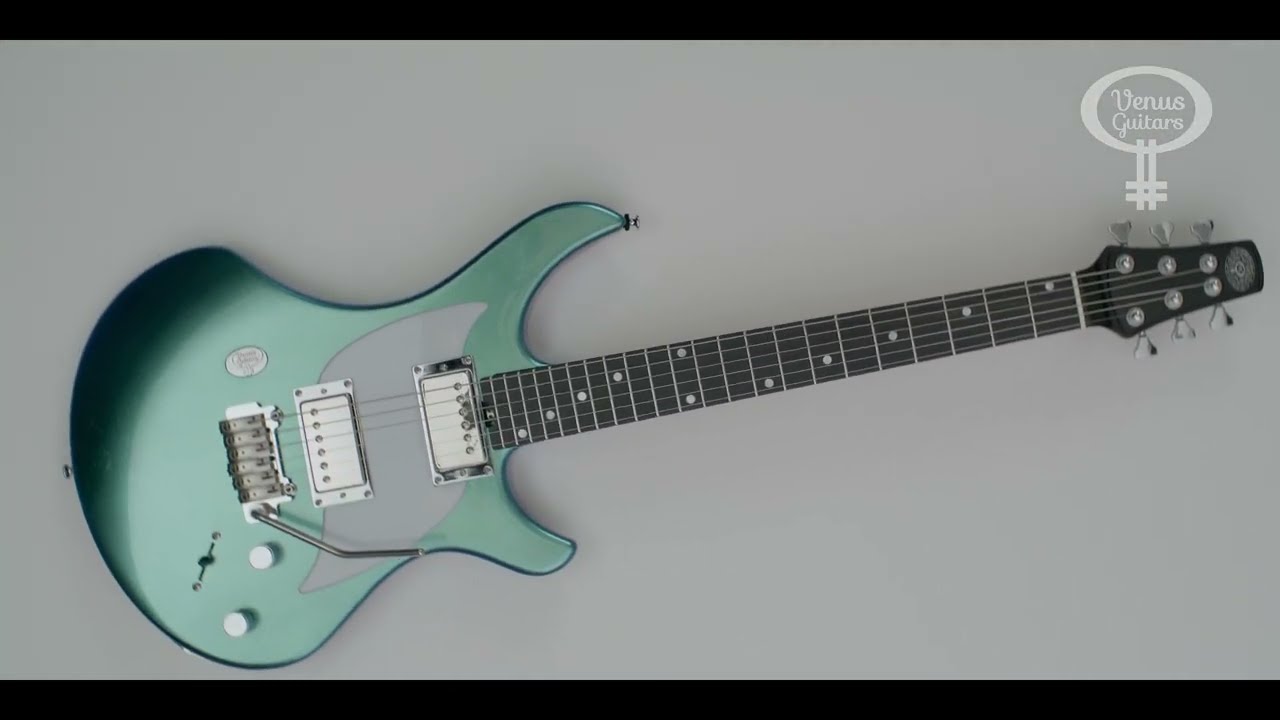
Guitar World Verdict
Inclusive, adaptable and comfortable, the Venus Revolution is a well-executed, player-friendly guitar that prioritises comfort and customization. It succeeds brilliantly as a design-led instrument with a specific purpose. But, at $749, it also enters a space where some players may expect a touch more sonic personality.
Reasons to buy
- +
Super lightweight and comfortable.
- +
Thoughtful, inclusive design philosophy.
- +
Quick-Swap pickguard system is genuinely innovative.
- +
Easy, approachable playability.
Reasons to avoid
- -
Tonally solid but a little unremarkable.
- -
Short scale won’t suit everyone.
You can trust Guitar World Our expert reviewers spend hours testing and comparing guitar products so you can choose the best for you. Find out more about how we test.
What is it?
The Revolution is the flagship shape from Venus Guitars – a new, boutique brand based in Indiana, USA.
Its makers position this compact double-cut as a response to a long-standing gap in guitar design: most electric guitars have historically been shaped around larger, typically male body types. By rethinking ergonomics, weight, balance and neck feel, the company’s mission is to better serve female players and those with smaller frames.
“At Venus Guitars, we believe every guitarist deserves an instrument that fits them perfectly,” states the manufacturer on its website. “One that feels great, plays effortlessly, and reflects their personal style.”
Coming from a similar starting point (at least conceptually) to Sterling's St. Vincent signature models, the Revolution is built around a distinctive “comfort carved” hourglass body shape, and has ultra-lightweight construction (around 5.5lbs - a good two to three pounds lighter than your average Strat-style guitar) and a short 24” scale length. It’s got dual, coil-splittable humbuckers, and sports Venus’s patent-pending Quick-Swap magnetic pickguard system, which allows players to change up the aesthetic of their guitar in a flash, without having to so much as look at a screwdriver.

For the pocket-friendly price of $749, it promises inclusivity, approachability and versatility. But once you move past the mission statement, how does it stack up as an instrument?
Specs

- Launch price: $749
- Made: Indonesia
- Type: Six-string electric guitar
- Body: White jabon
- Neck: Roasted maple, Slim-C profile
- Fingerboard material/radius: Indian rosewood, compound 12 - 16” radius
- Scale length: 24” / 610mm
- Nut/width: Bone / 43 mm
- Frets: 22 stainless steel, medium jumbo frets
- Hardware: Chrome locking tuning machines, fixed bridge
- Electrics: Dual humbuckers with coil split, three-way switch, one volume and one tone control (with pull-switch coil split)
- Weight: 5.5lbs / 2.5kg
- Left-handed options: Not available
- Finishes: Metallic White, Midnight Black, Aura Pink Pearl
- Case: Deluxe padded gig bag with pockets embroidered Venus logo
- Contact: Venus Guitars
Build quality

Build quality rating: ★★★★½
First impressions are solid. This test example feels tidy, well put together and reassuringly robust despite its featherweight build. It has no obvious finish flaws, no dodgy edges - just a clean, competent build that feels ready to go straight out of the box.
Practical hardware choices, like its fixed bridge and locking tuners, give a sense of “grab-and-go” readiness, and also help to keep things stable during a lengthy test run.
The model I have is finished in Midnight Black and features a subtle, sparkly fleck that pairs well with the three Quick-Swap pickguards Venus has sent with it (Purple Galaxy, Pink Sparkle and Shark, not included as standard).

The patent-pending magnetic system is genuinely slick: pop one off, snap another on and you’re done in seconds. Is it essential? No. Is it gimmicky? Also no.
It actually feels like a smart nod to how modern players engage with gear – as an extension of personal style – reinforcing the brand’s focus on identity and self-expression. Honestly, it’s kind of surprising no one else has done this already.
Playability

Playability rating: ★★★★½
Whether standing or sitting, it’s not the kind of guitar you feel you have to fight or keep readjusting to find – and maintain – a comfortable playing position
If you're used to slab-bodied workhorses, the first thing that’s likely to hit you is just how different this thing feels – in a good way.
Its thoughtfully contoured hourglass shape is nipped and tucked in all the right places to nestle naturally against the (female) body in a way many traditional designs simply don’t. Whether standing or sitting, it’s not the kind of guitar you feel you have to fight or keep readjusting to find – and maintain – a comfortable playing position.

There’s also some clever balance work going on, and despite the low weight, the Revolution successfully avoids neck dive, which is pleasing.
That ultra-light White jabon body is paired with a roasted maple neck (slim C profile) and a 24” scale length, giving it a fast, approachable feel that’s really fun to play - aided by a solid factory setup and comfortable action. That said, players used to a 25.5” scale may find things a touch cramped, especially up beyond the 12th fret.
Sounds

Sounds rating: ★★★☆☆
Beyond its thoughtfully crafted contours and customisable design features, the Revolution settles into more familiar territory.
It’s equipped with two coil-splittable humbuckers and a three-way switch. On paper, this means great versatility and heaps of tones. But in practice, the results are less distinctive than I expected.
Played through an amp clean (in this case a Fender Blues Junior) the available tones are perfectly usable but somewhat generic – there’s nothing here that screams a distinct sonic identity.

Throw on a little fuzz, reverb and delay, for example, and the Revolution comes alive a bit more, revealing indie rock machine potential
In full humbucker mode, there’s a respectable balance of warmth and clarity, but you might find yourself wishing for a bit more bite or aggression – especially in the bridge and middle positions. The tone control is responsive, with a usable taper, so you can shape things quite effectively, but the core voice remains fairly neutral.
Splitting the coils unlocks extra brightness and snap, but as is often the case, doesn’t quite measure up to true single-coil sparkle.
Personally, I can’t help but wonder if an HS configuration might have added a bit more distinctive character and contrast here – and it’s not hard to imagine players considering aftermarket tweaks or upgrades in the pickup department.
In some ways, though, the guitar’s tonal neutrality actually plays into Venus’s ethos of individual customization – it makes for a decent blank canvas for those who like to sculpt their sound with pedals and effects. Throw on a little fuzz, reverb and delay, for example, and the Revolution comes alive a bit more, revealing indie rock machine potential.
Verdict

The Venus Revolution is a potential game-changer for anyone who has found traditional electric guitars too heavy, awkward or unwieldy. It’s undeniably comfortable, lightweight and refreshingly easy to play – an instrument that works with you rather than against you. For smaller-framed players in particular, that alone could be, well, revolutionary.
Tonally, the guitar covers a decent amount of ground, but stops short of really defining a sound of its own
The relatively simple innovation of the magnetic Quick-Swap pickguard is a genuinely clever touch and a cool USP, adding a welcome sense of modular fun to the whole experience.
Tonally, the guitar covers a decent amount of ground, but stops short of really defining a sound of its own.
Guitar World verdict: Inclusive, adaptable and comfortable, the Venus Revolution is a well-executed, player-friendly guitar that prioritises comfort and customization. It succeeds brilliantly as a design-led instrument with a specific purpose. But, at $749, it also enters a space where some players may expect a touch more sonic personality.
Test |
Results |
Score |
|---|---|---|
Build quality |
Cleanly built with solid hardware choices and a reliable feel. Lightweight but sturdy, with thoughtful, innovative design touches. |
★★★★½ |
Playability |
Super comfy, super lightweight and that short-scale neck is a breeze to get around. |
★★★★½ |
Sounds |
Versatile on paper, but fairly neutral in practice. Takes pedals well, but lacks standout character or a truly inspiring core tone. |
★★★☆☆ |
Overall |
A very approachable short-scale that has plenty of tone options – but could just use a little more sonic identity. |
★★★★☆ |
Also try
Hands-on videos
Venus Guitars