


This lesson is about something that many players already do intuitively without even thinking about it or realizing they’re doing it, and that is using what I call the “all-purpose passing chord,” which is simply strumming one or more open strings when switching from one fretted chord shape to another.
For example, in the laid-back intro and verses to Soundgarden’s Blow Up the Outside World, when changing from an open E chord to C every two beats, guitarists Chris Cornell and Kim Thayil would momentarily lift their fretting fingers off the strings during the last 16th note of the beat that precedes the next chord and strum the open top four strings with an upstroke.
FIGURE 1 shows a similar move, with strumming prompts included.
Notice how, by briefly letting go of the strings during those upstroke strums, you’re buying your fretting fingers valuable time to move to the next chord shape in an easy way, and doing so while keeping the rhythm flowing.
Of course, you could just omit the 16th-note upstroke strum entirely and simply strum another eighth note with a downstroke then switch to the next chord. But using the all-purpose passing chord offers you a convenient way to fill out the rhythmic feel and convey a more detailed 16th-note groove with an occasional pair of down-up 16th-note strums.
It also allows you to let go of the chord a little sooner than you would if holding it for an eighth-note duration.

When playing open “cowboy” chords in the guitar-friendly keys of C, G or D, or their relative minor keys of A minor, E minor or B minor, the open-string notes – E, A, D, G, B, E – all live within the parent C, G or D major scales and musically “agree” with each of these keys.
So briefly playing the open strings between chords in these keys sounds totally natural. It also adds a mild feeling of tension and release to the proceedings. Mind you, strumming all six open strings or the lower ones draws more attention to the open notes than does only strumming the top three or four strings, which is why many players typically only strum the higher open strings between chords. That also has to do with the act of strumming an upstroke, versus a downstroke.
FIGURE 2 offers another example of this useful technique, with a progression of four open chords that brings to mind the chorus to Alive by Pearl Jam. Again, notice how we simply let go of the strings on the last 16th note of the beat immediately before each chord change while keeping a flowing groove that mixes eighth- and 16th-note rhythms.
While the all-purpose passing chord is usually strummed with an upstroke, it can also be used with a downstroke, say, if you’re playing a punk or metal song that has you strumming all downstrokes for an urgent feel and “pumping” effect. In this case, the downpicking technique would dictate that you hit the bottom two or three open strings instead of the higher ones.

The all-purpose passing chord can also work well with barre chords in these same keys. Bear in mind, though, that, if you’re playing in another key, the open-string notes may fall outside its related scale and end up clashing and sounding odd or sour.
For example, in the Green Day song American Idiot, guitarist Billie Joe Armstrong plays the series of barre chords Ab5 - Db5 - Gb5 - Db5 - Ab5 and briefly strums his open low E and A strings between the first three chords.
Then, after returning to Ab5 at the end of the progression, the guitarist intentionally whacks his open G, B and high E strings with a downstroke, so as to add a brief splash of ugliness to the proceedings. The open B and E notes are obviously alien to the key of Ab, but they contribute to the riff’s and song’s expression of angst.
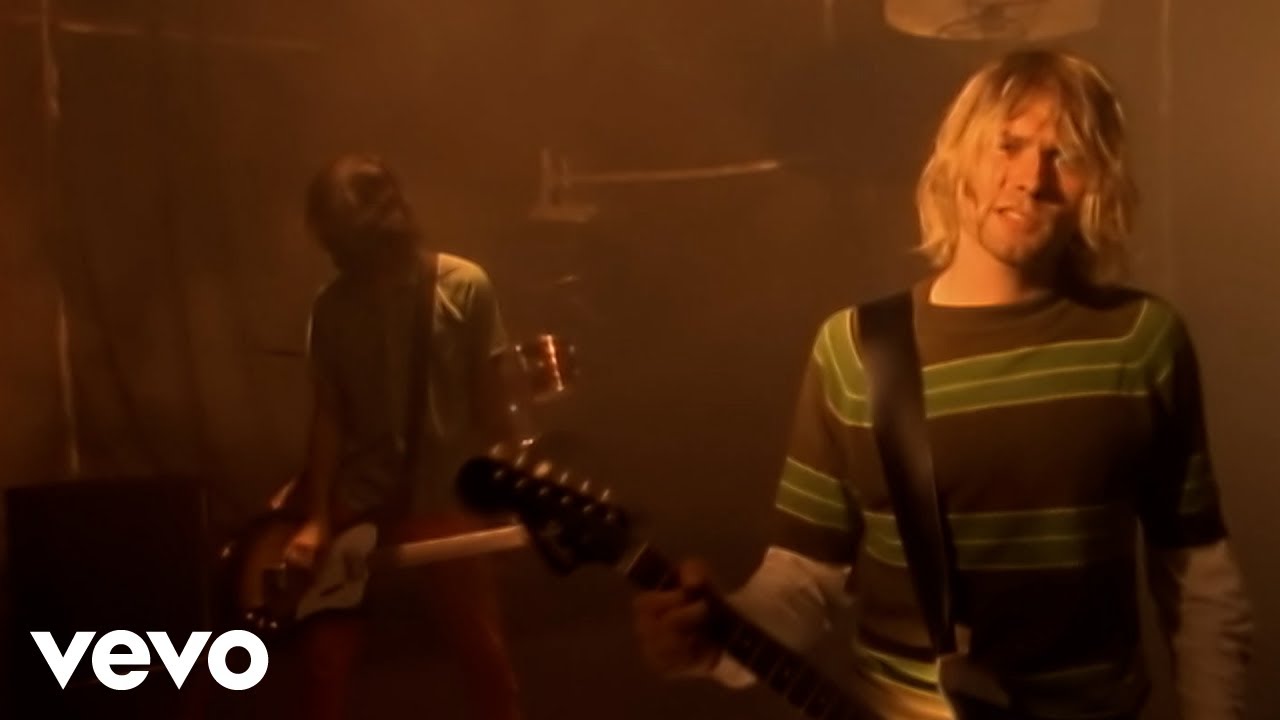
A classic example of this same kind of artistic ugliness can be found in the iconic two-bar intro and chorus chord riff to Smells Like Teen Spirit by Nirvana. Here, guitarist Kurt Cobain is playing in the key of F minor, strumming the repeating chord progression F5 - Bb - Ab5 - Db.
Between Bb and Ab5, he deliberately lifts his fingers off the fretboard and strums his open bottom five strings with a downstroke. He later does the same thing between Db and F5. As with the previously cited example, these fleeting dissonances add a feeling of angst and rebelliousness to the chord riff.
One more thing to bear in mind when using the all-purpose passing chord is the tempo of the song you’re playing. The slower the tempo, the more noticeable these passing chords will be. Something that sounds acceptable and cool when played at a brisk tempo could sound strange and bizarre when played slower.
So, keeping all this in mind, feel free to employ the very useful all-purpose passing chord as you see and hear fit to do.

