




There are several benefits to be taken from this solo, even if I do say so myself, depending on how you might choose to approach it. First, the selection of ideas is particularly useful to call upon in a trio situation where there is limited harmonic support available from a simple groove-based backing like this.
Second, there are useful pentatonic/blues scale ideas, transferable to any key and not limited to the trio format. And, not least, third, there is a kind of SRV vibe, so that’s always nice!
In a broader sense, this solo is also an exercise in rhythm. Often the phrases coincide with the drums, but, as you’ll hear, the first example plays swung eighth notes, which deliberately contrast against the accents of the kick drum and bass guitar. Elsewhere, I’m somewhat mindful of where there should be a space, to let a drum fill breathe or simply to take a moment to decide where to go next.
One of the steepest learning curves we can embark on is to record ourselves improvising in a scenario like this, then listen back and evaluate the results. To get the full benefit, it’s important that we make an ‘honest’ recording – don’t overthink or compose anything at first.
Listening back can be tough, but this is information nobody else can give you. It’s also true that there can be some nice surprises, often resulting from the moments when we feel we slipped and didn’t play something the way we intended to in that moment.
Coming back to an earlier point, many players are also surprised to hear how much they’re filling the space, especially in a slower/half-time context such as this. All that said, do use these ideas as extra vocabulary, but aim to improvise as freely as you can. Hope you enjoy and see you next time!
Example 1

We start this opening phrase with a series of swung eighth notes, deliberately contrasting against the accents from the bass guitar and kick drum. I’m drawing on pentatonic patterns here up to and including the second bar (not counting the pickup bar). In bar 3, we change to some rhythmic.
Example 2

We're starting with quite a long pickup bar here but moving swiftly on to break the flow a little. This allows some of the bass guitar and kick drum accents to ‘poke through’ during the gap, giving the feeling of interplay between the elements – and avoiding possible listener fatigue from a constant barrage of notes...
The overall feel is derived more from triplets (both quaver and semiquaver) than swung quavers. The last E will be reused at the beginning of Example 3. We thought this phrase sounded better with it in isolation and didn’t want to cut it from the next phrase!
Example 3

Starting with that duplicate E, this final example has one of the longest pickup bars we’ve seen, but it all makes sense once you land on beat 1 of bar 1!
This starts with some sustained blues bends, before mixing up some triplets, swung quavers and doublestops in bar 2. We revert to a more rhythmically simple pattern in bar 3 before digging in to some heavy accents on an E7#9 chord.
This coincides somewhat with the drum accents, but the most important consideration is to dig in with confidence. A good drummer will probably follow…
Hear it here
Stevie Ray Vaughan & Double Trouble – Texas Flood
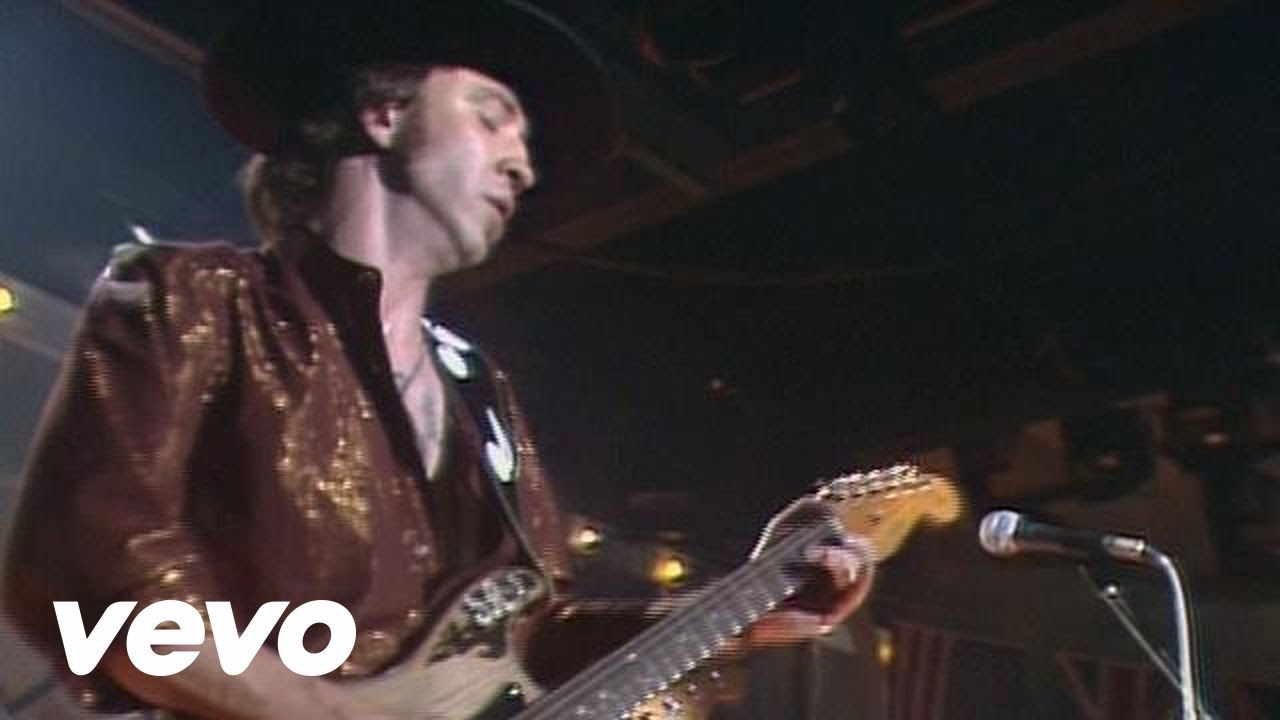
This album is packed with exemplary playing in a trio format. What’s more, it was recorded live from the studio floor.
There is something to be learned from every track, but perhaps the most relevant to the approach highlighted in the example solo are Pride and Joy, Texas Flood and I’m Cryin’.
Though always technically proficient, Stevie manages to create excitement without sounding like a rock player. His rhythms also sound super-confident.
Robin Trower – Robin Trower Live

Another example of a trio-based record, here Robin fills a lot of space without coming across as unaware of the other instruments or the vocals.
His soloing can oftentimes be frenetic, but there are many areas where he’ll happily hold a note and let the bass and drums carry things.
Check out Too Rolling Stoned (with its somewhat conspicuous edit!), and for the ultimate laid-back live feel make sure to have a listen to Daydream. The live version Day Of The Eagle is also one to track down.
Philip Sayce – The Wolves Are Coming
![Philip Sayce - Oh! That Bitches Brew [Official Lyric Video] - YouTube](https://img.youtube.com/vi/MM8VCTwFtj8/maxresdefault.jpg)
This is a very ‘in your face’ production, but the arrangements are carefully constructed to allow all the instruments to have their place in the mix. Have a listen to Oh! That Bitches Brew, Your Love and The Moon Is Full.
Honourable mention also goes to Intuition for its more laid-back feel, dynamics and bluesy soloing. Though this is very much a studio production complete with rhythm guitar and keyboards, it’s not too hard to imagine this arranged for the trio format.
- This article first appeared in Guitarist. Subscribe and save.

