
 Access Backstage Pass


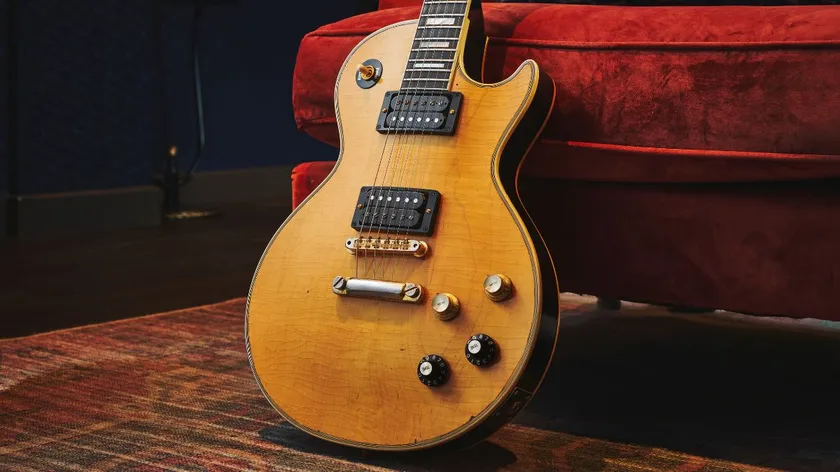


Gone are the days of smaller guitars feeling and sounding like toys. Now the best 3/4 acoustic guitars can be seen in the hands of pros on the biggest stages in the world.
A good, compact guitar can be the ultimate travel companion if you’re out on the road with work or on tour. A 3/4 acoustic can sound every bit as good as a full-size instrument, too. Manufacturers like Taylor and Martin have put a lot of work into getting these miniature heroes to sound as good as possible.
So, whether you’re shopping for an instrument to suit your smaller hands, you’re choosing for a younger beginner, or you simply want something more compact, here's what I reckon to be the best 3/4 acoustic guitars currently on the market.
But if you'd like to know my top pick right off the bat, I think the Taylor BT1 Baby Taylor is well worth a closer look. This is probably the most popular 3/4 guitar on the market, and for good reason. For me, it has the versatility, dynamic range, and playability to make it a quality guitar for any player.
Now, if you’re new to the world of 3/4 guitars, I've included a handy FAQ section at the end of this page to answer all your burning questions. I’ve also included a glossary to help decode the confusing language during these pint-sized acoustic guitars, and there are demo videos of our top three choices so you can hear exactly how they sound, too.
Best overall

✅ Buy if you want one of the best 3/4 guitars currently on the market: The BT1 is an excellent option if you're looking for quality and playability.
❌ Avoid if you're just starting out: The price might be too much for new players, so something a little cheaper will suit better.
The Taylor BT1, or Baby Taylor, is one of the most enduring travel guitars on the market, first being introduced way back in 1996 – and despite being on the market for 30 years, it still feels as relevant today as it did when it was launched.
Build: The first thing you’ll notice is the solid spruce top, which isn’t always a given in the world of travel-sized or 3/4 guitars. This choice of wood not only enhances durability but also helps the guitar mature tonally over time. The layered walnut back and sides provide resilience against changes in humidity and temperature, making this guitar especially well-suited to life on the road or for younger players who might not always treat their instrument with kid gloves.
The neck is carved to be comfortable for both smaller and adult hands, with a satin finish that makes shifting up and down the fretboard feel smooth and effortless. The fretwork is precise and free from any sharp edges, and the enclosed tuners are robust, holding tuning well even after extended play.
Playability: One of the standout features of the Baby Taylor is its accessibility. I’d say this guitar is genuinely fun and easy to play, regardless of your experience level. The 3/4-size and mini dreadnought bodies make it incredibly comfortable to hold, whether you’re sitting on the couch, traveling, or playing on stage. On our review model, the action was set low enough to be beginner-friendly, helping with chord changes and reducing finger fatigue, while still providing enough clarity and responsiveness for more advanced fingerstyle or strumming techniques. The neck profile is slim and inviting, making it a great option for younger players or adults with smaller hands. Yet, it never feels toy-like or insubstantial; there’s a real sense of playing a proper instrument.
Sound: Despite its modest dimensions, the BT1 Baby Taylor delivers a surprisingly big and lively sound. The solid spruce top gives it a sparkling brightness and a well-balanced tonal character, while the mini dreadnought shape helps project more volume and resonance than you might expect. There’s a clarity to each note, with a crisp attack that works equally well for fingerpicking and strumming. While the low end won’t rival a full-size dreadnought, it never feels thin or boxy. For anyone after a compact acoustic that doesn’t compromise on tone or feel, the Baby Taylor is tough to beat.

"As far as 3/4 size acoustics go, there’s a reason the Taylor BT1e Baby Taylor has been at the top of the game for the past 30 years. The combination of excellent tone, fantastic playability, and rock-solid build quality makes it a brilliant addition for any player, whether you’re looking for your very first instrument or you’re an experienced guitarist who wants something comfortable for songwriting sessions and sofa noodling."#
Read more: Taylor BT1 Baby Taylor review
Best mid-priced

✅ Buy if you want a solid, great-sounding acoustic for playing live: The LX1E boasts balanced sound and a pickup onboard.
❌ Avoid if you want something a little smaller: A scaled-down dreadnought might still be a little big for smaller hands.
The Martin LX1e has got to be one of the most recognizable 3/4 guitars out there. Of course, the guitar's popularity was helped hugely by being seen consistently hanging from Ed Sheeran’s shoulder for the early portion of his career before he made the switch Lowen.
Build: Picking up the LX1e, and I’d say the construction feels robust and sturdy. Like other models on this list, the top is solid Sitka spruce, but the back and sides are made of what Martin calls high-pressure laminate (HPL). Martin says HPL is designed for resilience, making the model ideal for players who need a guitar that can withstand changes in climate or frequent travel.
The neck is crafted from rust birch laminate, offering both strength and a comfortably smooth feel. Its wider nut width mimics that of a full-size Martin, giving adult players a familiar grip, while the shorter scale length ensures frets are closer together for easier reach. The LX1E’s build quality is impressive for its price, and Martin’s attention to detail is evident in the smooth fretwork, precise intonation, and clean satin finish.
Playability: The slightly wider neck accommodates adult hands comfortably, alleviating the squeezed-in feeling some 3/4 guitars can give. Despite this, the short scale keeps things accessible for younger or smaller-handed players. The action is set low from the factory, which, combined with smooth frets and a comfortable neck profile, makes chord changes and fingerstyle runs a breeze. I’d say that whether you’re practicing at home, performing on stage, or recording in a studio, the LX1E responds well to a variety of playing styles, from gentle fingerpicking to energetic strumming. It’s a guitar that feels natural and responsive in your hands, no matter your level of experience.
Sound: Tonally, the Little Martin defies its size, offering a sound that’s much larger than you’d expect. To me. The sound has a pleasing midrange and a low-end presence that avoids the boxiness common in smaller guitars. There’s a warmth and richness here that’s impressive for a compact instrument, making it equally suitable for solo performance, songwriting, or as a portable travel companion. Now, I would say that this isn’t the loudest guitar in the world, but for its size, it’s more than acceptable. Plugged in, the Fishman pickup delivers a natural, articulate acoustic sound that works well for live gigs.

"Compact, reliable, and consistently great to play, the Martin LX1E proves it still has plenty to offer in 2026. While its smaller body limits low-end depth, its clarity, durability, and ease of use make it a standout choice for travel and everyday playing."
Read more: Martin LX1e review
Best all-solid

✅ Buy if you want a rock-solid 3/4 with excellent performance: This Faith guitar is well-build and delivers rich, warm audio.
❌ Avoid if you want something more stripped back: The premium features offered here are great but they won't be necessary for all players.
Build: The Faith Nomad Mini-Neptune is a rare find in its class, boasting an all-solid wood construction at a price point where this is almost unheard of. The top, back, and sides are all crafted from solid Indonesian trembesi, a tonewood that looks fantastic. The stripes and swirling patterns catch the light nicely, and I can see why this wood species gets compared to Koa.
The compact Neptune body shape strikes a balance between comfort and projection, making it versatile enough for travel, stage, or home use. Hardware is equally impressive, with stable tuners. The inclusion of the Fishman Presys 1 pickup system rounds out the package, giving you the flexibility to plug in and perform live if you want to.
Playability: Out of the box, the action hovers around a super-comfortable 1.5mm on both E strings, which makes for a fast, inviting feel whether you’re strumming or fingerpicking. The neck is slim and compact, definitely on the smaller side compared to the likes of the Taylor GS Mini, but it never feels cramped or claustrophobic.
Sound: Sonically, the Nomad Mini Neptune Trembesi delivers more than you’d expect from a guitar this size. Bright, lively, and surprisingly loud, it projects with a clarity and presence that belies its compact footprint. The midrange really pops, adding a punchy, articulate character that’s perfect for both strummy rhythm work and subtle picking.
For anyone seeking a stage-ready, travel-friendly guitar with professional-level sound, this model is hard to beat.

“If you’re scouting for a travel guitar that feels like the real deal, the Faith Nomad Mini Neptune Trembesi absolutely deserves a spot on your shortlist. With its eye-catching all-solid Trembesi build, flawless fretwork, and punchy, lively voice, this little powerhouse is way more than just a “throw it in the back of the car” guitar. Sure, it’s not immune to the classic neck-dip that comes with a featherweight body, and the pickup system plays it safe rather than being spectacular, but the overall playability, looks, and sound are a cut above most rivals in the travel category.”
Read more: Faith Nomad Mini-Neptune review
Best for beginners

✅ Buy if you're just starting out on your acoustic journey: With its great price and quality tone, the JR1 is perfect for new players.
❌ Avoid if you want some acoustic punch: A full-size acoustic will be the better option if you want to get volume levels up.
I’m a big fan of Yamaha guitars. As a former guitar salesman, I constantly recommended Yamaha models because their build quality is second to none, and I rarely had issues with them.
Build: The Yamaha JR1 is a shining example of how a budget guitar can still deliver impressive build quality. Crafted with a spruce top and meranti back and sides, the JR1 feels solid in the hands without being heavy or cumbersome. The finish is smooth and clean, and the attention to detail is exactly what you expect from the Japanese instrument giant. Yamaha’s reputation for quality control is evident in the JR1, with each guitar coming out of the box ready to play and requiring minimal adjustment.
Playability: Moving on to playability, the neck is slim and comfortable, making it easy for beginners to navigate, while the short scale length reduces string tension. In our review example, the action was set low enough to be beginner-friendly, but not so low that it compromised tone by choking out or causing buzzing.
Sound: I believe Yamaha JR1 delivers a surprisingly rich and balanced tone. In our full review, we said, “The mid-range is definitely prominent, but Yamaha’s trademark clarity and brightness are alive and well in the JR1.” Personally, I think the overall tonal profile leans towards the brighter side, but there’s enough depth to keep things interesting. While it won’t compete with high-end models in terms of projection or bass response, it more than holds its own among beginner guitars. For those starting their musical journey or seeking a portable, fuss-free acoustic, the JR1 is well worth a look.
"Affordable, well-built, and far more playable than its ½-size frame suggests, the Yamaha JR1 is a brilliant option for young beginners and travel-minded players alike. Sure, it can sound a little boxy, and the fretwork isn’t perfect, but with its comfortable neck, balanced body, and trademark Yamaha reliability, there’s a lot to love here for the price."
Read more: Yamaha JR1 review
Best for gigging
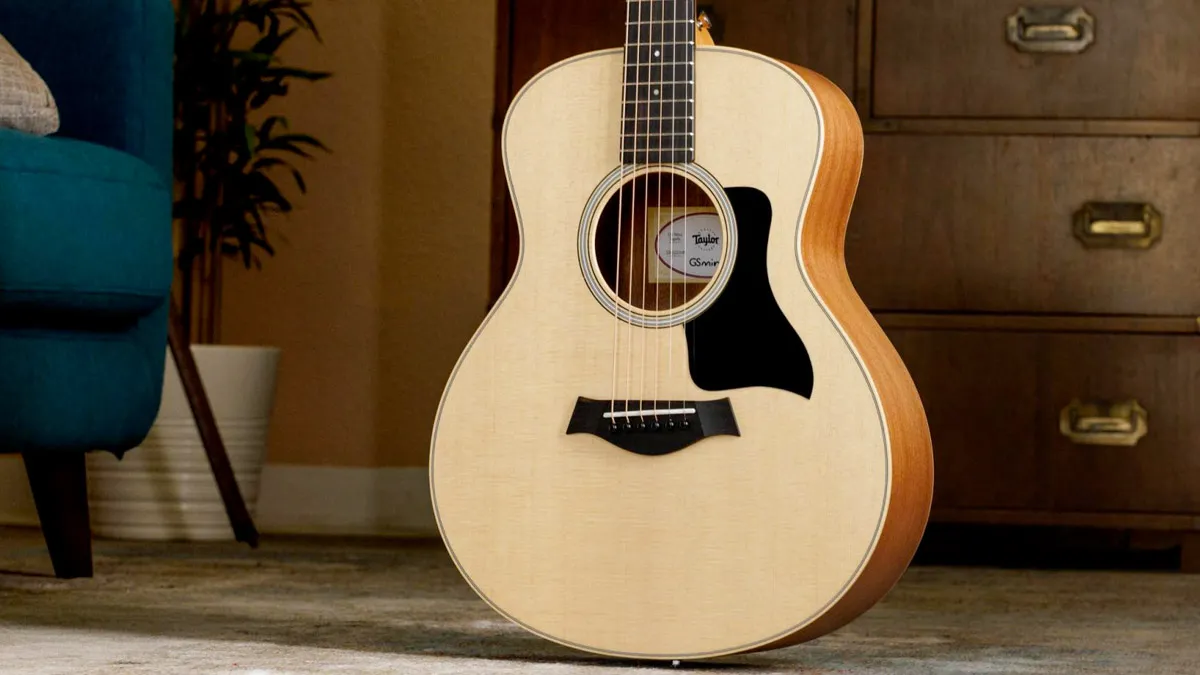
✅ Buy if you want a rugged and compact acoustic: This is a top option if you're looking for an acoustic that sounds big and powerful.
❌ Avoid if you're in the market for a true 3/4: This is technically a little bigger than a 3/4 so it might not be the right fit for you.
Okay, I know this is the second Taylor on this list, but as this model is so popular, and having owned one myself for many years, I thought I needed to include the mighty GS Mini on this list.
Build: The Taylor GS Mini has carved out a unique space in the world of compact acoustics, offering premium build quality in a size that’s portable but still substantial. Its solid spruce top and layered sapele back and sides give it both durability and a sophisticated tonal palette. The craftsmanship is exactly what you’d expect from Taylor, with flawless fretwork, a comfortable neck with a satin finish, and robust hardware that holds tuning remarkably well.
Despite its smaller footprint, the GS Mini feels like a serious instrument in every respect. The slightly larger body compared to most 3/4 models means you get extra projection without sacrificing comfort, making it an ideal choice for anyone who wants a guitar that’s easy to handle but still feels like a full-sized guitar.
Playability: One of the GS Mini’s strongest assets is its exceptional playability. The neck is inviting for players of all ages, with a profile that caters to both small and large hands. The body size is just right for playing on the couch, bringing to lessons, or even performing live, and the instrument’s overall balance makes long sessions a pleasure.
Sound: For me, I’d say the GS Mini’s sound is nothing short of impressive for its size. The solid spruce top provides a bright top end, which is quintessentially Taylor, but as this is a larger guitar than the BT-1, there is a lot more bass and low-end thump.

"The GS Mini Sapele remains the perfect choice for budget-conscious players who want the comfort and portability of a small-body acoustic without sacrificing big guitar tone."
Read more: Taylor GS Mini Sapele review
Best classical
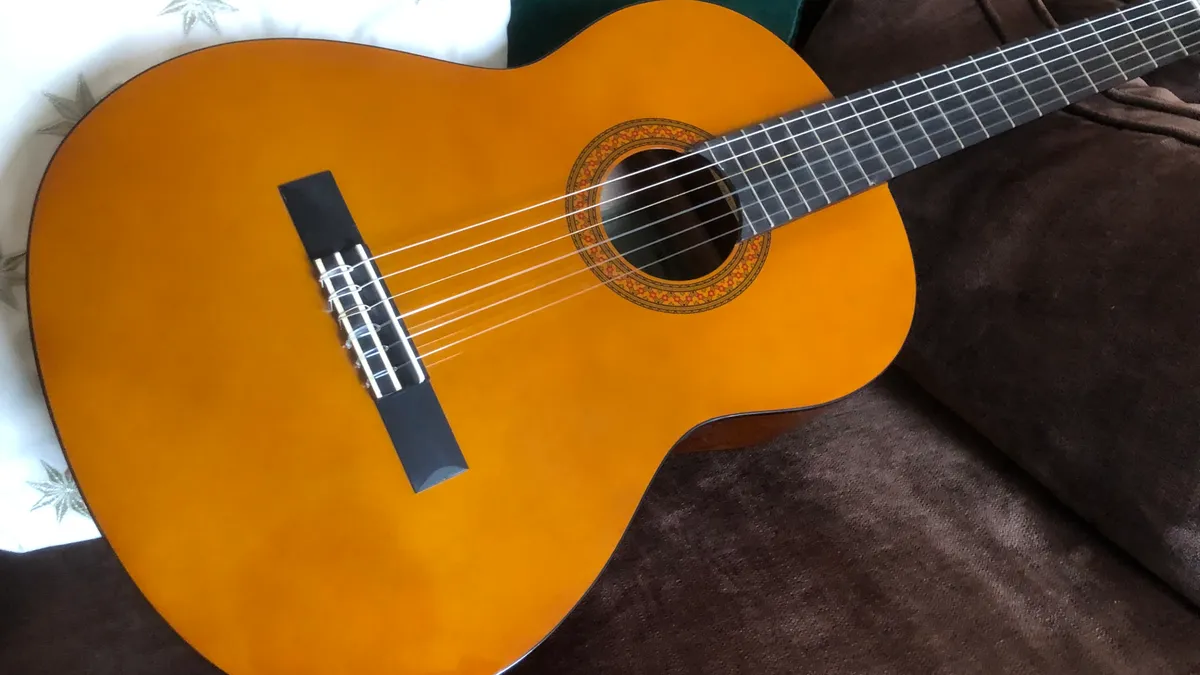
✅ Buy if you want a supremely playable classical: The C40 II's compact design makes it a joy to play.
❌ Avoid if you're an intermediate player: This is really a beginner instrument, so bear that in mind before purchasing.
And another mention for Yamaha, too – this time. of the classical variety. Many players have used this 3/4 classical to kick-start their guitar-playing careers, and honestly, we can see why. It’s affordable, accessible, and very well made.
Build: As I said, the Yamaha CS40 II 3/4 is a staple among beginner classical guitars, blending affordability with Yamaha’s hallmark reliability. Constructed with a spruce top and meranti back and sides – all laminate – the CS40 II is designed for young students. The finish is clean and even, the build quality is consistent, and the tuners are robust. What more do you really need, right?
Playability: In our review, we said, “It’s easy to see why beginners flock to the C40II like moths to a flame. Straight out of the box, and after a little tuning tweak, the guitar played wonderfully. The action was nice and low, the soft nylon strings were easy on our fingers, and the wide string spacing made fingerpicking a breeze.” High praise indeed for such an affordable guitar. Even though it’s a student instrument, the overall feel is reassuringly solid and invites players to progress with confidence.
Sound: Sound-wise, the CS40 II offers a pleasing tone that’s mellow and dynamic. The tonal character has plenty of warmth to make classical pieces sing while remaining responsive enough for strumming or simple pop songs. The projection is more than adequate for practice, and the guitar’s even response across the strings encourages proper technique. For anyone starting out on the nylon-string path, the CS40 II delivers a musical and inspiring playing experience at a budget-friendly price.
"If you’re after a beginner classical guitar, there truly is no better option than the C40II. With its excellent setup, durability, affordability, and consistent tone, the C40II has been the starting point for many guitarists over the past 30 years and shows no signs of losing its appeal. While there are minor overlooked touches such as scratchy frets and slightly sharp fret ends, these issues are not unexpected at this price point."
Read more: Yamaha C40 II review
How to choose a 3/4 guitar

With all this choice, it’s easy to get lost in the world of specs and model numbers. However, we can help you narrow it down by proposing some key considerations.
Firstly, let’s talk about size. All the models listed above are good choices for players with smaller hands, but if that really is an issue for you, then we’d recommend something with a thin, narrow neck. This makes it easier for your fingers to reach around the neck to get to the strings. Similarly, a guitar with a smaller body could also be ideal for the strumming arm.
If you haven’t got small hands, or you’re used to playing a full-size guitar but just fancy something more compact, then keep an eye out for a guitar with a full width neck as it will feel more familiar.
If the inherent tone of the guitar is important to you, then you’ll probably want to go for something that has a solid top. Solid wood vibrates more freely than laminated wood, so you get more resonance and essentially, a better, richer sound.
One reason why you might be searching for the best 3/4 acoustic guitar is because you want an easy instrument to travel to gigs with. If that’s the case, then you’ll almost certainly want electronics built in.
If you fancy something on this list that doesn’t have a pickup built in, then it’s worth checking the manufacturer’s website - they could well make the same model with built-in electronics.
FAQs

Why choose a 3/4 guitar?
There are actually a ton of benefits to owning one of the best 3/4 acoustic guitars. When you’re playing at home, on the sofa or in your room, you might not want a big, cumbersome guitar. Something more compact is easier to sit comfortably with. Quite often when I’m watching TV, I’ll have my GS Mini in hand, quietly strumming as it’s great practice without having to think about it!
These guitars are also excellent for players on the move a lot. If you’re using public transport to get to gigs or rehearsals etc, taking a smaller guitar on busy trains is much easier. Even if you’re in the car, choosing a 3/4 means your bigger, full-sized guitar isn’t taking up all of the trunk space.
Of course, a 3/4 acoustic guitar is also excellent for players of a smaller stature, whether that be children or adults. The smaller body means it’s easier to get your arm around to strum and the smaller scale length means that frets are closer together so there’s less finger stretching.
Are 3/4 guitars good for beginners?
A decent 3/4 acoustic guitar can be a solid choice for a beginner. Stretching fingers across frets is something that many beginners struggle with, so having the frets more tightly packed in makes it easier.
That said, they won’t be right for everyone. Lots of smaller guitarists manage just fine on a full-size instrument, and if you’ve got bigger hands, then the shorter scale and more compact dimensions of a 3/4 guitar may actually make it slightly more difficult to play.
Is everything smaller on a 3/4 guitar?
Usually, yes - 3/4 guitars tend to just be full-sized instruments slightly shrunken. So, the scale is shorter, the body and neck are smaller and so on. There are a few exceptions though, so check the specs on individual guitars - for example, the Martin LX1E has the neck width of a full sized guitar.
Are 3/4 guitars tuned the same as full-size?
Yes. Standard tuning is the same on 3/4 and 4/4 guitars - EADGBE. This means that all chord shapes and scales, intervals etc are exactly the same on both.
Can adults play 3/4 guitars?
Absolutely. There isn’t a set age range for which 3/4 guitars are suitable. If it’s comfortable, it’s comfortable! Pretty much anyone will be able to get along just fine with a 3/4 guitar, even those with bigger hands. If you’re used to a full sized instrument and you switch to 3/4, you’ll likely adjust to it within a few minutes.
Glossary
- Scale length: The distance between the nut and the bridge. It’s essentially how long the part of the string that produces the note is.
- Top: The top part of the body of the guitar. This acts a little bit like the main speaker of the instrument.
- Back and sides: The back and sides pieces of the body of the guitar. These also effect what the guitar sounds like.
- Electronics/Pickup: These refer to the system that some acoustics have that allow you to plug them into an amp or PA system.
- Electro-Acoustic: This just means the guitar has a pickup system on-board, so it can be plugged in.
- Neck: The long, thin part of the instrument that connects the body and the headstock (where the tuners are). The neck has the fingerboard (sometimes called a fretboard) glued to it.
- Neck profile: The actual shape of the neck behind the fingerboard. A thin neck profile means there’s less wood for you to get your hands around.
How we choose products

Here at Guitar World, we are experts in our field, with many years of playing and product testing between us. We live and breathe everything guitar-related, and we draw on this knowledge and experience of using products in live, recording and rehearsal scenarios when selecting the products for our guides.
When choosing what we believe to be the best 3/4 acoustic guitars available right now, we combine our hands-on experience, user reviews and testimonies and engage in lengthy discussions with our editorial colleagues to reach a consensus about the top products in any given category.
First and foremost, we are guitarists, and we want other players to find the right product for them. So we take into careful consideration everything from budget to feature set, ease of use and durability to come up with a list of what we can safely say are the best 3/4 acoustic guitars on the market right now.
Read more about our rating system, how we choose the gear we feature, and exactly how we test each product.
Why you can trust us

✅ A global audience of 3.8 million guitarists monthly
✅ 1,200+ reviews on GuitarWorld.com
✅ 30+ years of product testing at Guitar World
Guitar World boasts over 44 years of expertise and stands as the ultimate authority on all things related to guitars. The magazine and website feature expertly written gear round-ups and top-quality, authoritative reviews penned by a team of highly experienced industry professionals.
Guitar World's inaugural print issue hit the shelves in July 1980, and ever since, it has been captivating players and enthusiasts with engaging lessons, insightful interviews with the most prominent guitar heroes, and priceless buying advice for newbie players.
Furthermore, GuitarWorld.com continues this legacy online and serves as the hub of the world's foremost authorities on guitar playing. The site not only hosts content from Guitar World but also showcases articles from respected publications such as Guitarist, Total Guitar, Guitar Techniques, and Bass Player. With a reach extending to 3.8 million players each month, GuitarWorld.com is a go-to destination for guitar fanatics globally.
Meet the experts
Daryl is a Senior Deals Writer at Guitar World, where he creates and maintains our 200+ buyer's guides, finds the best deals on guitar products, and tests the latest gear. His reviews have been featured in prominent publications like Total Guitar, Guitarist, Future Music magazine, and MusicRadar.com.
During his career, he has been lucky enough to talk to many of his musical heroes, having interviewed Slash and members of Sum 41, Foo Fighters, The Offspring, Feeder, Thrice, and more. In a past life, he worked in music retail. For a little under a decade, he advised everyone from absolute beginners to seasoned pros on the right gear for their needs.
Daryl's world doesn't just revolve around guitars either; he also has a passion for live sound. Daryl is a fully qualified sound engineer who holds a first-class Bachelor's degree in Creative Sound Production from the University of Abertay and has plenty of experience working in various venues around Scotland.
Matt is a Junior Deals Writer here at Guitar World. He regularly tests and reviews music gear with a focus on guitars, amps, pedals, modelers, and pretty much anything else guitar-related. Responsible for over 60 buying guides, a large part of his role is helping guitarists find the best deals on gear. Matt worked in music retail for 5 years at Dawsons Music and Northwest Guitars and has written for various music sites, including MusicRadar, Guitar Player, Guitar.com, Ultimate Guitar, and Thomann’s t.blog.
A regularly gigging guitarist with over 20 years of experience playing live and writing and recording in bands, he's performed everything from jazz to djent, gigging all over the UK in more dingy venues than you can shake a drop-tuned guitar at. When he's not holed up in his home studio recording new songs or tweaking pedal settings, you'll find him making a racket with northern noise punks Never Better.

Ross has been a music lover and guitar player since the age of 8. He has spent the five years since graduating from university working in music retail, selling guitars, amps and more. Ross is particularly interested in electric guitars, pedals and amplifiers and his current rig includes a trusty 2009 American Standard Stratocaster and Vox AC30S1 with a few Walrus Audio and Way Huge pedals in between.

After spending a decade in music retail, Richard is now a freelance writer for MusicRadar, Guitar Player, Guitar World and Reverb, specialising in electric and acoustic guitars, bass, and almost anything else you can make a tune with. When his head’s not buried in the best of modern and vintage gear, Richard runs a small company helping musicians with songwriting, production and performance, and plays bass in an alt-rock band. Otherwise, you'll probably find him out walking the dog!
Latest updates
01/06/26: This guide has been fully rewritten, with all-new products, buying advice, and even video demos.
25/03/26: Four new products have been added to the original list, and each product entry now has an "At A Glance" panel showing pros and cons. Expert verdict boxes are now included where applicable, and a new glossary section is now included, highlighting key terms when shopping for a 3/4 guitar. The FAQ section has been completely rewritten, and a section on how to best choose a new guitar is now included. We've also added a section on why you can trust the Guitar World team, and to expand that, you can now read more about the authors of the guide in the "Meet The Experts" section.
Read more:
You can trust Guitar World Our expert reviewers spend hours testing and comparing guitar products so you can choose the best for you. Find out more about how we test.
- Take a look at the best acoustic guitars under $500
- And these are the best guitars for kids
- Best short-scale basses: pint-sized basses at all price points
- Play more comfortably with the best guitars for small hands
