

Marla Kether's Congolese heritage and a musical upbringing in the University of Bristol's Jazz, Funk and Soul Society has given her a unique feel for blending Afro-Brazilian rhythms with dancefloor-inspired grooves.
“My approach is instinct-driven,” says Kether. “I play whatever feels right in the moment. Most of the time, consciously or not, my goal is to emulate James Jamerson. I truly prioritise feel and placement over all else.”
Kether found the outlet she was looking for when she was invited to play with rapper Little Simz, beginning an ongoing collaboration that has taken her on a world tour and to a standout performance at the 2024 Glastonbury Festival.
Asked how she got the gig with Little Simz, Kether tells us: “I used to play bass for a singer called Obongjayar, and there were a few London shows where Simz would come onstage. I think that's how she became aware of me.
“She asked if I could play some shows with her, but the dates clashed with a family holiday. Luckily, she asked again a few months later, and I ended up playing the Pyramid Stage at the Glastonbury Festival.
“Of the hour-plus set, the live band featured on five songs. So it was a combination of playing to the biggest crowd I'd ever performed for, only appearing on five songs, and feeling incredibly exposed – there's not much to hide behind on at Glastonbury!”

Do you enjoy that level of crowd interaction?
I actually feel there’s a weird phenomenon where the more people there are, the fewer interactions you end up having. With bigger crowds, it just looks like a sea of indistinguishable figures, so it’s sometimes easier to play to.
I prefer playing to smaller rooms where you can really interact with people – although seeing the audience that close can also be more nerve-wracking. If you’re playing your heart out to a 100 capacity room and you see someone yawn, you just take it to heart, even though it’s really not that deep.

What’s been the period of greatest growth for you as a bass player?
I’d say there’s been a noticeable development since I started playing for Little Simz in 2024. Something shifted for me in the run-up to that first show, and since then I’ve been pushing myself more than ever.
I also use a wireless setup onstage, so my performance has had to evolve. That includes my stage presence during solos, deciding which songs to roam on or stay put for, and what energy to bring to each moment.
These are all things I’ve carried through into my solo project. My confidence as a band leader and bass player is continuing to grow, and I’m constantly looking for ways to improve my live shows.
What drove you to start writing your own music?
It was a natural progression from being a session musician to wanting to establish my own musical identity and explore my own ideas. I’d been playing for other artists for just under two years when lockdown started.

I had developed my craft and suddenly had enough time to start experimenting with Logic, and to revisit a growing collection of voice note ideas, turning them into properly recorded tracks.
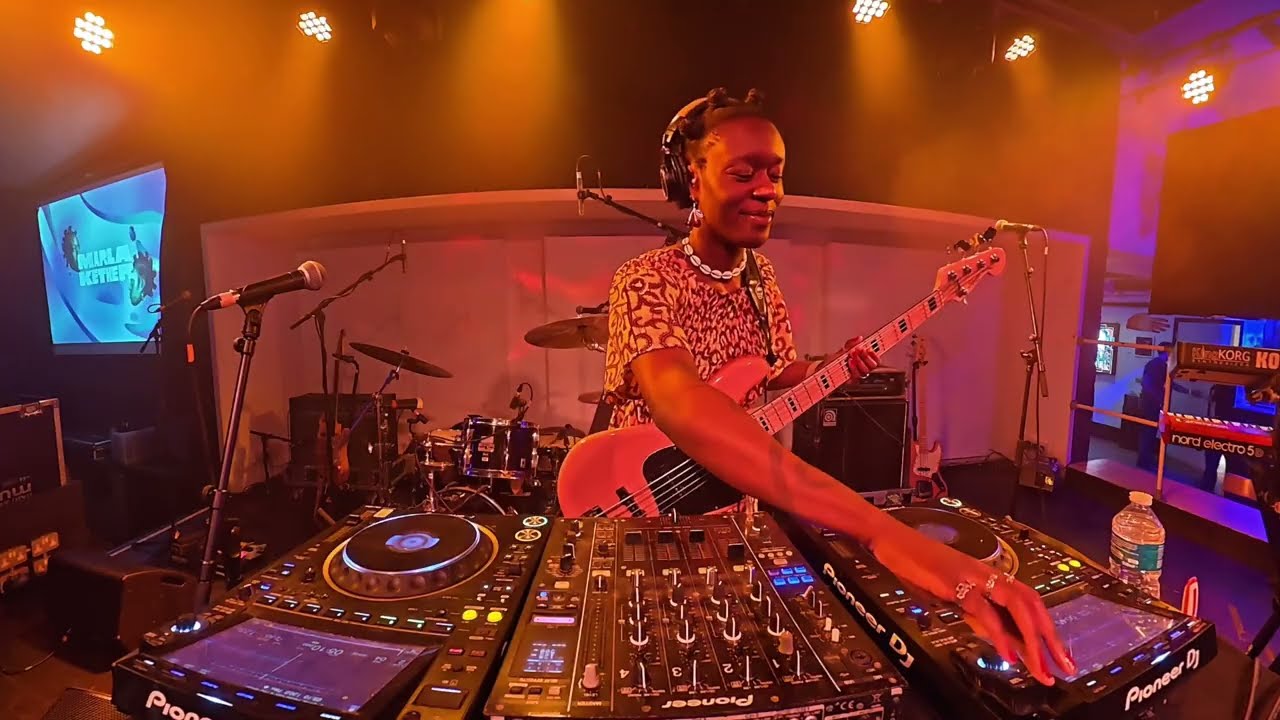
I’m drawn to bass-driven and percussion-led genres like batida, gqom, bubbling and UK funky. I’ve even developed a DJ/bass hybrid setup, which is what I used when supporting W.I.T.C.H
Has your career as a bass player influenced your DJ Set?
Absolutely. I’m drawn to bass-driven and percussion-led genres like batida, gqom, bubbling and UK funky. I’ve even developed a DJ/bass hybrid setup, which is what I used when supporting W.I.T.C.H around the UK, so my bass playing directly informs my sets in that sense too.
What was your biggest takeaway once you entered the gigging scene?
Be personable. There’s no point grinding to reach a standard you consider acceptable if you’re not pleasant to be around. When you’re on the road for weeks at a time, it’s important to be in the company of great people.
How have different cultures influenced your music?
My music is primarily influenced by Brazilian and West African music. A track like In My Corner ft. K.O.G has elements of soukous, a genre I grew up listening to through my Congolese parents. I also make Afro house tracks.

The African continent is so rich in music that it’s hard not to draw inspiration from it, and I’ve not encountered a Brazilian genre I dislike: baile funk, brega, baião, MPB, forró, samba, maracatu – I love them all. That love naturally feeds into my music.
I’ve not encountered a Brazilian genre I dislike: baile funk, brega, baião, MPB, forró, samba, maracatu – I love them all
Who were your early musical influences?
I was learning basslines from Nikolai Fraiture of The Strokes, Chris Baio of Vampire Weekend and Esperanza Spalding. I started uploading bass covers to YouTube about a year after I began, and they’re still up.
When I first started making my own music, I was heavily influenced by Deborah Scroggins of ESG. I’ve always been taken by how her basslines can say so little while saying so much.
Tracks like Step Off and Dance are prime examples of the power of a great riff: it doesn’t need to be overly complex. It’s an ethos I still carry into my production now, including on tracks like BTR2, which layers three different bass riffs.

What was the first bassline you ever learned?
I’m not sure if this was truly the first, but once I started bass lessons I remember being taught Money by Pink Floyd. It’s quite a bold choice for a beginner, giving them a tune in 7/4, but it definitely expanded my musical horizons.
Do you have a go-to bass or do you like to experiment?
My go-to is my Fender Squier 5-string Jazz Bass that I bought in 2017. The strings haven’t been changed since 2019!
What is your ideal bass tone?
I love the rich tone provided by flatwound strings; I use D’Addario XL Chromes.
Do you have any advice for aspiring bass players?
Be kind, be punctual, don’t get bogged down in comparing yourself to others and believe in the ubiquitous qualities that you bring!
- Blessing is out now.