


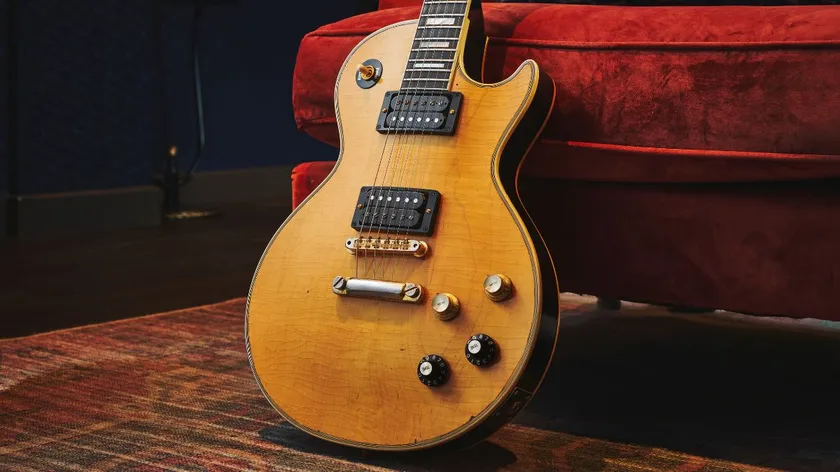


When it comes to Mike Campbell’s sound in and out of Tom Petty and the Heartbreakers, there’s a common thread – his 1951 Fender Broadcaster, a guitar he picked up in 1975 at Nadine’s Music in Hollywood for $600.
Given the sheer number of iconic tracks this guitar has appeared on, it’s safe to say it was worth the investment.
“All my Teles sound good,” says Campbell, who has his own namesake Fender Stories Collection Red Dog Tele. “But that one is still bright and has a nice midrange. It’s got a warm tone underneath there, and that makes it sound different from other Teles.”
You can decide for yourself as you check out Campbell’s picks for his five favorite Broadcaster-enriched Heartbreakers tunes.
1. American Girl
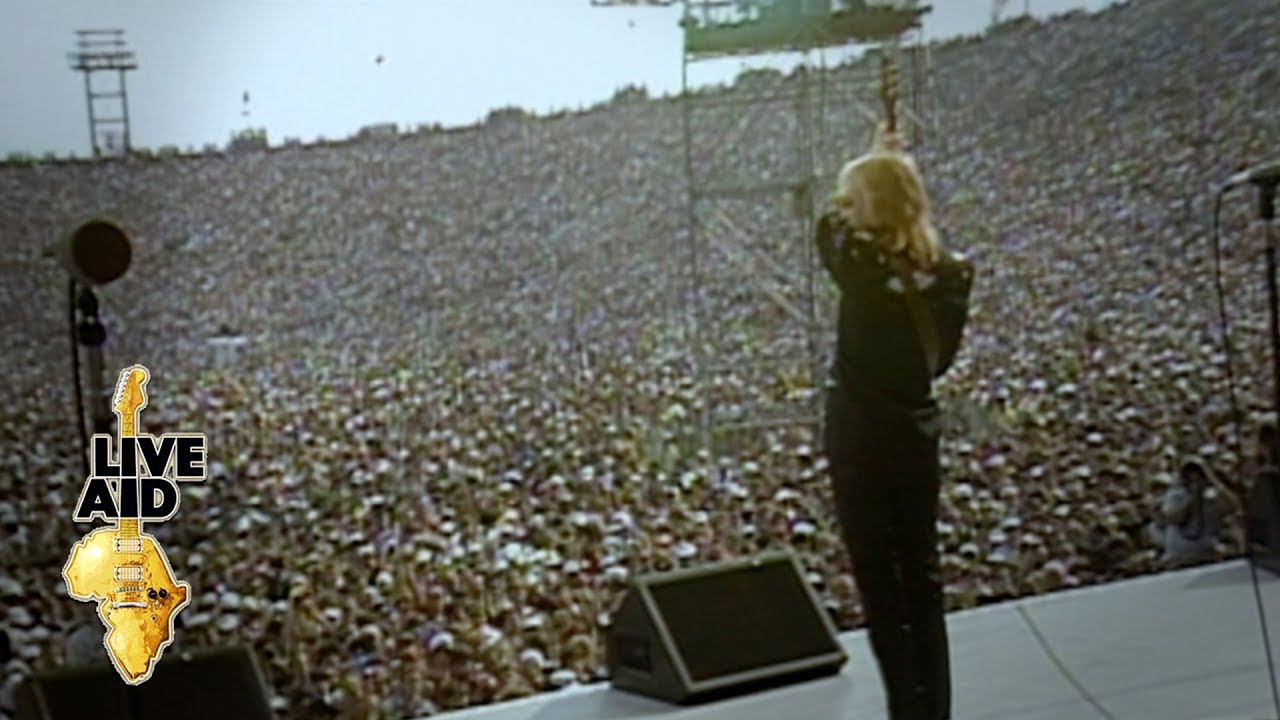
We didn’t have a 12-string, but we wanted one on the song. Well, I did! I took my Broadcaster and played octaves – because a 12-string is multiple notes and octaves on one string. I tried to simulate a 12-string on that riff throughout the song. At the end, where I do that triplet thing – that was an afterthought.
I didn’t like it, but Tom said, “No, it’s great. Now you’ve got to double it.” So I doubled it, and that became the end of that song. American Girl is kind of just the sound of that guitar. It was the harmonics between the rhythm and the Broadcaster on top of it. That became the Heartbreakers' sound.
2. Breakdown
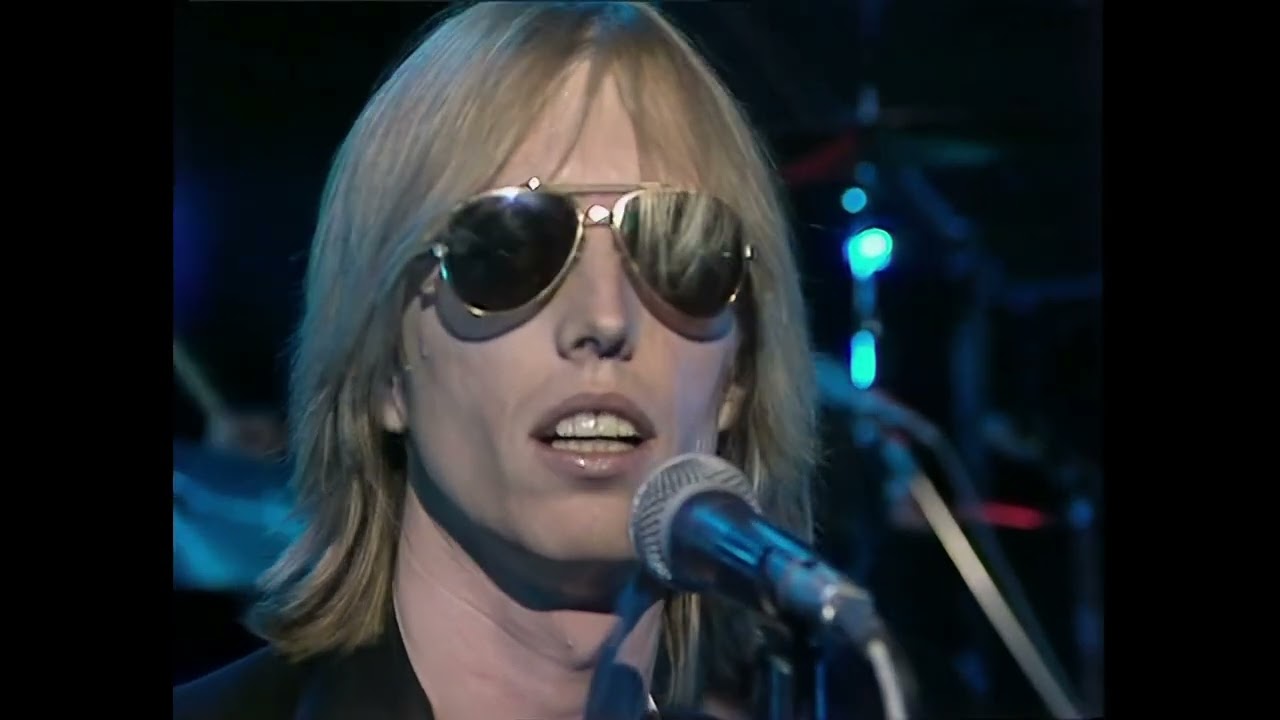
We had only two guitars during the first couple of albums. Tom had been playing bass up until then, so I let him borrow my ’64 Strat, and that was his guitar for the first few years. Then I got the Broadcaster and, eventually, a Les Paul. But with Breakdown, all we had was my Strat and the Broadcaster.
It was about a six-minute take one night at Shelter Studios in Hollywood. I said, “Let me put some guitar on it.” It didn’t have the lick; it was just the chords, so I noodled for six minutes – and then I got bored. I couldn’t think of anything, so I picked up a slide and played that lick.
I didn’t think much about it and went home. An hour later, the phone rang. Tom said, “You’ve got to come back. We want to put that lick you played at the end at the front of the song.” I got up, drove back down, and I had to hear it to remember what it was and learn it. I ended up playing it without the slide, but I played that melody. That became the hook of the song.
3. Mary Jane’s Last Dance
I think I had my Ampeg Rocket set up in the garage while we were working with [producer] Rick Rubin. Tom picked up my Broadcaster. He was working on a rough idea for the song, and he just started playing that rhythm through the Ampeg. That’s what ended up on the record – the sound that set up the song.
The Broadcaster just keeps popping up throughout our whole career! It was like, “What goes here? The Broadcaster will work!” It’s a workhorse. But yeah, “Mary Jane” was Tom playing the rhythm on the Broadcaster, and I played a goldtop Les Paul against it, which created that sound.
4. You Wreck Me
![Tom Petty - You Wreck Me [Official Music Video] - YouTube](https://img.youtube.com/vi/-3aGZZueg08/maxresdefault.jpg)
You Wreck Me was just a bolt of adrenaline. I was writing it in E, and I got bored with it. So I put a capo on the first fret just to change the tone a bit, and I got those three chords.
It was all written in the key of F with a capo on the first fret. It’s just open chords like that on the Broadcaster – but they sounded really raunchy, full and exciting.
5. Here Comes My Girl
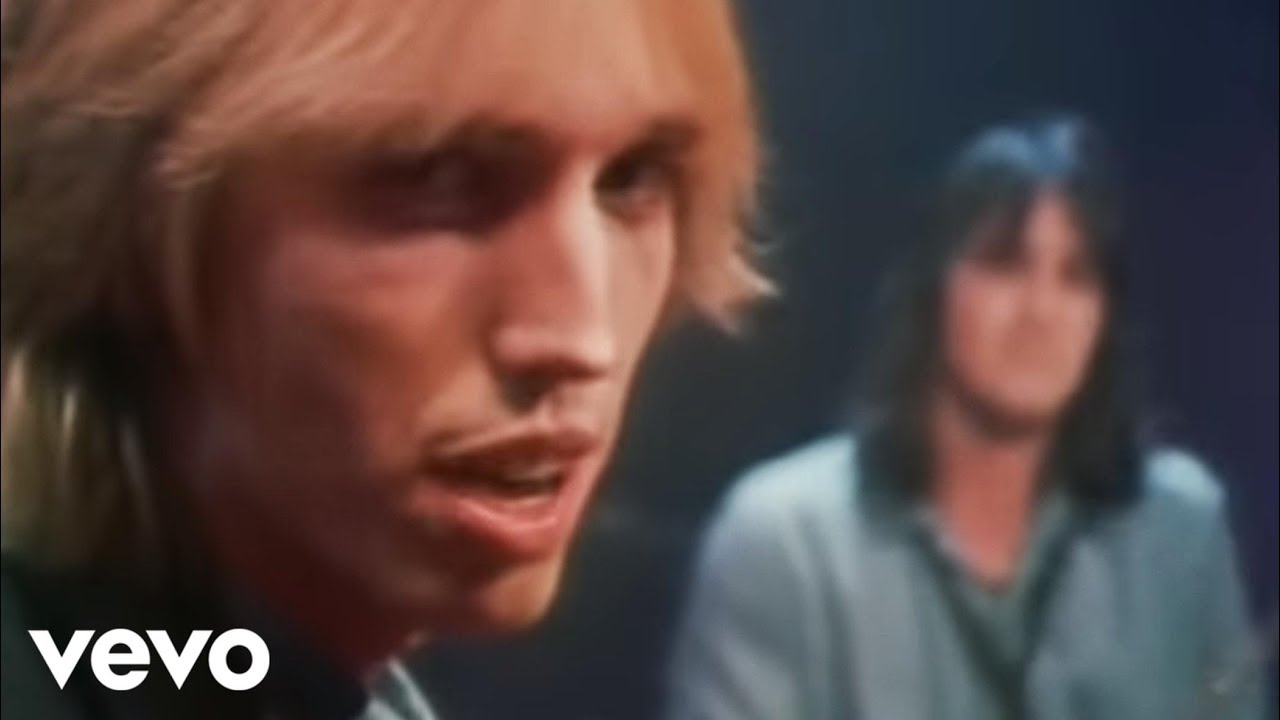
When we played this one live, I used a 12-string, but in the studio, I used the Broadcaster and doubled it for those suspended chords. The cool thing about the Broadcaster is that you can play a chord, and if you’re set up right, you can hear every string clearly.
On Here Comes My Girl, we needed the clarity of those chord suspensions going up. And it couldn’t be cloudy because you have to hear each string ring clearly.
So it was written and recorded on the Broadcaster, and then it was doubled here and there. So, yeah, it’s a good guitar. Talking about it makes me wanna go play it!
- This article first appeared in Guitar World. Subscribe and save.

