


When Devo arrived out of Akron, Ohio, the world didn’t know what to do with them. After all, Ohio was part of the so-called American ‘Rust Belt’, an area known for adoring acts such as KISS, Ted Nugent and Grand Funk Railroad.
But Devo, with their weird guitars and even weirder music and looks, weren’t like those artists. In fact, they were deliberately something else entirely.
The band comprised guitarists Bob Mothersbaugh and Bob Casale, bassist Gerald Casale, vocalist/keyboardist Mark Mothersbaugh, and drummer Alan Myer.
“We didn’t like the arena rock kind of sound,” Bob Mothersbaugh tells Guitarist. “We wanted to make fun of it. We wanted to do anything but arena rock. We just wanted to do anything weird.”
And the band did just that – but not without consequence. “We were very misunderstood,” says Bob. “We didn’t try to produce hits… we wanted to be artistic. We’d play around Akron and people hated us!”
He recalls: “In the Devo documentary [streaming on Netflix], there’s footage of what it was like. People hated us, bullied us, threw stuff at us and even threatened to beat us up. But they didn’t leave… we knew we might have been upsetting them, but we had something.”
Although Mothersbaugh and company wanted to create unconventional music with an off-kilter aesthetic, his influences were decidedly run-of-the-mill. “I had favourite guitar players. Players like Chuck Berry, George Harrison, Jeff Beck and Muddy Waters.”
Those influences were not unique, but Mothersbaugh soon found that no matter the influence, his mind and body wouldn’t let him be anything other than himself. “I never took lessons,” he says. “I’d play what I felt. And when I tried to play those players’ parts, I always sounded like me. And now, I’ve been doing that for long enough that people try to emulate me! [laughs]”
It’s not just about longevity, though, as Mothersbaugh has played a huge role in the success of new wave music in general, as well as its adjacent guitar stylings. One listen to Devo’s first four records – 1978’s Q: Are We Not Men? A: We Are Devo!, 1979’s Duty Now For The Future, 1980’s Freedom Of Choice, and 1981’s New Traditionalists – will tell you that. The records contain far-from-arena-rock-but-still-halcyon hits, a cover of The Rolling Stones’ (I Can’t Get No) Satisfaction, Girl U Want, and Whip It, among others.
And then there are the records that came after – 1984’s Shout, 1988’s Total Devo, 1990’s Smooth Noodle Maps, and the latter-day – and probably final Devo – record, 2010’s Something For Everybody. These records all proved critical to establishing Mothersbaugh’s legacy. The same can be said about his partner in guitar crime, Bob Casale.
Sadly, Casale passed away in 2014 and so Josh Hager joined the ranks, holding down the fort with style and grace. To Hager’s credit, Mothersbaugh calls him “a good player,” while joking… or lamenting the fact that many of Casale’s off-the-rails rhythm parts have fallen to him to execute, such as the idiosyncratic licks within Devo’s rendition of Satisfaction.
In August this year, Bob Mothersbaugh will be 74, but he’s not slowing down as Devo hits the road in the States, with UK dates coming in June. While he reveals that getting ready for gigs is tougher these days, he will “play just enough so he’s not in excruciating pain” on tour. “I’ll rock till I drop,” Mothersbaugh says.
Elsewhere, the band – whose current line-up is now Bob and Mark Mothersbaugh, Greg Casale, Josh Hager and another relative newcomer (who’s been with Devo since ’96) drummer Josh Freese – are surging after the recent Netflix documentary, Devo, shone a light on the band.
With a new generation of fans loving the band, Mothersbaugh is thankful: “As soon as we walk out, people are cheering,” he says. “I’m lucky to go out and do that every night. We’re having a resurgence.”

This has not caused Mothersbaugh to rethink his playing but to double down on what he’s always done, aka the thing that makes Devo so damn lovable in the first place.
“I think of my guitar like a shovel,” he says. “I’m just digging ditches with the rest of the band. I just play whatever there is and see what I can do to make it sound good.”
Devo came of age in the ’70s and presented an alternative to classic rock, which you almost seemed to be making fun of.
It’s funny… yeah. I always think back on that and it was just like a groundswell. You know, there were all these bands that weren’t doing arena rock, like the Ramones, the Sex Pistols, Blondie and the Talking Heads. Everything was cool for a short while.
If Devo were to land today and not in the ’70s how do you think it would go?
I think we would be well received with a larger audience because of the internet. I’d like to try it.

Early in Devo’s career, you and Bob Casale were a formidable guitar duo. But you were songwriters first. How did you bounce off each other?
Bob Casale was a great guitar player, but he didn’t like to play leads, so I got the job
Bob Casale was a great guitar player, but he didn’t like to play leads, so I got the job. Often, I would play both guitar parts on the album, and then we would work out who played what live. Bob was an easy person to get along with and one of the funniest people I’ve ever met.
He was just a great bandmate. [Our dynamic] came really naturally. He didn’t play leads. But you know, there’s a difference between playing good rhythm parts and then playing a lead where you don’t know where it’s going, you know? So he didn’t play many leads, but the big thing was we wrote songs.
What gear did you use for songs such as Satisfaction, Whip It and Girl U Want?
For Satisfaction, I used a Gibson L6-S guitar and an Acoustic model 470 solid-state amp. For Whip It and Girl U Want, I played the Ibanez ‘Cloud Guitar’ through a tube amp that Roland was developing; they loaned me a prototype. And Bob Casale is the one who came up with the riff for Satisfaction.
We were doing a tour where we did all the really early stuff. Bob had passed, so I played his part on Satisfaction and it was really hard every night, because I hadn’t played it every night for years [laughs].
Devo is known for oddball guitars. Was there a reason for that as far as sound goes, or was it more for aesthetic purposes?
No reason as to the sound… I just wanted to look different! Back in Akron, I saw a La Baye 2X4 guitar in a pawn shop and decided I had to play it live. It didn’t sound great or play great, but it was cool to play it on stage at club gigs in Akron and Cleveland.
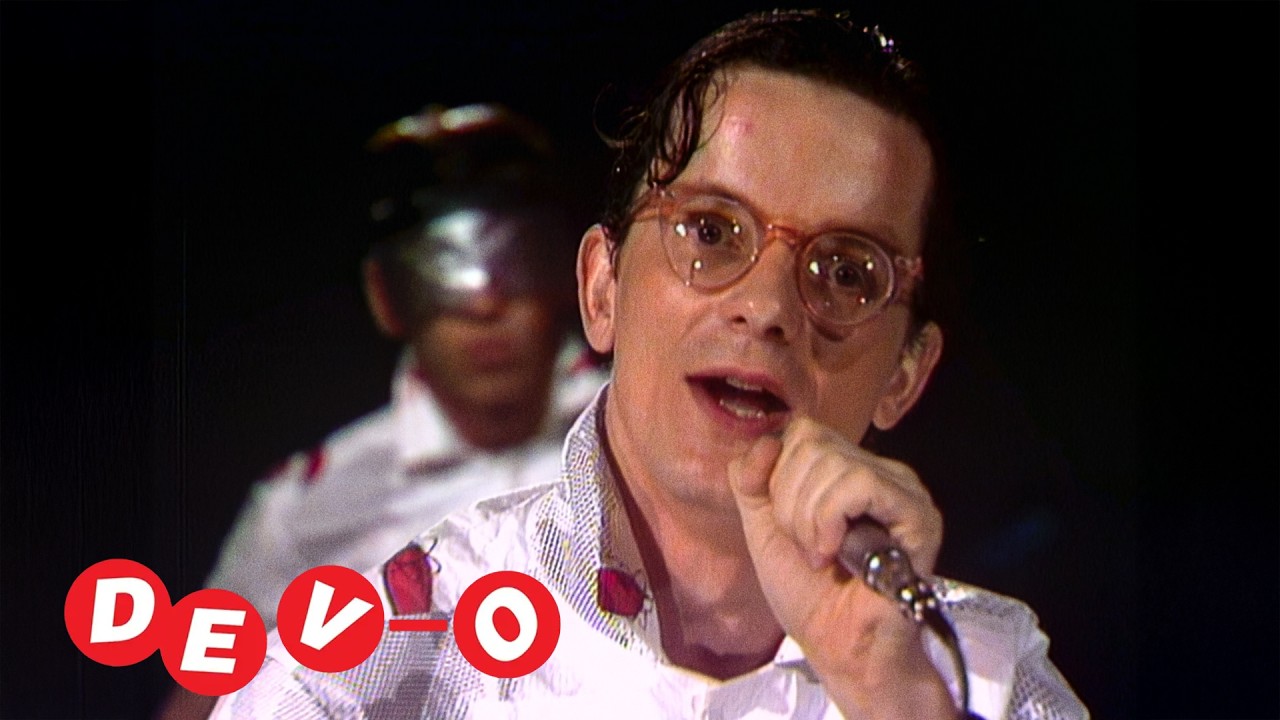
After Whip It became a big hit, along with its kooky music video, how did your life change?
“We got to do whatever we wanted for a couple of years [laughs]. But with the video, we actually made that because the song was taking off. We just thought Whip It was going to be another song on the album and actually expected Girl U Want to be the hit.
Did you have a tried-and-true process for tracking guitars that you can look back on as essential to Devo’s albums?
I knew very little about the tracking process. In the basement in Akron, we just stuck a Shure SM57 in front of the amp. Our first four albums were recorded with producers and engineers who knew how to mic an amp.
You often used solid-state amps in the studio and live. Why did you favour those as opposed to tube amps?
I didn’t know much about guitar amps, and the Acoustic 470 had a five-band graphic EQ, which I would configure in patterns for each song. And the cabinet had 2x12-inch speakers and a high-frequency horn. I later disconnected the horn – too much high-end for me.
What gear do you rely on these days while touring?
At some point, I wanted a guitar that felt good. So what I’m playing now is a Les Paul that’s a Gibson Custom Shop recreation of Mike Bloomfield’s ’59 Les Paul.
I’ve one of those, and I’ve a Line 6 modelling amp, so that we don’t have to have amps with speakers. But apparently, a lot of places have stuff under the stage, and that was affecting and making noise, so our sound guy said, ‘Bob, you gotta get a guitar with humbucking pickups…’
I went to the guitar store, and I was just like pulling down all these Les Pauls, and going, ‘Boring. Boring. Don’t like this…’ And then I grabbed the Mike Bloomfield one and I was like, ‘Oh my God, this feels perfect!’ So I bought it and then took it home, plugged it in and said, ‘Oh, and it sounds perfect, too!’ I just wanted something that feels good in my hands.

With the amps, I like a really clean sound, where I can plug the Les Paul in, and go, ‘Oh, yeah, that’s the Les Paul sound.’ And then I can grab my Tele, plug it in, and go, ‘Oh, yes, there’s the Tele sound.’ I appreciate all of that.
But like I said, I don’t really use amps that much when we’re on stage any more. I mostly just use amps now when I’m back in LA and I’m working on TV shows, you know, mostly cartoons. But it really just takes too long to mic up an amp, so even then oftentimes I just plug right into the computer.
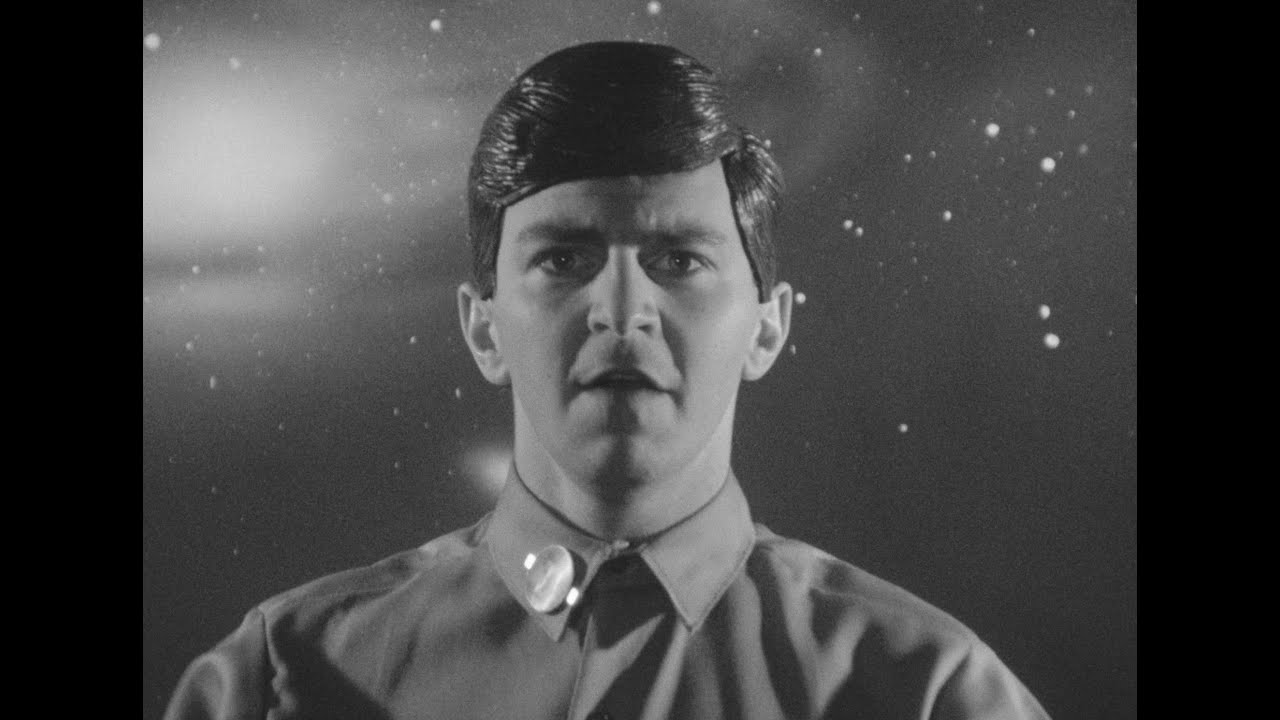
Talking now about the recent Netflix documentary, Devo, has its success altered your view on the band’s legacy or your influence as a guitar player? It offers a pretty full-frontal look at the band’s journey.
The documentary has allowed people some insight into what Devo was doing all these years. It has not altered my viewpoint on legacy or influence as a guitar player. I’m still doing what I’ve always done.
[Director] Chris Smith did a good job with it. He found a lot of really old footage that I’ve never seen or just didn’t remember. It was a lot of fun to watch. And, really, it’s a feelgood kind of documentary, you know? I felt good at the end of it. And that’s what everybody else has told me, too.
As someone who was put through the wringer early on and came out the other side a huge success, what’s your best piece of advice for would-be guitarists or bands looking to succeed?
I didn’t know I was in the wringer at the time; I just thought record companies were insane
I didn’t know I was in the wringer at the time; I just thought record companies were insane. I’ve always enjoyed writing music and playing guitar, so being successful is an added bonus. If you don’t enjoy the process, you’re in the wrong business.
Devo seems to have no intent to stop. What’s next and why, in your eyes, does the world need groups like Devo?
You’re right! Devo has no intent to stop. And starting in April, we will be touring the world. Devo is like the musicians on the Titanic who kept on playing as the ship was sinking. We are just trying to do our part.
The documentary has brought a new audience to our shows. I think people needed reminding about how fun Devo is live. I take nothing for granted and am truly grateful for Devo’s continued success.
- The Mutate, Don't Stagnate Tour is underway. See Devo for dates and ticket details.
- This article first appeared in Guitarist. Subscribe and save.

