


After Tom Petty unexpectedly died in 2017, his longtime partner in guitar and songwriting crime, Mike Campbell, found himself at a loss. But since then, he’s picked up the pieces and leaned heavily into his own band, the Dirty Knobs.
“Of course, I miss the Heartbreakers, and I miss my brother… that was very sad when that happened,” Campbell tells Guitar World. “But I’d always had it in the back of my mind that if the Heartbreakers ever retired, I would focus on the Dirty Knobs and make that my purpose.”
Campbell continues to expand on that purpose with The Dirty Knobs' fourth record, Mission of Mercy. “I named the record that because I kind of feel like The Dirty Knobs are on a mission of mercy,” he says. “We’re trying to bring a little relief from the wicked world we all live in.”
Songs like I Remember, Mission of Mercy, and Vicious Hangover do just that. But Campbell isn’t reinventing the wheel. “I stick with what I’m comfortable with,” he says. “I’ll try a new guitar or amp, but if I’m recording and working on a record, I don’t want to be bothered with too many choices. I want to focus on the song and the performance.”
For the most part, as he did with the Heartbreakers, Campbell leans on his beloved Fender Broadcaster and his gold top Gibson Les Paul, with a hint of Rickenbacker 12-string mixed in. “It’s whatever inspires you,” he says. “I’ll look at a guitar, and I’ll think, ‘I wonder what this chord would sound like on that guitar…”
Gear aside, when it comes down to it, Campbell is grateful to still be out there doing what he loves. “We, The Dirty Knobs, play these theaters; we have some rock ‘n’ roll soul healing together,” Campbell says.
He continues, “That’s the only way to get that in your life, you know? It has to be through that. So, that’s what I live for, and that’s what makes me happy. I’m very grateful to be where I am. I survived the [Tom Petty’s] death, moved on, and I keep making music.”
Do you still always write on guitar?
It used to always start on guitar, but lately, since I’ve been writing on my own, sometimes it’ll start with piano, or no instrument, and just in my head with some lyrics. I’ll hear something, and it’ll trigger something I heard in the Sixties, or whatever. Next thing you know, I’m writing a song.
Mission of Mercy is a real homage to Brian Wilson, who is a big hero of mine. And so, when I was writing that song, it was with him in mind
The first single, I Remember, was written on piano, right?
Yeah, that’s an example of not writing on guitar. I’m not good on piano, but I can find chords. That song was just chords… on piano, you can have a bassline, and then the melodies on top, so it’s a little fuller than just a guitar chord. And then, I wrote the rest of the song over that.
I really like Let Me Back in My Dream. How did that come together?
I like that song a lot, too. I kind of dreamed that song up… no pun intended. [laughs] A lot of times, you can have a dream, and it might be a really good dream, and then you wake up, and you want to remember the dream and go back into it because you were enjoying it!
But it just vaporizes, and it’s gone if you don’t grab the idea right away. So, that’s what inspired that. And then, the music was just quickly written, probably, within five minutes. It’s just some loud chords and some unique chord changes in the verse. It’s mysterious.
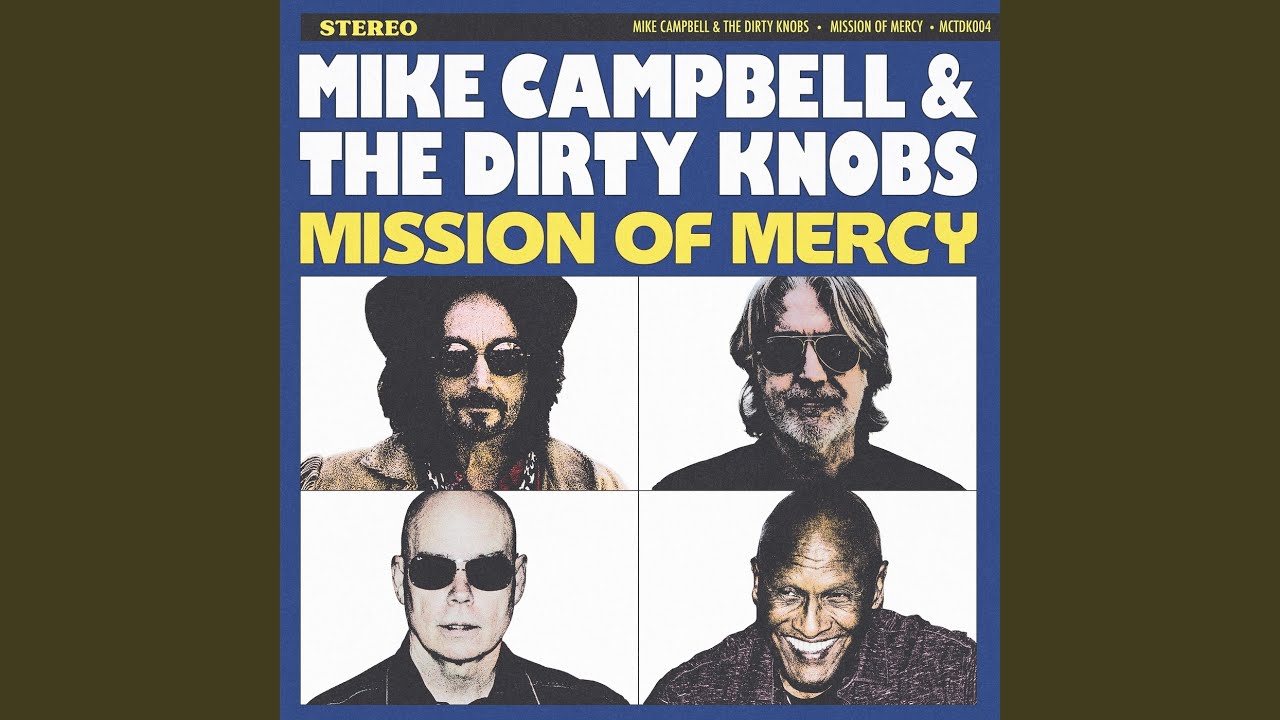
How about the title track, Mission of Mercy?
I had that song in my head for a while in my tape library. I’d forgotten about it and never pursued it because I thought it wasn’t rock ‘n’ roll enough. It’s a real homage to Brian Wilson, who is a big hero of mine. And so, when I was writing that song, it was with him in mind with those chord changes and the background vocals.
Is that style of music more ingrained in your songwriting than people realize?
I don’t know what people realize, but it’s certainly buried in my history of listening to music. I grew up on that stuff, but I like new music, too. I'm occasionally inspired by new music, but mostly, I get frustrated with it because it all sounds computerized, and there’s no magic in the songs like there was in the Sixties.
Is that to say that when it comes to your music, you’re all analog?
No, I’m not all analog. I use Pro Tools, which I’ve used for a long time, or at least since they got the sounds together. Now, with that, it’s hard to tell if you’re on tape or digital if you record it properly. But I don’t do a lot of technical stuff with Pro Tools; I just use it to record, rewind, and play, like a tape recorder.
One of the more fun songs on the record is Vicious Hangover. How did that one come together?
That’s a perfect example of spontaneity. The band was coming over that day, and right before they got into the studio, I thought of this idea, which was just real simple, and I threw the chords together with rock ‘n’ roll energy. But I didn’t have it sussed out, so they came in, we changed the chords around, and we were able to capture it in one take.
[Guitarist] Chris Holt plays the song on that song, right?
Yeah, he did. It was all live, and the first time we played it through, I said, “Just go for it.” And he’s that good and has just been a breath of fresh air for the band. He’s so talented on so many levels, and brings amazing harmonies, doubles my voice, and can play strings and keyboards, too. He’s also really easy to get along with.

What’s your tried-and-true key to finding guitar tones these days?
Good question! I don’t spend a lot of time looking for tones. I get an amp setup that I like, starting off with the gain that’s right for the song, and then I try a couple of guitars. So, whichever guitar seems to fit, I start with that, and then if I get to a point where it needs to be beefed up, I might try a boost pedal or a wah. But I don’t do a lot of pedals. I like to get the tone from the guitar and amp if I can.
What was your main rig for this record?
For this record – and the last couple of records – I’ve reconnected with an old amp that I used early in the Heartbreakers, an Ampeg Rocket. I used that for the whole album, and Chris used a Fender Princeton. And for guitars, I gravitate toward my Broadcaster, my Les Paul, and occasionally, a Rickenbacker twelve-string.
What led you to reconnect with the Ampeg now?
It was just in my closet, and one day I pulled it out, turned it on, and thought, “Wow… this is a sound that I’ve been missing.” It sounded really good, and I sort of stumbled back into the room, and there it was. [laughs]
Do you put much stock into the so-called “connection” with a particular guitar, or amp, or can you write on any guitar, at any time?
A lot of times, the instrument, if you really get in tune with it, it will speak to you
That’s a deep question. If you get in touch with your instrument, and it speaks to you, it'll tell you what it wants to play a lot of times. If you’re doodling around, there will just be certain things that sound good on this guitar, and you’ll go back to it, and it'll become a direction for a song. So, a lot of times, the instrument, if you really get in tune with it, it'll speak to you.
Considering the years you spent with the Heartbreakers and the void you found yourself in after Tom’s death, what does the positive reception toward The Dirty Knobs mean to you?
Well, it’s my life. It means a lot. The good thing about The Dirty Knobs is that we started out playing in little bars, and now that we’ve done relatively well, we can play theaters, which I love. My goal was to get out of the bars and play theaters, and we’ve gotten there now.
I mean… it’s not a money-making thing, like the Heartbreakers, which was a big financial success. With this, I’m doing okay, but I’m doing what I love to do. Nothing makes me happier than taking this band into a theater with a group of people and having a moment.
- This article first appeared in Guitar World. Subscribe and save.

