




When guitar players hear the words “blues power,” they will usually cast their minds back to the late Sixties and early Seventies, when trailblazers like Albert King and Eric Clapton were using such terms to convey the emotional gravitas as well as the historic and humanistic weight deeply encased within the music.
All these years later, out of the younger generation, it’s Jared James Nichols who has been using the phrase to carry that legacy on, telling stories and hitting people in the heart with every strum and bend.
The singer/guitarist’s latest album, Louder Than Fate, carries many of his signature trademarks, while also surprising listeners by exploring new sonic ground that crosses the line past southern rock and into country.
That’s not the only way he’s chosen to step things up this time round – part of the album was recorded at Studio 606, the private facility and creative hub owned by Foo Fighters, with super producer Jay Ruston (Corey Taylor, Anthrax, Steel Panther) bringing his many years of expertise behind the desk.
Then there are the external producers and songwriters that Nichols enlisted to help avoid some of the common trappings and obstacles that almost every blues player faces in this day and age.
All in all, this is the most well-rounded Jared James Nichols album to date, taking us on a journey unlike anything he’s released before.
What did you learn from working with writers and producers like Roger Alan Nichols and Skip Black?
I’ve been trying to prove myself constantly because when you get billed as some hotshot player, people will stand in front of you with their arms crossed as if to say, ‘Prove it’
I think it was Brad Paisley who said how guitar players often cater their songs towards the solos or the riff. It’s a hard habit to break, because you make a structure and then play the shit out of it. I’ve been trying to prove myself constantly because when you get billed as some hotshot player, people will stand in front of you with their arms crossed as if to say, “Prove it”.
There’s this whole stigma around being the guy who can show everyone he can play. This time, I was rubbing elbows with people who had worked with some of the world’s greatest musicians. And not only that, these people just want to write songs.
They’d be like, “Oh yeah, another guitar player”. They didn’t care. Walking into those rooms gave me a completely different mindset. It was a challenge because I was working with people more experienced than me.
This record feels like a huge learning curve for you.
Dude, I got to do a huge chunk of it at Studio 606. Our drummer was using Taylor Hawkins’ kits. I was playing through Dave Grohl’s cabinets. We were going through the Sound City board. There was such a vibe in there. I felt like I was getting schooled the whole time.
One thing I learned is that you don’t need as much gain as you think you need for riffing. I started playing with my gain decked and thought it sounded cool. But when I walked into the control room, Jay was like, “Have you got a pedal on?” and told me to turn it off.
I was a little scared at first, but when I did, I could hear more of an old school vibe. Like if you listen to the classic stuff from the ‘60s and ‘70s, those Plexis aren’t as gainy as you might think. The tones were defined and muscular, but not washed out with overdrive and reverb.
At one point I had to ask myself, ‘Am I going to be able to do this?’ It was like showing a whole other side of music that I love but have never had the guts to do
So how did all of this affect how you actually play?
I remember working on a song called Looks Like That Felt Good. The Drop D riff is super easy, we kept it simplistic because I imagined myself in a venue playing with the drums.
Roger was the producer for that one and he kept hitting the spacebar, telling me to stop sliding into everything. Sometimes there are these things we do as guitar players – sliding makes things sound more slurred and bluesy, but some riffs need to hit straight. He told me to stop that and lose the vibrato.
Again, I was a bit unsure, but lo and behold his advice made sense. You learn things like that, which go a bit deeper than the big licks. It’s the little stylistic elements that fly under the radar, but when you pay attention, you’ll be glad you did.
Songs like Bending Or Breaking, Killing Time, and Show Me seem to showcase this whole different side to you.
That’s the thing about being in a room with people who aren’t into what you’re into. You learn more. It ended up being the perfect sauce. As an artist there comes a point where you have to let go of your insecurities. I did a lot of that on this record.
At one point I had to ask myself, ‘Am I going to be able to do this?’ It was like showing a whole other side of music that I love but have never had the guts to do.
Those dudes exist big-time in the country world and pushed me into finding my footing in stuff I wouldn’t have taken on without them. We’ve been playing these songs in the set and it’s great to see the change of pace. People have been like, “Damn, Jared’s not just ripping my head off for 80 minutes”.

There are, however, moments on this album where you still do. The first song, Let’s Go, has some Richie Kotzen-style barred pentatonic ideas.
I love Richie’s playing so much. I was lucky enough to tour with him in The Winery Dogs and we ended up hanging out a lot. I remember listening to him when I was 20 years old and thinking, ‘What the fuck?!’ And it’s the same with other legends like Paul Gilbert or Michael Schenker.
Whenever I tour with people like that, some of their licks end up in my playing. I just can’t help it. Even John 5, who is someone I’ve done over 100 shows with, ended up creeping into my playing because it was like we were drinking the same water.
Which of the new solos are you most proud of?
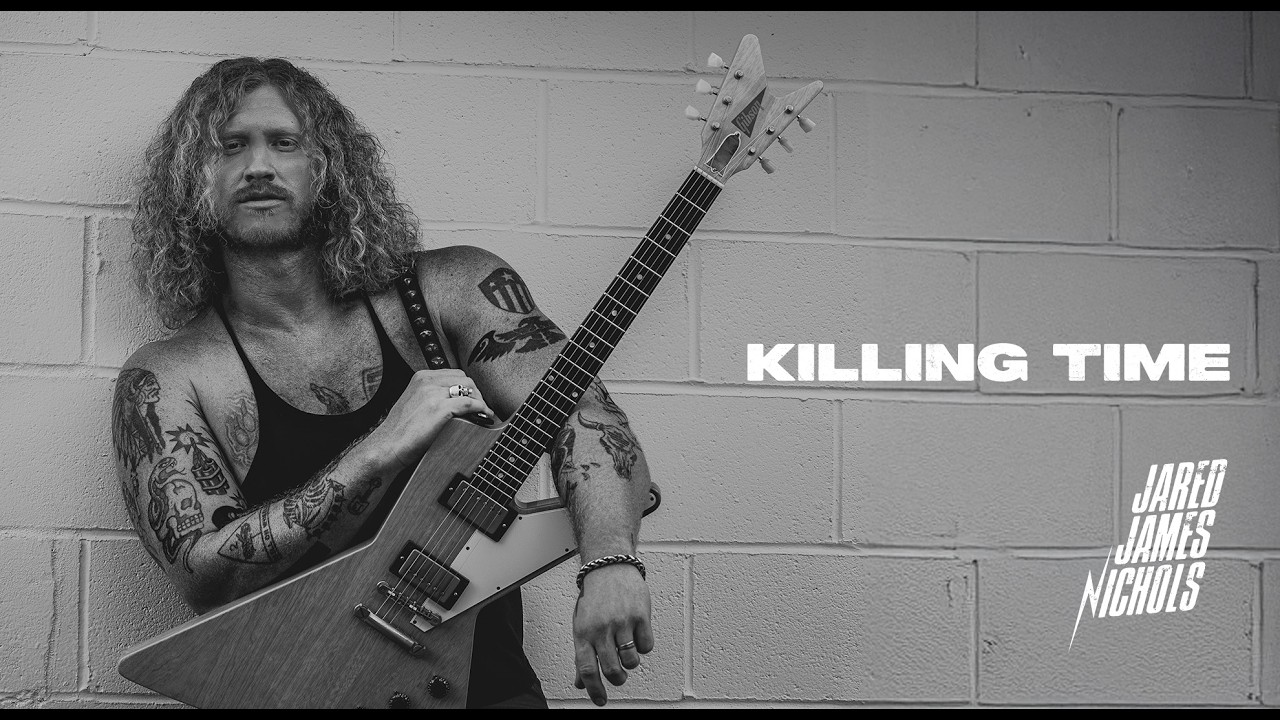
Nothing on the record was really contrived, it was all still from a shoot-from-the-hip mindset. But the solo in Killing Time was a first pass. I was listening to the backing track the night before, it’s this crescendo build in E Minor, just this basic thing. I started humming ideas that felt almost more like David Gilmour territory.
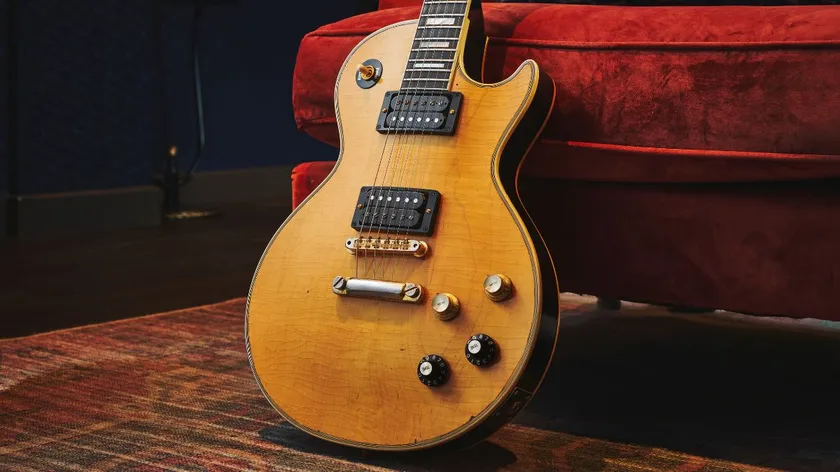
In the end, I played it through a 1969 Plexi with my Klon, using my Dorothy guitar, which is my really old Goldtop from 1952. The Klon was on with zero gain but I went to the amp and turned the volume all the way up.
I love solos that have some composition, these little waves of writing, but they also feel like they’ve been improvised. That’s where this one lives. It has the fiery spitball of “Cmon guys, let’s play”, but you can still hear how it follows the changes nicely.
What else are we hearing on this album? You tend to be quite minimal when it comes to gear.
It’s not a long list beyond the cable (laughs). I had the Plexi and this special amp from Blackstar that’s a one-of-one point-to-point handwired Series One. I was told they’d made it for Jeff Beck but for some reason they never got it to him. It’s more aggressive than the Plexi, like an old JCM800.
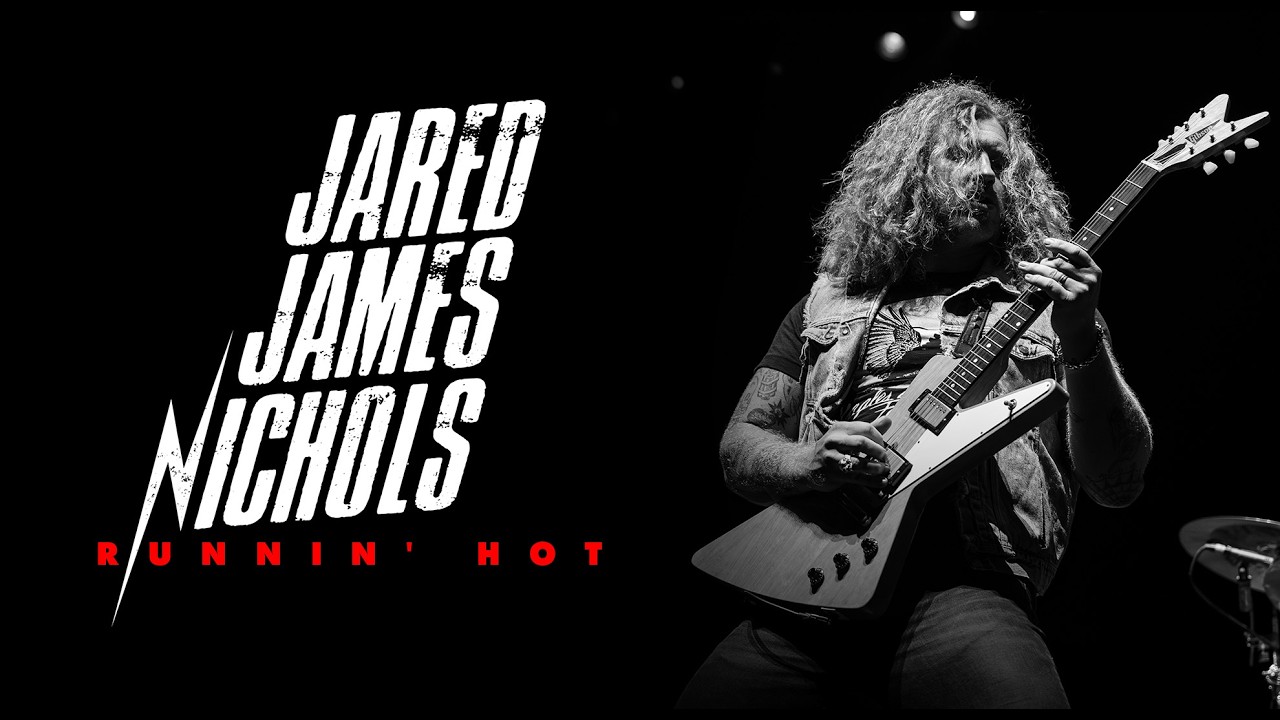
I used my Tube Screamer for a couple of things. For Runnin’ Hot, I borrowed this [Electro-Harmonix Small Stone] big box phaser from the early ‘80s. It gave some rhythms a bit more movement. The main guitars were Dorothy and this Korina Futura I got from Gibson for all the big-ass humbucker parts. I didn’t have to search much when it came to tone. It’s funny, I remember doing this track with Joe Bonamassa and he brought his whole rig over, saying to use whatever I needed.
I brought my Marshall head, Dorothy and my Klon and started testing out tones with my stuff before asking him what I should try. His answer was “I think you should stay there”. That was it. I try not to overcomplicate things.

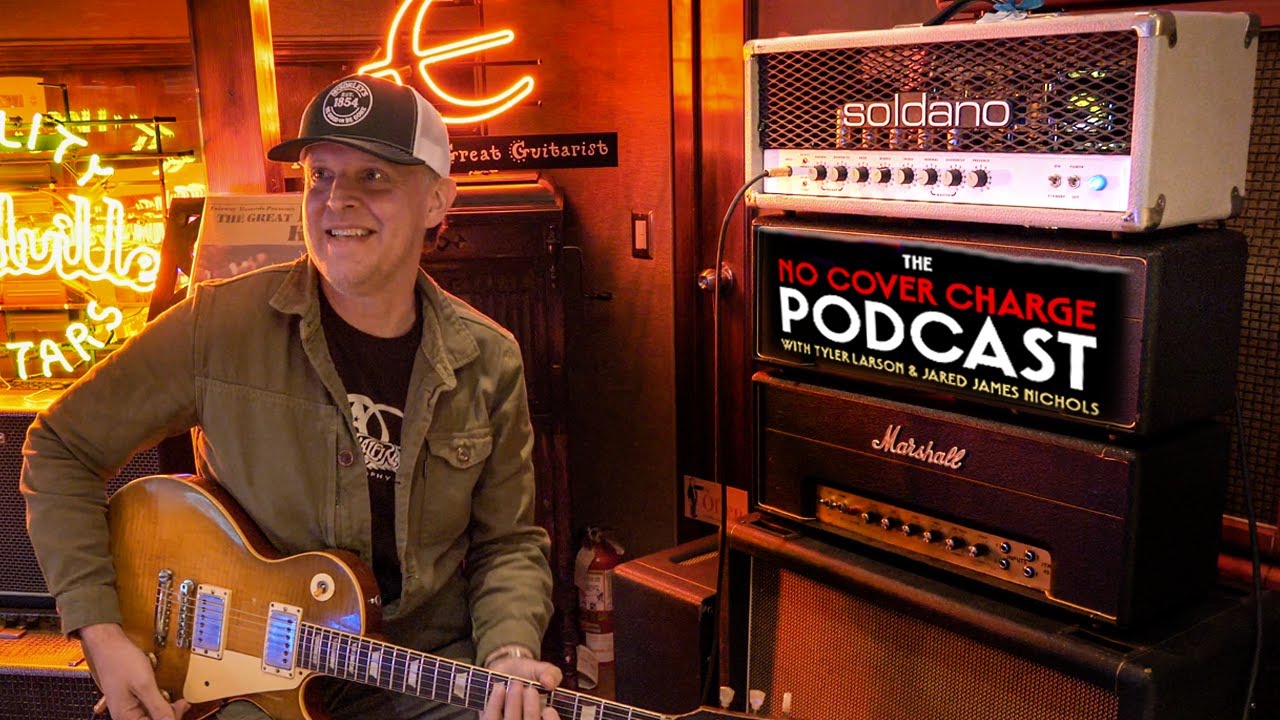
Speaking of Joe, you recently went to his house to film a video on Gary Moore’s 1989 Soldano SLO-100 head, which he’d recently acquired.
I feel pretty spoiled when I think about all the cool shit I get to be around
Joe must have balls of steel because when we got there, the amp hadn’t been serviced or even turned on. It literally just showed up in a shipping crate. It was a bit like finding a classic muscle car, sticking some gas in, and firing it up. Joe was cranking it right away with a 1959 Les Paul.
In the video you can see the power sizzle down, shut off, and then come back. It did that a few times. It’s like we were feeling Gary Moore’s spirit in the room. I feel pretty spoiled when I think about all the cool shit I get to be around.
I also did a video on Gary’s JTM45 Bluesbreaker, which another friend got at auction. I own Gary’s original Guv'nor pedal, so we used that with a 1959 Les Paul. Here’s the crazy shit, the power went out four times, which has never happened before. Then this horrible rainstorm came. Something weird and energetic happened. I got the chills and remember saying, “Dude, I think Gary Moore’s here.”
You posted a picture not long ago of yourself as a teenager wearing a Sabbath Bloody Sabbath shirt, proudly holding your first Les Paul in front of your bedroom Marshall rig. That kid has come a long way.
I wouldn’t change a thing. Every time I screwed up or took a wrong turn, from bands breaking up and me getting depressed or whatever, it’s all led to this path of understanding. Everything boils down to hard work. To be honest, I’m still that kid in a Sabbath Bloody Sabbath shirt holding the Les Paul in front of the Marshall.
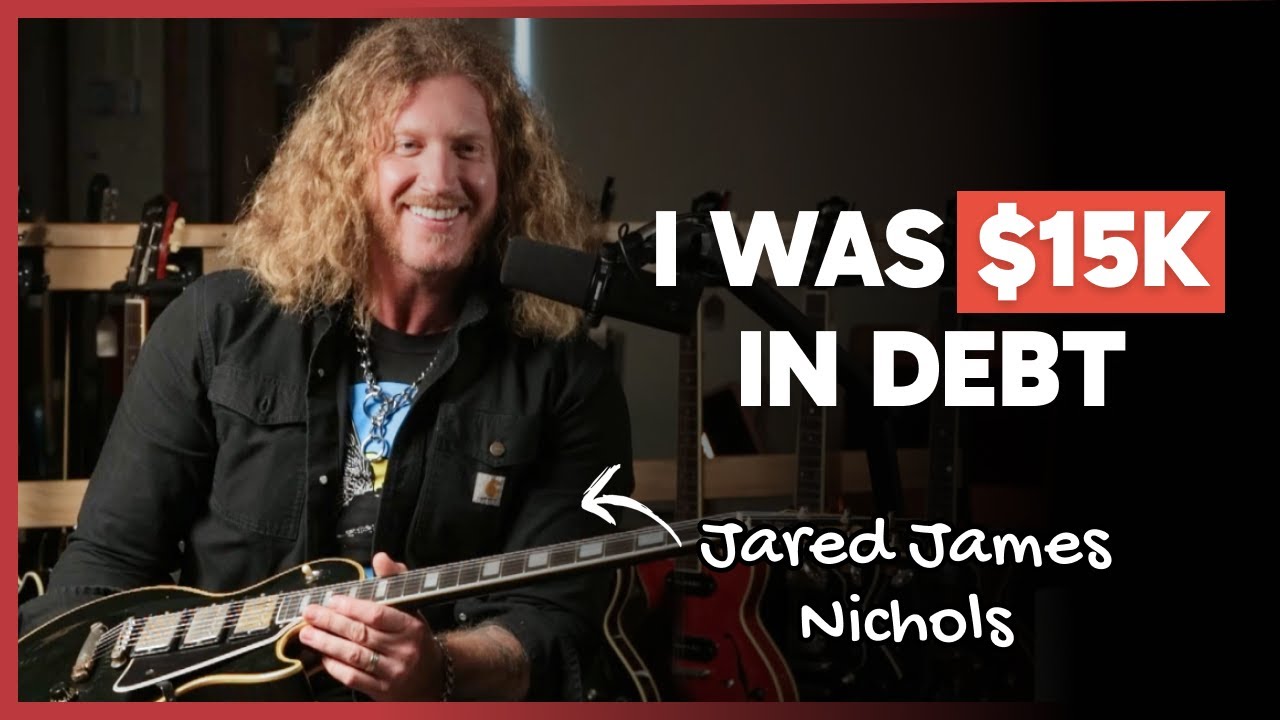
If I was able to put in the work and get to where I am today, then so can anyone. There were times were I was crashing on floors, living on 10 bucks a week with no gigs booked. I would walk around streets late at night trying to listen out for bands just to see if I could jam with them.
It’s easy to get discouraged. You might not be as fast as you like or have loads of followers online. But it just comes down to how bad you want it. Are you prepared to go through all of the shit to come out the other side? I stuck to my guns, playing the music that I love.
- Louder Than Fate is out June 6 via Frontiers
- This article first appeared in Guitar World. Subscribe and save.

