





Guitar World Verdict
This classic overdrive is just as relevant today as it was when it launched in 1981. It’s versatile, affordable, dependable, and incredibly easy to dial in – really, what more do you need in an overdrive pedal?
Reasons to buy
- +
Rock-solid build.
- +
Simple to dial in.
- +
Versatile drive sound.
Reasons to avoid
- -
Can get a bit fizzy if you push the gain too much.
- -
The pushed mids aren’t for everyone.
You can trust Guitar World Our expert reviewers spend hours testing and comparing guitar products so you can choose the best for you. Find out more about how we test.
What is it?
If there was ever one pedal that the vast majority of players have owned at some point, it is the humble Boss SD-1 Super Overdrive. In fact, I’m not even convinced people buy them; they just seem to materialize out of thin air the moment you decide you want to turn your hand at the electric guitar. All joking aside, this famous yellow box is one of the most popular, most enduring stompboxes in the world, being a firm favorite for many guitarists across genres and generations – but how does it actually hold up to the standard of today? Well, that’s what I’m going to find out.
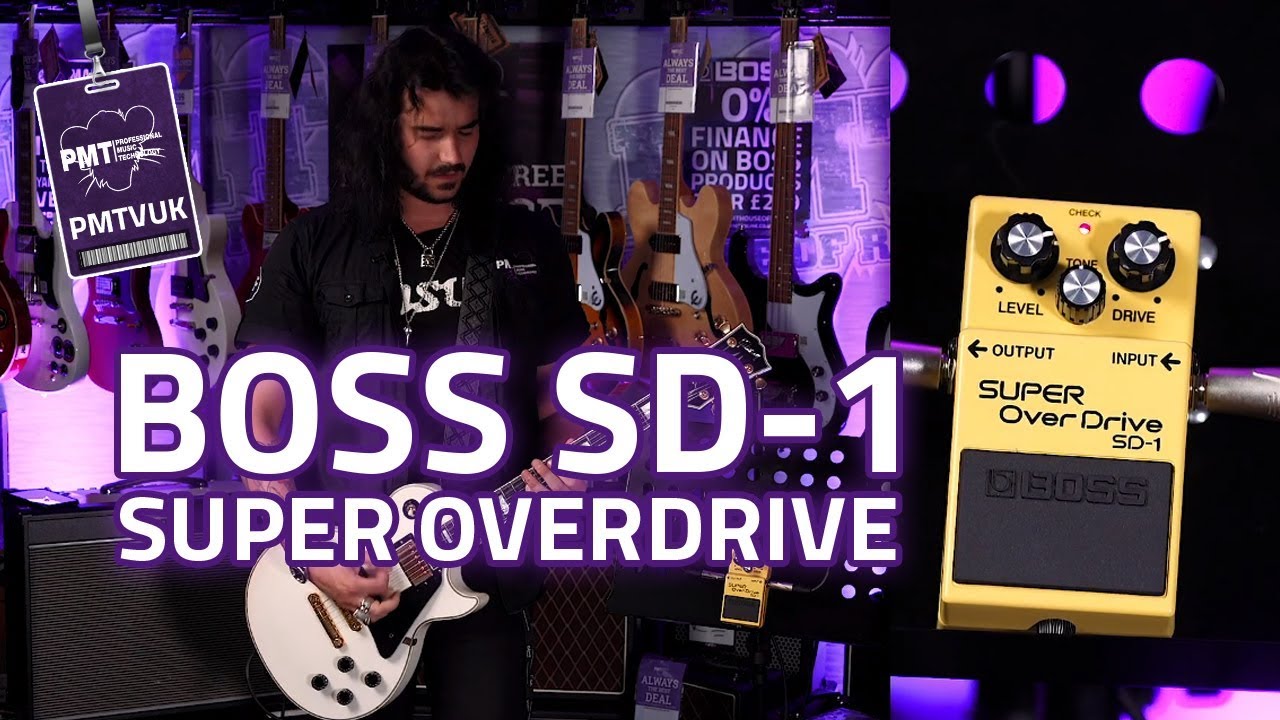
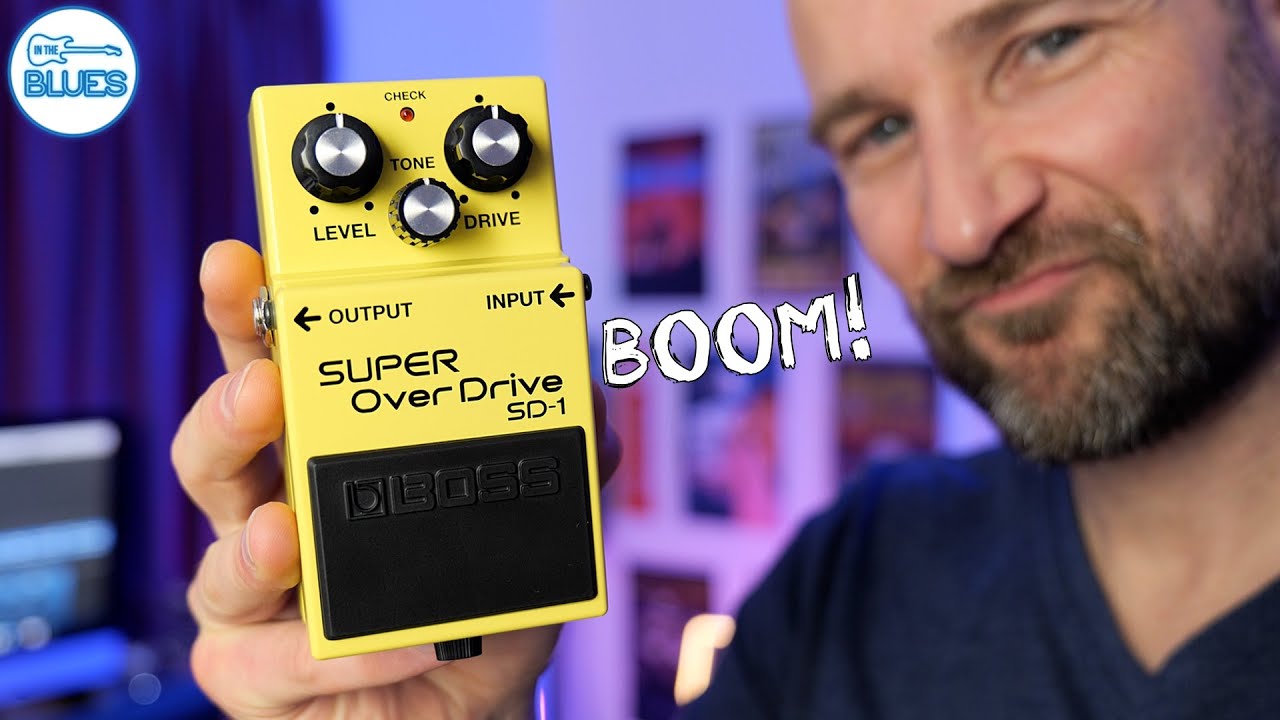
This pedal is a pretty simple affair, with dials for Volume, Drive, and Tone. Despite these limited controls, there are plenty of ways to run this pedal, and it all depends on the sound you are after and, of course, your rig. For a fraction of the cost of many boutique pedals, the SD-1 delivers a classic, usable overdrive that works equally well as a standalone boost or as a stackable gain stage in more complex setups.
As for the drive, the pedal uses asymmetric soft clipping to give it an amp-like overdrive that feels more organic than some other budget-friendly pedals, with a smoother transition from clean to driven tones.
You can’t talk about this little yellow box without mentioning some of the guitarists who have used one. The roster of artists who have relied on the Boss SD-1 is like a who's who of iconic players. Guitar wizard Steve Vai has used the SD-1 both in the studio and on stage, Prince was often seen with one at his feet live, and even The Darkness axe man Dan Hawkins used one on the band's breakout album Permission To Land. Other notable players of this yellow wonder include Josh Homme, Zakk Wylde, and Kirk Hammett. The pedal’s presence in the rigs of such varied players shows just how versatile the SD-1 can be.
So, with so many players swearing by it, and with an overdrive market that’s fully saturated with more “transparent drives” than you can shake a Les Paul at, I’m going to test the famous SD-1 from a modern viewpoint and see if it still holds up to today’s standards.
Specs

- Launch price: $66/£59/€62
- Type: Overdrive
- Controls: Level, Tone, and Drive
- Features: Asymmetric soft clipping drive pedal
- Connectivity: 1/4" ins/outs
- Bypass: Buffered
- Power: 9V
- Dimensions: W 73 mm x D 129 mm x H 59 mm
- Weight: 0.4 kg
- Options: N/A
- Contact: Boss
Build quality

Build quality rating: ★★★★★
Everything here feels like it’s made to last for literal decades, and honestly, most SD-1s probably do
If there’s one thing Boss has always nailed, it’s making pedals that feel like they could survive a drop out of a moving van. Simply put, the SD-1 is rugged, dependable, and superbly put together. The chassis is that classic Boss metal shell that’s sturdy, weighty, and finished in that unmistakable canary yellow.
As with all Boss pedals, turn the screw on the front of the footswitch to access the battery compartment. I love that. It’s so much less of a faff than having to peel it off your pedalboard and unscrewing a tiny backplate. This way you can change the battery without it ever leaving your board.
The jacks are properly mounted to the chassis, so you don’t get that worrying wiggle you sometimes find in cheap guitar pedals, and the footswitch is classic Boss. It’s wide, smooth, with just the right amount of resistance. You can stomp it barefoot or in boots, and it always registers.
Everything here feels like it’s made to last for literal decades, and honestly, most SD-1s probably do. I’ve certainly played some that are older than me and still going strong!
Usability and features

Usability and features rating: ★★★★★
This pedal is straightforward, unfussy, and instantly familiar
Usability-wise, this pedal is straightforward, unfussy, and instantly familiar to just about anyone who’s plugged in a guitar before. As I said before, you get only three knobs: Level, Tone, and Drive, and that’s it. No hidden switches, no convoluted menus, just the essentials for dialing a reliable driven sound. I reckon you could hand this to a total beginner and they’d have a usable sound in about ten seconds flat – like all Boss pedals, set everything to noon, and you’re pretty much good to go.
Now, I would say that while it’s simple, it’s not limiting. There’s a surprising amount of range in those three controls. The Level knob gives you loads of output, so you can use the SD-1 as a clean boost or really slam the front of your tube amp. The Tone control has a wide sweep, going from dark and woolly to bright and biting; be warned, though, it can get a touch harsh if you push it too far. The Drive knob is equally versatile, taking you from the subtlest edge-of-breakup to a full, singing overdrive.
Another thing I love is that it stacks beautifully with other pedals. You can run it into a fuzz, another overdrive, or a distortion, and it just plays nice. If you gig, you’ll appreciate the fact that the pedal’s footprint is compact, so it fits on even the most crowded boards.
Whether you’re a beginner sorting out your first board or a seasoned player who wants something reliable and no-nonsense, the SD-1 just works.
Sounds

Sounds rating: ★★★★½
For testing, I’m starting out by plugging my Fender Telecaster straight into my trusty Fender Twin, set completely clean. With all the controls on the pedal at noon, you get this barky, slightly honky, and gritty tone. It’s not super high-gain; instead, it’s an immediately usable light overdrive.
Compared to the Tube Screamer I usually have on my board, the SD-1 comes across as a bit brighter and more present, while the TS leans warmer and a little smoother overall. Of course, these are different circuits, using different clipping diodes, but they’re cut from similar cloth, and I can see why they are often compared to each other.
Dial the gain down, and the pedal cleans up beautifully, giving you those edge-of-breakup tones. For me, this is a great clean boost if you crank the Level.
Turn the gain up, and you’re in full-on overdrive territory. This is perfect for classic rock rhythms, bluesy leads, or even a bit of punk bite. I find the sweet spot is usually around two o’clock on the Drive, but there’s plenty of room to play. It does tend to get a little fizzy if you push it too far, though.

Where things get really fun is running the SD-1 into an already cooking amp
Some players love that extra sizzle; I usually keep it dialed back. The Tone control, too, can get a little sharp if you max it out, but the usable range is huge, so it’s easy to find your sweet spot.
Where things get really fun is running the SD-1 into an already cooking amp. Suddenly, that midrange bump helps your solos leap out of the mix, giving you extra sustain and presence.
Stacking it with other drives or boosts is a classic use of this pedal. The SD-1 excels at tightening up low-end flub and adding clarity, making even high-gain setups feel more focused and articulate.
What I appreciate most is how well the SD-1 responds to your playing dynamics and your guitar’s volume knob. Dig in, and you get more grit; roll back, and it cleans up without losing character.
It’s transparent enough to let your guitar and amp shine, but it always adds a little something extra. That’s why it’s stuck around for decades. Whether you’re after a subtle push or a full-on drive, the SD-1 can definitely do it.
Verdict

What really sets the SD-1 apart is its ability to fit into almost any rig
Okay, so the Boss SD-1 Super Overdrive is a classic; there’s no getting away from that, but I actually think it holds up surprisingly well in 2026. The pedal landscape has gone through a monumental change since this unit launched in 1981. There’s now more budget brands than ever before, and cheap, almost disposable stompboxes are ten a penny, but none can hold a candle to the build quality of the humble SD-1 – there’s a reason this stomp tops so many best overdrive pedal lists.
At around $69, it’s hard to think of another pedal that’s so cheap, so reliable, and that so many famous players continue to use on their boards. Is it the most complex or best-sounding overdrive in the world? No, of course not, but it is a surprisingly versatile one.
What really sets the SD-1 apart is its ability to fit into almost any rig. Whether you’re stacking it with other drives, pushing the front end of a tube amp, or using it to add just a hint of grit to a clean tone, the SD-1 delivers.
For new players and veterans alike, it’s a reminder that sometimes, the tried-and-true classics really can’t be beat.
Guitar World verdict: This classic overdrive is just as relevant today as it was when it launched in 1981. It’s versatile, affordable, dependable, and incredibly easy to dial in – really, what more do you need in an overdrive pedal?
Test |
Results |
Score |
|---|---|---|
Build quality |
Bomb proof construction that’ll last for decades. |
★★★★★ |
Usability and features |
Simple three-knob setup is superbly easy to dial in. |
★★★★★ |
Sounds |
A versatile range of drive sounds, just don’t push the tone or gain too far. |
★★★★½ |
Overall |
A true pedal classic in every sense of the word, that still holds its own against modern competition. |
★★★★½ |
Also try
Hands-on videos
PMTVUK
intheblues
- Best overdrive pedals: from mid-hump to transparent tone

