


“Judas!”
When Bob Dylan “went electric” – fully abandoning his image as a Woody Guthrie acolyte authoring stately acoustic protest songs – a lot of fans didn't want to join the ride. Case in point, the above comparison to history's most famous backstabber, shouted at Dylan during a now-legendary gig at the Manchester Free Trade Hall on May 17, 1966.
Dylan was nothing if not defiant, though – indeed it was the first artistic 180 in a career that would be marked by a million of them. That evening, he turned to his backing band and ordered them to play their next tune after the interruption, the epochal Like a Rolling Stone, “fucking loud”.
The Hawks, later to be known as simply The Band, were the group in question. Their guitarist was one Robbie Robertson, who had the formidable task of serving as Dylan's electric six-string foil in this tumultuous new era.
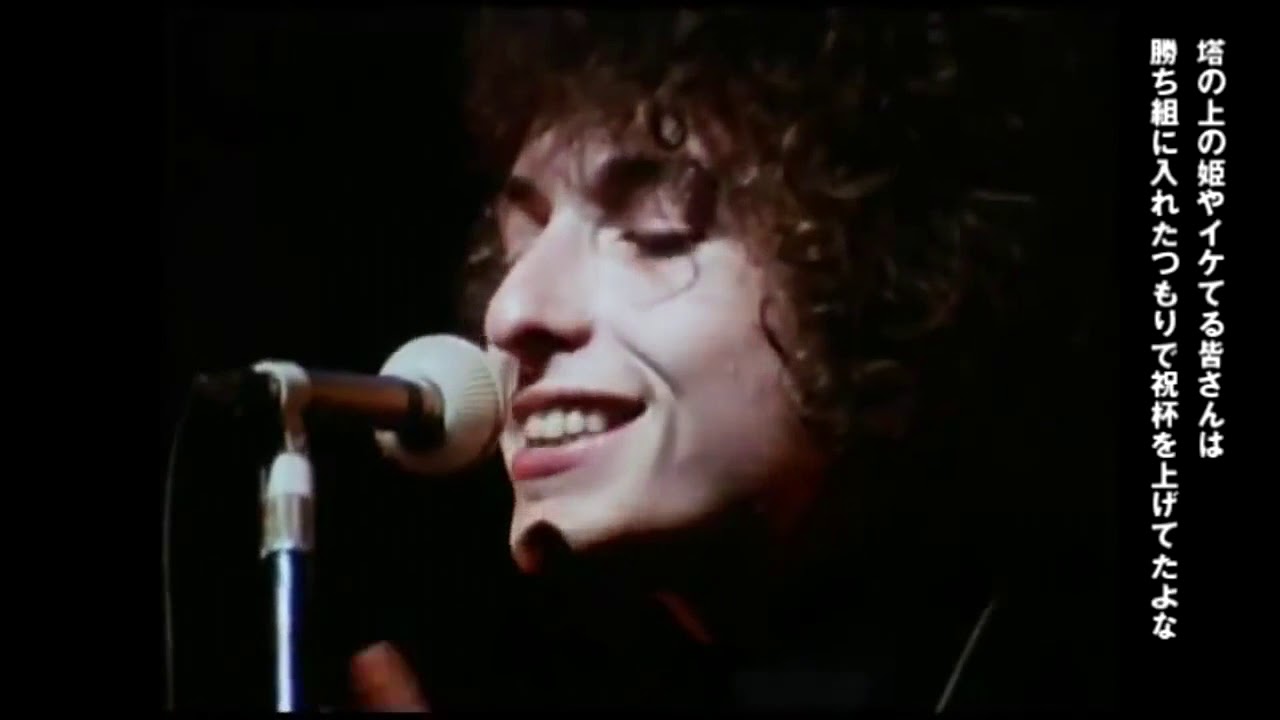
Back then, full-on, raucous rock shows staged at many-thousands-of-people scale were a fairly new phenomenon. We take enormous PA systems blasting rock, dance music, hip-hop or what have you for granted nowadays – you can hear them anywhere and everywhere – but in the mid-’60s, your average person probably had little reference point for anything as loud as the amplification needed to reach the crowds Dylan drew on his first electric tour, in 1965 and 1966.
As such, some have argued that the sheer volume of his electric shows of that formative period played into their mixed reception.
Discussing his experiences backing Dylan on that historic tour in a 1998 Guitar World interview, Robbie Robertson said, “We weren't that loud, but when we were playing with Bob, and they amplified everything, it seemed like it was extremely loud.
“Bob was very excited about having this extreme power behind him. I mean, here's this guy with a harmonica and a little acoustic guitar, and all of a sudden there's this locomotion.”
That said, Dylan hadn't consistently performed electric band shows since his teens – and those gigs certainly weren’t to cheering (and jeering) masses.
“Back then, he didn't know anything about electric guitar, and a lot of guys who get their first electric guitars plug in and just go, waaah-wahhh! It can be really annoying,” Robertson told GW in 1998.
“He didn't know how to put his hand over the back of the strings, and he didn't know how to finesse the instrument. It was like, ‘Don't worry Bob, I'll adjust the amp for you, it sounds great, don't worry.’ In time he started to get some things going, and started to understand the electric guitar better. Now, he's much better than he was.”

The tour was controversial and personally exhausting enough that it – coupled with the effects of a serious motorcycle accident just months after its conclusion – put Dylan off touring for almost a decade. The next time he did hit the road, though, it was once again with the Band, now hugely successful in their own right, in tow.
Their 1974 tour was an enormous success – something both critics and performers, ironically, chalked partially up to the boos and hecklers of 1965 and 1966.
Levon Helm, the Band's drummer, said to that effect, “I sometimes had a funny sensation: that [during the tour] we were acting out the roles of Bob Dylan and the Band and the audience was paying to see what they'd missed many years before.”

