

All the scratches and dents on your guitar tell a story. People even buy brand-new guitars artificially roughed up to look like they’ve been on tour for decades. But when I was starting out I couldn’t comprehend this mindset – and a delusional quest to keep my guitar in perfect condition unexpectedly led me to playing one of the most famous instruments in rock history.
A brown sunburst Stratocaster was the guitar I wanted before I could even play a note. Single coil versus humbucker? No idea what that meant. Which guitarist used it on what song? Didn’t care. To me it was just the most beautiful object in existence: if you wanted to be a rock star you better have one of these.
After two years learning on an imitation Strat, on my 15th birthday I went to get the real thing. It was the mid-1980s and 48th Street in Manhattan was lined with guitar stores. It took three places to find the perfect model: maple neck and two-color burst. My favorite thing I had ever seen. And then the most tragic mistake of my teenage life: with some leftover cash I grabbed a cheap strap on the way out.
I practiced guitar constantly, but like any rock-star-in-training I would throw on sunglasses, turn up Van Halen and work on my stage moves. One blistering solo called for a high jump to really sell that last note. When I landed, the strap buckle dug a deep gash across the upper body of my brand-new guitar.
Like a parent rushing an injured child to the hospital, I took the Strat back to 48th Street. I opened the case for the sales guy, knowing what to expect. First, he’d be shocked; next would come anger – how dare I be so careless? Other employees would gather around and the shame cycle would repeat. But then the outrage would be replaced by our common need to bring the brown sunburst Stratocaster back to perfection.

That didn’t happen. The guy looked uninterested. “Yeah, that’s what makes the guitar yours,” he said. Same response up and down the street. No-one understood the situation. At the last store, someone took pity on me: he scribbled a phone number and said to call his friend.
Forget today’s expensive restaurants and apartments – back then Tribeca felt more like an undeveloped war zone. I called the number on a payphone across the street from an abandoned-looking factory. A guy leaned out a fourth-floor window and dropped his keys to me so I could get inside. He took the Strat and told me to come back in a week.
When I returned, the gash had been filled and smoothed; but there was slight discoloration where the work had been done, leaving a weird birthmark. I tried to look appreciative, but he knew I wanted perfection. He told me: “Look kid, that’s as good as it’s going to get.”
While I wondered if life could go on with a desecrated Strat, another guy showed up to pick up his instrument. He eyed my guitar. I waited for the condolences, but instead he asked if he could try it out. “Nice guitar,” he said after playing a bit. “Wanna jam?”
He gave me his guitar: also a Strat, but black. And it was way more beat up than mine. We plugged in, and the first thing I noticed was this guitar played beautifully.
I didn’t understand then, but it was my first time on a guitar with a proper setup – I’d yet to play around with any adjustments. I also sounded a lot better; maybe a week of remorse had improved my skills.

To be honest, though, I was more focused on the guitar’s wear and tear. It had scratches, dents and some faded paint. Doesn’t anyone take care of their instruments?
After 20 minutes the guy had to leave, and we traded our guitars back. When he was out the door the luthier said, “you know who that was, right?” By this point I knew every guitarist on the planet, but I hadn’t recognized him at all. “He’s Pink Floyd’s road manager.”
My first thought: maybe I could get concert tickets sometime. My second thought: I guess crew members play guitar, too. The luthier looked at me like I was missing something important. “Do you realize whose guitar you were just playing?”
That was David Gilmour’s Black Strat. The one he used to record The Dark Side of the Moon and The Wall. I had been playing a sacred object – and Gilmour didn’t seem to care if it didn’t look brand-new. Maybe inventing a Comfortably Numb solo is more important than a few scratches.
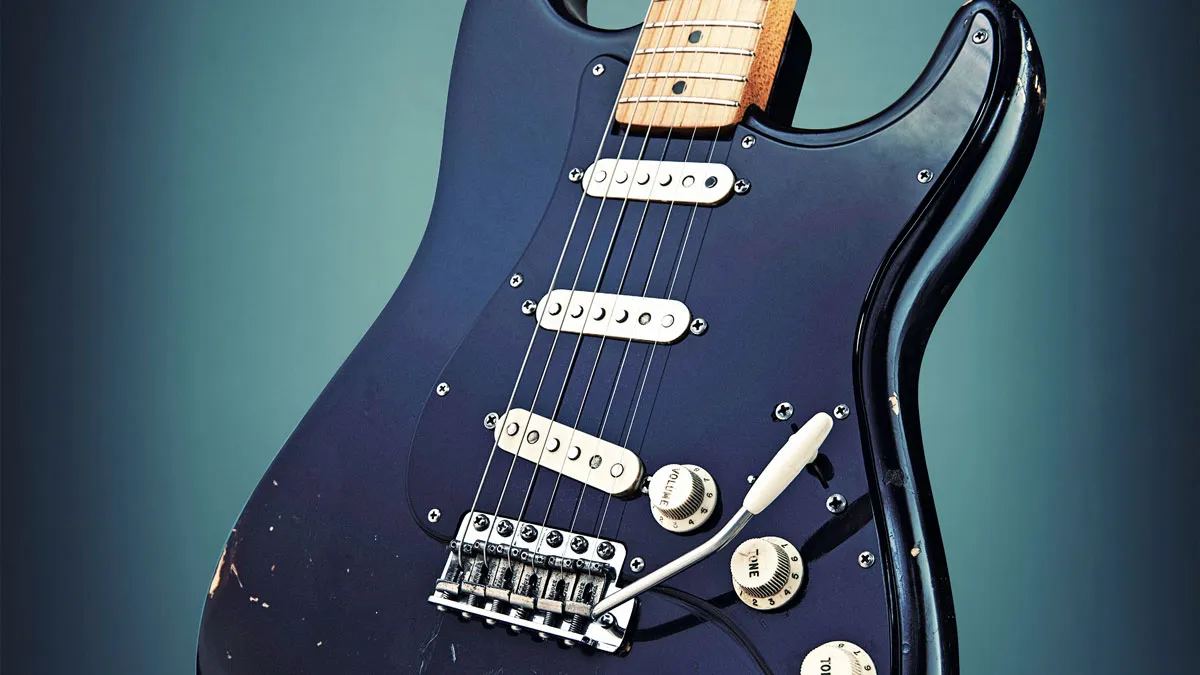
In March 2026, that Black Strat sold at auction for $14.5 million. The most expensive guitar ever. It was time for some bragging rights; so I plugged the numbers into a chatbot to see how much my 20 minutes playing was worth.
“$9.85.”
Not impressive. I argued the guitar wasn’t played 24/7 and had spent years in storage. “Let’s say this: it’s the world’s most expensive guitar and you put $1,000 worth of wear and tear on it.”
Yeah, I can live with that. Even a chatbot knows the real story is in the wear and tear.
