


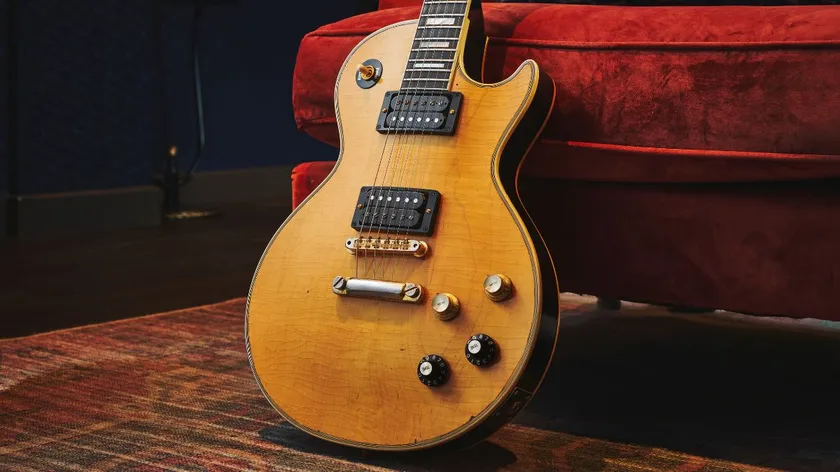


Part of the modulation family of pedals, a phaser pedal is a distinctive sound that was popularized by Van Halen's 'Eruption', but has been used on many different tracks since it was invented in the 60s. If you're looking to add one of the best phaser pedals to your rig, then you're in the right place, as we've tested a range of pedals to give you the best for each type of sound.
A phaser creates a 'swooshing' sound as it sweeps through the frequency ranges, adding a movement to your tone that can be subtle, it one that can completely take over your tone. Depending on what you're after, I've rounded up the best options for any player, whether you prefer vintage, modern, or you want a range of different tones.
For me, the best overall phaser pedal is the MXR Phase 95, which combines two of the most iconic phase tones in the Phase 45 and Phase 90, putting them all into a compact, great value for money stompbox. If you need something even cheaper than that, check out the Electro-Harmonix Nano Small Stone, which is available for well below $100.
I've included a how to choose section in this guide aimed at newcomers to phase tones, explaining all the ins and outs and what you'll need to look for to achieve your ideal phase tone. If you want to get even further into the nitty-gritty, have a look at the comprehensive FAQs, which answer all of the most common queries on phase pedals.
Best overall

The MXR Phase 90 is the classic analog phaser, operating over four stages, with a sound ranging from smooth to full-on bubbles - the Phase 95 not only shrinks it into a mini-pedal format, but adds extra features to boot.
While the original Phase 90 offered just a speed control, the Phase 95 adds a Phase 45 circuit for subtle two-stage sweeps, while a script switch toggles between feedback styles, enabling vintage and modern tones.
Countless guitarists regard the Eddie Van Halen-used Phase 90 as the classic phaser, but the Phase 95 makes it even better, in a size that will fit on any pedalboard. Packing iconic sound into its tiny chassis, it delivers the ultimate in phaser tones at a price that's phenomenal value for money.

"I have to tip my hat at how convincingly MXR recreates the syrupy sweet two-stage phasing of the Phase 45 and the more concentrated four-stage phasing of the Phase 90 for the Phase 95. With each toggle of the switches, it’s absolutely mesmerizing to explore the layer upon layer of densely packed phasing that’s available."
Read more: MXR Phase 95 review
Best budget

No list of best phaser pedals would be complete without the inclusion of this classic Electro-Harmonix design, now available in a Nano chassis. The version is much more pedalboard-friendly than the original, but retains the same control layout for those iconic tones.
The Small Stone is the phaser beloved of Radiohead (it's all over OK Computer), with a spacey swirl that lends a more ethereal edge over the all-out rock swoosh of the Phase 90. That said, EHX's offering can get more extreme than many of its rivals, courtesy of a Color switch, which adds a more pronounced frequency shift.
This can go from fast, Leslie-type sounds to an almost ring-modulated tone in the 'down' position, while flicking the switch up unlocks stronger, more vowel-heavy phase tones that give you that classic tone that feels like you're underwater. You'll find it well below $100, making it superb value for money.
Best analog

The Walrus Audio Lillian is an analog phaser pedal that's ideal for those who want to experiment with a modern-sounding phase effect. If you find vintage phasers take over your tone a bit too much, then this might well be the pedal that brings you over to the effect once and for all.
The standout feature of the Walrus Audio Lillian is the D-P-V, or dry, phase, vibrato control. This blend function gives great sensitivity between no phase, 50/50, through to full application, which covers a wide array of phasing effects. D-P-V is joined by a selection of a four- or six-stage phaser, the latter of which adds boost to the sound. You can even hold down the foot selector for momentary phasing.
The rate setting is among the slowest we’ve seen, with subtlety that really stands out for playing less complex pieces. That said, pushed forward, especially with the feedback and blend control setting high, the Walrus Audio gives as much phasing effect as you’d ever need.
Best versatility

The Strymon name is synonymous with top-quality, highly modern stompboxes and the latest offering to continue this trend, is the newly released Zelzah - a “multidimensional” phaser. If you want to really tweak your phase tones to get them just right, this is the pedal for you.
The Zelzah is made up of two different phasers. The first is a four-stage phaser, which offers an array of classic-style tones for the vintage enthusiasts, and the second side, is a radical six-stage phaser, providing extra modulation pedal sounds such as flanging, chorus, and more.
As you’d expect from the Strymon, you get complete control over almost every aspect of this phaser, with controls for the sweep, resonance, and even the voice. So if you are looking for a fully loaded option, for all your phasing needs and more, be sure to check this one out.

"Not all players will want a dedicated phaser pedal, many relying on the sort of multi-effects pedal that will ‘do’ phasing alongside other modulation effects. However, as phaser pedals go, you won’t go far wrong with the versatility that the Zelzah provides: two distinct phaser flavours and many ways to use them, as well as the flanging and chorus that you might have got in a multi-effects unit."
Read more: Strymon Zelzah review
Best for gigging

The Boss PH-3 Phase Shifter Pedal has been around for many years, and for good reason. As with all Boss stompboxes, this is an incredibly durable pedal that was made for gigging. It's great value for money, and will deliver time after time.
The digital phaser features speed, depth and resonance controls, plus a mode which switches between four, eight, 10 and 12 phase stages. Unidirectional phasing, which creates a continual rise or fall, is achieved via two extra modes, plus a step effect. The addition of tap tempo mode keeps you in time, which you can control with greater flexibility by linking in an additional expression pedal.
The result is a wide array of digital phasing sounds, including classic analog simulation, all in a unit that can fit on pretty much any pedalboard. For those who don't want their phaser to take up too much room but still want loads of flexibility, this is a superb option.
Best vintage

The Orbit Phaser takes cues from the legendary Maestro PS-1 - the first phaser ever made - with the added benefit of allowing you to switch between four- and six-stage phasing.
It's very midrangey, and you can feel that as soon as you kick the pedal on that you're in vintage phaser tone territory. The width knob can be used to add in some more top end, increasing the overall intensity of the effect.
The four-stage mode replicates similar phase tones to those we found on the MXR Phase 95 and the Nano Small Stone. It's not for players who want modern tones, but if you love vintage phase tones, there's a lot to love here.

"That treble content, though, is partly dependent on the width knob that adjusts the top-end while upping the intensity of the effect. In the four-stage mode you can get sounds reminiscent of celebrated vintage four-stage phasers like the MXR Phase 90 and, especially, the Electro-Harmonix Small Stone, which has a similar tonal profile."
Read more: Maestro Orbit Phaser review
Also consider
How to choose

If you've never used a phaser pedal before, then here's where you need to start. In this section I'll break down everything you ever wanted or needed to know about phaser pedals, giving you better all-around knowledge for when you decide to buy one.
What is a phaser pedal?
You can trust Guitar World Our expert reviewers spend hours testing and comparing guitar products so you can choose the best for you. Find out more about how we test.
A phaser pedal, or phase shifter, is one of the earliest guitar effects and was originally developed to recreate the sound of rotating organ speakers. Phasers were adapted to create an array of sounds in ‘60s psychedelia for that swirling effect, and were notably used later by Van Halen. They remain a commonly-used effect today.
Essentially, a phaser takes an input signal sine wave, duplicates it and moves it out of phase. The phaser then recombines the sine waves, and the difference between their peaks and troughs creates that noted phased sound.
Different amounts of phase shift stages create a varying phased sound. A digital phaser pedal often has four, eight, 10, or 12 stages, recreating a variety of phased sounds. Alternatively, an analog phaser usually has fewer phase stage settings and therefore less variety, because additional stages require more components - most classic '70s phasers use four stages.
What should I look for?
Despite the reduced variety, many guitarists prefer the warm, original sound of analog compared to digital alternatives. Whether you have an analog or digital phaser, the most basic control is phase speed, which controls the speed of the rise and fall of the wave. The depth control relates to the intensity of the phased waves, while resonance, also called resolution, is another common EQ control, emphasizing various tones across the sweep.
Classic, swirling phase has often been emphasised on slow, ringing chord work. As you might expect, the speed of the phased waves should coordinate with the beat, which is why a phaser used to play chords is more usually employed at a steadier speed to avoid a melodic clash.
It’s preferable to match your phaser’s speed with the tempo of the song, which can be achieved through tap tempo or MIDI. This enables coordination of the exact speed. A phaser isn’t just for chords, though, and the staccato effect from Jimi Hendrix’s Machine Gun is a classic example. Phasing is also used to boost a signal for individual lead notes, without adding distortion.
FAQs

What is the difference between a phaser, flanger, and chorus pedal?
All three of these pedals use an LFO (Low Frequency Oscillator) to generate their tones, making them part of the same family of modulation pedals. They all do it in a slightly different way however, which distinguishes them from one another.
- Phaser - Splits your signal and uses all-pass filters to change the timing of specific frequencies. It's then mixed back into the dry signal which creates the sound of your guitar sweeping up and down.
- Flanger - Splits your signal and delays the sound before modulating it, resulting in a more dramatic, metallic sweep tone.
- Chorus - Splits your signal, delays it longer than a flanger pedal and slightly detunes the sound, resulting in a wobbly, warbly type of tone.
What are the phaser stages?
The stages in a phaser pedal refers to the number of all-pass filter circuits in each pedal. You'll see many pedals have varying stage amounts, or some just have a single stage, each resulting in a different tone.
- 2-stage - Just one all-pass circuit, which gives a subtle, watery kind of tone.
- 4-stage - Two all-pass circuits, which gives that classic rock and roll phase tone used by EVH.
- 6-stage or more - Creates a more dramatic sound that can get pretty sci-fi at higher numbers.
Why does my phaser cause a volume jump when I turn it on?
This is very common with phaser pedals, which happens because a phaser pedal changes the perceived midrange of your tone. Depending on what amp you have the phaser pedal boosts and cuts certain frequencies, so it can feel like a big jump when you switch it on. Modern phaser pedals get around this with a level or mix knob.
Can a phaser pedal do a Uni-Vibe sound?
It can get pretty close, but it won't be a perfect replication of one. The original Uni-Vibe was technically a four-stage phaser, but used lightbulbs and photocells instead of resistors to create its sound. If you have a four-stage phaser, playing with the speed and depth knobs might allow it to replicate a Uni-Vibe.
What are the different types of analog phaser circuits?
Analog phasers can create their sound in a few different ways, with slight differences in the tones you get out of them.
- JFET (Junction Field Effect Transistor) - These are variable resistors, the type of which you'll usually find in the MXR Phase 90 and pedals aiming to mimic that sound.
- OTA (Operational Transconductance Amplifier) - These do modulation directly in an integrated circuit, giving a much more aggressive phase sound. This is the Small Stone type of phase tone.
- Optical (Photocell) - The type of circuits found in the Uni-Vibe which uses an internal light source flashing against resistors.
How do sine and triangle LFOs affect a phaser pedal?
These are two different ways of sweeping from the bottom of the frequencies to the top, and both have differing end results. A sine wave is a more gentle sweep that moves smoothly up and down, staying at the top and bottom for a short time. A triangle LFO on the other hand moves straight up and down without pausing, resulting in a more rhythmic, pulsing type of phase tone.
Should a phaser go before or after distortion/overdrive?
It depends on what type of sound you're looking for. Eddie Van Halen ran his phaser before his overdrives, which gives you a smoother, warmer sound. If you place your phaser after your distortion pedals, expect a much more dramatic sound.
Should I place my phaser in front of the amp or in the effects loop?
This depends on your setup. If you're running into a clean amp or use pedals for your overdrive sounds, then putting it in front of the amp will likely yield the best results. If you run your amp dirty, then pop it in the effects loop otherwise the phase will make your tone muddy.
How we test products

Here at Guitar World, we are experts in our field, with many years of playing and product testing between us. We live and breathe everything guitar and bass related, and we draw on this knowledge and experience of using products in live, recording and rehearsal scenarios when selecting the products for our guides.
When choosing what we believe to be the best phaser pedals available right now, we combine our hands-on experience, user reviews and testimonies and engage in lengthy discussions with our editorial colleagues to reach a consensus about the top products in any given category.
First and foremost, we are guitarists, and we want other players to find the right product for them. So we take into careful consideration everything from budget to feature set, ease of use and durability to come up with a list of what we can safely say are the best phaser pedals on the market right now.
Read more about our rating system, how we choose the gear we feature, and exactly how we test each product.
Related buyer's guides
- Get your pedals in order with the best pedalboards
- ...and power it up with the best pedalboard power supplies
- Get creative with our pick of the best looper pedals
- Get all wobbly with the best tremolo pedals
- Take a look at some of the best gifts for guitar players
- Check out our pick of the best reverb pedals for guitar
- These are the best distortion pedals you can buy today
- Enhance your tone with the best compressor pedals

