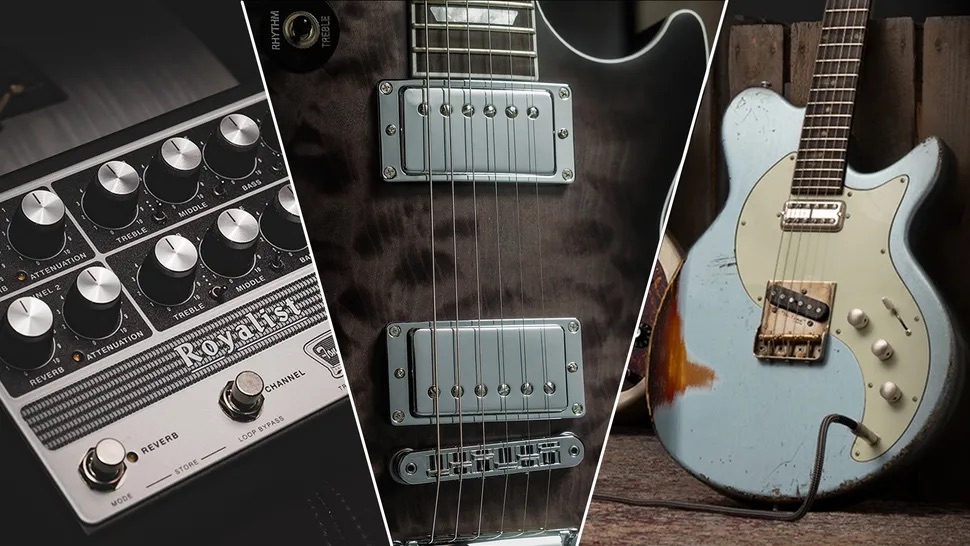


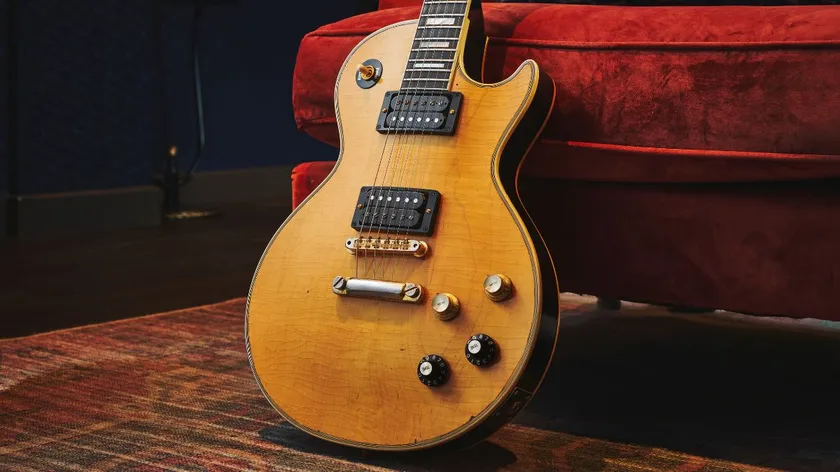


When talking about the best pedal amps, guitarists can often get confused. That's because there are actually two different categories of pedal at play here. The more common is the amp modeler pedal, one that you can put at the end of your pedalboard and have it handle all those typical guitar amp duties. The second is a power amp, which you can then use to drive a traditional guitar cabinet.
Deciding which one of these you'd like comes down to your particular setup. For players who are regularly traveling, want to play and record at home silently, or prefer a direct-to-PA option for their tones, you should go for the amp modeler pedal like the Strymon Iridium or Universal Audio Dream 65 pedals.
If you'd rather use a traditional guitar cabinet but have the flexibility of multiple amp tones, have a look at a power amp pedal, like the Blackstar Amped 1 or Seymour Duncan Powerstage. With one of these, you can deactivate the cab in your modeler and use the power amp to push out to whatever cabinets the venue has, giving you that amp feel without having to rely on dodgy monitors or complex in-ear setups.
If you're new to pedal amps, have a look at our how to choose section, which will tell you everything you need to know before you buy. I've also included an FAQs section with loads of common questions answered to get you up to speed on all things associated with pedal amps.
Best overall

When it comes to finding the best pedal amp that strikes just the right balance, look no further than the Strymon Iridium Amp and IR Cab Simulator. Not only does it offer a range of amp and cab combinations with versatile EQ controls including room ambience, it’s also compact and easy to use.
Of course, a pedal amp has to sound good, and the Iridium does a great job of modeling some classic amps and cabs. With amp settings Round, Chime and Punch you can convincingly replicate Fender Deluxe, Vox AC30 and Marshall Super Lead amplifiers. The nine-speaker cabinet pairings, meanwhile, are not only realistic but highly responsive – something many of its simulator/emulator peers have struggled with. Furthermore, you can upload your own impulse responses (IR) with the Strymon software.
Ultimately, the Strymon Iridium Amp and IR Cab Simulator is a great all-rounder for guitarists, whether you’re looking to mobilize your live rig, practice quietly at home, or expand your recording tools.

"This pedal is all about the provision of the three most classic amp flavors with a minimum of fuss. Unlike the Kemper, Helix and Fractal’s Axe-Fx where you can navigate the menus for a massive choice of models, the Iridium is sharply focused: it has exactly what’s necessary and no more."
Read more: Strymon Iridium review
Best budget

For something containing a wide range of classic amp/cabinet combos (eight cabinets, eight microphones and three power amp tube simulations), the NUX Solid Studio IR & Power Amp Simulator is actually simple to use. NUX has really tried to cram as much into this box as possible, leading it to look complex and sophisticated. That said, you should find it fairly straightforward once you get your head around the layout.
Featuring simulations of all the big name cabs, including AC30, Twin and Deluxe Reverbs, and Bassman, and so on, as well as all the key mics and placement options, there is so much scope for tone sculpting here. The NUX Solid Studio IR & Power Amp Simulator also features USB inputs to enable users to import their own impulse log in case any of the other options weren’t enough.
As far as amp simulators go, it’s certainly realistic enough to gig with. But given the amount of cab and mic sim options here, it’s no wonder the IR & Power Amp Simulator found its best use as a studio tool, helping guitarists record realistic mic’d up cabinet sounds without needing a seasoned engineer on call.
Best for gigging

Blackstar have a really brilliant talent for coming into a saturated market and dropping something that not only sounds amazing, but also tends to undercut the competition for price, so it’s no surprise they’ve done it again with the 10 Amped 1.
The 10 Amped 1 is a genuine way of getting gig-level volume – courtesy of the 100 watt (at 8 or 16 Ohms), class D power section – in a unit that’s easily small enough to throw into your rucksack. With effects loop, built-in digital reverb and even MIDI integration, this has features that some premium amp heads/combos can’t match, plus it has its own dedicated DI output with 3 different speaker simulations to choose from, plus a headphone output. And for those who want to record at home, it can also act as an audio interface with USB connectivity.
Whilst it lacks the tube preamp section of Milkman’s The Amp or the BluGuitar Amp 1, the Amped 1 is an impressively versatile option that should be more than enough for most guitarists for just about any situation, and at a very competitive price.

"The simple three-band EQ and clean layout make the transition from traditional amp to pedal layout feel smooth. And the Cab Rig/headphone amp makes for an easy transition to studio desk. It’s comprehensive and well-considered – there’s MIDI input too, though no stereo out – but most of all, Amped 1 can go fiercely loud and be tamed down efficiently to bedroom levels."
Read more: Blackstar Amped 1 review
Best pedal platform

For some, the Universal Audio FX Amp Emulators might not be as flexible as some of their rivals, given the decision to strictly stick to one amp emulation per pedal, but for others – particularly those who suffer from option paralysis – having one really brilliant ‘amp in a box’ might just be the perfect solution.
Our personal favorite, the Dream ’65 Reverb Amplifier, serves as the black-panel Fender with an emulation of the Deluxe Reverb. It's scarily realistic-sounding, even down to its ability to take pedals in the front end and is ideal for those who want a great clean base at the end of their pedalboard.
Though a lack of MIDI integration feels somewhat of a shame, for technophobes, the ability to take any one of the UAFX Amp Emulator pedals out of the box and achieve vintage tones, complete with tactile feel, without hassle will be hugely appealing. These are undoubtedly for the tube purists… despite there being no tubes in sight!
"There are some solid clean tones here that make this an ideal partner for your pedals but plenty of targeted drive, too. The three options are for a stock amp with a clean preamp boost for the purists or a choice of two amp modifications. Lead offers more midrange warmth, and D-Tex, described as the SRV modification, is great if you want an extra bit of gain and singing midrange. The spring reverb really hits the spot here, and the speaker options are well chosen – we really liked the 4x10 option for a Fender Super vibe."
Read more: Universal Audio Dream 65 review
Best power amp

Seymour Duncan has been making a name for itself in the pedal amp market with its PowerStage range for good reason – the company has created some of the most powerful yet simple to use products out there. The PowerStage 100 is a class D solid-state amp that boasts an impressive 100-watt output and full stereo.
This is one of the reasons why many guitarists looking to downsize their rig look to the Seymour Duncan PowerStage 100, as there’s just so much headroom on offer here. While it works best when paired with a decent-sized cab, the cab simulator option is pretty decent and means you can plug straight into the house PA and still get a great, full sound.
Though comparable to the other models available in the range, we really like the stereo option for its flexibility, allowing you to run wet/dry rigs or just split between two 4x12s for a massive guitar tone.

"The power amp’s sound quality with both rigs was pristine with warmth and definition dialed in for guitar tones, and the output level was more than loud enough for club stages. If you need a stereo amp with more output, Seymour Duncan also offers the PowerStage 700, but it only has 3-band EQ and comes in a rackmount configuration."
Read more: Seymour Duncan PowerStage 100 Stereo review
Best compact
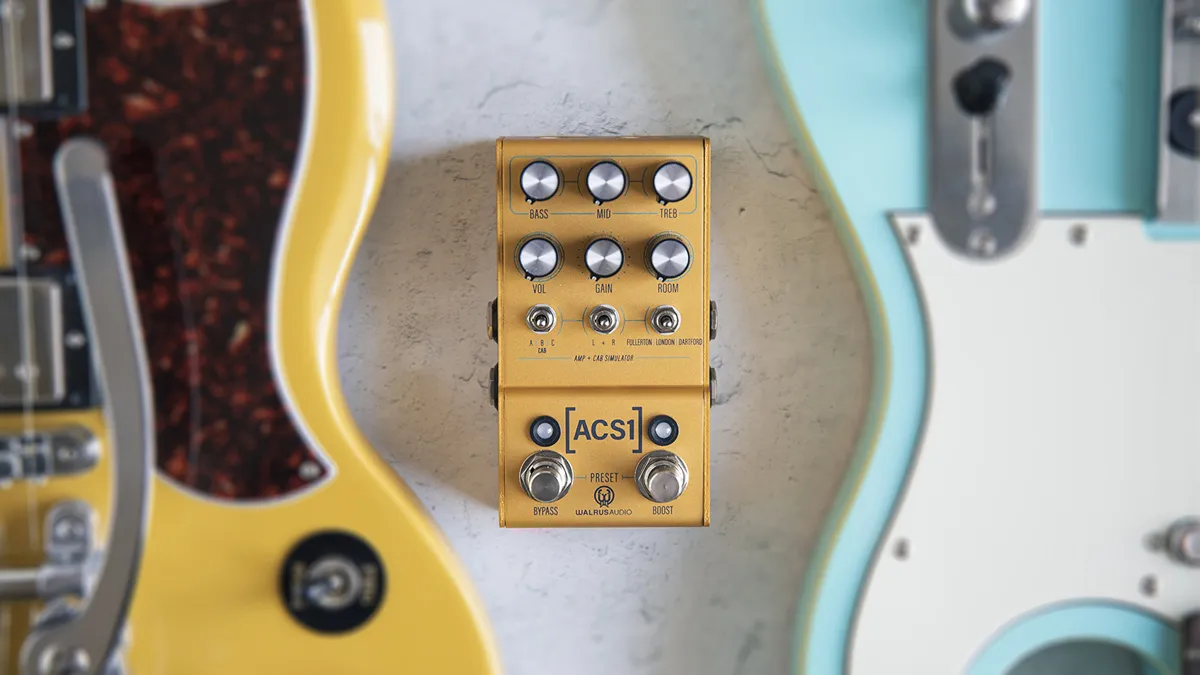
The latest version of the Walrus Audio Mako MKII ACS1 amp and cab simulator represents a big step forward for the company from the previous iteration. Gone are the toggle switches in favor of an OLED screen; there are now three new high-gain amp models, and a wealth of new cabinet impulse responses from the likes of York Audio and Tone Factor.
The pedal itself has a sleek new look, but still retains the excellent build quality of the original, so you'll have zero qualms about using this live. Its compact size makes it an ideal pedalboard companion, though it can be a little fiddly with all the controls so close together. Overall, though, it's a very intuitive pedal to use, and the screen adds an extra layer of usability.
The classic amp tones are, as you'd expect, offering a mixture of clean and crunch tones that will satisfy many a player out there. The Fender clean tone is exactly what you'd expect, although we did find ourselves wanting a little more gain from the Marshall model, and missing the pokey mid-range on the AC30 sim.
The new models, based on a 5150, Orange Rockerverb, and a Dual Rectifier, offer up some much more searing tones for heavy players. This was sorely missed on the original, so it's great to have some higher-gain stuff for chugging and lead work. You can also run any of the amp models in stereo, which leads to some seriously massive tones depending on how you combine them.

"There's a lot to like about the Walrus Audio ACS1 MKII. This feature-laden pedal offers players a wealth of tonal options, MIDI compatibility, true stereo imaging, and a bomb-proof construction. When the tones are good, they are very good, but unfortunately, not all the amp models hit the mark. That said, while the AC30 model left us a little disappointed, there was plenty more on offer to lift our spirits."
Read more: Walrus Audio Mako MKII ACS1
Also consider
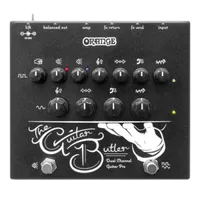
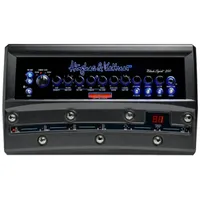
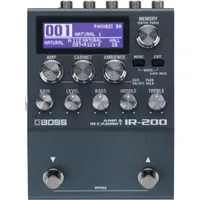
How to choose
The term pedal amp can include two different types, so it's important to know what exactly it is you want from your pedal amp before you hit the 'buy' button. This section of our guide will take you through everything you need to know, and all the questions you need to ask yourself to ensure you get the correct product for your guitar needs.
1. Sending the signal
You can trust Guitar World Our expert reviewers spend hours testing and comparing guitar products so you can choose the best for you. Find out more about how we test.
The first thing you need to consider is where you want to send your guitar signal. Are you going into a PA system, and audio interface, or a pair of headphones? If it's any of those, you need an amp modeler pedal.
If you want to send your signal to a traditional guitar cabinet, then you need a power amp pedal. This will give you enough power, and the right connections to drive a guitar cab.
2. Usability
Pedal amps tend to come in two formats, those that prioritize a screen or a companion app, or those that go for traditional amp style workflows with knobs and buttons. Knowing what you like, make sure you consider this before you buy a pedal amp. There's nothing worse than feeling like a screen is impacting your workflow, or wishing you had more in depth tweaking options instead of just a handful of knobs.
3 Final features
The last thing you should think about are additional features and connectivity. Things like stereo operation, FX loops, and a balanced XLR out put for gigging can all drastically change how usable your chosen pedal amp is for you.
FAQs

What is the difference between a preamp pedal and power amp pedal?
Preamp pedals and power amp pedals do the same thing as what you would find on a traditional guitar amp. The preamp section is where the EQ and tone shaping happens, the power amp section is where the signal is boosted hard enough to drive a guitar cabinet. In pedal form, these simply take those particular tasks and dial them down to a single unit.
Can I plug my amp modeler into my guitar cab?
No you cannot. An amp modeler typically doesn't have enough power to drive a guitar cabinet. To do this, you'd need to turn off your cab sim in your amp modeler and get a power amp pedal to boost your signal high enough to move the speaker in a guitar cabinet.
Can I use analog pedals with a pedal amp?
Absolutely. Many pedal amps respond the same way their real life tube amp counterparts would, so putting pedals in front of them result in a very similar effect. Like with any pedalboard, you'll need to make sure to have a good handle on your gain staging and signal chain, but you shouldn't find any major issues doing this.
What are impulse responses and do I need one?
Impulse responses are high quality captures of a guitar cabinet, the microphone capturing the sound, and the room the cabinet is in. When using an amp model you can place one of these in the cabinet block to dramatically improve the sound of your amp modeler. Whether you need one or not is down to how happy you are with the sound of your modeler. For some, the stock cabinets sound just fine, others prefer to use 3rd party impulse responses.
Personally, I think 3rd party impulse responses can really enhance the quality of your amp modeler, as good quality ones are typically made by studio engineers who know great guitar tone. It basically means you can play your amp modeler through a very expensive or vintage cabinet, with the best recording microphones, and a great sounding, well treated room. Plenty of companies offer trial packs if you want to try before you buy, too.
Where do I place my delay and reverb pedals when using a pedal amp?
Ideally you'd want to place these in the FX loop, but not every pedal amp has one of these. If yours doesn't, then you've got two options. You can place your time-based effects before the pedal amp, running everything into the front. This works great for less complex setups, but can be problematic if you use your amp for distortion or overdrive.
The second option is to place the time-based effects after the pedal amp in the signal chain, using the outputs on these to send to front of house or your audio interface/headphones, etc. This can help maintain a cleaner sound for your delays and reverbs.
How we test products
Here at Guitar World, we are experts in our field, with many years of playing and product testing between us. We live and breathe everything guitar and bass related, and we draw on this knowledge and experience of using products in live, recording and rehearsal scenarios when selecting the products for our guides.
When choosing what we believe to be the best pedal amps available right now, we combine our hands-on experience, user reviews and testimonies and engage in lengthy discussions with our editorial colleagues to reach a consensus about the top products in any given category.
First and foremost, we are guitarists, and we want other players to find the right product for them. So we take into careful consideration everything from budget to feature set, ease of use and durability to come up with a list of what we can safely say are the best pedal amps on the market right now.
First and foremost, we are guitarists, and we want other players to find the right product for them. So we take into careful consideration everything from budget to feature set, ease of use and durability.
Read more about our rating system, how we choose the gear we feature, and exactly how we test each product.

