


One of the wonderful things about the acoustic guitar is its ability to be completely self-sufficient. More than that, in the right hands it can even give the illusion of two or more guitars playing together. Nobody knew this better than players such as Lightnin’ Hopkins, Big Bill Broonzy and, of course, Robert Johnson.
The demo piece isn’t modeled on any particular one of these, but it borrows from that country/folk-blues style that inspired a surprising amount of the ’60s Blues Invasion and rock bands of the ’70s.
As a general rule, the picking-hand thumb plays the bass part and establishes the rhythm, with the remaining fingers adding chords and/or melody on top.
However, if you watch Big Bill Broonzy’s picking hand, he’ll play simultaneous notes in a triad like a classical player, use his index finger in a flicking motion across the strings, and occasionally strum across a chord with his thumb. There are also times when he’ll accent a downwards strum in an almost flamenco style.
It’s hard to say how systematic or methodical he was about his technique – it was most likely developed by instinct over time – but it is very effective. That’s not to say we can’t pick up tips and tricks by watching or listening carefully, though.

For this reason, the picking-hand technique is left to you in the example piece, but there is a logic to assigning the bass notes to your thumb.
Going on from there, treat this as a starting point for your own experiments. Key considerations are to establish a strong rhythm before getting too fancy with licks, and keep it simple when accompanying a vocal. See you next time!

We start with a classic descending chord line, using syncopation between the bass line and top triads. It’s also nice to give those triads a little vibrato if you can. This leads to an abrupt stop on the A7, followed by the piano-style lick that will lead us to the IV chord (D7). You might need to work up some stamina in your fretting hand for those hammer-on and pull-off licks.
However many arguments exist for the superior tone of heavy acoustic guitar strings and a high action, this stuff works better with a lighter touch – there’s a happy medium to be had with action height and string gauge.
Bars 4 to 8 spend most of the time sticking to rhythmic patterns, though there are a couple of flourishes. Note that open strings are often used to facilitate more seamless position changes, such as the one down to A, where there are a few quick-fire changes – almost a chord melody approach here.
Bars 8 to 12 borrow more classic moves, but there is a bit of a shift in the syncopation at times, maybe more than you might typically hear, but this piece tries to cover much ground in a short time.
The final descending chords take some inspiration from Jimmy Page’s ending to Babe I’m Gonna Leave You. The swung feel stops and we slow down for that last rake across A major.
Hear it here
Big Bill Broonzy – The Bill Broonzy Story
A strongly rhythmic player, Big Bill was very adept at creating the illusion of bass/rhythm, choppy chords and ringing top notes. Seek out his performances of Hey Hey, Worried Man Blues and This Train.
There is some really clear footage of his playing available online, which is great for analysing his technique and learning his approach. It sounds (and looks) as though he was able to coax a lot of volume out of the guitar with quite a relaxed technique.
Lightnin’ Hopkins – Lightnin’ And The Blues
Though he used a thumb-pick, Hopkins used thumb and fingers to create simultaneous rhythm and melody like Big Bill Broonzy. Hearing him play Baby Please Don’t Go, Have You Ever Loved A Woman and Ain’t It Crazy, it’s easy to imagine a young Van Morrison, Jimmy Page and others getting hooked on this style and wanting to emulate it.
However, there is a suggestion of power in the solo acoustic guitar, which arguably doesn’t need a loud rock ’n’ roll band to back it up.
Robert Johnson – The Complete Recordings
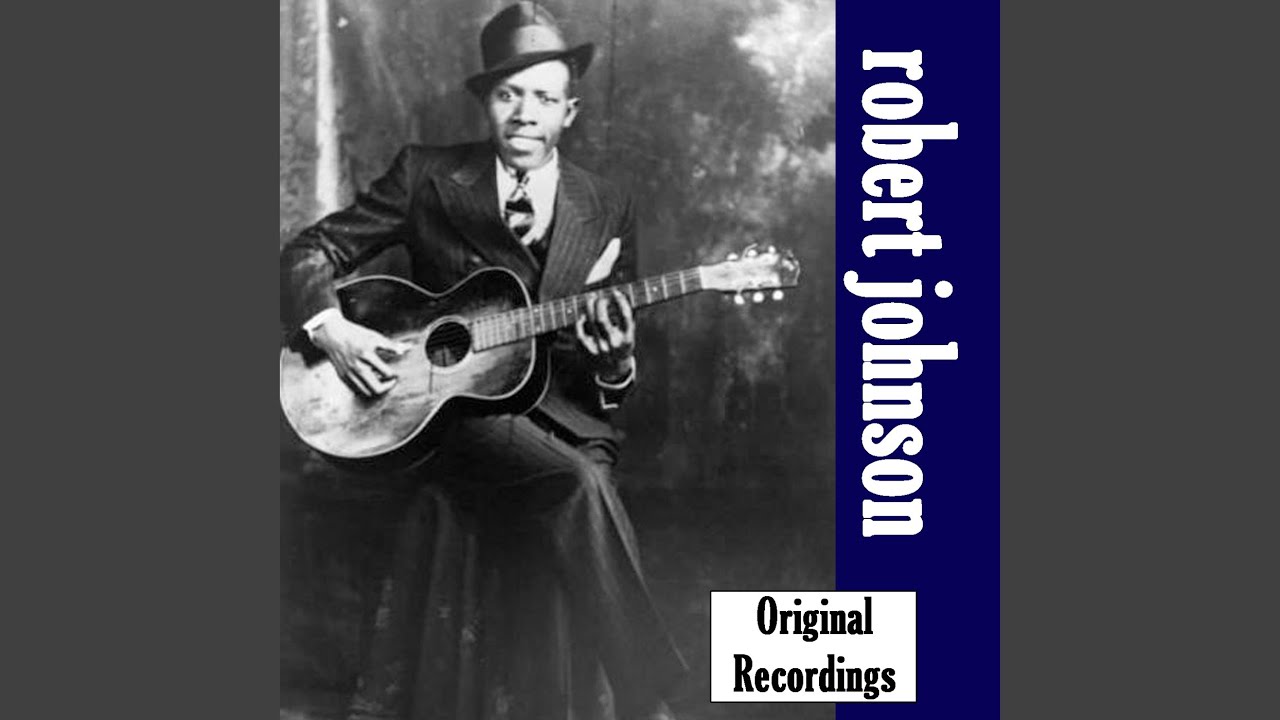
Regarded by many, including Eric Clapton, as the definitive solo blues guitarist, quite a mythology has developed around Robert Johnson. Having a listen to Sweet Home Chicago, Me And The Devil Blues or Devil Got My Woman should explain why.
The recordings are slightly ‘grainy’, but the power of his playing and deftness of touch come through loud and clear. Perhaps more than anyone’s, Johnson’s music inspired the generations that were to follow.
- This article first appeared in Guitarist. Subscribe and save.

