


Most of us guitarists are perpetually chasing ways to raise our game. That is part of the fun, after all. But sometimes what we seek is already freely available, without studying music theory, learning scale/arpeggio shapes or drilling picking exercises.
I’m talking about the rhythm of what we play, which is arguably 50 per cent (if not more) of what makes phrases appealing and memorable.
If we feel we should be working harder, this is when we’re most at risk of overplaying, filling all the gaps and overcomplicating things (take it from someone who’s done it). Sometimes what feels good to play doesn’t translate to what sounds good to the listener, who may not play guitar or be wowed by rippling arpeggios.
If we listen closely to the greats, especially in this genre, you can hear that not only do they leave spaces, but when they do play, there’s a rhythmic signature to their phrasing.
For example, Clapton in Crossroads, Gilmour in Comfortably Numb and Peter Green in Black Magic Woman all have their own take on how they approach rhythms in the phrasing, giving a uniqueness while using the very same pentatonic shapes.
One thing that isn’t demonstrated explicitly here is the spaces in between. That would certainly be easy to transcribe (and read!), but ultimately not particularly helpful, so do bear in mind that even these examples are a concentrated version of what you might want to play in a real-life musical scenario.
The four phrases were played separately, but could be joined up to make a solo if you prefer. That being said, the fourth example is really an alternative take on Example 1, or perhaps a suggestion of how you might continue onwards in a similar style. I hope these examples are useful and enjoyable. See you next time!
Example 1

A quick rake leads into a contrasting held bend, giving a sense of space to start. Bar 2 then features some repeated triplets – feel free to pull back and play these late, you’ll know when you’ve gone too far.
Note the quarter-tone bends in bars 2 and 3. These are very subtle but add so much in terms of attitude. The final phrase crosses bars 3 and 4 – it’s a smooth bend/release leading to a quick flurry, similar in essence to the introductory phrase.
Example 2

Keeping with the triplet theme to start, this example then takes a leaf out of Peter Green’s book, especially in bar 3 where the rhythmic groupings feel as though they’re floating independently of the beat.
They aren’t really in this case, though the last four semiquavers do pull back in tempo noticeably.
This shouldn’t be set in stone, keep experimenting – you can always dial it back if you think you’ve lost the feel. The pre-bend with fast vibrato in bar 3 is another detail worth spending some time on.
Example 3

This rhythmic idea is similar to some of Eric Clapton’s phrasing during his solos in Crossroads. The rhythmic groupings are quite funky and you will want to use down- and upstrokes to aid with this.
Use this idea as a basis for further experimentation, rather than conforming precisely to any rhythm. There are no rules, but you can pick up some hints from watching the video. Also, watch for details such as quarter-tone bends, staccato/short notes and vibrato.
Example 4

An alternative opening phrase, or a suggestion for how things might continue, this example draws on David Gilmour’s phrasing from the solos in Comfortably Numb, Another Brick In The Wall (Pt 2) and Have A Cigar.
As with Example 3, it’s questionable how useful it would be to duplicate this exactly. This is more of a ‘feel’ thing, based around choppy/staccato or muted up- and downstrokes.
We finish with a classic pentatonic lick, the last note of which (D) holds, adding a slow quarter-tone bend after crossing into bar 4.
Hear it here
Eric Clapton – Crossroads
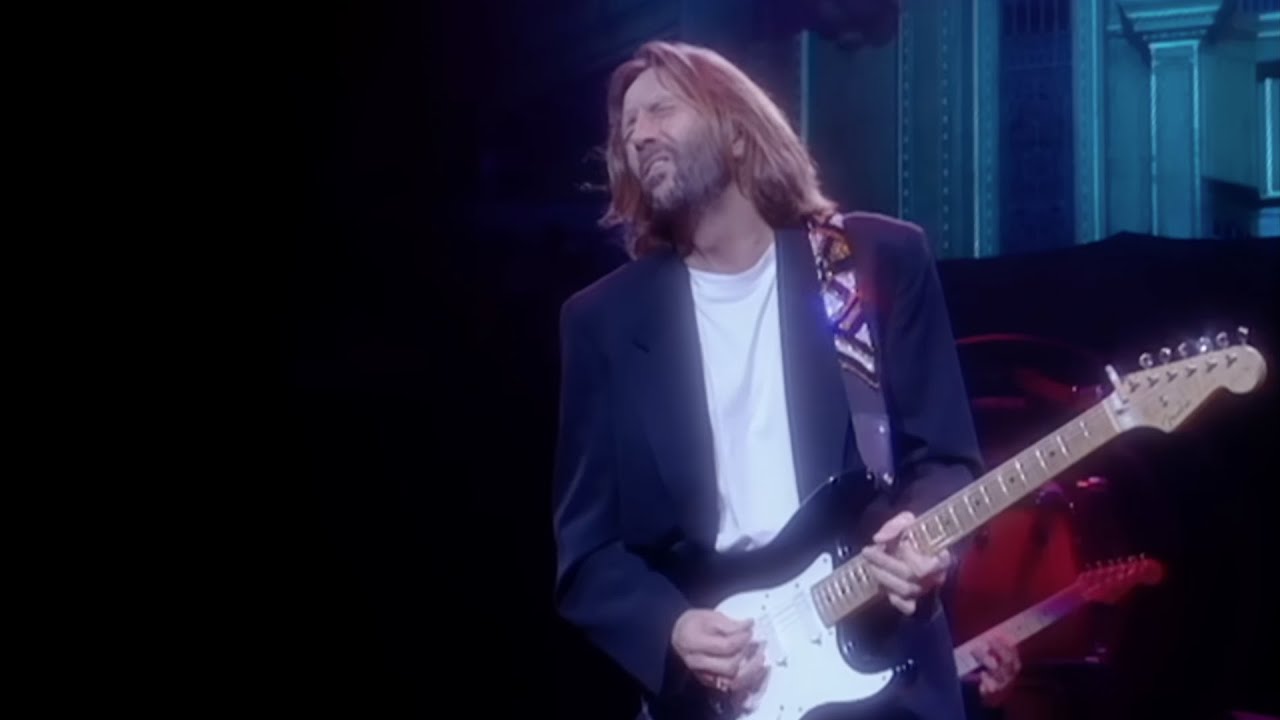
One of the details which makes Eric’s playing so appealing is his use of rhythm. Check out the solos in Crossroads and you can hear him experimenting – and really pulling against the beat at times. He can also be heard (in a more restrained manner) on the Bluesbreakers (‘Beano’) album a few years earlier.
More recently, he revisited this approach in Bad Love. Like anything, the rhythm is just a part of the picture, so often isn’t as blatant as some of the examples.
Albert Collins – Truckin' With Albert Collins

The Iceman himself, Albert used an unusual F minor tuning (low to high: F C F Ab C F) often with a capo at the 5th to 7th fret, which contributed to his sound, but that need not concern us too much here. All the same, check out Frosty from the 1969 album Truckin’ With Albert Collins.
On that same album, see if you can sit comfortably with the lilt between the guitar and brass on Tremble! Finally, have a listen to his playing alongside Gary Moore on his cover of Too Tired.
Peter Green – The Pious Bird of Good Omen
Peter’s manipulation of rhythms is perhaps the most subtle of the players cited here, but his rhythmic groupings on Black Magic Woman, Supernatural and Need Your Love So Bad demonstrate a free flowing ‘push and pull’ against the beat, with some unexpected pentatonic flurries that sound easier to play than they actually are.
All are great demonstrations of the use of space, plus you can hear the intention behind each and every note.
- This article first appeared in Guitarist. Subscribe and save.

