




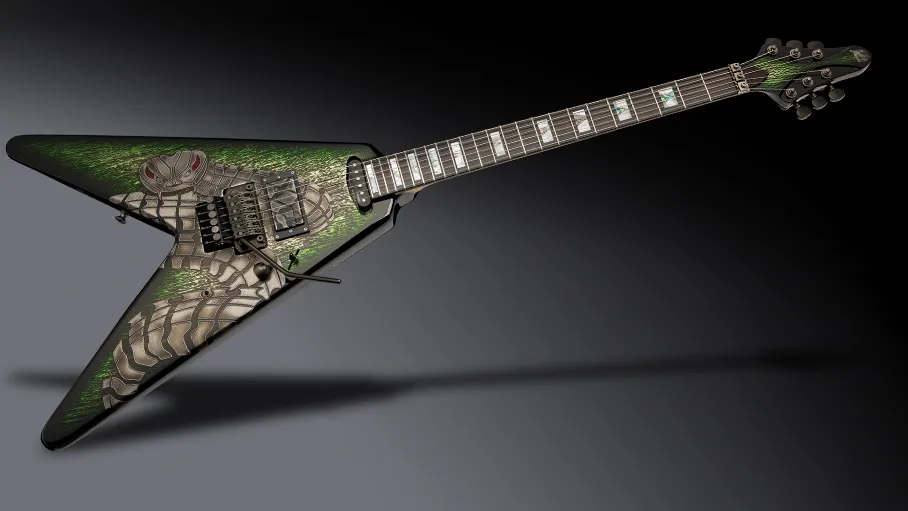
Framus’s latest signature guitar for Accept lead guitarist Wolf Hoffmann has slithered into view – meet the WH-1 Special Bionic Snake.
The model is based on artwork for the latest Accept album, Too Mean to Die, and teams a sand-blasted lacewood body and maple back with a snake design made of real steel, which produces its pseudo 3D effect.

That same design continues to the matching headstock, which also boasts Graph Tech Ratio locking tuners with wooden knobs, as well as the locking nut for the ‘Kiss My Strings’ Floyd Rose tremolo.
Framus has even included side-edge green LEDs on the guitar’s maple neck to further reinforce the serpentine theme – these illuminate the neck’s 25.5” tigerstripe ebony fingerboard, which features a 12” radius and 24 nickel silver frets.


Pickups are a Fishman Fluence single coil in the neck and humbucker in the bridge, controlled via a three-way switch and a single volume control, which doubles as a push/pull to adjust the Fishman’s humbucker voicing.
Special Bionic Snakes are built to order, with a delivery time of four to five months and a price tag of €15,709 (approx $18,800).
For more info, head over to Warwick/Framus.

