


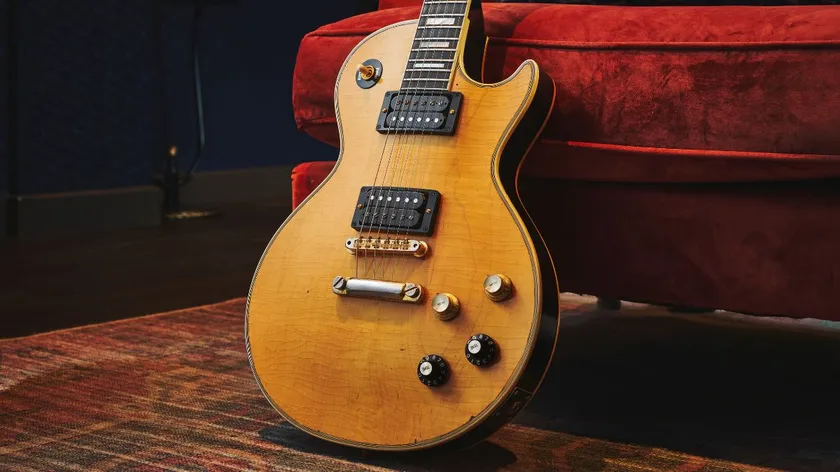


Although often tied to a specific artist or sound, the best signature guitars are often a great way to get unique specifications and configurations you won’t find anywhere else. Signature models don’t have to appeal to a broad spectrum of players, leaving manufacturers free to experiment outside of their prescribed box, which often leads to some fantastic results.
If you’re looking for the best signature guitar overall, I’ll let the people speak on this one. The PRS SE Silver Sky has frequently topped best-seller lists since it launched, with John Mayer’s take on the Strat grabbing the top spot in this guide. If you want a unique signature model on a budget, check out the Squier J Mascis Jazzmaster, which is so popular Fender brought it back from being discontinued.
Signature guitars are unlike most other models you’ll find, and nowadays there are a lot of different options available. Manufacturers are tapping into the popularity of artists, and although often more expensive than the regular mass-produced models, they can be a great way to get superior components on your electric guitar without retrofitting them.
We’ve reviewed loads of sig guitars over the past few years, so we’ve rounded up 8 of the very best for you to peruse. If you’re stuck deciding what to get, have a look at our how-to-choose section and comprehensive FAQs for answers to all your burning questions.
Best overall
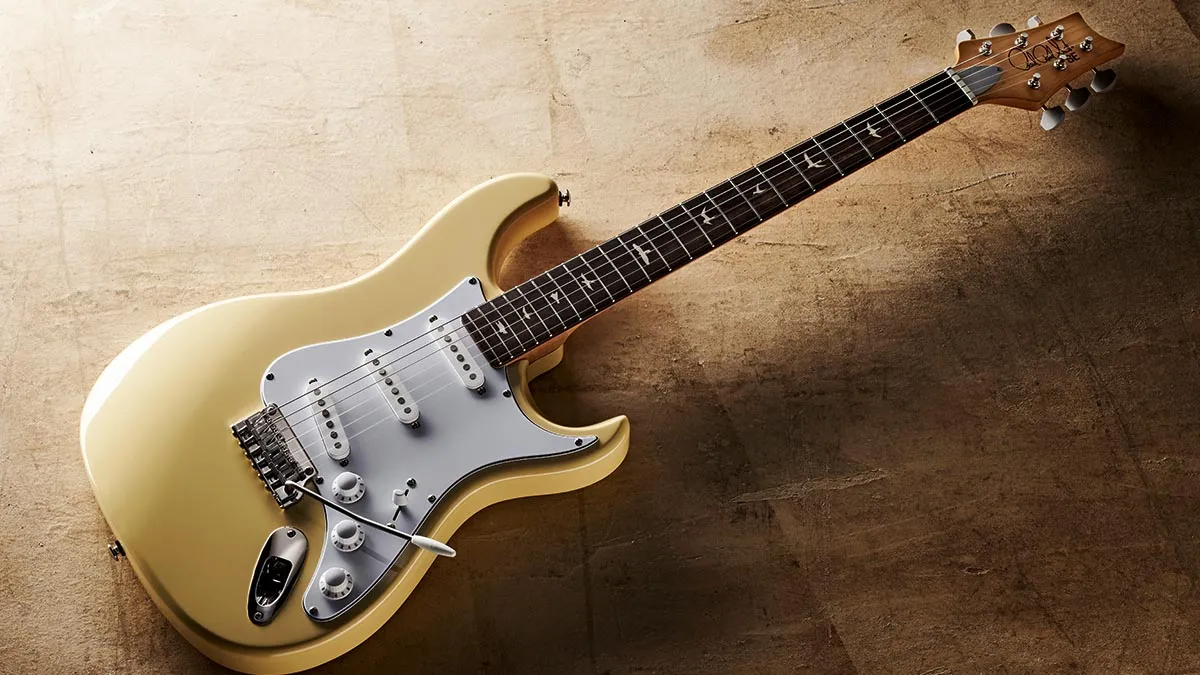
✅ Buy if you want the best value-for-money signature guitar: There’s a reason the PRS SE Silver Sky is insanely popular, and that’s because it takes a very traditional guitar design and adds some really unique features
❌ Avoid if you want to play heavier styles: This is a guitar geared more towards light rock, blues, and funk rather than hard rock and metal.
Overview
One of the most popular guitar releases of the last few years, the PRS SE Silver Sky is the signature model of modern guitar legend John Mayer. It takes the Stratocaster format and adds some unique touches, making it stand out from a sea of imitators.
Build quality
This is an Indonesian-made guitar, but in all honesty, Indonesia is putting out some seriously great guitars nowadays. This model is particularly well put together, and it’s clear that there’s been a lot of attention to detail, with all the components firmly attached, and the fretwork is also excellent.
Playability
One of the first things you’ll notice about the Silver Sky is that it doesn’t feature the common ‘C’ profile neck. It’s surprisingly chunky, but no less comfortable for it. With plenty of wood there, it feels great for bluesy bends, but you can still play fast licks on it. It’s nice because it offers something different from the norm, which is welcome where so many manufacturers opt for the classic ‘C’ profile.
Sounds
Unsurprisingly, the trio of single-coil pickups delivers all of those classic S-style tones. The pickups are bright and articulate, and you’ve got those quacky in-between sounds as well as the honk of the middle pickup. It’s a classic combination, and despite the relatively low cost of the guitar, it delivers some very good tones.

“There is nothing cut-price here and the quality of build, feel and sound blurs – perhaps even erases – the whole country of origin consideration. It’s not where but how that’s important.”
Read more: PRS SE Silver Sky review
Best budget

✅ Buy if you want a budget signature guitar: Another super popular signature model, the J Mascis Jazzmaster delivers a lot for relatively little.
❌ Avoid if you want versatility: This isn’t a traditional guitar, so some users may want a bit more tonal versatility when it comes to their signature instrument.
Overview
Since it initially launched, the Squier J Mascis Jazzmaster became a bit of a cult classic. It overdelivered for the money, and when Fender discontinued the model, it suddenly became highly sought after, with prices skyrocketing. Thankfully, the big ‘F’ reissued it, and it continues to be a popular model for those seeking a budget offset guitar.
Build quality
The looks are quite unique and I can definitely see this being divisive amongst players. Overall, it’s a very well-put-together instrument though. The addition of an adjust-o-matic bridge is a big upgrade over the traditional Jazzmaster-style tremolo bridge, and makes it feel worthy of gigging guitar players.
Playability
Unusually, this guitar features jumbo frets, which makes it great for lead work. Bending against these is a breeze, and it makes the neck feel quite fast versus those with smaller frets. The neck profile is the typical, comfortable Fender fare with a 9.5-inch radius and a 25.5-inch scale length.
Sounds
Spec’d by the man himself, the J Mascis Jazzmaster single-coil pickups deliver everything from hot lead tones to mellower rhythm sounds. They’re not quite traditional single coils nor humbuckers, delivering a sound that’s very much their own. It’s also great to see the traditional Jazzmaster switching system in play, making this guitar very versatile indeed.
Best for metal

✅ Buy if you want to play metal without significant drop tuning: This is a super versatile guitar, great for most modern metal and rock.
❌ Avoid if you want a good coil-split: We found the coil split on this guitar was a little uninspired.
Overview
Despite looking like a more classic type of electric guitar, the Jackson Lee Malia LM-87 is actually a super versatile metal guitar. It proves you don’t need sharp edges and a wildly out-there aesthetic to deliver a guitar capable of getting heavy.
Build quality
The okoume body makes it surprisingly lightweight, so it’s great for those who are regularly playing live. It’s got an open-pore finish, which means it will wear down quicker over time, making each guitar personal to whoever buys it. It’s got a 12-16 inch compound radius, a set neck, jumbo frets, and a D neck profile for all your rapid-fire metal techniques.
Playability
It’s very much a shreddable guitar, and the neck specs definitely help to make those kinds of techniques much easier. Upper fret access is great, similar to what you’d get on an SG, and it feels nicely balanced whether you play it on a strap or sat in your lap. The forearm bevel is generous and it’s got a belly cut which makes it super comfortable no matter where you play it.
SoundsA P-90 in the neck position doesn’t scream ‘metal guitar’, but it works beautifully here in conjunction with the custom-wound Jackson humbucker in the bridge. The bridge position is the one for metal riffing, delivering a gnarly, gnashing tone that works perfectly when you dig in with your pick and palm mute. The P-90 gives added flexibility for leads and clean tones.

“It might have Surfcaster DNA but it has mutated sufficiently to be considered in league with the apex predators under the surf – the Shark’s Eye block inlays suggest a thematic kinship with the teeth of the sea. Many will pick this up and love it because it puts Malia’s signature tones within reach. But perhaps just as many players will pick this and love it because they can find their own sound.”
Read more: Jackson Lee Malia LM-87 review
Best semi-hollow
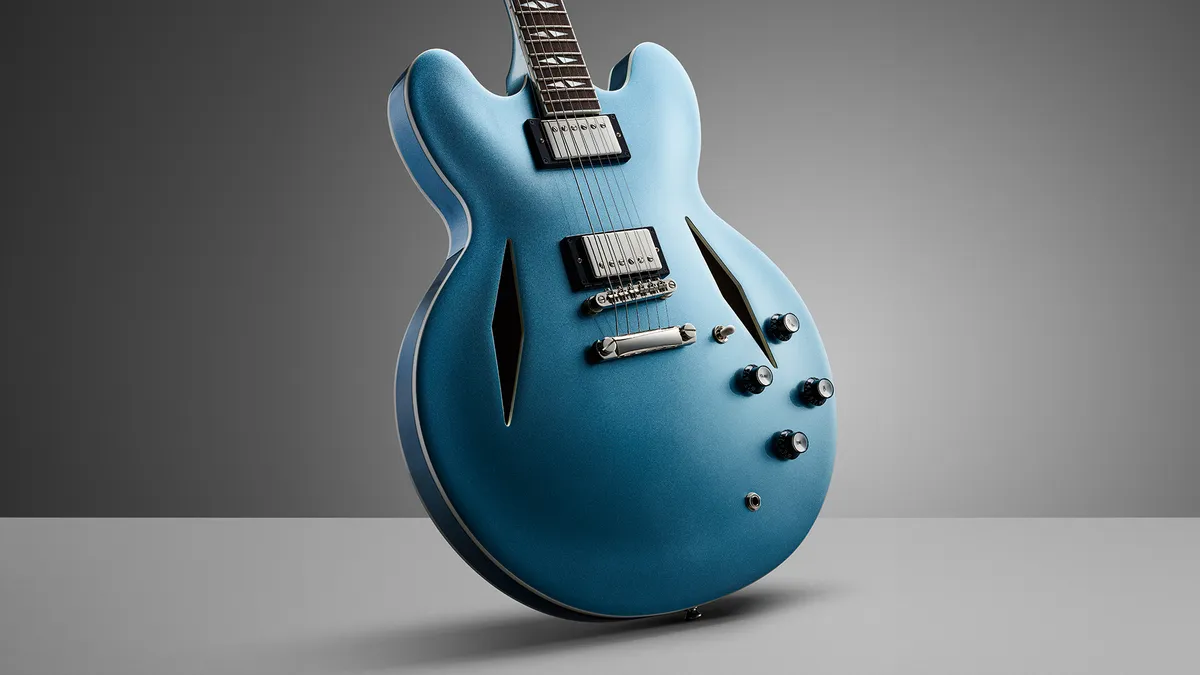
✅ Buy if you want a top-notch semi-hollow guitar: Despite being the signature of Dave Grohl, this is genuinely one of the best semi-hollow guitars money can buy right now.
❌ Avoid if you’re playing metal: Although DG is known for loving metal, this guitar won’t suit that particular style.
Overview
While the Gibson Dave Grohl signature can cost up to $20,000, this Epiphone version is perfectly reasonably priced around the $1k mark. It’s a fantastic semi-hollow guitar with a spec that punches well above its weight, so even if you’re not a Dave Grohl fan, it’s a great example of a versatile rock guitar.
Build quality
Our review model was delivered absolutely flawlessly. It looks stunning and the color is absolutely bang on. It’s got the features Dave Grohl’s guitar inherited from the Trini Lopez ES-335, with the diamond F-holes and that super cool, six-in-a-line headstock.
PlayabilityThe neck shape is quite different from a lot of other models in the Epiphone stable, too. It’s an elliptical ‘C’ profile, which is much chunkier than the SlimTaper profile often found on Epiphone guitars. It fills your palm, making it a great anchor for playing open and barre chords. It’s still slinky enough that you can play lead licks, but a shred neck this ain’t.
Sounds
The dual Gibson USA Burstbuckers are the real star of the show here. They sound absolutely amazing and are easily capable of recreating Dave’s own sound. They’re super versatile though, turning the 335 into a more rock-ready instrument that’s capable of handling blues, indie, classic rock, and more.

“Yes, we’re talking relatively meat and potatoes for a lot of Foo Fighters sounds, but as we all know, getting the simple things right can present as much of a challenge as more complex sounds. Not here though, because with our modeler dialled in, we were able to quickly replicate some typical Grohl sounds using very little processing beyond amps, overdrive and delay.”
Read more: Epiphone Dave Grohl DG-335 review
Best Les Paul
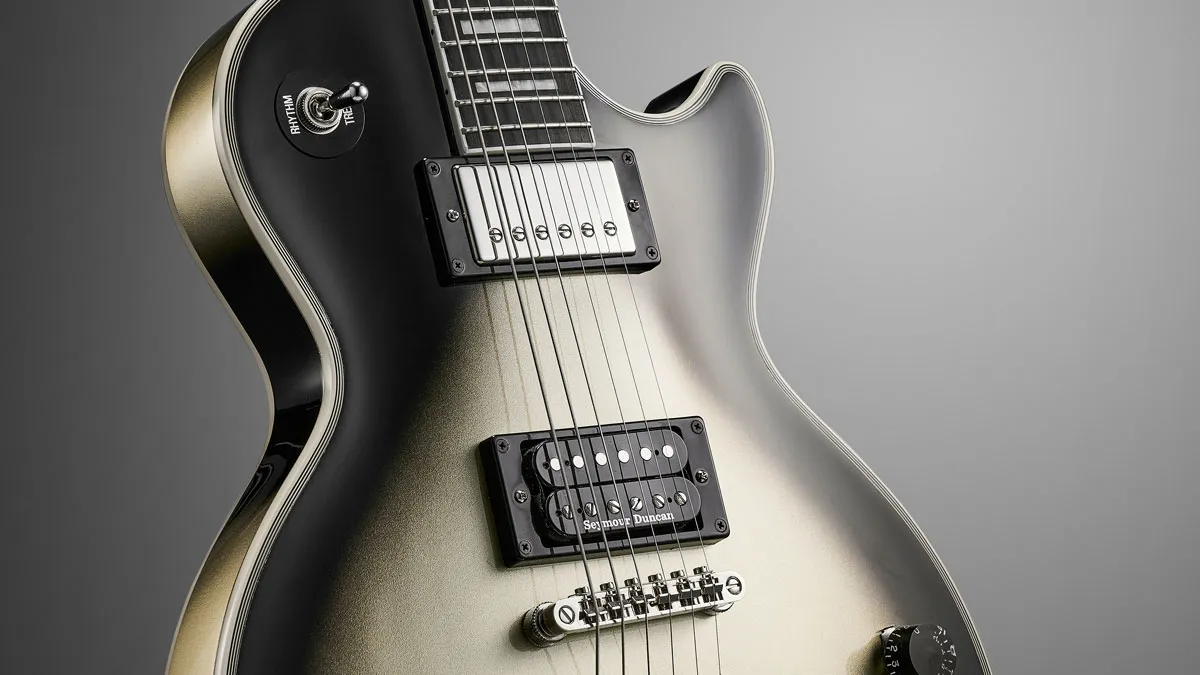
✅ Buy if you want a Les Paul capable of a huge array of sounds: The combination of Seymour Duncan and Epiphone humbuckers makes this a really versatile instrument.
❌ Avoid if you don’t like distinctive-looking guitars: The artwork on the back makes this a real standout, which could be good or bad depending on the player.
Overview
Despite being the more affordable version of Adam Jones’ signature guitar lineup, the Epiphone Silverburst Les Paul Custom has some genuinely unique touches that make it stand out from the rest. Adam Jones was actually doing makeup and special effects before he found fame with Tool, so it makes sense that his signature guitar has some very arty inspirations.
Build quality
When you first look at the Adam Jones Les Paul Custom, it’s hard to believe that it’s an Epiphone model. The art emblazoned on the back of the body is incredibly eye-catching, and there’s further artwork on the back of the headstock. With that distinctive Silverburst finish, it’s certainly an eye-catching instrument, and our review model was really well put together.
PlayabilityThe neck profile is on the thicker side of things, but it’s still really comfortable to play. It’s a custom rounded ‘C’ profile, but we found it to be very playable whether chugging power chords or firing up some tasty leads. It’s a three-piece bound maple neck which makes it very different to your typical Les Paul fare.
Sounds
The Seymour Duncan humbucker in the neck is very high output, making it perfect for aggressive riffing. It’s versatile enough to cover rock and metal styles, and sounds beautiful through a cranked tube amp. The neck humbucker is slightly lower in output, so it’s ideal for those cleaner Tool passages. It’s honestly one of the most versatile Epiphone Les Pauls we’ve ever played.

“Once amped up, these vibrations are articulated very well indeed, with the neck pickup’s warmth providing a well-matched contrast to the high-power snarl of the Duncan Distortion in the bridge – which, by the way, replicates the brain-simmering sounds of Ticks & Leeches, Jambi and Pneuma to a tee, as well as handling the less metallic tones from the quartet’s early years.”
Best versatility
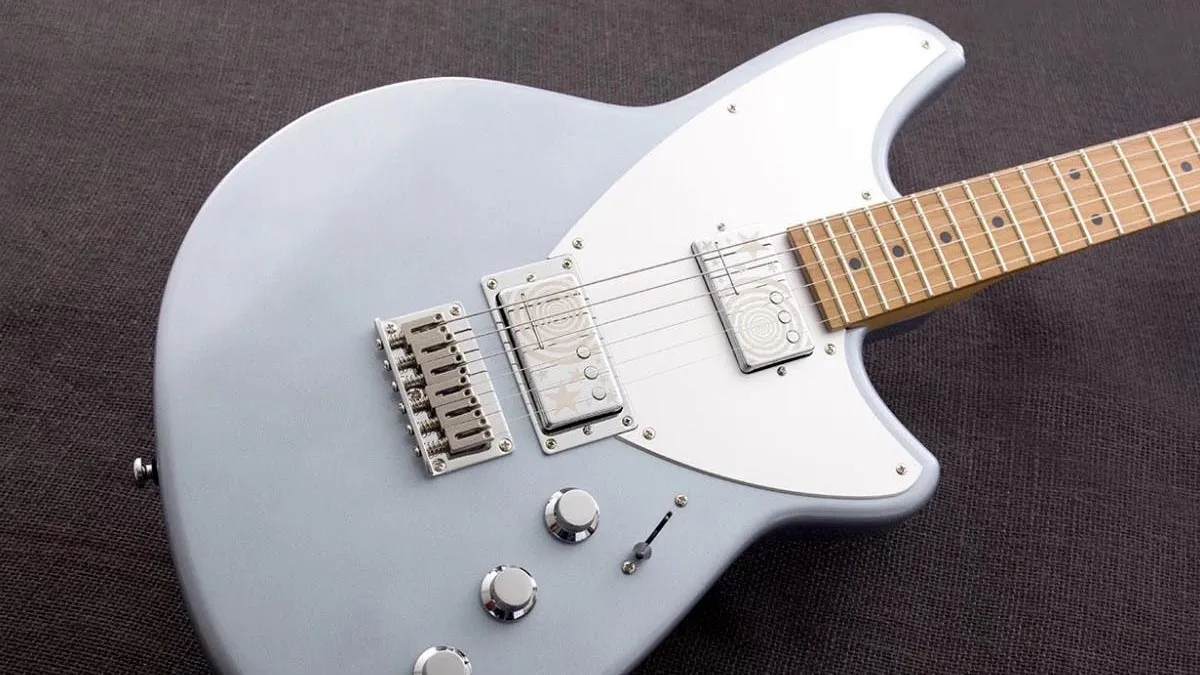
✅ Buy if you want the most versatile signature guitar: This Billy Corgan signature can cover a vast array of styles.
❌ Avoid if you’re left-handed: Despite its versatility, there’s no lefty version of this guitar, so you’ll need to look elsewhere.
Overview
This is actually the third signature guitar collaboration between Billy Corgan and Reverend, and it marks a real big breakthrough for the brand in the mainstream guitar consciousness. It’s a distinctive-looking instrument but, as we’ll find out, also an incredibly versatile one.
Build quality
The brushed metal pickguard and decorative humbucker covers are subtle touches on a guitar that is quite distinctive-looking. The horns have been sculpted for comfort when further up the neck, and the body is chambered to make it more lightweight and resonant.
Playability
The Z-One has a medium oval neck profile, which offers a very comfortable playing feel. It’s right in the middle of chunky and slinky neck profiles, delivering a playing experience that’s equally comfortable with open chords as it is with lead guitar work. The jumbo frets feel really nice to bend against, and the flat, 12-inch radius makes it feel speedy with legato.
Sounds
The bridge pickup delivers a very mid-range voice, perfect for pairing with an overdriven tube amp. The trebles are rolled back and the bass controlled, and it nicely cuts through a full band mix. The neck pickup is almost like the Strat neck pickup but with zero hum. It’s got a round voice that’s percussive. With a middle position that sounds almost Gretsch-like, you’ve essentially got one guitar that sounds like three.

“Playability and construction are top-notch, particularly the neck, which features a profile that maintains Reverend’s reputation for speed and comfort. Thanks to the versatility of the newly voiced Railhammer pickups, suffice to say the third time’s the charm.”
Read more: Reverend Billy Corgan Signature Z-One review
Best for shred

✅ Buy if you want a fast-playing signature guitar: Tim Henson is one of the fastest players on the planet, and his signature guitar follows suit.
❌ Avoid if you’re a traditional guitar player: This is a futuristic option designed for modern players and contemporary tones.
Overview
Tim Henson is one of the most influential and divisive guitar players of the last decade. Love him or hate him, the guy has chops, and the Ibanez Tim Henson Signature is designed for ultra-fast playing. Tim’s technical approach to playing will be evident to anyone who picks up this guitar.
Build quality
It’s a distinctive-looking instrument with that ‘tree of life’ inlay and the bold silver finish. It looks great, but our review model did have some slightly rough edges in terms of the build. What was flawless, though, was the setup, which delivered superb playability from the moment we took it out of the box.
Playability
Despite being a shred guitar, it doesn’t have the typically ultra-thin neck profile. It’s still unbelievably fast to play, though. It’s a flat, 12-inch radius in lieu of the fancier compound ones we often see on modern guitars, and the jumbo, stainless steel frets deliver a stable platform for bending and vibrato.
SoundsThe TOD10 ships with Henson’s signature Fishman Fluence pickups in a HH format. These have three voices with an active humbucker, passive humbucker, and a single-coil voice. These are accessed via a five-way switch and push-pull tone pot, giving you a total of 8 different tones to play with. This makes it incredibly versatile, if modern-leaning.

“Present through all these sounds is a contemporary type of clarity. The Ibanez TOD10 is perhaps not for those chasing a guitar tone influenced by the originators of the rock genre through the likes of Les Pauls and Strats, but an obvious must-try for Polyphia fans looking to recreate those unique sounds, or for a guitarist after something a little different in the modern realm.”
Read more: Ibanez TOD10 Tim Henson Signature review
Best for drop tuning

✅ Buy if you want a guitar for chugging heavy riffs: The long scale and massive string gauge make this perfect for downtuning.
❌ Avoid if you want to shred: That also works against you, though; shredding is very difficult on this guitar.
Overview
Sleep Token is one of the biggest metal bands on the planet right now, and guitarist IV’s signature model very much appeals to the heavy side of the band. The Jackson Sleep Token IV Monarkh is basically a very metal version of the Bass VI, tuned to E1, a full octave below a regular scale guitar.
Build quality
It’s a beautifully put-together instrument, but we aren’t fans of the big block of gloss black that covers part of the maple neck. The Pale Moon ebony fretboard is absolutely stunning though, with its distinctive pale and dark shades that are unique to each instrument. It’s overall a solidly built instrument, and not as heavy as you might expect considering the scale.
Playability
It’s actually a surprisingly playable guitar. Barre chords aren’t as hard as you would expect given the string gauge and scale, but it’s no shred guitar either. The thickness of the strings works against you here, making fast scale runs and sweep picking not quite impossible, but difficult. For heavy riffing, however, it’s a super satisfying instrument to play.
Sounds
The IV Monarkh is also a surprisingly versatile beast when it comes to sounds. Jackson opted for the classic Fishman Fluence humbuckers rather than the modern option, which means it handles clean tones rather well. It does mean you’ll need to tweak it a bit for that properly tight, djent chugging tone, though. Once you make a few adjustments, the combination of long scale length, thick gauge strings, and the EverTune bridge makes this incredibly stable for drop tuning, and it really takes well to ultra-high-gain guitar tones.

“If you love drop-tuned metal and want to focus on riffs rather than shredding, the Jackson Signature Sleep Token IV Monarkh is a great alternative to a 7- or 8-string guitar. The pickup choice is flexible enough for djent riffs as it is cowboy chords, and the looks are distinctive enough to make it appealing to ST fans without putting off the wider metal community, who perhaps aren’t so obsessive about the band.”
How to choose

When you’re picking a signature guitar, there are a few more considerations than a typical electric guitar that you’ll need to consider. Here’s what I think are the most important factors you should look at when buying a signature guitar:
1. Utility vs fandom
You can trust Guitar World Our expert reviewers spend hours testing and comparing guitar products so you can choose the best for you. Find out more about how we test.
It’s easy to get lured into buying a guitar simply because you’re a megafan of the artist. If this is the case for you, I’d urge you to consider the actual utility of the instrument in question before you pull the trigger. Focusing on the specs versus the signature on the headstock is a much better way to choose a guitar, and you should also consider signature models even if you don’t like the artist in question.
2. Visual identity
Signature models are often inherently tied to the artist in terms of visuals. An understated signature model will blend in anywhere, but those guitars with fancy fingerboard inlays, or custom body artwork are going to stick out a mile wherever you play them. It might mean the guitar in question doesn’t fit the visual identity of your band, so it’s worth thinking about this before you buy.
3. Pickup versatility
As you might expect, signature guitars are often sonically tied to those characteristics the artist prefers. It can mean that some guitars are configured specifically to deliver tones for that genre, limiting their use cases in other styles.
FAQs

Am I just paying for a name with a signature guitar?
In most cases, you’ll be paying more for a signature guitar. It’s not just about the name on the headstock, though. Signature guitars often come with custom specifications and unique configurations you can’t find elsewhere. These could be pickups, neck profiles, switching, colors, or anything else. These might actually be more expensive to retrofit, so in some instances you could actually be saving money with a sig model.
Is it bad taste to play an artist signature on stage?
This all depends on your personal taste. For some, signature guitars are a no unless you’re playing in a covers band. For others, it doesn’t really matter. I’m in the latter category. Signature guitars are brilliant instruments, usually with great specs, so if it does the thing you need it to, play away.
Can I buy a signature guitar if I don’t actually listen to the artist?
You can, just be prepared for questions and assumptions from fans and other guitar nerds when you gig it.
Do touring artists actually play the off-the-shelf version of their signature model?
In general, touring artists tend to have custom shop models of their guitars that would be far too expensive to mass-produce as a signature model. Often there are small differences between the artist's actual guitar and the one you can buy in a shop, usually done to keep the cost down and make it more affordable for us regular folk. Some players like Jim Root and J Mascis are known for playing the mass-produced versions of their signature models, however.
Do signature guitars hold their resale value better than standard production models?
Signature guitars often hold or increase their value due to typically being limited-run and having unique specifications. It’s a double-edged sword, however. Flipping certain signature guitars can be difficult unless you can find a super fan of that artist or someone who wants a very specific configuration on their guitar. The pool of players who want to buy a signature guitar is a lot smaller than those buying your average Telecaster.
How we test

When testing the best signature guitars, we follow a rigorous review process focused on three key areas: build quality, playability, and sound. Signature models often feature custom specs, unique hardware configurations, or premium price tags, so our goal is to evaluate whether those artist-driven changes deliver real-world performance for everyday players.
First, we inspect the build quality right out of the case. We closely examine the overall fit and finish, checking for finish defects, tight neck joints, and solid hardware tolerances. We inspect details like nut slotting, bridge stability, pickup mounting, and how sturdy the controls and jacks feel. We also test hardware like locking tuners and vibrato bridges under aggressive playing to ensure the guitar can handle the demands of regular rehearsing and gigging.
To evaluate playability, we look at how the instrument feels in the hands across extended playing sessions. We pay special attention to the neck profile, fretwork, and factory setup. We check for level frets, smooth edge dressing, and dead spots, testing string bending and vibrato action across the entire fingerboard. We also assess upper-fret access and body balance, testing how comfortably the guitar sits on a strap and in your lap.
When analyzing sounds, we test how the electronics respond across different gain levels and playing techniques. Signature pickups are frequently custom-voiced, so we test how dynamically they respond to pick attack and volume knob adjustments. We run every guitar through a variety of real-world rigs, including traditional tube amps, digital modelers, and straight into audio interfaces for plugin testing, to determine whether the tones are hyper-focused on one artist's signature sound or versatile enough to cover multiple genres.
Having tested hundreds of signature and standard production electric guitars over the years, our team is uniquely positioned to benchmark every new release against its direct competitors. We use this deep category experience to place each guitar in this guide based on its build, playability, sound, and overall value.
Read more about how we test products and services at Guitar World and how we make our recommendations.
