


As an original member of Tom Petty’s Heartbreakers, bassist Ron Blair supplied distinctive basslines for the band’s classic first four albums – Tom Petty & the Heartbreakers, You’re Gonna Get It!, Damn the Torpedoes, and Hard Promises.
But global success came at a cost: Blair learned quickly that rock-star life was anything but glamorous, being earmarked by a mind-numbing succession of one night stands, and exhaustive recording and touring commitments.
Burnt out from the grind of an unrelenting schedule and disillusioned by the record business, Blair split from the group in 1982 and was replaced by Howie Epstein. Two decades later, he came full circle and rejoined, as Epstein’s long battles with substance abuse tragically claimed his life.
Throughout his tenure, Blair powered such quintessential Petty tracks as Breakdown, American Girl, I Need to Know, Listen to Her Heart, Refugee, Here Comes My Girl, Shadow of a Doubt, Even the Losers, and many others.
Asked to revisit his beginnings as a bass player and, like so many others before him, Blair revealed that he switched from six strings to four out of necessity rather than choice.
Speaking to Bass Player in 2013, he explained: “When I was in high school in Jacksonville, my dad went on a tour of Japan with the Navy, and because I wanted to be a drummer, he was going to bring me back a set of drums.
“But he ran out of money buying everything from lamps to rosewood furniture, so he came back with a Guyatone guitar and a little amp. I figured I was going to be a guitar player, and learned all the surf music.
“I had some friends in a band, two brothers who didn’t get along, and one of the brothers had to go. So my friend asked me, ‘Would you be into playing bass?’
“I went down to Lipham’s Music Store – where we used to hang out – and I borrowed a bass guitar. Then I got a hold of a little psychedelic substance and tripped out all night. By morning, I said, ‘I’m a bass player!’
“Back in those days the bass wasn’t a romantic instrument. You really had to talk someone into playing bass.”
Pressed about his early years as a musician, Blair reveals an unusual starting point: “I was a military brat; my dad worked for the Navy. I lived in Jacksonville, Florida, and surf music was the big thing – this was pre-Beatles. Then my dad got stationed overseas. Next thing I knew, we were on a boat headed for Japan.

“When I got there it was like going back in time; it took a long time for music to get over to Japan, so they were somewhat behind.
“Around 1968, my dad got stationed in Hong Kong, but I needed to go to university, so I chose the University of Florida in Gainesville, Florida. There was such a good music scene there.”
Were you familiar at that time with Tom Petty’s band, Mudcrutch?
No, not then. A couple years later, I got into a band that did gigs at places where Mudcrutch would play. Around that time I met a great girl who turned out to be Tom’s wife’s best friend. We used to go over to his little apartment above a laundromat, so I became acquainted with Tom then.
How did you reconnect?
Sometime in 1974, drummer Stan Lynch called me and said, ‘I’ve got a session with the remnants of the Mudcrutch guys, but it’s for a songwriting demo.’ I said, ‘Sure I’ll come.’
It was going really well, and at some point Tom showed up in the control room and never left. Shortly after, we were asked to do some sessions for Tom.
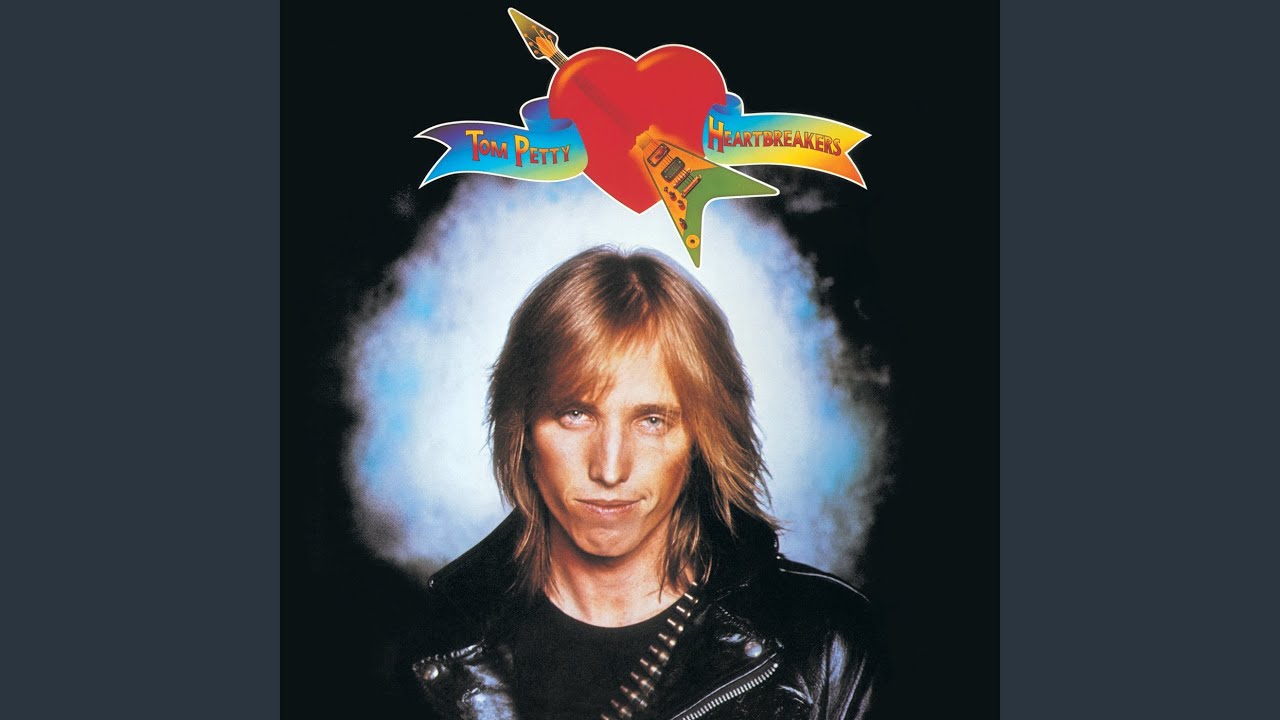
At A&M Studio we were cutting the song Mystery Man, which appears on our first album. We ran through it, and producer Denny Cordell went, ‘Fucking ace!’ – we had cut a track before we even knew what we were doing.
I felt really home at home playing with the band. It must have something to do with our Florida roots. Maybe it’s the lifestyle, but if you grew up playing there with so many good bands, you were soulful whether you tried or not.
When did you realize the band had broken through?
We had our breakthrough first in England, and then America came a little later. Before we were in the position of being a headliner, we opened up for a lot of groups back then, everyone from the J. Geils Band to Kiss.
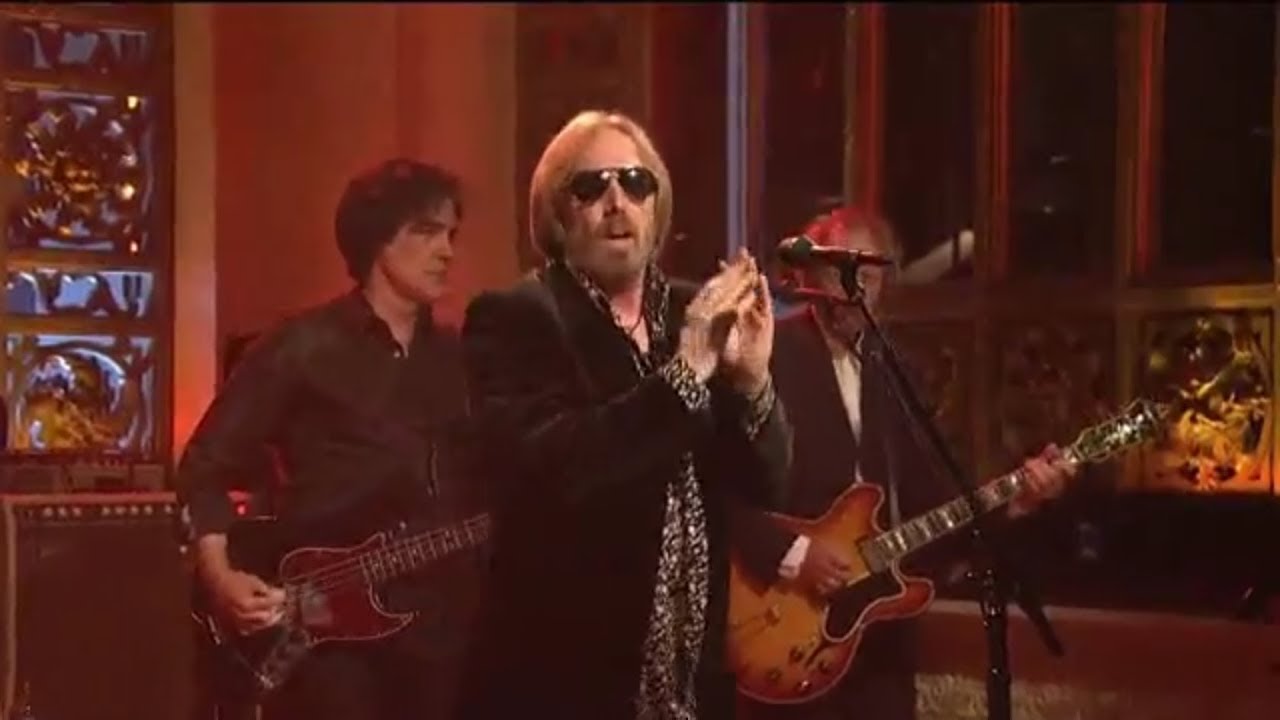
Breakdown did well in the U.S., but it was our second album, You’re Gonna Get It!, that pushed us over the top. It’s the first album of ours that went gold. When that happened, I was like, ‘Holy crap, I’m in a real band!’
Is there a Petty song that was particularly challenging for you to nail?
On Mojo, I Should Have Known It was really trippy. The demo had a bunch of stops in it and wasn’t to an exact meter. I was like, ‘Shit, I’m gonna have to take some notes.’ Somehow we deciphered that tune, but it was tricky just to make it through and nail one good take.
Another signature bassline of yours is the melodic figure introducing American Girl.
I don’t remember exactly how I came up with that part, but it’s a good one. Every time I pick up a bass and start noodling around, I always go to some kind of an open A string with a high 3rd or an open D string. I’m proud of that bass figure – it’s super-cool. We started off our halftime show at Super Bowl XLII with that.
How would you define your approach to playing bass?
I’ve always loved melody. In the early days of the band, I was consumed with jumping out with those melodies whenever I could. On one of our anthologies, there’s a live version of The Best of Everything, and every time it’s going to a transition I’m playing way up high, and then I come back down. You really need to be prudent with that kind of stuff.

A song of ours that conveys that sparseness is Fooled Again, from our first album. It’s got a pretty neat groove. Same goes for Mystery Man, which has this slow Bo Diddley beat that we hit before we even knew it.
When we started headlining and doing shows on our own, we had to be reminded: ‘Everybody’s paid their money to see you, so just slow down and give them what they want. Don’t overplay.’
A lot of bass players have a certain sound that’s great by itself, but that doesn’t mean much. How it blends with the song, how it’s sitting against the rhythm guitar, is more important.
How do you approach bass parts so you don’t step on the guitars’ frequencies?
A lot of times, you overplay a riff and execute the attack with more intensity than you need. If you’re playing high up the neck, you’ve already got it going on, so play a little easier and lay back, and those notes will ring a little better.
Can you offer any guidance in terms of sounding better as a player?
A lot of the gadgets you see on amps, the graphic EQs and strange boosts that sound really good when you push them in or crank them up – ditch all of that stuff, and just dial up your sound.
You’ve got three ways to dial it up: bass, mid, and treble. Keep it way simple. Try, with all the power you can muster up, to blend with all your bandmates and not get in the way of the frequencies.
What’s the most useful tip you ever received as a bass player?
There’s a great Phil Lesh quote that goes, ‘You’ve gotta have a damn good reason to play an open string on a bass.’ That’s good advice. I have one of my own: remain in contact with the neck at all times! Do not drop your left arm down to your side or point or do anything – don’t showboat.
