

Victor Wooten's incredible performances as a member of the Grammy-winning Béla Fleck and the Flecktones have long earned him the admiration of bass players and music fans worldwide.
In 1999 he won the Nashville Music Award for Bassist of the Year (his second), and in 1998 he received his third Bass Player of the Year award from Bass Player magazine, making him the only bassist to win the honor more than once. He was also ranked No. 14 on our list of the 100 greatest bass players of all time.
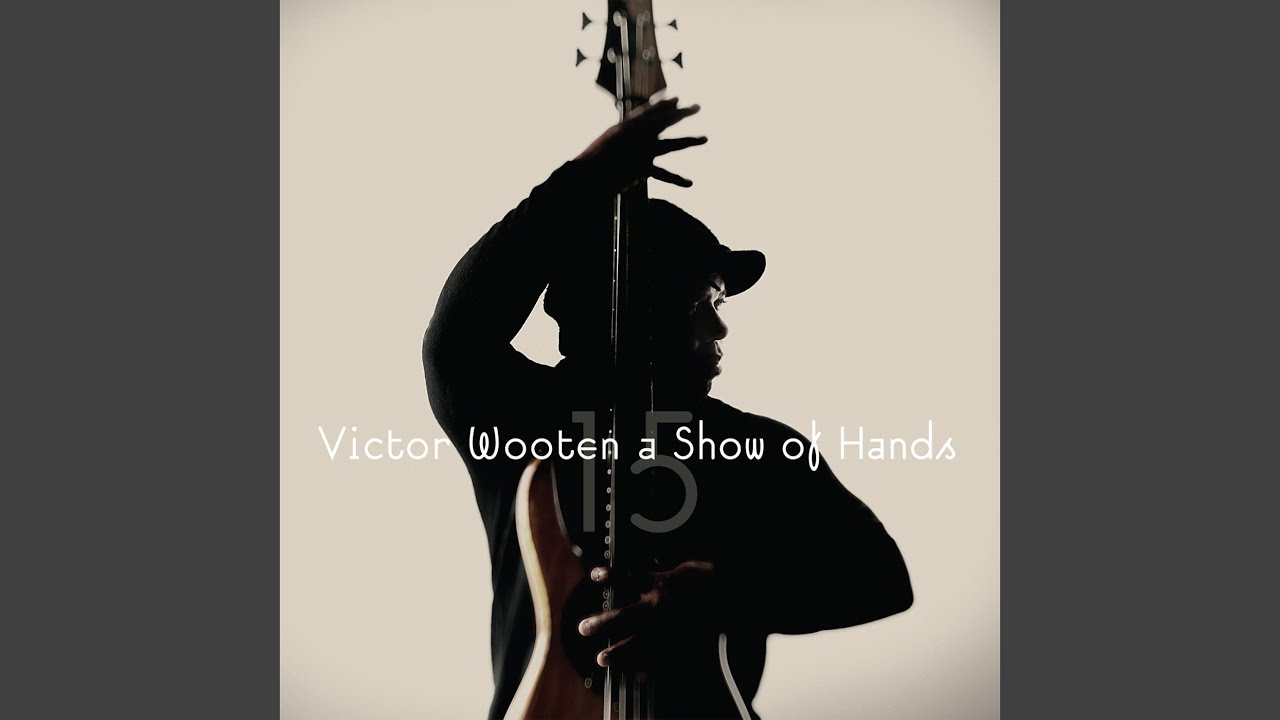
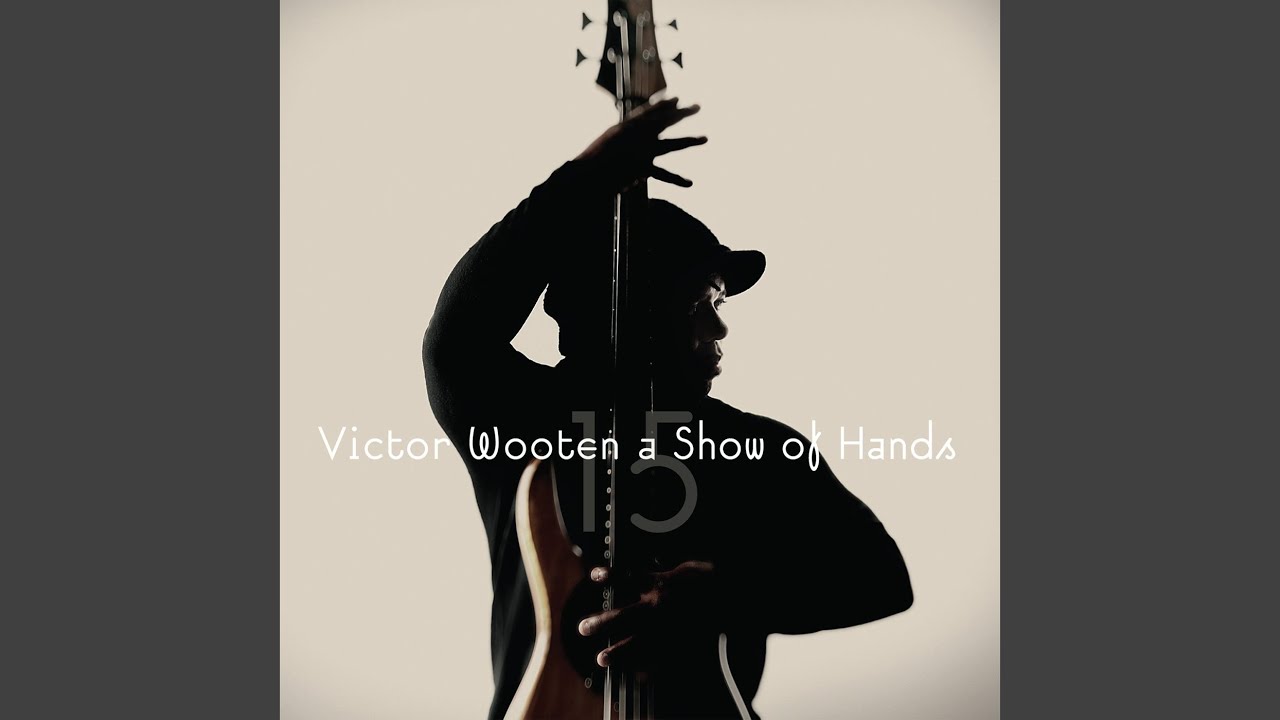
And yet, according to Wooten, one of his most remarkable achievements was the release of his groundbreaking debut album, A Show of Hands.
Originally recorded in 1993 and ’94, the project soon attained cult status through word-of-mouth and bootlegging before it was finally released. Wooten's concept was to perform all of his bass parts live, without any overdubs.
“I wanted to make a statement – more to myself than to the public – not to prove what I could do, but to show it could be done,” said Wooten in the Feb 2002 issue of Bass Player.
“I just didn’t quite know how to make the record listenable for the duration. It was kind of a challenge to myself, and I was quite happy with the outcome.”

“Back then, all I had were cassette tapes. I happened to be at Fodera Guitars in Brooklyn the day they were shipping a fretless bass to Marcus Miller, and so I grabbed a cassette of the album, slipped it into the case, and sent it off.
“I did the same thing with Stanley Clarke, and somehow managed to get cassettes into the hands of Chick Corea and Anthony Jackson, too. The coolest part is that every one of them got back to me. Somewhere I still have the voicemail Marcus left me.
“Anthony's reaction really stuck with me the most. For years, he'd been pretty vocal about not being a fan of tapping or thumbstyle playing. Then he called and gave me one of the highest compliments I've ever received.

“He said I was the first bassist who made him think about learning to tap himself because there was something on my record he couldn't figure out. Coming from Anthony Jackson, that was about as meaningful as it gets.”
Wooten describes his “open hammer pluck” technique as hitting an open string with your right thumb, hammering a note with your left hand, and then plucking a note with your right index finger, typically creating a triplet.
“My approach has always been to turn whatever I was working on into a piece of music. If I was developing a new technique, I'd write a song that forced me to use it. That way I wasn't just practicing exercises – I was making music.”
“The song Classical Thump is a great example of that because it started out as nothing more than a thumb exercise. It was a way to work through different thumb techniques. If you listen to the song from that perspective, you can actually hear the technique evolve as the piece progresses.”
Another example of how much music can be made with just four strings can be heard on Justice, Wooten's thought-provoking homage to life on the streets.
“I'd been messing with that bass groove for quite a while; it had a cool sound, which inspired the lyrics and the other sections. Don't ask me why I chose to solo over the chorus – it just seemed to work!”
As for the track’s wide-ranging vocals, Wooten revealed, “It’s all my voice overdubbed. Instead of singing in various ranges, I slowed down or sped up the tape so my actual voice quality would change. Prince does that.”
In keeping with the album's solo bass concept, Wooten performed all of his bass parts live, without overdubs. “Whenever I play – whether I'm by myself or not – always hear the rest of the band in my head. So I try to emulate the sound of a band, with all the rhythmic motion that occurs between the melody notes.”
On the bass side, Wooten played his Fodera 4-string in standard tuning; he used new strings and recorded direct through Demeter and ADA preamps into the board. “I also placed a live mic right in front of my bass to get the string attack.”
Few tracks from the album illustrate Wooten’s bass playing philosophy more than U Can’t Hold No Groove. “That’s still one of the songs that I get asked how to play the most.”
“The whole CD had been recorded for months when I decided to add the vocals to that song. I called Will Lee and he agreed to sing with me. I was not going to sing at all but he talked me into it. We did our best imitation of Larry Graham.”
Another standout track that has become a benchmark for bassists, and a crowd favourite at clinics and concerts, is the title track, A Show of Hands.
“A friend of mine named Steve Lowrey drew a picture of me that he titled A Show of Hands. I decided it would make a good title for the album. Once this song was recorded I found the title appropriate for it, too.
“I used my stereo bass guitar for this one – a four-string Fodera that has individual Piezo pickups for each string, along with magnetic pickups made by Bill Bartolini. The Piezo’s allow each string to be recorded on separate tracks. I then panned each string in a different place during mix down.
“Over the years, I have had to play this song repeatedly to prove to people that it can be played all at once!”

