

Don Felder is used to pain when it comes to music. I mean, the guy was in the Eagles, a band that epitomized the idea of seemingly seeking pleasure through agony. He took that to a new level when he was carted off the stage in February 2025 due to a pretty serious case of dehydration.
“My phone has never blown up so much in my life as it did when I had that little thing,” Felder says with a laugh.
That laugh is key, as it shows that at 78 – and now incredibly well-hydrated – Felder isn’t about to curb his touring career. “I’m going to rock until I drop,” he says. “But I didn’t think I’d be dropping in the middle of Tequila Sunrise! I thought I’d be dropping during Life in the Fast Lane, and they’d just drag me off the stage.”
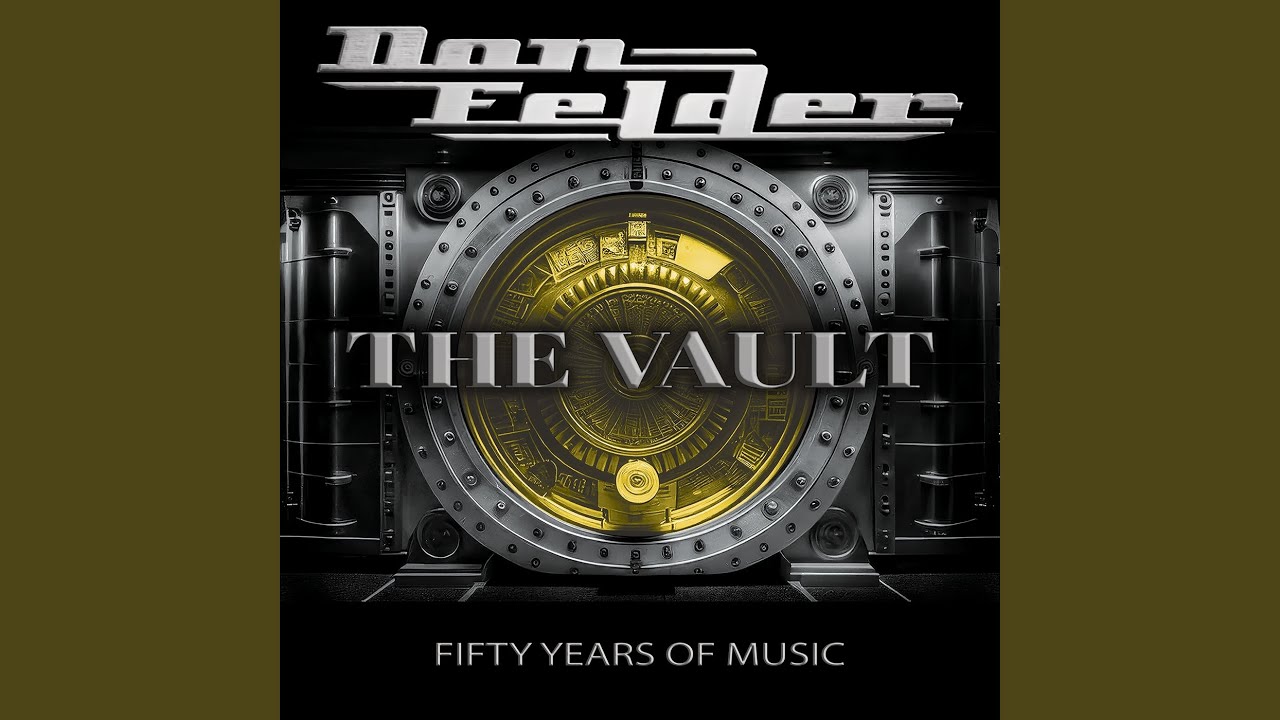
Happily, there will be many more stages to drag Felder from. He has a slate of shows planned in 2026 and released a new record – The Vault 1975-2025: Fifty Years of Music – last year. There is, however, a bit of a gray area when it comes to the word “new,” as some, though not all, of the tracks from The Vault are, well, vintage.
For example, Felder wrote Move On, which features some tasty slide work, as an offering to Don Henley and Glenn Frey when he joined the Eagles. Henley and Frey didn’t dig Move On, but Felder did – especially when he recently rediscovered the original 1973 demo in a storage cabinet. He loved his slide work on the track, the roots of which date to an evening spent with Gregg and Duane Allman.
“We became friends,” Felder says. “One night, Duane was sitting on the floor playing slide. I said, ‘You’ve got to show me how to do that.’ He showed me the open tuning and how to pull down the fifth, slide up to the third and have a flat seventh on it. You know, the basics.”
After that lesson, as evidenced by Move On, Felder made the technique his own. “I’ve never tried to copy or emulate Duane,” he says. “He was so far ahead of me. I just felt like, ‘Now that I know how to get around on the instrument, I’ve got to learn to sound like me.’ I can’t sound like him; no matter how hard I tried, I couldn’t do that. But I stole as much as I could from him, watching him play in the old days.”

The Vault is actually a perfect marriage of old and new – a middle ground, if you will. And that’s just the right fit for Felder, who’s sometimes overlooked when it comes to ’70s guitar titans. Not that he cares.
“I never did it for the money, the fame or the legacy,” he says. “I did it because I was fascinated with music. I love to play and write. I love to go to the studio when it’s dark, turn it on and have no idea what I’m gonna do. I pick up a guitar, see what comes out and put it on record.
“I don’t know what I’d do if I retired; I’d be bored to death! It’s fun to have something to be excited about, and I always hope somebody else will be excited, too.”
You recently released The Vault 1975-2025: Fifty Years of Music. What’s the story with that?
I moved out of Malibu in 2000 after going through five major fires – and all the mudslides and road closures – and moved into town. I had a little studio I dismantled and put into storage, and all my tapes and demos were in storage, too. I hadn’t seen that storage locker for 20-something years, so it was time to go through it.
There were boxes of cassettes, CDs and DAT machines that recorded half-inch four-track, half-inch 24-track, 16-track and all the stuff I’d been working on since 1974 and 1975 as demos. I said, “I don’t even know what this stuff is!”
One of the demos you mentioned is Move On.
I’d just been invited to join the Eagles, and [ex-Eagles guitarist] Bernie Leadon told me, “If you want to write songs in this band, just worry about song structure – don’t write lyrics or melodies. Give those ideas to Don and Glenn, and they’ll write lyrics if they like the track.”
So one of the very first things I did was, with a four-track, I recorded myself playing on a cardboard box for the drum track, and then I played bass and slide. It was a very basic, raw demo of the idea. I hadn’t heard it for 50 years.
What did you think when you heard it again?
I went, “I remember that slide part! I loved that slide part.” When I submitted it to Don and Glenn, they went, “I like the slide, but there’s really not much of a song there,” so that’s what I heard, the slide part. I said, “I like that track. I’m gonna finish this.” I finished it, reproduced it, re-recorded the slide part, did the lyrics and harmonies and brought new life to an old idea.
Steve Lukather plays on Digital World. What’s it like working with him?
When he comes over – and he’s played on just about every solo album I’ve made except for the first one, Airborne [1983] – we spend the first 45 minutes to an hour just laughing, telling stories and having a great time before we plug in and tune up. It takes 30 minutes for us to walk through an idea, trade solos and create harmonies. I enjoy working with Steve. He’s brilliant, and a lot of fun to hang out with.
You re-recorded 1981’s Heavy Metal (Takin’ a Ride). How’d you approach It?
When I hear the original recording, it sounds technically dated. It was all analog, and just the echo chambers; it doesn’t sound up to the level of technology today. I decided I’d re-record it in today’s technology, which sounds 100 times better. If you were to play the old two-track version of the stereo version and compare it to today, there’s a massive difference.
When I hear the original recording, it sounds technically dated. It was all analog, and just the echo chambers; it doesn’t sound up to the level of technology today
You’ve been at it for a long time, which probably means you’ve got gear you’ve had for just as long. It would be easy to fall back on all of that, but you’re leaning into what’s new. Why?
I use vintage microphones, and I have a rack of classic outboard gear I use to record. I just think the process of recording at 96 kHz with high-resolution, quality analog gear on the front end is a wonderful combination.
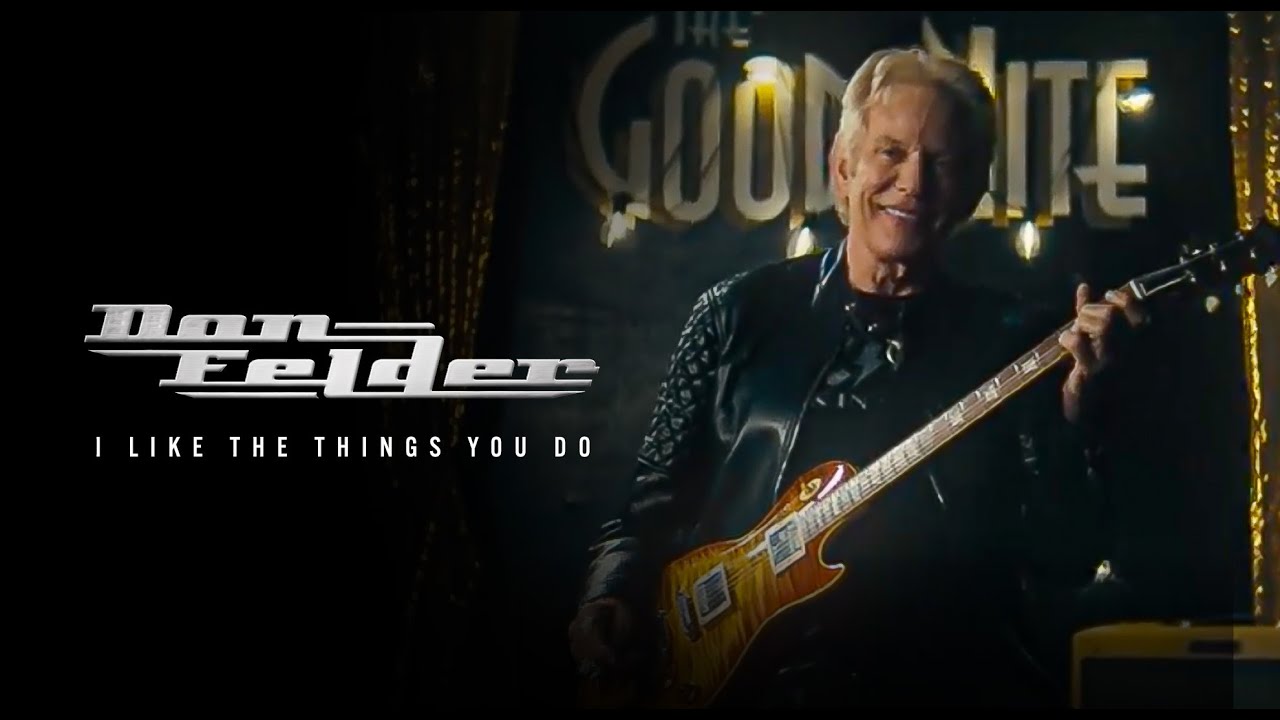
I use some great new guitars and amps, and I’ve got six or seven amps that Alexander Dumble re-did for me. I’ve got Bogners and tons of different amps and guitars. It’s easy to go in and multi-track. I was looking at something yesterday; I think it’s I Like the Things You Do. There might be 30 guitar tracks on that.
What’s the reason behind that?
If I want to pick up my ’57 Strat from the locker, I can open up my spreadsheet, walk into the vault, pull the guitar off the shelf and bring it back – or have somebody go get it
Some of them are doubles; some are split left or right. Some are effects I use. There’s just a lot of different ideas and approaches to making a track. Instead of just playing a thing top to bottom with the same rhythm guitar, that, to me, is old school. I was trying to explore, taking old ideas musically and making them sound modern with new techniques and approaches.
Do you still fall back on your guitars from your Eagles days?
I have close to 300 guitars. They’ve all been photographed and given a name. They’re separated by manufacturer; everything by Gibson is in one rack, everything from Fender is another. If I want to pick up my ’57 Strat from the locker, I can open up my spreadsheet, walk into the vault, pull the guitar off the shelf and bring it back – or have somebody go get it.
Of those 300 guitars, which is the most important?
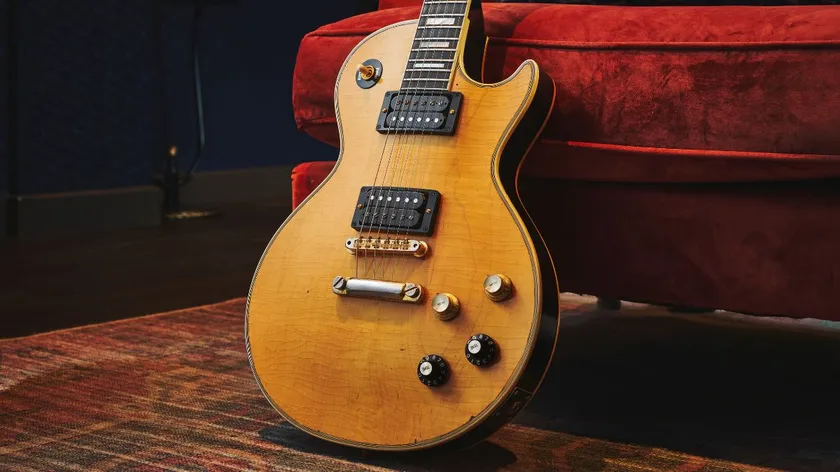
My ’59 Les Paul. I played that on just about every Eagles record that I recorded with a Les Paul. I’ve recorded with it a lot for my albums, and I used it on a couple of tracks on this record, too. I used it on I Like the Things You Do and Free at Last. It feels like home.
Do you see yourself working with Gibson on more signature gear?
I really respect the fact that Gibson did it, and was honored that they asked me to do it. I work very closely with them; their Custom Shop makes things for me that are spectacular
No, not right now. I’ve dealt with Gibson since I started playing music, and they released the Don Felder Hotel California copy of my ’59 Les Paul and the white Hotel California [EDS-1275] double-neck guitars, probably 10 or 12 years ago. They sold out immediately.
I don’t know that I’ll do many more endorsements. I really respect the fact that Gibson did it, and was honored that they asked me to do it. I work very closely with them; their Custom Shop makes things for me that are spectacular.
You talked about rocking until you drop – and you’re still writing songs.
I write all the time – almost every day. I write, scribble down a little something while listening to something on TV. I’ll hear an orchestra and go, “That was a beautiful change, back that up…” I’ll grab an acoustic and figure out what chord progression this orchestra was playing, put it on my phone, record it and collect bits and pieces.
When I’m on the road, it’s hard to write music; I can write lyrics, but not necessarily music. So when I come back home, I’m in the studio writing, recording, producing and coming up with ideas. Not all of them will become finished products, but you never know what’s going to come out until you step into it.
- This article first appeared in Guitar World. Subscribe and save.