


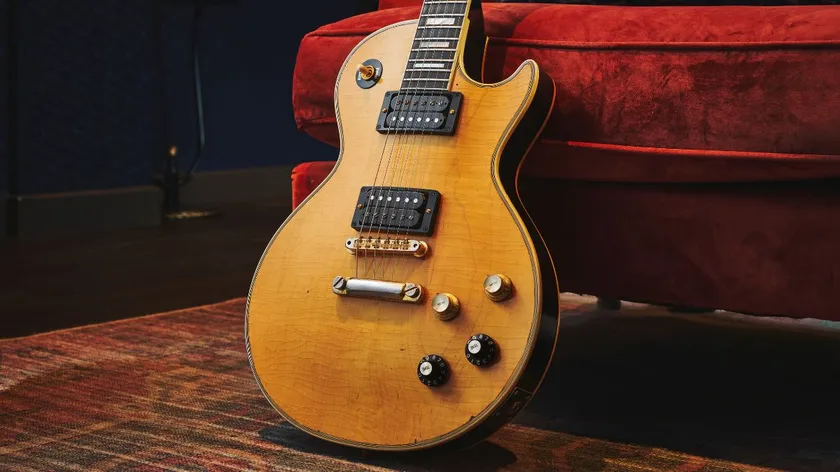


Chris Poland is best known as the original guitarist for Megadeth, appearing on the group’s first two records, 1985’s Killing Is My Business… and Business Is Good! and 1986’s Peace Sells… But Who’s Buying?
He’s the archetype for that group’s style, if you will. Beyond that, Poland’s oddball style – which stems from a nasty hand injury he suffered before he turned pro – is a pillar of Eighties thrash. But that’s not all there is to Poland’s playing.
“I came from a rock background – guys like Jeff Beck, Jimmy Page, Eric Clapton, Jimi Hendrix and Leslie West,” Poland says. “When I heard Jeff Beck’s Blow by Blow, I went down the rabbit hole of bands like Weather Report, Mahavishnu Orchestra, Return to Forever, Tony Williams with Allan Holdsworth and bands like that. My Ohm project and any other of my solo instrumental records are just me being influenced by this music.”
Going into Black Flame, Poland’s new album with Nuclear Messiah – which, by the way, features fellow former Megadeth men Marty Friedman, Glen Drover and Chris Adler – his rock and metal roots collided with his fusion sensibilities, creating an amalgam of six-stringery only Poland could conjure.
“Am I a fusion player? I don’t know,” Poland says. “But it was the Mahavishnu Orchestra’s The Dance of Maya on Guitars That Destroyed the World [a 1973 compilation album featuring the fretwork of John McLaughlin, Carlos Sanata, Leslie West and more] that really turned my head.
“When I first heard it, I hated it but couldn’t stop revisiting it. Until one day I got it.” Poland has been down this path before, like on 1990’s Return to Metalopolis. And, by the sound of Black Flame, Poland has still got it. It’s with that in mind that the 68-year-old virtuoso beamed in with GW to dig into the record.
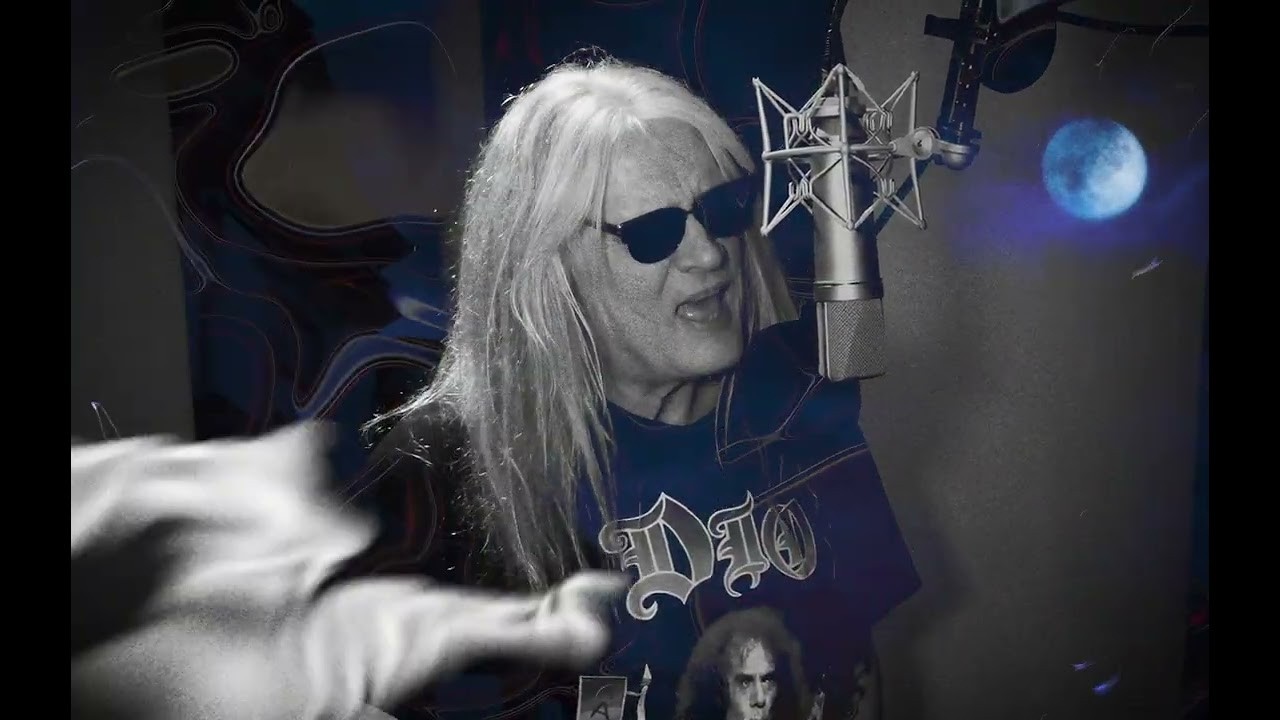
How did Nuclear Messiah get off the ground?
It was the brainchild of Brian Perera, president of Cleopatra Records. I had worked with Brian on several projects before this and knew that if he was involved, it was going to happen.
When he explained who was involved, I was blown away. I was amazed by who he got to contribute to the album. That’s why it came out so great.
Wow… between Marty, Chris and Glen and Shawn, that’s a lot of Mega talent. [Laughs] Each of them is legendary in their own right
Nuclear Messiah seems to have been built around you, with others coming on board to pitch in. What was the process like?
Original song ideas started with Derek Hughes and Jürgen Engler. They’d send song ideas to me and I’d add parts to those, then other players would add their parts. That’s the beauty of the internet and ProTools.
Then Derek and Jürgen would mix everyone’s parts, and what you hear is the end result. Derek and Jürgen did such an amazing job mixing. It’s hard enough to mix one band. But on Black Flame, each song was different – with a different vibe and different artists. They need to be commended.
What was your rig like for this recording?
I used my Custom Audio Electronics rig that I’ve had for decades. I used an Egnater IE4 red face preamp with a modded Peavey 120/120 tube power amp with 5881 tubes in it, plus assorted pedals and rack effects. Bob Bradshaw’s system is my palette.
Fellow Megadeth alumni Marty Friedman, Glen and Shawn Drover, and Chris Adler appear on this record.
Yeah! Wow… between Marty, Chris and Glen and Shawn, that’s a lot of Mega talent. [Laughs] Each of them is legendary in their own right. Each of them brought their vibe to the record. It was my honor to be on this record with them and everyone else.
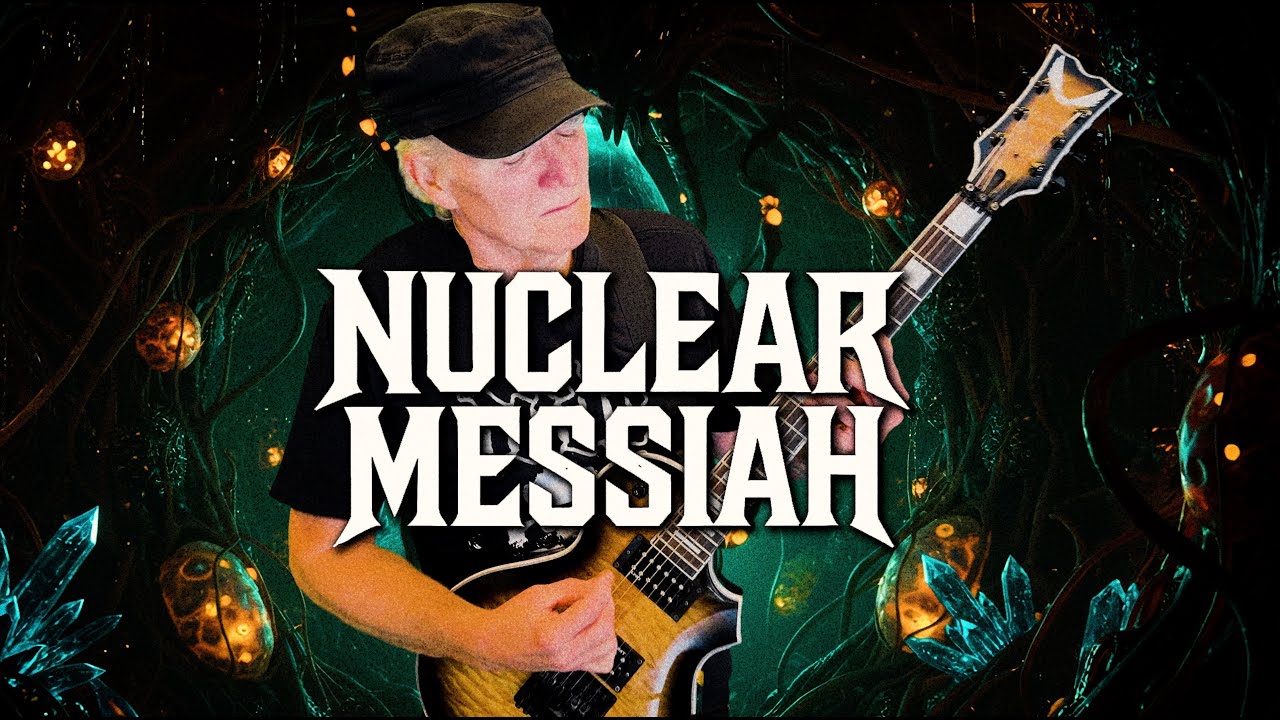
Pat Travers and Vinnie Moore also appear, adding more six-string firepower.
Oh, my God! Pat Travers! Snortin’ Whiskey? Holy shit, man… I loved that song and record. Pat’s phrasing and tone is peerless. And Vinnie Moore is the same. He has a lot of blues in his playing, but at the drop of a hat he can sweep and pick some impossible phrases.
Both have perfect bend pitch as well. All the other guitarists brought their own sound and feel. And then there’s Bumblefoot [Ron Thal], Joel Hoekstra, Lance Lopez and Mick Box; they’re all world-class players. Add Jürgen Engler to this list as well!
My favorite moment is Arthur Brown’s performance on Ride the Sky. It gets me every time I hear it. But all the other songs are just as good
Electric Burn is cited as a highlight from Black Flame. What’s the story there?
Electric Burn is such a great track. I feel it has a lot to do with Chris Adler’s drumming. It’s relentless and at breakneck speed. Add Marty’s incredible soloing, especially the end of main solo ascending harmony section, and Marc Lopes’ intense vocal performance and you have a song that never gets old.
But my favorite moment is Arthur Brown’s performance on Ride the Sky. It gets me every time I hear it. But all the other songs are just as good. But that vocal – I just love it.
I’d be remiss if I didn’t mention William Shatner’s spoken‑word introduction…
By the way, Brian Perera wrote the words that Mr. Shatner spoke. I want to mention how welcoming he was when we went to his home
William Shatner is a force of nature. He’s an amazing actor, but when I heard his spoken word back at the studio – which is the first of two takes, by the way – I realized he was speaking in perfect 3/4 time. I really don’t think he planned it. It just came out that way. That’s how good an orator he is.
That is how I wrote the music around his spoken word. By the way, Brian Perera wrote the words that Mr. Shatner spoke. I want to mention how welcoming he was when we went to his home. He’s such a great person with a great sense of humor. It’s something I’ll never forget.
What excited you about this project most?
I learned a lot making this record, including how to realize what works and what doesn’t work on the spot and when to let your best instincts take over. That said, I admit I asked to revisit a couple of solos I did after I turned them in. That was a luxury not often given. As far as my playing and writing goes, I hope it’s always evolving. I guess time will tell.
- This article first appeared in Guitar World. Subscribe and save.

