


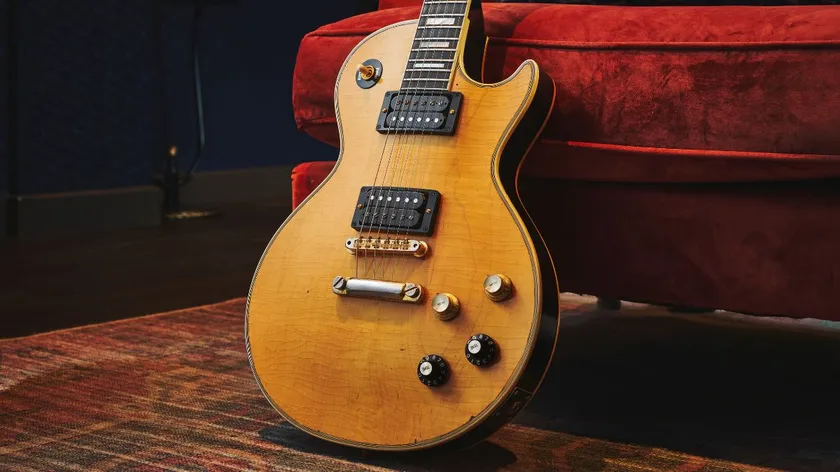


The guitar is one of the most versatile instruments on planet Earth. It’s easy enough to learn, extensive enough to cover a wide range of sounds and frequencies, and, with thanks to a newfangled invention by the young-buck guitarist name of Les Paul, it’s also electric now too (whatever that means). Glibness aside, there’s a reason the guitar has the stature it does today – and a reason you’re after a microphone with which to capture your own playing.
But the multitudes of which the guitar is capable makes this simple question – what’s the best microphone for recording guitar? – a difficult one to answer succinctly. The world of microphones is even broader, with different technologies, designs and even base materials yielding dramatically different audio results. For a seasoned studio engineer, this is a wide palette of potential sounds they can deploy judiciously for killer recordings; for a guitarist a little fresher to the idea of recording their playing, it can be a minefield.
Some microphones are more suited to capturing dynamic acoustic guitar performances, while others excel with the electric guitar’s raucous output through a gritty tube amp. Some are versatile Swiss-army knives of tonal possibility, while others are highly-specialised studio-grade tools. Some are cheap and cheerful, and others are bank-breaking object-d’art. And, in this very buyer’s guide, you’ll find a microphone for every occasion.
For my top pick, I've gone for the excellent Shure SM57 - a dynamic, no-fuss mic that delivers beautiful, clear audio, but all the products I've picked out below are worthy of consideration.
If you’re not quite ready to weigh up my picks for the best microphones for recording guitar, you might mosey on down to the FAQ section below. There, you’ll find a handy glossary of terms and some frequently-asked questions to help you get your head around the ins and outs of recording, guitars and recording guitars.
My top picks

The undisputed king of microphones for recording guitar, the Shure SM57 is everything: robust, honest and surprisingly inexpensive. It’s a dynamic microphone with little in the way of bells and whistles going for it, but which goes all-in on an earnest commitment to giving you exactly what you need, when you need it. Makes for a good drumstick in a pinch, too.

The MV7i isn’t a just a microphone, but also a 2-channel audio interface with headphone monitoring. As far as accessibility is concerned, it's on the money. It’ll record whatever you put it in front of, can take DI signals too, gives you headphone monitoring for free, and gives you an easy in-road to getting clean captures with its DSP tech.

Rode is a well-heeled manufacturer of industry-standard microphones, and yet also one of the more trustworthy names at the budget end of the price scale. It’s a breath of fresh air, then, to be able to earnestly recommend a mic that’s barely more than £100/$150, and which makes things easy as possible for the tight-of-budget in the process.
Best overall

✅ Buy if you want one of the very best mics out there: The Shure SM57 allows you to record at a variety of volumes without any loss of clarity.
❌ Avoid if you're just starting out: If you're just beginning your guitar journey, there are cheaper options available that will get you off the ground.
If I didn’t include the Shure SM57 in a list of the best microphones for recording guitar, I would have been hounded out of town… and with good reason.
The jack-of-all-trades dynamic mic is the perfect partner for recording electric guitar, as it allows you to record at essentially stage volumes without any loss of clarity. Its cardioid pickup pattern is great for isolating the sound you want, and it is as tough as old boots too.
I also love the Shure SM57 Microphone for its versatility. Far from being ‘just’ an electric axe specialist, this mic is just at home working with acoustics, drums, bass guitars and vocals too, and is happy transferring its skill-set between the studio and the stage. The best microphone for recording guitar bar none.
Best for beginners

✅ Buy if you want a versatile mic that's ideal for new players: The Shure MV7i are accessible, versatile and perfect for those just kicking off their recording journey
❌ Avoid if you have a bit more recording experience under your belt: If your a seasoned player, you'll likely want more from your mic set up.
For many, ‘beginner’ is often a crude stand-in for ‘budget’; it points toward a potential okay-ness with reduced feature-sets, cheaper construction or minor performance-related deficiencies in favour of a low-stakes on-ramp to trying something new.
In the world of microphones and recording, this isn’t quite the case. Someone new to recording their guitar might also be new to the world of audio interfaces, of DAWs, of audio post-processing and more. Which is precisely why Shure’s MV7i is a phenomenal prospect for the beginner recording artist.
The MV7i isn’t a just a microphone, but also a 2-channel audio interface with headphone monitoring. You connect it straight to your laptop or PC, and can record straight into your software of choice. Not only can you apply effects and corrective algorithms in real time, but you can also connect another instrument or microphone via the combi input on the base of the mic. This means you can simultaneously record two tracks of audio, all without investing in an audio interface or any additional accessories.
As far as accessibility is concerned, the Shure MV7i is on the money. It’ll record whatever you put it in front of, can take DI signals too, gives you headphone monitoring for free, and gives you an easy in-road to getting clean captures with its DSP tech. A great start, and a great stopping point for the hobbyist musician too.

"Combining the excellent vocal audio capturing capabilities of the acclaimed Shure MV7+ mic with a 2-channel audio interface, the Shure MV7i is an affordable and extremely useful creative tool for podcasting, streaming and studio or location recording that provides helpful processing for delivering consistent professional-sounding results."
Read our Shure MV7i review
Best budget condenser
✅ Buy if you a good condenser mic for an affordable price: If you're on a tight budget, the NT1 is a top option that perfoms really well.
❌ Avoid if you have a bit more cash to splash: This is a solid investment, but if you have more money to spend on a condenser mic, you'll get better results elsewhere.
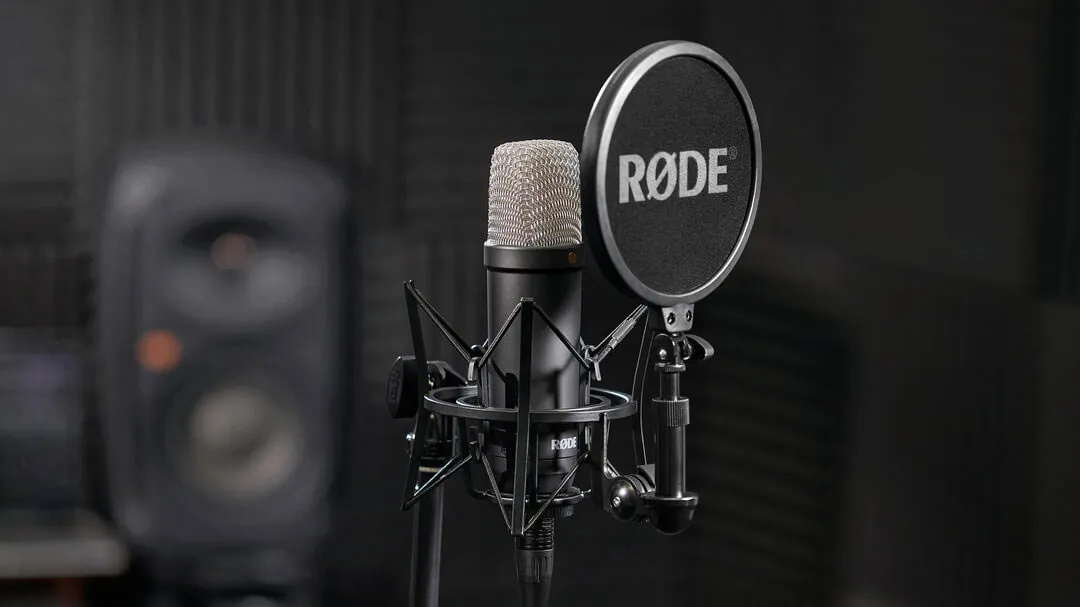
Rode is a well-heeled manufacturer of industry-standard microphones, and yet also one of the more trustworthy names at the budget end of the price scale. In an industry where recognisable names are often attributed to four-figure price points, it’s a breath of fresh air to be able to earnestly recommend a mic that’s barely more than £100/$150, and which makes things easy as possible for the tight-of-budget in the process.
That mic is the Rode NT1 Signature Series, a fifth-gen edition of a condenser microphone design that’s been knocking around for 35 years now. This is a dependable cardioid LDC mic, with some impressive handling of SPL and an even more impressive signal-to-noise ratio. The frequency response is wide enough and also fairly flat, save for a 10kHz boost that gives the NT1 some crisp character – all the better for your electric-guitar lead lines, or for your deft fingerpicking.
For your money, you’re not just getting an NT1. You’re also getting a solid shock mount, a pop filter for vocal captures and a free XLR cable. This kindness, at this price, for such a solid mic? Hell yeah.
"The Rode NT1 Signature Series outperforms its price range (which is even better value now than it was during the ’90s) with its super-quiet low noise specs, high SPL handling capabilities and crisp, airy sonic personality perfect for modern vocal performances."
Read our Rode NT1 Signature Series review
Best for acoustic

✅ Buy if you want to capture the detail in your acoustic recordings: This pair of mics will cover the capture of both the body and neck of your guitar.
❌ Avoid if you want to do much else with your mics: Granted, the Rode's do their job very well, but if you want a do-it-all mic, this is not it.
It’s often preferable, when recording acoustic guitars, to employ more than one microphone for the task. While the majority of the sound will come from the guitar’s body, there are also fine details around the fingerboard which can elevate a recording into something much richer.
The Rode M5-MP (MP stands for matched pair) is a set of two compact condenser microphones which excel at picking up these extra nuances. You simply point one towards the soundhole and the other towards the neck and will achieve great results.
Their small size means they won’t get in the way of your playing, and you might be surprised how much extra detail and stereo width you gain from your recordings. You won’t, it must be said, find much use with electric guitars unless you use them for room ambience, but the Rode M5-MP set is cheap enough that it’s worth keeping a set on hand just in case.
Best condenser

✅ Buy if you want a robust mic that delivers excellent performance: The Aston Spirit is tough as old boots and performs beautifully. An excellent option.
❌ Avoid if you don't want a more traditional mic: If you want a more straightforward mic, there are other options you can choose from.
British mic brand Aston has been cooking up a storm over the past few years, releasing a range of different mics which have universally impressed myself and the wider Guitar World team.
The Aston Spirit is its flagship condenser microphone, delivering superb recording performance and exceptional build quality at a price which nobody else in the sector can beat.
The Aston Spirit is so well constructed that you can drop it, bash it around and generally give no further thought to its well-being and it will continue to perform. This is thanks to features like the unique mesh head which, if subjected to a drop or ding, will simply fold up to protect the valuable internals.
It also has an in-built pop filter and shock mount, making it ready for anything you can throw at it.
Best ribbon mic

✅ Buy if you want a quality ribbon mic for a good price: The Warm Audio Fen-Tone WA-FT delivers warm, natural sound.
❌ Avoid if you want to get the best results straight out the box: If you want to get the best performance from this mic, I'd recommend getting an external high-gain pro mic preamp.
Warm Audio is an excellent audio-tech example of the oft-stolen adage “good artists borrow; great artists steal”. Among a plethora of affordable redesigns of now-expensive vintage studio equipment, you’ll find this ribbon microphone – the Fen-Tone WA-FT, a strikingly ‘50s affair which takes knowingly after the far costlier studio-mainstay ribbon mic, the Royer R121.
But look within that glorious, finned chrome chassis, and you’ll find a wealth of innovation equating to true modern convenience. Ribbon mics are notoriously difficult to gain-stage properly, at least without some additional investment in some expensive mic preamp tech. Warm Audio has taken care of that for you, with a phantom-powered JFET preamp you can switch in for a 26dB lift. This means you, with your budget audio interface, can enjoy the unique silky-smoothness of a ribbon-mic-ed guitar without any unwanted preamp hiss.
Between this, its handling of high SPLs and its attractive price, the Warm Audio Fen-Tone WA-FT is one of the better deals for ribbon mics on the market today. All the better to track your electric guitars with.
Read the full Warm Audio Fen-Tone WA-FT review.
"The Warm Audio Fen-Tone WA-FT is an affordable, professional-quality ribbon mic that delivers the polished, natural-sounding tones that have made ribbon mics the preferred approach for miking guitar cabinets and many other instruments over the last 20 years."
Read our Warm Audio Fen-Tone WA-FT review
7. Best for studio

✅ Buy if you want an excellent all-rounder: The Neumann TLM-102 is a great choice for general studio use and can handle acoustics and vocals brilliantly.
❌ Avoid if you're looking for mic with a shock mount: It's not a deal breaker, but a shock mount would be a welcome addition.
Sitting at the upper-to-middle price bracket, the Neumann TLM-102 is one of the best microphones for recording guitar for anyone looking to hone their recording craft. As a large-diaphragm condenser, the TLM-102 is great at acoustic guitars and vocals, with a slight boost at 6kHz adding some extra sparkle.
That said, the Neumann TLM-102 microphone has also been engineered to withstand high sound pressure levels (SPLs) so it’s not averse to being propped up in front of a guitar cabinet.
I like its compact form factor too, and have had great results using a TLM-102 in conjunction with a dynamic mic to provide a wider tonal palette when it comes to mixing. If you want a compact option with bags of character, this Neumann is the best microphone for recording guitar for your needs.
Best for rock

✅ Buy if you want a mic that's tailor-made for rock playing: The Sennheiser e609 is built for recording at higher volume levels.
❌ Avoid if recording rock music isn't your thing: With the e609 working best at volume, this may not be the right mic for you.
The Sennheiser e609 Microphone has been made specifically for recording guitar amps, going as far as to remove the need for a dedicated mic stand. Instead, you simply drape the e609 over the top of the amp towards the speaker cone, and there it will happily sit picking up sounds at any volume you care to reach towards.
The supercardioid pickup patterns ensures the microphone will only record exactly what’s coming out of the speakers with no bleed or feedback too.
It doesn’t have the widest frequency range, and there are certainly better ‘sounding’ microphones for more delicate play styles, but for rock and metal players who need something quick and inexpensive, the Sennheiser e609 is ideal.
Most versatile

✅ Buy if you want a mic that can be tweaked for ultimate customization: The AKG C414 XLII is a great studio tool and can be tinkered with to suit your desired sound.
❌ Avoid if you want a wider sound: I would have liked the performance to be a little wider and not quite so hemmed in.
AKG is condenser mic royalty, and with the AKG C414 XLII Microphone it’s easy to see why. As a studio tool, it’s near indispensable thanks to its multiple pickup patterns and different attenuation and filtering options available on the mic itself.
This makes the AKG C414 XLII ideal for recording all kinds of guitar sounds and techniques, while the dynamic range you’d expect from a high-quality condenser remains untroubled.
I really like the fact that it comes complete as a package with a shock mount and pop/wind shields, making it one of the best bundles in its price range.
How to choose

Typically, there are a few things to consider when choosing from among the best microphones for recording guitars. First is the situation you’ll be using the microphone in. Studio and stage bring different requirements and may therefore require different choices. Likewise, you would possibly employ a different type of microphone for recording an acoustic than you would an electric.
The two major types of microphones for recording guitar covered here are dynamic and condenser. There are also ribbon mics, which yield incredible sonic results but this is reflected in their sky-high price. Dynamic microphones contain no moving parts, and can withstand much higher volumes without losing fidelity. This makes them the best microphones for recording guitar if you want a mic to place in front of loud tube amps, which need volume to unlock their true harmonic potential.
Dynamic mics tend to have a tighter pickup pattern – more on this shortly – which makes them ideal for concentrated, focused sound capture. Condenser microphones, on the other hand, are more delicate but their method of capturing sound enables them to pick up much more in the way of fine detail.
As mentioned, a microphone’s pickup (or polar) pattern is a crucial component of how they operate. Cardioid, or super-cardioid, means the microphone registers only what is placed directly in front of it, rejecting sounds coming from outside that specific axis.
Omni and bi-directional pickup patterns work, as you expect, by registering sounds from a wider area. In the studio, for example, you might want some of the natural reverb from the space in which you’re recording incorporated into the overall results and an omni-directional mic will allow for this. Let’s take a look at the top picks for the best microphones for recording guitars now.
FAQ
What’s the difference between a dynamic microphone and a condenser?
The two major types of microphone for recording guitar covered here are dynamic and condenser. Dynamic microphones are passive devices, with an internal design that favours higher volumes and directional recording. This makes them the best microphones for recording loud electric guitar through an amp, or for use on stage so as to reject sounds from elsewhere.
Condenser microphones, on the other hand, are active devices with higher sensitivity to sound. They are better for studio applications, in capturing more delicate and detailed sounds or performances. These are great for acoustic guitar, but also killer on guitar cabs.
What's the best microphone for recording electric guitar?
Unsurprisingly, the best microphone for recording electric guitar depends on the results you want to achieve. That said, it’s the Shure SM57. Unequivocally. The SM57, despite being the cheapest microphone on this list, wins out against most of them – as evidenced by its near-ubiquitous usage as the main mic for guitar recordings in practically every professional recording studio on the planet. The SM57 is simply exceptional at honestly capturing the characteristics of an electric guitar through an amplifier.
Of course, different microphones have different characteristics, which can either enhance your recording or get in the way. So, with some research, you might find you prefer the sound of a certain microphone or technique over this tried-and-true, one-size-fits-all fave. This writer, for instance, is a big fan of using small-diaphragm condenser mics up close against the grille of an amp cab for a full, rich and intensely-detailed sound – especially when paired with a ribbon mic backed off into the room for texture. But more on this later.
What's the best microphone for recording acoustic guitar?
Again, the best microphone for recording acoustic guitar is a matter of both intention and taste. For a detailed, honest recording of your playing, a large-diaphragm condenser mic like the Aston Spirit is an excellent choice – all the better if paired with a ribbon mic for some juicy dual-mic configurations.
If you’re willing to get a little deeper, a pair of small-diaphragm condenser mics would be ideal for getting a stereo representation of the guitar as it sounds in a room – capturing body and neck separately for a subtle dimensionality that sounds like butter in a mix.
How do I mic up a guitar amp?
Micing up a guitar amp is as simple as pointing a Shure SM57 directly at the centre of a speaker in your guitar amp’s cab. That technique is the basis for easily more than 50% of the recorded guitars you’ve ever heard in any song or album. Of course, there’s a lot more to it than that – if you’re willing to experiment.
For instance, the further out from the middle of the speaker you move, the more changes you’ll hear in the character of the sound you’re receiving. Likewise, tilting the microphone off-axis, so it’s pointing at the speaker from an angle, can alter the character in ways. This is worth experimenting with, for darker and grittier tones and for use alongside an optional second mic.
There are those that, rightfully, eschew the SM57 as a sole guitar mic, in favour of some more exciting mic arrays and techniques. For instance, replacing the SM57 with an SDC mic can yield powerful results, particularly in the low end – ideal for solo electric guitarists or minimal arrangements. An LDC or ribbon mic, pointing at the amp from a few feet away, can capture the amp as it sounds in a space, for more roominess and sparseness.
How do I mic up an acoustic guitar?
Recording an acoustic guitar is at once deceptively simple and surprisingly difficult. The easy way is foolproof, and more than adequate for a vast majority of cases: point your microphone at the 12th fret, between 6” and 12” from the strings. Move it around to find where sounds best, and you’ve got a fairly even and natural capture of your instrument and playing.
If you want to get a little more involved with your recordings, this is where the real fun begins. For body and three-dimensionality, two pencil mics in an X-Y configuration – that is, capsules as close to touching as possible, and pointing 90 degrees away from one another – is a great way to capture body and neck separately.
Alternatively, an LDC and a figure-8 mic like a ribbon mic, in a mid-side configuration – where the main mic captures the guitar itself, and the figure-8 mic captures the room while rejecting the instrument’s sound – can give you tighter control of the guitar and the space it’s being recorded in.
These are just three methods of recording an acoustic, and barely scratching the surface when it comes to potential. Consider this the doorway to a very enticing rabbit-hole, and one which this writer has quite comfortably made a home in.
What polar pattern should I use for recording guitar?
Any and every polar pattern has its home with recording guitar, in some form. All a polar pattern tells you is where a microphone can hear from; put your guitar in that space, and it’ll hear it just fine. What matters is how you use polar patterns to your benefit. On stage for a loud rock gig, for instance, you don’t want your guitar amp microphone picking up the monitors in front and feeding back; a cardioid mic helps thanks to its rear rejection.
Polar patterns can also be used in studio scenarios to the benefit of your recordings. If you want to record an acoustic guitar and your voice at the same time, without one bleeding into the other’s mic, you can use the null points in the polar patterns of each mic to ensure the wrong sounds aren’t picked up.
Figure-8 mics are powerful tools in this way, thanks to their strong side rejection. Put two next to each other, point one diagonally down at your guitar, point the other diagonally up at your face, and you have a mic arrangement that cleverly avoids bleed from other sources.
Glossary
Active: If a piece of audio equipment is active, this means it uses externally-provided power to run. Condenser microphones are active microphones, because there is circuitry within that utilises phantom power.
Capsule: The capsule is the part of the microphone that converts audio signals into electrical signals; it contains the diaphragm.
Cardioid: Cardioid is a form of microphone polar pattern; it picks up audio signals to the front, while rejecting audio signals from the rear.
Condenser microphone: A condenser microphone is a form of microphone, which converts audio into electrical signals using active circuitry. Condenser microphones are generally more sensitive by nature, and often have a wider frequency range than other microphones.
Diaphragm: A microphone’s diaphragm is the part which vibrates sympathetically with an audio signal, thus receiving it to be converted into an electrical signal.
Dynamic microphone: A dynamic microphone is a form of microphone, which converts audio into electrical signals using passive components. Dynamic microphones are better-suited for louder sound sources, and generally better at rejecting off-axis sound in favour of the target sound source.
Figure-8: Figure-8 is a form of microphone polar pattern; it picks up audio signals directly in front and behind, while rejecting sound to the left and right.
Hypercardioid: Hypercardioid is a form of microphone polar pattern; it picks up audio signals to the front and some signals from behind, while rejecting audio signals from the rear-left and rear-right.
Omni: Omni is a form of microphone polar pattern; it picks up audio signals equally in every direction.
On-axis/off-axis: On-axis and off-axis, essentially, refer to the orientation of sound source and microphone. If a sound source is on-axis, the microphone is effectively ‘pointed’ directly at it; if off-axis, the microphone is ‘pointed’ elsewhere. Some microphones have polar patterns that reject more off-axis sounds, ensuring you have no bleed between different sound sources; others can give you different effects, or even benefits, depending on what you’re recording.
On- and off-axis are also commonly used with respect to guitar amp speakers; putting a microphone on-axis with a speaker means pointing it at the speaker head-on, while putting it off-axis means pointing it at the speaker from an angle. Each approach yields different sonic results.
Large-diaphragm condenser (LDC): Large-diaphragm condenser, or LDC, is a type of condenser microphone. Its diaphragm is typically 1” in diameter or more. Larger diaphragms are capable of producing more output from the same sound source, and hence tend to have a lower signal-to-noise ratio. However, LDCs also run the risk of clipping at lower levels than other microphones. These are typically used to capture vocals and guitars, among other sound sources.
Passive: If a piece of audio equipment is passive, this means it does not require externally-provided power to work. Dynamic microphones are passive microphones, because they convert sound into electricity without needing power of any sort.
Phantom power: Phantom power, or P48, is a low-current 48V supply of power sent to microphones through the same XLR cable that receives electrical audio signals. This 48V power enables circuitry in active microphones to work. Its presence in the cable is harmless to most passive microphones that do not require it – apart from ribbon mics and certain older dynamic mics, in which the presence of P48 can cause serious damage.
Polar pattern: The polar pattern of a microphone describes the directions in which it can and can’t ‘hear’ things, using a polar coordinate graph. The centre of the graph is the capsule of the microphone, and the pattern plotted shows which directions the microphone is most sensitive too, and which directions are its ‘blind spots’.
Preamp: A preamp is a piece of audio equipment which amplifies the volume of an electrical audio signal entering it, in preparation for further amplification or recording by later equipment. Microphones produce small electrical signals, which must be amplified in order to be heard properly; microphone preamps are used to do this, whether pro studio mic preamps or the preamps built into an audio interface.
Proximity effect: Proximity effect is an acoustic phenomenon which sees bass frequencies reinforced and amplified when a sound source is placed close to certain microphones’ capsules. Proximity effect can be used to great effect in recording, but can also negatively affect audio capture depending on your needs.
Ribbon microphone: A ribbon microphone is a type of microphone which eschews a conventional diaphragm in favour of a suspended, corrugated foil strip. The movement of the strip in sympathy with a sound source fluctuates a magnetic field, inducing an electrical signal. Ribbon microphones can sound warm, silky and colourful, but with the caveat that they are often fragile. Older ribbon microphones are not likely to handle high SPLs well, as the ribbon can rip from excessive air movement.
Signal-to-noise ratio (SNR): A microphone’s signal-to-noise ratio describes how quiet the microphone is ‘at rest’, so to speak. All microphones have a degree of self-noise, whether from internal active circuitry or the design of the capsule. This self-noise is referenced against a 94dB sound; a low SNR means the microphone is quite noisy, and could impact the quality of recordings you take, while a high SNR means less noise impinging your recordings.
Small-diaphragm condenser (SDC): A small-diaphragm condenser (SDC) is a type of microphone with a diaphragm typically smaller than 1”. Many small-diaphragm condensers come in the form of pencil microphones, used in stereo pairs to capture a variety of acoustic sound sources with dimensionality and clarity. SDCs benefit from minimal directivity of sound character, meaning a more natural-sounding capture.
Sound pressure level (SPL): Sound pressure level, or SPL, is effectively the loudness of a sound as measured in decibels. Higher-SPL sounds have more energy; different microphones’ capsules are overcome by different maximum SPLs, leading to clipping – or even damage, in the case of ribbon microphones.
XLR: XLR is a type of cable connector, and the contemporary standard for microphones. It is a three-pin connector, enabling the carriage of a balanced audio signal from the microphone to the next stage in your recording setup.
Why trust Guitar World?
☑️ A global audience of 3.8 million guitarists monthly
☑️ 1,200+ reviews on GuitarWorld.com
☑️ 30+ years of product testing at Guitar World
Guitar World boasts over 44 years of expertise and stands as the ultimate authority on all things related to guitars. The magazine and website feature expertly written gear round-ups and top-quality, authoritative reviews penned by a team of highly experienced industry professionals.
Guitar World's inaugural print issue hit the shelves in July 1980, and ever since, it has been captivating players and enthusiasts with engaging lessons, insightful interviews with the biggest guitar heroes, and priceless buying advice for newbie players.
Furthermore, GuitarWorld.com continues this legacy online and serves as the hub of the world's foremost authorities on guitar playing. The site not only hosts content from Guitar World but also showcases articles from respected publications such as Guitarist, Total Guitar, Guitar Techniques, and Bass Player. With a reach extending to 3.8 million players each month, GuitarWorld.com is a go-to destination for guitar fanatics globally.
Meet the experts

Chris Corfield is a journalist with over 12 years of experience writing for some of the music world's biggest brands including Orange Amplification, MusicRadar, Guitar World, Total Guitar and Dawsons Music. Chris loves getting nerdy about everything from guitar gear and synths, to microphones and music production hardware.

James Grimshaw is a freelance writer and music obsessive with over a decade of experience in music and audio writing. He's lent his audio-tech opinions (amongst others) to the likes of Guitar World, MusicRadar and the London Evening Standard – before which, he covered everything music and Leeds through his section-editorship of national e-magazine The State Of The Arts. When he isn't blasting esoteric noise-rock around the house, he's playing out with esoteric noise-rock bands in DIY venues across the country; James will evangelise to you about Tera Melos until the sun comes up.
Latest updates
15/01/26: The guide has been rebuilt from the ground up to include new product entries. A top picks section has been added, and every product now has "at a glance" panels with pros and cons. Expert verdict boxes have been added where applicable and a completely new glossary and FAQ section are now included in the guide. A section detailing why you can trust the Guitar World team now features, along with a meet the expert section.
Read more
You can trust Guitar World Our expert reviewers spend hours testing and comparing guitar products so you can choose the best for you. Find out more about how we test.
- Best DAWs for guitarists: guitar-friendly music-making software
- Raise hell with the best metal guitars for all budgets
- Or save big with the best cheap electric guitars under $500
