


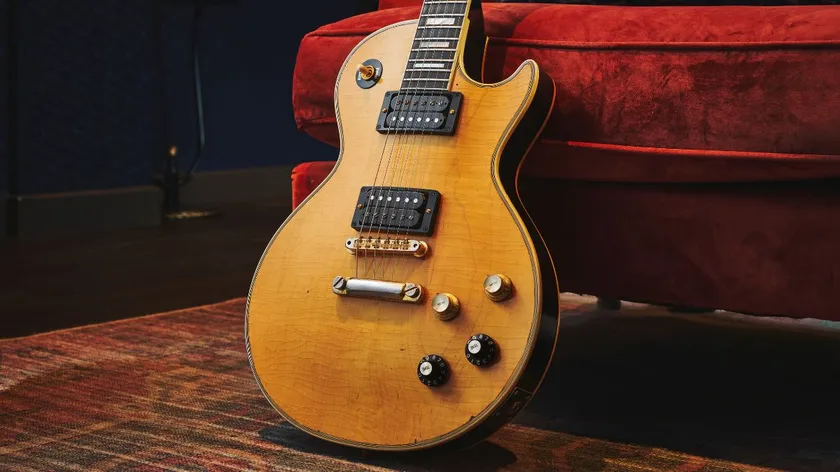


Philip Sayce has earned a reputation that puts him at the top of the list of modern high-energy blues-rock guitarists. Operating entirely outside the major label machine, he’s built a loyal following through relentless touring and word of mouth.
The independent artist cut his teeth handling guitar duties on tour with artists like Jeff Healey and Melissa Etheridge – that’s where he mastered the art of live performance.
You can hear exactly where that journey has led on his recent live album, Scorched Earth: Volume 2 Live in LA / London. Recorded at London’s Garage and LA’s Baked Potato, it captures his power trio completely raw.
What made you want to pick up the guitar?
Growing up, my parents played The Beatles, The Stones, The Kinks and a lot of ’60s music. British music, world music and blues were always around; my dad loved blues.
I started guitar late because my brother and I were taking piano lessons and my parents had saved for a piano, so I felt guilty asking for a guitar. I was around 15 when I finally asked. I always wanted to play because that’s what was listening to in the house – huge Clapton solos and things like that.
Once I got a guitar, I went deep into learning how to play. I played constantly on a cheap Sears acoustic with brutally high action. This was around the time Stevie Ray Vaughan passed away, and his music hit me spiritually.
I felt that same pull from Albert Collins, B.B. King, Buddy Guy, Jeff Healey, Clapton, George Harrison and Jeff Beck. I remember my dad telling me how Stevie Ray was “true example of greatness.” He thought Stevie was the only guy that was as good as Clapton.
Did you have any formal training?
I’m mostly self-taught. I would sneak into clubs when I was underage and stand close to the stage, trying to understand how people were getting their sound and phrasing. I watched anyone who could play, tried to absorb something and then went home and figured it out.
![Philip Sayce - Spanish Castle Magic (Live) [Official Live Video] - YouTube](https://img.youtube.com/vi/-yYBQbwrfHk/maxresdefault.jpg)
Even if I only picked up on one little thing, I’d go home and work on it for hours. I also learned from tablature and books.
How did you first connect with Jeff Healey?
We met through the Toronto scene at a downtown club when I was around 18. An associate introduced us and Jeff asked me to jam. He played bass, I played guitar, and we did Robert Johnson and Willie Dixon material – the Cream versions. Afterwards he asked if I wanted to join his band. He was a hero to me, so I said yes immediately. I was so grateful for that opportunity.
So after high school, my friends went to college and I went on tour with Jeff. I call it the University of Jeff Healey – I watched, listened and absorbed everything. He gave me space to sing and solo, building my confidence. I also learned professionalism and how to deliver every night.
When did that chapter end?
After about four years, Jeff told me it was time to do my own thing. Around that time, producer Marti Frederiksen was working on a Jeff record in Toronto. He came to see me play and suggested I come to Los Angeles with him and write songs. My wife and I eventually moved there. It was scary, but I got some session work and later toured with Uncle Kracker when his song Drift Away was huge.

How did Melissa Etheridge come into the picture?
I met producer John Shanks at a guitar store while trying amps and we hit it off. Later he said Melissa needed a guitarist who could play and sing. I met her for lunch, then auditioned with Kenny Aronoff and Mark Browne. They reported back to Melissa and I got the gig. I was already a fan; I had played her songs in high school.
Did you have to adapt your style?
Not really – Melissa is roots-based, with strong rhythm and emotional delivery, so it came from the same place as blues. She was generous and let me be myself. Sometimes she’d say, “Play and stretch out!” which gives you confidence. Watching her connect with audiences was a lesson in communication.
Fender hit a sweet spot with the neck shape, feel and response. Mine are from August and September ’63 and both feel right
What was that transition from clubs to arenas like?
There were things to learn. An arena doesn’t mean you get to play ten times louder. You really have to focus on monitors because you can be far from everyone on stage and feel some lag. You watch the band leader, learn stage presence and command the room. As a sideman you know it’s not your stage – your job is to support the artist.
Did you always know what direction you were headed in, or did you try different styles?
For the most part, it’s always been the blues-based rock I play now, although I sometimes move towards funk, rock or soul. I started singing out of necessity when my high school band lost its singer before a battle of the bands competition. But my favorite guitarists were also great singers, so that’s what I wanted to do.

How did you first get turned on to vintage Strats?
It was always a dream to own one because my heroes – Clapton, Stevie Ray Vaughan, Knopfler and Buddy Guy – played them. I kept hearing that ’62 and ’63 were the sweet spots. Big Daddy was a guitar I missed out on years ago, then a buddy saw it 10 or 15 years later and sent a picture. It was the same guitar, so I sold some gear and bought it.
What is it about your ’63 Stratocasters that makes them so special?
Fender hit a sweet spot with the neck shape, feel and response. Mine are from August and September ’63 and both feel right. The pickups are outstanding.
Big Daddy is the biggest, meanest Strat I’ve heard. Mother has ’58 pickups now, so it’s more airy and sparkly, but has that ’63 chunk. I’ve had them re-fretted several times with the tallest, widest wire I could find because so much of my playing is bending.
Why do you think modern guitars don’t have the tone and feel of vintage guitars?
I don’t think modern builders are getting it wrong or missing anything. The wood on a vintage guitar that’s 60-plus years old is dry and settled. When those guitars were made, that wood might have already been 100 years old. You can get really close now but there’s maybe that last five or 10 per cent where it comes down to the resonance and the age of the wood.

The pickups make a huge difference, too. The pickups in Mother are from ’58 so slightly underwound, and they sound great. We did a project with Seymour Duncan, recreating the Mother pickups – it was fascinating getting into the details of what made them sound that way. The team did a fabulous job and the Duncan Mother pickups sound fantastic.
How does your PRS Silver Sky fit in with your vintage Strats?
It has its own lane so it’s not competing with the ’63s. It’s comfortable, stays in tune and goes where you want it to go. Vintage guitars are like muscle cars. The Silver Sky is like a modern performance car. It handles beautifully and doesn’t fight you.
He worked on Stevie Ray Vaughan’s amps, I sent him a Fender Dual Showman. It came back with unbelievable punch, sustain and clarity
Do you play differently depending on the guitar?
Not in a big way. It’s about what the guitar gives back. Once the old guitars are dialed in by a good luthier, they feel like old jeans or an old baseball glove. The Silver Sky is comfortable too; I like warming up with it.
When did you start seriously exploring tone beyond just guitars?
Playing beside Jeff forced it because his Marshalls sounded huge and I needed something that could keep up. I contacted Cesar Diaz, who worked on Stevie Ray Vaughan’s amps, and sent him a late ’60s Fender Dual Showman. It came back with unbelievable punch, sustain and clarity.
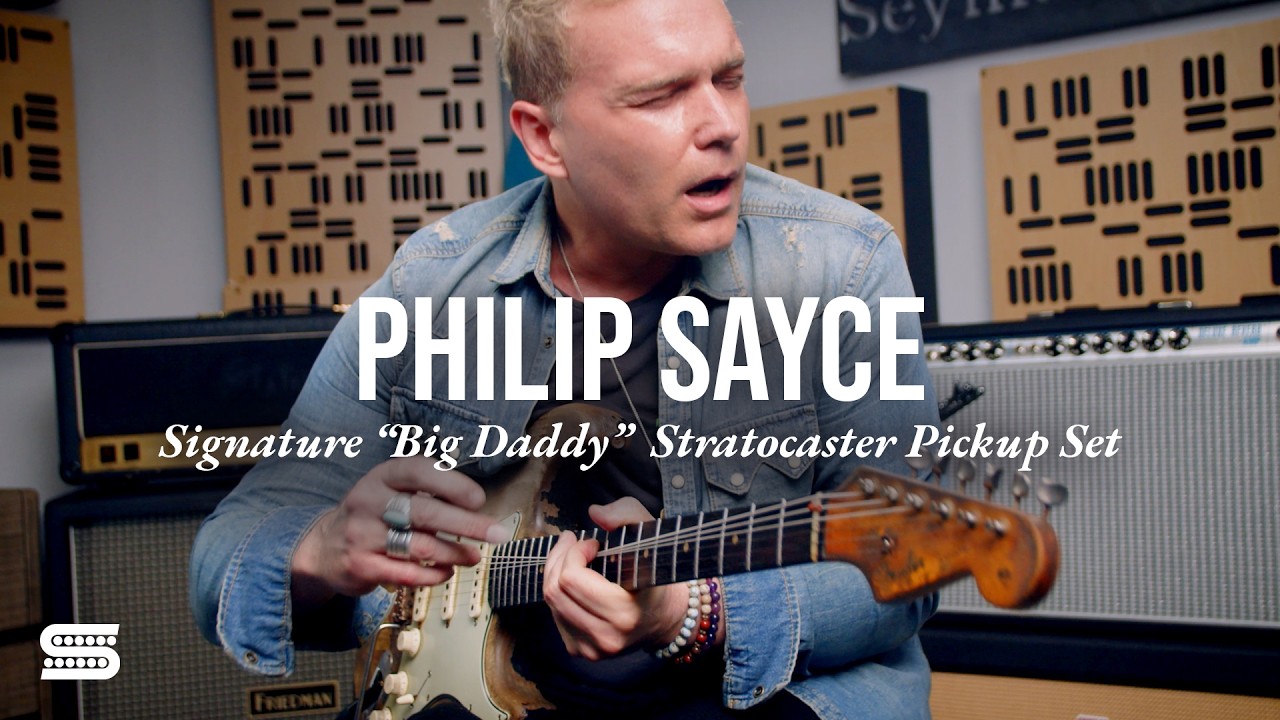
Later I brought him a Super Reverb and Bassman. I got to spend time in his shop while he built some pedals for me. It was very hands-on – I would play, give him feedback and he’d mess with the amp. He dialed in my Super Reverb in about 20 minutes!
He was amazing. We worked on getting my guitars and Fuzz Face to interact with the amp the right way. Cesar approached amps the way a tailor fits a suit. Watching him work was like seeing magic happen.
Did that experience also influence your choice of speakers?
Absolutely. Cesar turned me on to Electro Voice speakers, and I used EVM 12Ls in touring cabinets with Jeff, and later Melissa, because they were strong and reliable. Once you feel a 4x12 with EVs it’s hard to go back.
For the past 15 years I’ve worked with Tommy Cougar in Sweden, who studied Cesar and Dumble. He’s incredible – in my opinion, the best living amp guy in the world right now. He also turned me on to JBLs for my Super Reverb.
![Philip Sayce - Peace Machine LIVE in L.A. at The Baked Potato [Official Video] - YouTube](https://img.youtube.com/vi/IZBzHhOXNC4/maxresdefault.jpg)
Did that experience shift how you think about tone?
Yeah, it taught me that tone is really about response. The amp has to react to your hands. If you play softly it opens up, and when you dig in it pushes back. When that relationship works, you stop fighting the instrument and start communicating through it.
How did you start working with Alexander Dumble?
I feel most connected to music that’s honest, truthful and brings people together. It’s about sharing what’s in your heart
Producers Dave Cobb and John Shanks introduced us. I had already used some Dumble amps on sessions, so I knew his work. When I went for a visit, he was warm, generous and not as mysterious as people imagine.
We played through several amps at his house, including an early Steel String Singer. I also left him a Fuzz Face to work on. It took months to get it back, but he didn’t charge me and it sounded fantastic.
Was there something about the Dumble amps that really stood out to you?
Each amp was built for a specific player; they weren’t interchangeable. The feeling was like putting on glasses and suddenly seeing clearly. Notes jumped out in three dimensions, with a stickiness that gave back what your fingers put in. It inspired you to play differently because the detail and connection were right there.

Out of all your records, is there one that you feel was a turning point for you?
Each record is a snapshot of where I was personally, so it’s hard to choose. But Peace Machine from 2005 was a turning point – it was raw, unfiltered and high energy. I called up some musicians that I loved working and recorded it mostly live in just a few days.
What’s most important to you in your music today?
Connection – like when you meet someone and feel like you know them right away. I feel most connected to the kind of music that inspired me when I first started out; music that’s honest, truthful and brings people together. It’s really about being authentic and sharing what’s in your heart.
- Scorched Earth: Volume 2 is out now.

