





In early 1984, MTV bubbled with cheery pop acts like Culture Club and the Human League. It was a Crayola-colored world where girls just wanted to have fun, Huey Lewis wanted a new drug and spontaneous group dancing in public was as common as sneezing.
Enter the four-headed glam-metal beast known as Mötley Crüe. Looking and sounding like supervillains from the underworld, the Crüe marauded mass consciousness by way of a pseudo-Satanic, post-apocalyptic-themed video for Looks That Kill, the first single from their breakout sophomore album, late 1983’s Shout at the Devil.
The song’s brash, sawtoothed guitar riff had a Pavlovian effect on millions, pulling America’s alienated teens toward their TV screens with tractor-beam efficiency.
The Looks That Kill riff is a four-second summation of everything that was awesome about ’80s metal. It’s one of those instantly iconic guitar figures that sound like they fell from the sky, fully formed and howling for blood. In truth, however, this riff took many incarnations on its way to becoming a sonic weapon in the Crüe’s hands.
Its origin story takes us into the heart of Neon Decade-era Hollywood, where Mötley and their fellow Sunset Strip rockers were blazing a musical trail that reeked of booze and Aquanet.
Girls, Girls, Girls
Stop reading now and listen to the song Young Girls by the pop-metal band Dokken. No, really – do it.
Yep, the opening riff is damned near identical to the one from Looks That Kill – a rhythmic pattern built from twin palm-muted tonic pedal tones interspersed with descending chords played an octave higher. Structurally speaking, a single half-step is the only thing setting these two chord progressions apart. Like the Looks That Kill riff – and, for that matter, all the others we’ll be exploring – Dokken’s riff kicks off the song without accompaniment.
On first impression, despite Dokken guitarist George Lynch’s undeniable guitar prowess, the Young Girls riff comes off as a no-calorie Looks That Kill knockoff, lacking the rude, dirty tone that gives the latter its sledgehammer wallop.
However, closer inspection reveals that Looks That Kill might be the imitator here; the European release of Breaking the Chains, the Dokken album that contained Young Girls, came out almost exactly two years before Shout at the Devil.
Precluding any premature assumptions that Young Girls was written before Looks That Kill, Mötley Crüe premiered the latter song live at Pasadena’s Perkins Palace on April 19, 1982, according to setlist.fm.
Since Mötley formed in January 1981, it’s possible, if unlikely, that Crüe bassist Nikki Sixx had already written the song by the time the European version of Dokken’s Breaking the Chains came out in September of that year.
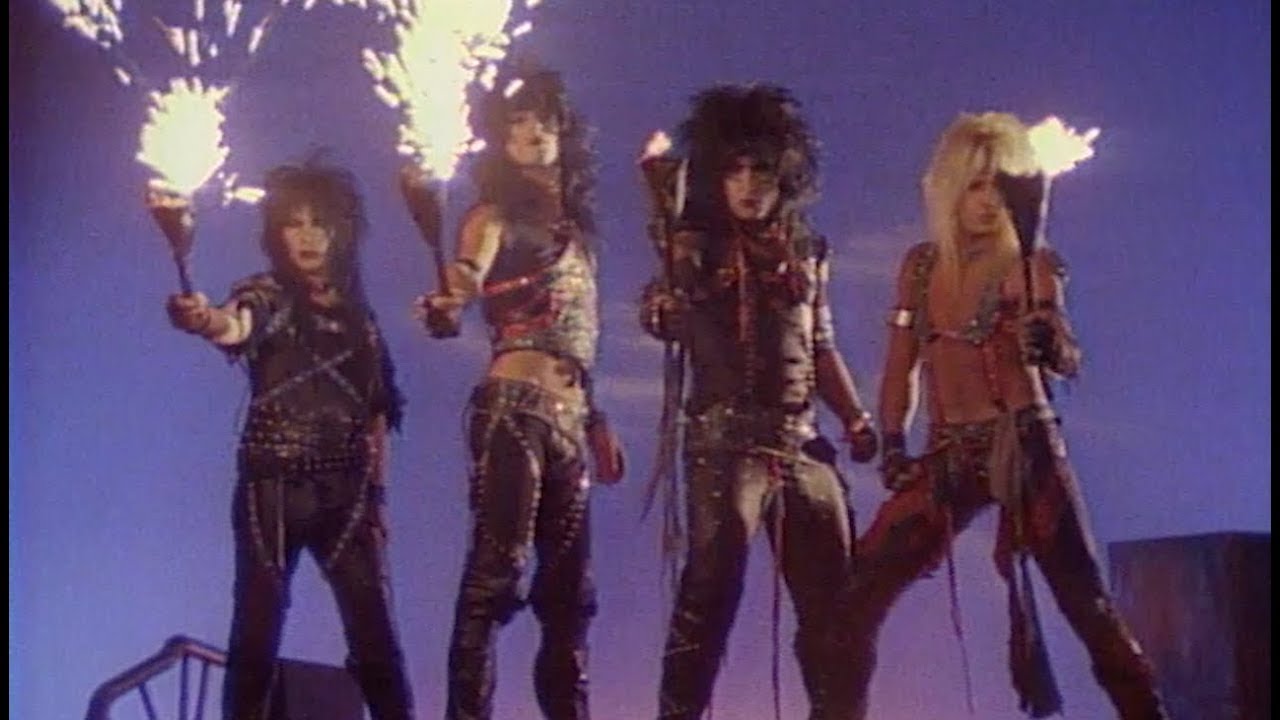
However, Looks That Kill doesn’t appear on live Crüe bootlegs from ’81, so the odds are far greater that Lynch and vocalist Don Dokken penned Young Girls before Looks That Kill was a glimmer in Nikki Sixx’s twisted imagination. Could a gig that Mötley Crüe played with Dokken at the Roxy in November 1981 have sown the seeds of inspiration inside Sixx’s skull?
Breaking the Chains also featured a tune called Stick to Your Guns, which, like Mötley Crüe’s debut single of the same name, used the line “You gotta fight!” to drive home a message of perseverance in the face of hardship.
The Crüe’s single came out in May 1981 – four months before the European release of Breaking the Chains – so once again, no definitive conclusion on which song was written first can be made until one of the songwriters lets that information out of the cellar.
Out on the Streets, That’s Where We’ll Meet
The chord progression from Young Girls wasn’t the first – nor the last – to bear a strong resemblance to the one from Looks That Kill. For example, the rhythm guitar performance that opens a song called Tell the World by Mötley Crüe’s glam-metal brethren in Ratt belongs to the same family of riffs.
Tell the World first appeared on the compilation album Metal Massacre, which was released June 14, 1982, about two months after Mötley’s onstage premiere of Looks That Kill. A new version of Tell the World surfaced on Ratt’s self-titled debut EP, which came out roughly one month before the September 1983 release of Shout at the Devil.
It’s possible that these guitar lines emerged during songwriting sessions between Nikki Sixx and the late Ratt guitarist Robbin Crosby
Notwithstanding the musicians’ well-known passion for intoxicants, there’s little chance that the similarity between the Looks That Kill and Tell the World riffs escaped both bands’ notice.
However, considering the close timing of the two songs’ releases, it’s possible that, rather than this being a case of one riff directly inspiring the other, these guitar lines emerged side by side during group rehearsals or songwriting sessions between Nikki Sixx and the late Ratt guitarist Robbin Crosby.
In his book Sex, Drugs, Ratt & Roll, Ratt vocalist Stephen Pearcy recalled that certain members of Ratt and Mötley were thick as thieves, at one time forming a street gang called the Gladiators. “Robbin Crosby and I were closest with [Crüe drummer] Tommy [Lee] and Nikki, and we started tripping around with them frequently,” Pearcy wrote.
Sixx and Crosby, the latter of whom co-wrote Tell the World with Pearcy, were especially tight, eventually sharing a living space. As told in Sixx’s book The Heroin Diaries, the bassist moved in with Crosby after Mötley wrapped up their Shout at the Devil tour.

Naturally, the friendship between Sixx and Crosby sparked some musical collaboration. Sixx confirmed this in a Facebook post from July 2025. After writing that Robbin “had a heart of gold,” he noted, “[I] look forward to finishing some of these songs we started down the road.”
During a conversation with SiriusXM radio personality Tommy London in 2022, Pearcy revealed that he and Crosby rehearsed with Sixx and Lee “a couple of times” in the early ’80s. “I don’t know if we wanted to start a band or if we were just jamming, but something was getting intense in there,” he said.
The singer added that while Sixx ultimately decided to go his own way, “if that would have been a band, it would have been a great band, actually. I don’t know what songs we played, but we were very supportive of each other back in the day.”
Did the alliance between these musicians give rise to the Looks That Kill and Tell the World riffs… or might Ratt, Dokken and Mötley Crüe all have drawn inspiration from an unexpected source that predates glam metal?
The Journey Begins…?
Various rhythm guitar performances from songs that came before Young Girls, Tell the World and Looks That Kill vaguely foreshadow these later songs’ signature riffs, perhaps even helping inspire them. One example is the guitar line that drives You Don’t Have to Be Old to Be Wise from Judas Priest’s 1980 album British Steel.
The link between this tune and Looks That Kill is especially evident at the song’s end, with the group’s shout-along “You! Don’t!” chant prefiguring the gang vocal in the chorus of the latter song.
That said, Where Were You by Journey might be the song that started it all. It appeared on Departure, released in early 1980 and co-produced by future Shout at the Devil engineer Geoff Workman.
Listening to Where Were You and Looks That Kill back to back is a study in the contrasting directions a musical idea can take in the hands of two different bands.
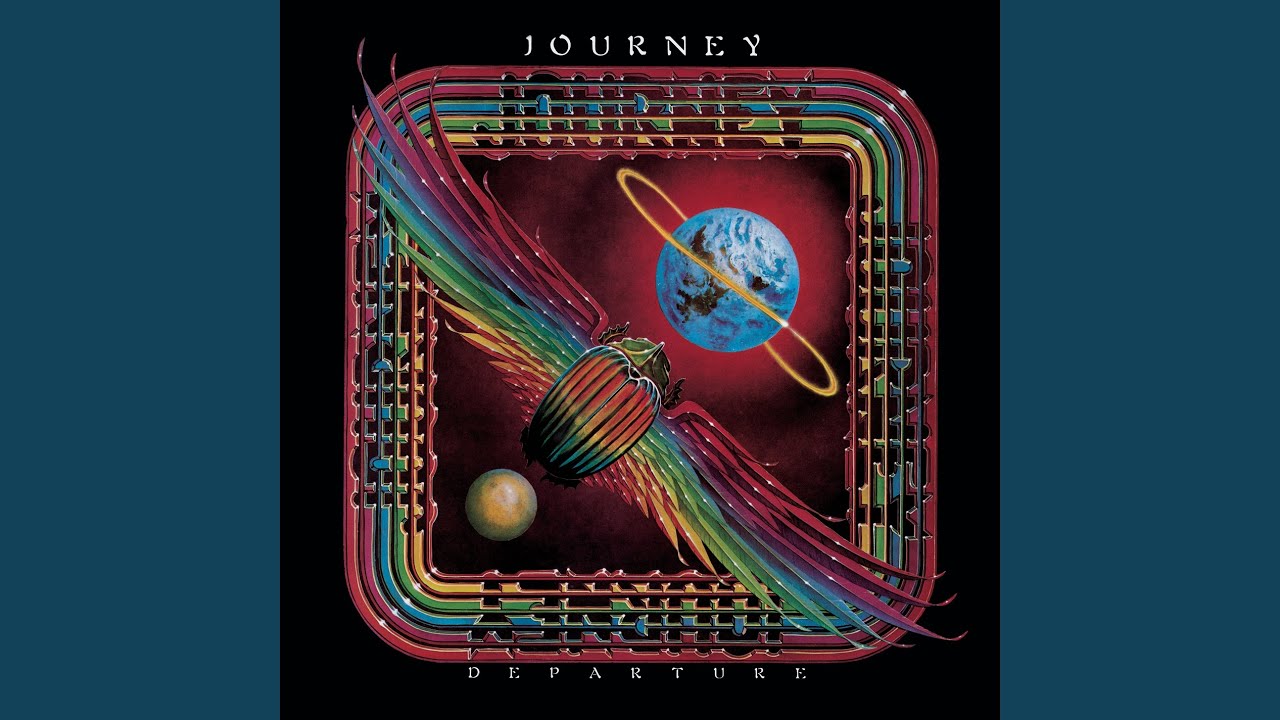
Rather than flying headlong into over-the-top metal aggression, Journey used their riff as the starting point for a high-energy pop-rock tune whose vibrance outweighs its bitter lyrics. The song’s buoyant feel stems in part from guitarist Neal Schon’s relatively moderate use of overdrive.
He likely got his gritty tone on this song by playing a Gibson Les Paul through a Marshall or a “jumped-up Hiwatt head,” the latter of which was one of his go-tos in the early ’80s. Regardless of this song’s possible status as a forerunner to Looks That Kill, Schon’s searing lead playing on Where Were You is worth checking out.
Thus, the journey of the Looks That Kill riff appears to have begun at the dawn of the Decade of Decadence, when Schon cooked up a rhythm guitar part that might make him the unlikely godfather of ’80s glam metal.
- This article first appeared in Guitar World. Subscribe and save.

