


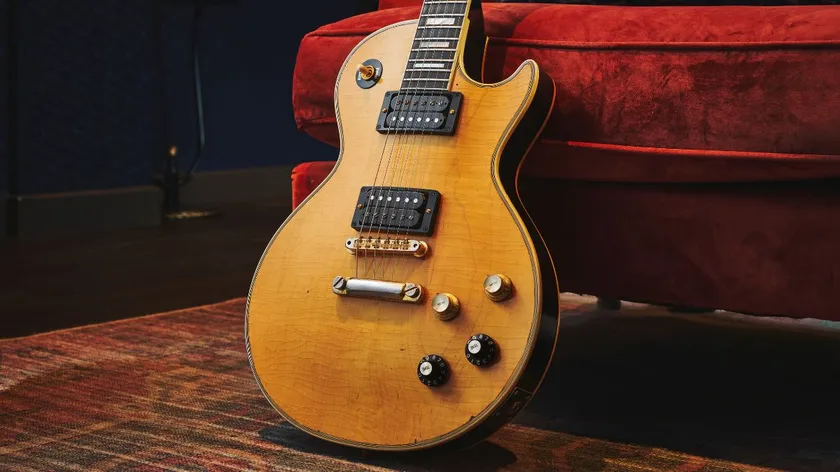


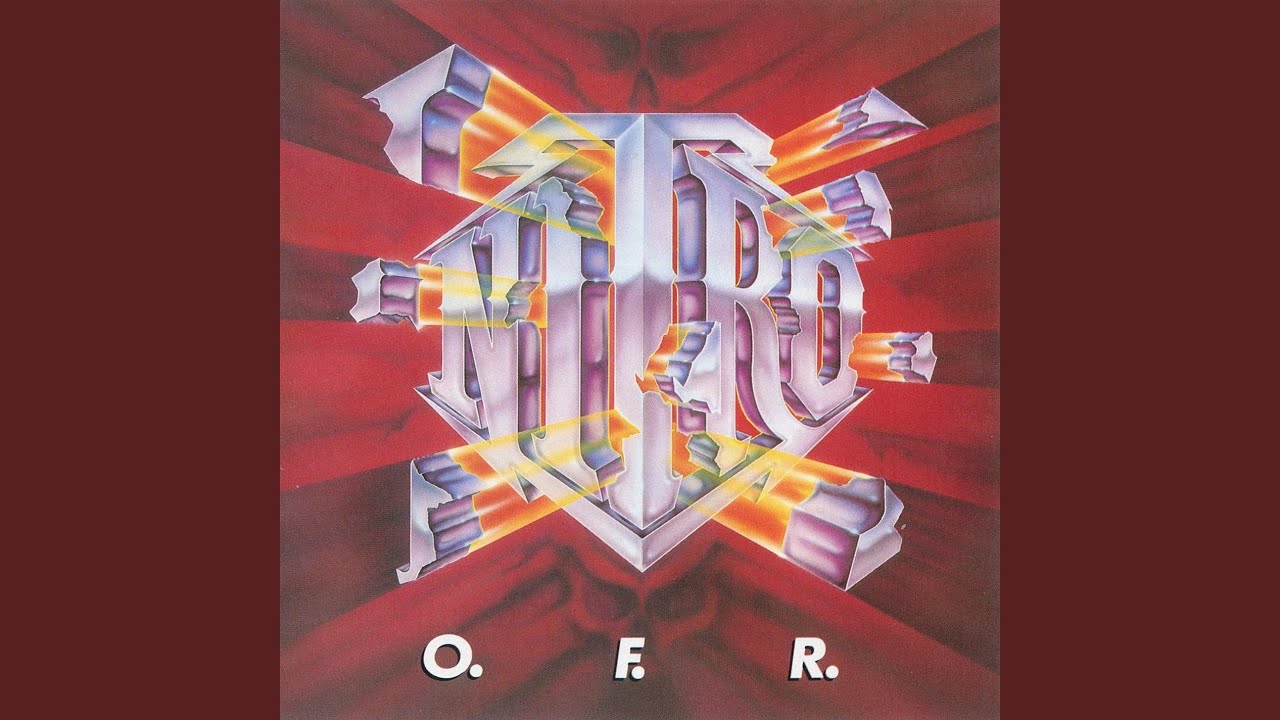
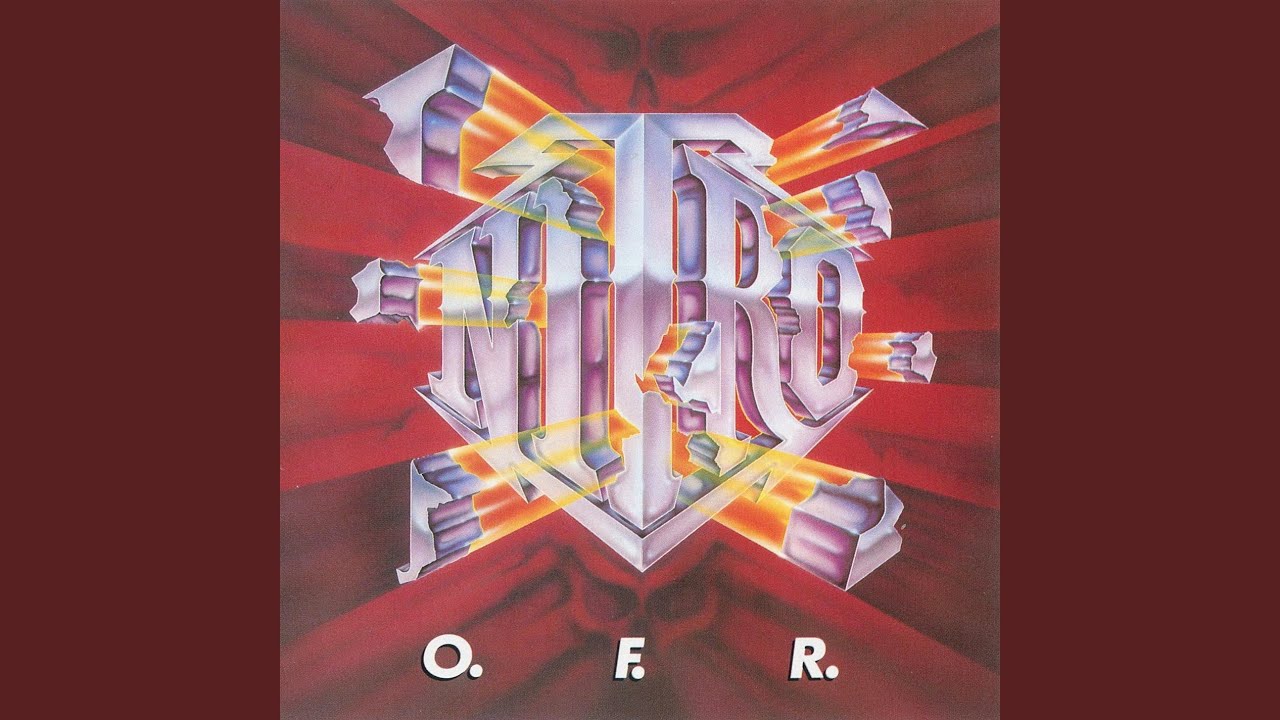
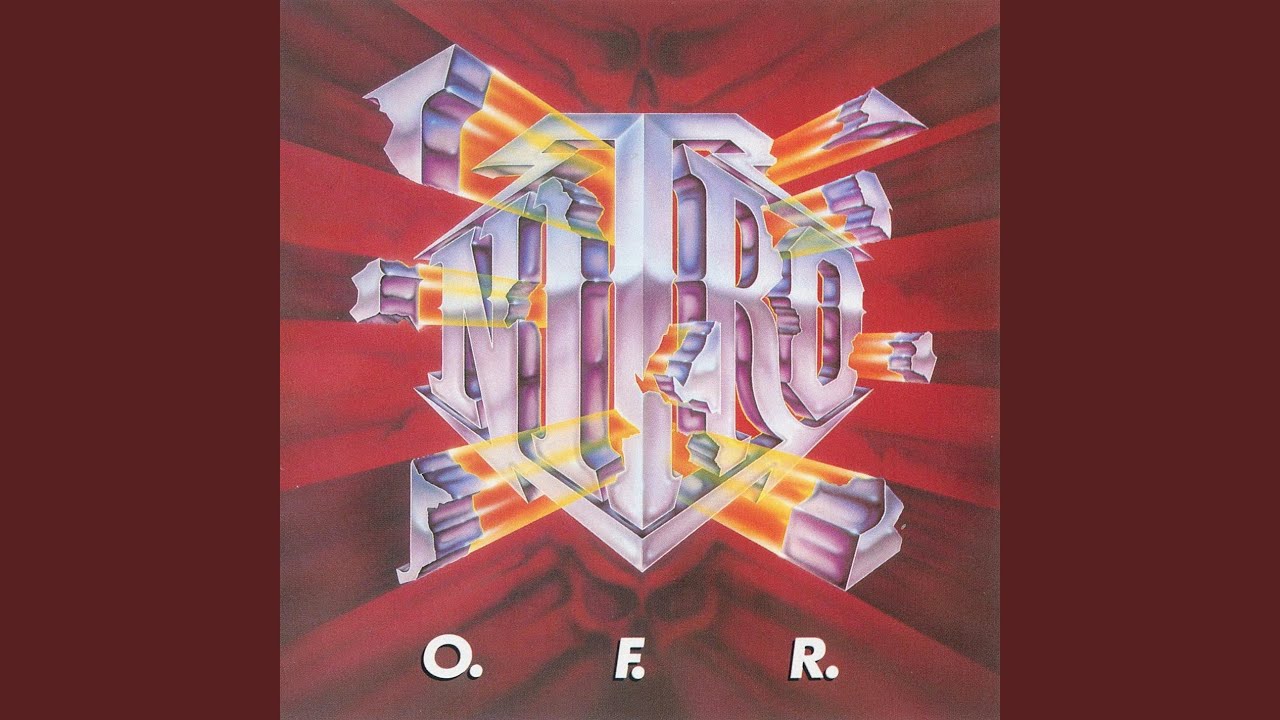
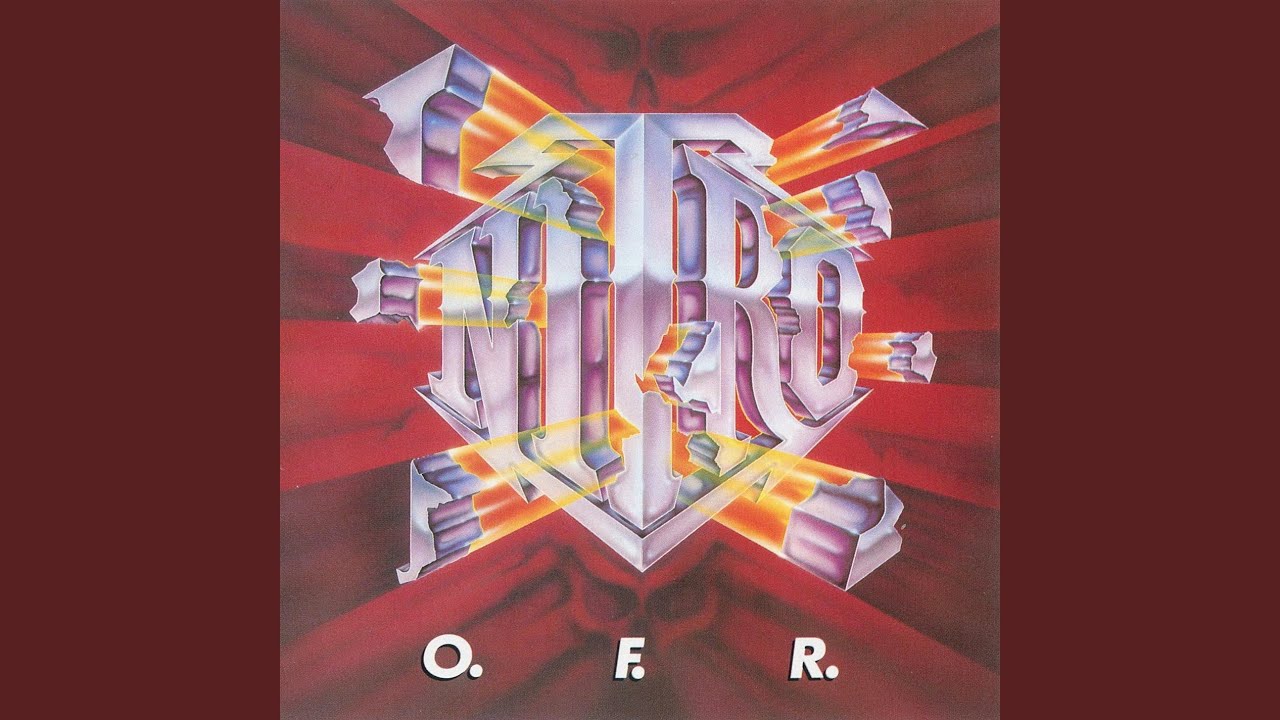
The critics were brutal, none more so than Guitar World’s editors, who branded Nitro’s 1989 debut, O.F.R., “dickhead music.” Michael Angelo Batio says the smackdowns stung, but he also reveals that what pissed him off the most was that he found himself agreeing with much of the criticism. “The band knew going into it that we were going to be very extreme, but we wound up going way beyond that,” he says.
Everything about Nitro was pushed beyond the max. The Los Angeles-based glam metal quartet, which also included singer Jim Gillette, drummer Bobby Rock and bassist T.J. Racer, was billed as having “the fastest, loudest, highest sound around.” And boy, did they ever. Gillette, whose ballsack-grabbing soprano seemed to extend to a range heard only by canines, reportedly shattered not one, not two, but three wine glasses at live shows.
Batio, brandishing a custom “Quad guitar” with four necks pointing outward, blitzed through songs with neutrino-like speed. (His solos were so blindingly fast, in fact, that many listeners assumed they were the result of computer manipulation.) With Nitro’s songs whooshing by at a head-spinning 200 beats per minute (perfect for cardio workouts), all the rhythm section of Rock and Racer could do was hang on for dear life.
The group’s image was as outlandish as their sound – circulation-constricting leather and Spandex, and bigger-than-big hairdos that surely boosted Aqua Net’s stock. Gillette took things to the point of parody, with a gravity-defying hairstyle that made him look like Tina Turner’s stunt double from Mad Max: Beyond Thunderdome.
“It was all very calculated,” Batio says. “I was surprised at how divisive the record was. You loved it or you hated it with a passion. It was an odd thing, because I don’t consider it representative of who I am, or who I was at the time.”
Previously, Batio had high hopes for Holland, a Chicago-based metal band he joined in 1984. Fronted by singer Tom Holland, the group signed with Atlantic Records and recorded an album titled Little Monsters with hard rock production specialist Tom Werman.
“If you listen to that record, that’s the real me on guitar,” Batio says. “The playing is tasteful, kind of like Cheap Trick meets L.A. heavy metal. It’s got really ripping guitar sounds.”
When Little Monsters failed to chart, Holland broke up and Batio moved to Los Angeles. “Suddenly, I thought, ‘Is black really white? Is up really down?’” he says. “Fast didn’t sound fast to me anymore. High didn’t sound high. I hung out on the Strip, and I morphed into this hair metal guy. Nitro became an extreme version of it.”
According to Batio, the group’s demo – “all fast playing and high singing” – wasn’t quite extreme enough for Rhino Records President Bob Cahill. “He said, Angelo, I thought you were fast,” the guitarist says. “I was a little taken aback, and then he said, ‘I want you to overplay all the time.’ He wanted the record to be sonically abrasive.” Which it was, once the label mastered the album.
The finished product accentuated treble frequencies, rendering Batio’s fulsome sound thin and tinny. Worse yet, Racer and Rock’s bass and drum performances all but disappeared under Gillette’s shrill, multi-tracked gang vocals. “The label wanted the PMRC [Parents Music Resource Center] to ban the record, so everything was way over the top,” Batio says.
O.F.R., which stands for “Out-Fucking-Rageous,” appeared to go unnoticed by the nation’s self-appointed censors, but it reached an audience comprised of hardcore metalheads, shred-guitar enthusiasts and curiosity seekers. Boosted by the singles Freight Train and Long Way from Home, which received weekly plays on MTV’s Headbangers Ball and regional metal video shows, the album performed respectably, reaching Number 140 on the Billboard 200.
Even so, Batio and Gillette wanted more. “We just weren’t happy with the mastering of the record,” Batio says. “Jim and I even went to Bob Cahill’s house and said, ‘Look, we hate how the record sounds. We’ll take our own money to remix and master it.’ Bob looked at us and said, “Why? It’s on the charts. It’s selling!”
You wanted to be “the fastest, the loudest and the highest.” When you met Jim, did you think, “He’s the guy”?
Jim’s hair was the biggest of all. I remember when we drove to the photo studio to do pictures for our album, I had a hatchback car, and Jim had to sit in the front seat and push it all the way back to accommodate his hair
Oh yeah. Jim’s outfit had so many metallic studs on it – the jacket weighed almost 80 pounds. It was very heavy metal. We didn’t have big hair – we had the biggest hair. We didn’t have any money, but that didn’t stop us from looking like rock stars.
Jim’s hair was the biggest of all. I remember when we drove to the photo studio to do pictures for our album, I had a hatchback car, and Jim had to sit in the front seat and push it all the way back to accommodate his hair. Even then, his hair was sticking out the car door.
How did you find Jim?
I met him at a party in Venice Beach. We had a mutual friend, a hair stylist who did people like Farrah Fawcett and all the stars. All the rockers used to hang out at her place and go to her parties. I thought Jim could fit in perfectly. He’s an interesting guy. He’s got a black belt in Gracie Jiu-Jitsu. He’s super-smart, super-street. He’s just an extreme guy. You don’t bet against Jim. And he had this voice.
Bobby Rock had already been in the Vinnie Vincent Invasion, so he had that extreme thing down already.
All we knew was that Ella Fitzgerald did it in a Memorex commercial, but we thought, “There must be a way.” Jim and I were on a quest
Oh yeah. We targeted Bobby. I don’t mean that in a stalking sense, but we used to see him on the Strip. Jim would be like, “Bobby Rock… We need Bobby Rock!” So I ended up talking to him, and he joined up.
Is it really true that Jim could shatter wine glasses with his voice?
He could. We advertised “double axes and shattered glasses” at Nitro’s debut show at Gazzarri’s. At first, we had no clue how to shatter glass. All we knew was that Ella Fitzgerald did it in a Memorex commercial, but we thought, “There must be a way.” Jim and I were on a quest.
We actually went to [California-based loudspeaker manufacturer] Renkus-Heinz, and we pumped 125 dB against a wine glass – and it still wouldn’t break! We tried everything. We got hold of the guy who did the Memorex commercial. He was like, “Who are these crazy rockers?”
But he liked us and he kept giving us clues. For example, it had to be a fluted goblet made by a German company called Schott Zwiesel, and it had to have a two percent lead content. If you had one of those goblets, it was easy.
Did have all the music written for O.F.R. before you found Jim?
The two songs that became singles, Freight Train and Long Way from Home, I had written before I met Jim. I didn’t have any words, though. I patterned Freight Train after Deep Purple’s Burn.
That’s how I came up with the riff. I had these words, “Believe in yourself, believe in yourself,” and Jim went, “Dude, that’s stupid.” In two minutes, he came up with lyrics to Freight Train. Sonically, what I did on the demo was killer. It was thick and heavy, but that wasn’t what the label wanted.
Were you already playing the four-neck guitar at this point?
No. What happened was, I had a two-neck guitar, and then Steve Vai came out with his three-neck heart guitar. My label wanted me to challenge Steve to a duel. I didn’t see the point in competitions like that.
You’d be doing the Crossroads thing in real life.
Yeah. I didn’t want to do that, but the label went, “Michael… Steve’s got three necks and you have two. You know what you need?” And I went, “Four.” They loved it. As it happened, Wayne Charvel was building all my guitars. I said to him, “Can you do this?” He said, “Sure.”
I have a good engineering mind for guitar design, so I designed the Quad. I told him how I thought it should be four separate guitars, and that was that. It was the wildest thing. There was no limit to what we were trying to do.
When the record came out, a fair amount of people thought you had sped up your guitar playing with computers.
No, no. Those songs were clocking at 200 bpm, which was nothing for me – that’s all 16th notes. There are a lot of guitarists who can play like that now. No, that was all analog tape. There were no punches.

What about Jim’s vocals?
With Nitro, we wanted the biggest background vocals since Queen. Jim could sing like that – five octaves. He was massive, and we didn’t even put reverb on him. There’s no reverb on my guitar either, except for one part of Machine Gunn Eddie. Live, we used the background vocals from our records, and we played everything to the clicks of the record.
How much touring did Nitro do for the album?
We did two- and three-month runs, but we couldn’t get on a big tour. The label gave us tour support for six months. Everybody else got paid, but Jim and I were broke. A lot of people liked us; others didn’t. There were no gray areas with Nitro. After a while, Bobby Rock got offered to play with Nelson. We couldn’t match the number they gave him. I understood. I’m still friends with him.
You guys made another album before breaking up. But you reformed for a time in 2016 with Victor Wooten on bass. How on earth did that happen?
We got Chris Adler from Lamb of God on drums. He was a fan of my solo albums. Victor, too. He’d heard songs from my solo albums, and he said, “I’m looking to get into something heavy.” We were like, “Yeah! We’ve got a supergroup.” Unfortunately, life got in the way. My mom got sick and I had to go take care of her. She ended up passing. I had already told Jim that I couldn’t focus on the band at that time.
Think you guys might ever try again?
No, no. I play in Manowar now, and I’m happy. We headline arenas – our average crowd is, like, 15,000 people. I love what I do now.
- This article first appeared in Guitar World. Subscribe and save.

