


Back in the mid-1960s, Gibson’s cherry sunburst Les Paul Standard had been discontinued five years previously. But some devotees of blues guitar, such as a young Eric Clapton, knew that, if you could find one, the pre-SG Les Paul was an instrument to be reckoned with. The problem was finding one.
A post-war embargo on American luxury goods and musical instruments had ended only a few years previously, in June of 1959, and US guitars, such as Strats and Les Pauls, were rare birds and genuine examples coming up for sale were hunted down diligently by London’s leading guitarists.
So when Eric’s 1959 Les Paul Standard he used on John Mayall’s Bluesbreakers with Eric Clapton – aka ‘Beano’ – was stolen from a church hall in Brondesbury, London, where he was beginning rehearsals with Jack Bruce and Ginger Baker for their nascent supergroup Cream, Eric needed to get his hands on a replacement in a hurry and there were very few to be had.
In the end, Eric turned to another young pro on the London scene, Andy Summers, and implored him to sell his 1960 Standard.
Despite Summers’ initial reluctance, money – to the princely tune of £300 – soon changed hands and Clapton had the guitar he needed to press on with recording Fresh Cream, the debut album for a group that would become every bit as influential as Clapton’s era-defining work with John Mayall.
Beano’s replacement wasn’t perfect, however. Not that it mattered much at the time, but it featured a newer style of sunburst that Gibson had debuted in 1960 to avoid fading red tints in the finish – a process that customers didn’t like at the time, but which has since passed into ’Burst lore – and this newer finish had a gaudier ‘tomato soup’ tone to it.

Eric’s new Lester also had a malfunctioning bridge pickup that would need sorting out, too. But in the cut and thrust of the 1966 music scene none of that mattered much – it could all be fixed or overlooked – because the sound that guitar made was tarnishless gold.
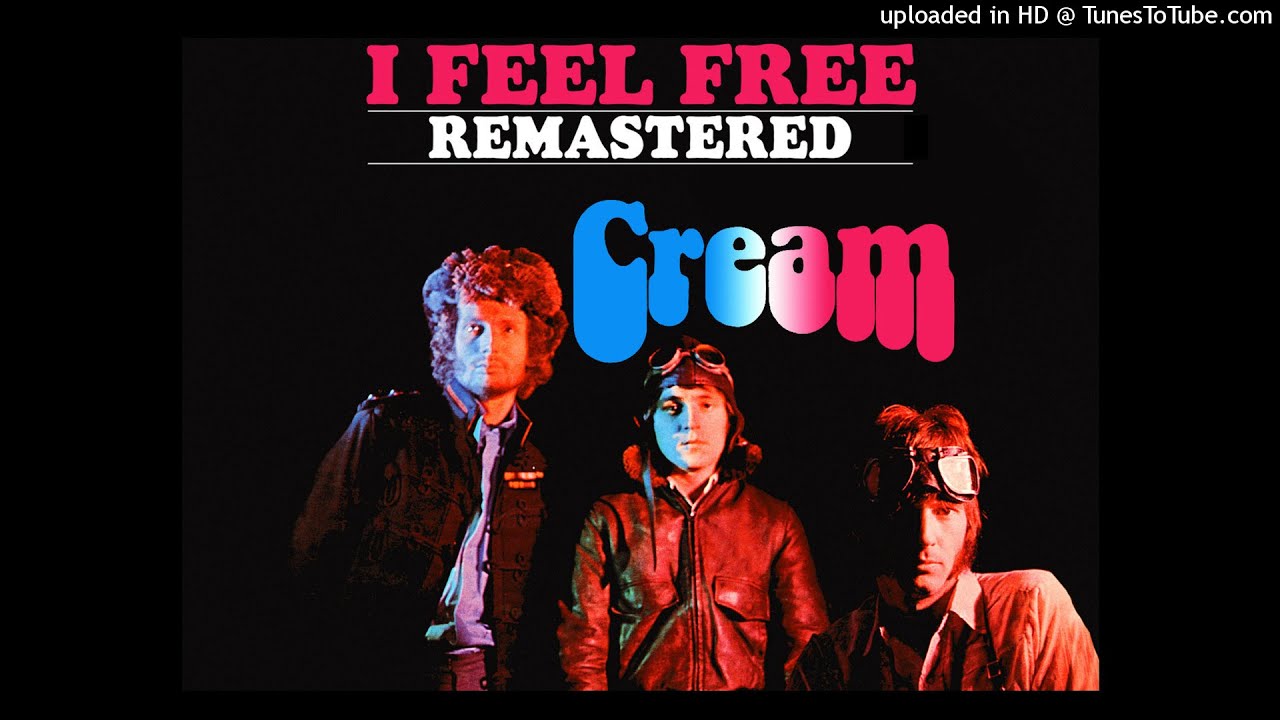
By turns biting and mellifluous, the voice of that guitar is all over Cream’s debut album, recorded at London’s Rayrik and Ryemuse studios and released in the UK on 9 December 1966, which featured tracks that shaped what blues could be in a new, free-thinking era of psychedelic rock. Tracks such as Spoonful, I’m So Glad and the single I Feel Free, which appeared on Atco’s 1967 US release of the album.
But though the guitar’s story as a famous instrument began in London, it ended – or rather went dark – across the Atlantic in New York, where Clapton and Cream soon ended up, initially playing dates at the RKO Theater in March of 1967, before returning to record their follow-up album, Disraeli Gears, in May of that year.

Somewhere in among these New York trips, Clapton’s Les Paul suffered what is now believed to be the second of two serious neck breaks and he took it to Dan Armstrong’s repair shop, where it was given a ‘creative’ headstock replacement that was crafted to please the young guitarist but prompted him to dump the guitar at the shop after refusing to pay the bill.
And there, after changing hands a few times, the guitar came to rest – in New York, in a private collection, kept out of sight through all the years that saw original sunburst Les Pauls change from being somewhat obscure, niche collector’s items to icons of mid-20th century guitar making.
There it stayed, widely speculated about but seen only in scarce photographs. Until today. Now, Matthieu Lucas of Matt’s Guitar Shop in Paris has acquired the guitar, which has sometimes been dubbed the ‘Summersburst’, and wants to share it with the world while it remains in his keeping. We join Matt to pick up the story…

How did this guitar come into Clapton’s hands originally? And what was Andy Summers’ connection to it?
So this guitar was bought by Andy Summers originally, way before he went into The Police, in 1964, to the best of my knowledge, at Rose Morris in London. At the time, there were only about two Les Pauls available in London – or very few.
We all know that Keith Richards was already playing one [in The Rolling Stones], and I think his was the very first sunburst Les Paul to appear on [British] TV, so he was playing his. But in ’64, it was not easy to get one in London.
During my research, I’ve seen Andy talking about how he got the guitar at Rose Morris and Clapton was playing with John Mayall already at the time, and then Clapton saw this beautiful Les Paul that Andy had in the case, and he said, "Wow. Where did you get that?” Andy told him that he bought the guitar at Rose Morris’s shop, and so Clapton went right away and bought the guitar we all know as ‘Beano’.

Then Andy was not really using the guitar that much and, in the meantime, as we all know Eric’s ‘Beano’ ’Burst got stolen – and we are still wondering where that guitar is. So Clapton kept calling Andy Summers and reportedly he said something along the lines of, “You need to sell me your guitar. I’m going to record Fresh Cream, I need a Les Paul, that’s the sound I want.”
Andy initially said no because he wanted to keep the guitar for himself, but, apparently, Clapton [persevered] and pressed him to sell him the guitar and, in the end, Andy accepted. I think he charged him £300.
An interesting point to draw attention to is that when Andy sold the guitar to Eric, the bridge pickup didn’t work properly and Andy was already using a Tele at the time, which he still has today. So he sold him the guitar, and after that Cream were rehearsing in London and recorded Fresh Cream.

The headstock on the guitar today is very clearly non-original – what’s the backstory of the neck on this guitar and how did it end up with this mandolin-style headstock?
In my opinion, Clapton broke the headstock of the guitar twice. The first time was very early on after he bought the guitar from Andy Summers. I can’t tell where and when, but when you really search the archives, in the very early pictures of Clapton with that almost ‘bowl’ haircut, you can already see that the headstock has been badly repaired and it has already been broken off, in a major way, a first time.
Apparently, what happened – although of this we can’t be sure – is that the repair [of the first break] was so bad that when the guitar was dropped a second time Clapton went to Dan Armstrong’s shop in New York City to have the guitar fixed properly.

Dan Armstrong was there and a then-young luthier called Matt Umanov, who checked the guitar, said, “Well, it’s not possible to fix the [original] headstock on that guitar because that’s a really, really bad break that the guitar just had,” so they offered to replace the headstock for Clapton.
And that’s where Matt Umanov got very innovative with the way he replaced the headstock of the guitar. He removed the original headstock and we don’t know where it went.
But then he grafted a new headstock on, keeping the original binding and fingerboard intact, and what he did was create the [new-built] replacement in the shape of the headstock from an F-5 mandolin, which made the guitar unique because nobody ever did that again on a Les Paul, to my knowledge.
[He] put Eric Clapton’s name, with a mother-of-pearl inlay on the headstock, too, plus a [representation of someone’s] face. It’s unclear if it’s a woman or if it’s Eric Clapton’s face that Matt Umanov put on that guitar with mother-of-pearl inlay.

What happened next?
From what I can tell, Eric Clapton was very unhappy with the repair, and that way he didn’t pay for the repair, but he just said words to the effect that, ‘No, no, I don’t need the guitar any more anyway, I’m starting to use the ES and the SG,’ because he was already searching for another kind of sound. So the guitar just stayed in [Greenwich] Village of New York City, at Dan Armstrong’s shop.
Then the guitar went to a guy called Adrian Barber, who was the guitar player for a Liverpool band called the Big Three at the time. After he quit the band, he stayed in Germany and he became a sound engineer. When he passed away, the guitar went [back] to New York with his son, who was living there. He didn’t really want the guitar, so he called somebody named Chris Such, who had a small guitar shop in the [East] Village called Mojo Guitar.
Chris’s place was a little neighbourhood guitar shop, so he didn’t have the money to buy a sunburst Les Paul at the time, so that’s how he called [collector] Perry Margouleff to offer him the guitar, and Perry met the guy and just gave him money, and then owned the guitar since 1986.
Nobody saw that guitar for many years because, first of all, Perry was a curator for the largest guitar collection ever – and this was part of his private stash – but mainly because Perry was very attached to 100 per cent original ’Bursts, at the time, and he didn’t care so much about the fact it had been Clapton’s guitar. And, in any case, the market for star-owned guitars didn’t really exist back then.
It was kept in the collection for years and, eventually, when I first met Perry 13 years ago, he showed me a lot of those guitars, and I was very blessed that he kind of put me under his wing – he was always showing me and teaching me about [vintage] guitars, especially this one.
Back then, you know, I was never in a position even to imagine that I was eventually getting this guitar 12 years later, but that’s what happened. And we started talking, I would say, around October last year. It took a bit of time, but we arranged a deal a few weeks ago and then I went to New York City and picked up the guitar myself.
Tell us about the pickups. The bridge humbucker isn’t the Patent Applied For humbucker it left the factory with. So what’s the story behind that?
Well, what’s interesting is that when you look at the picture of [this guitar] in The Beauty Of The ’Burst book [Yasuhiko Iwanade]…
We all know that picture of Perry with the ’Burst wall behind him – there’s [famous ‘named’ ’Bursts] Red Eye, there’s the Stanley ’Burst, the red cherry [finish] ’59 Les Paul, all of those, and there is also Eric Clapton’s guitar on there and you can recognise the guitar immediately from the mandolin headstock, of course.
But what’s interesting is that this guitar – on that picture – has a zebra bridge pickup, which, of course, it doesn’t have today. That pickup is long gone and Perry doesn’t have any idea where it went.

But what Perry is sure about is the Patent Number pickup – because the pickup now in the bridge is one of those, a mid-’60s Gibson pickup, which is good news for the guitar because Perry remembers that this pickup was in the case of the guitar, in the case pocket.
And that matches Clapton playing this guitar with the double-black pickup in the bridge. So Perry said, “Okay, well, we have this pickup in the case and I think that’s the pickup that belongs to the guitar, I’m going to put it back, so it matches really what Clapton was playing at the time.”
Because if Perry had restored the guitar [to a generic period-correct spec] back then, based on his meticulous restoration work, he would just have put an original Patent Applied For [pickup in the bridge] that he had back then from his stash – he would never have put the Patent Number pickup in the bridge position [but for the Clapton connection].
The [otherwise anomalous] Patent Number pickup makes total sense because when you read Andy Summers’ biography, and the interviews that Andy gave on that guitar, that’s one of the reasons why he sold the guitar to Eric in ’65 or early ’66 – because the bridge pickup didn’t work on that guitar.
My guess is that Clapton obtained a pickup on Denmark Street – a Gibson pickup – from 1965 or early ’66, which was a Patent Number humbucker, and he put the pickup in the bridge position of the guitar and then went to record Fresh Cream with that pickup configuration because the neck pickup on that guitar is the original Patent Applied For pickup.
We checked the solder joints on the parts, and that guitar for sure has all-original solder, except for the volume pot in the bridge position – and that’s the only major electronic change that’s on the guitar. Back then, nobody cared about original [Patent Applied For pickups] – they were all players [not collectors], and so my guess is that he just put a working pickup in the bridge position and that was it, you know?
That guitar is a major piece of the ’60s and the British music and a major piece of guitar history, so my feeling is that all those guitars need to be shared and played
So that’s the journey of this guitar, and that’s interesting because I knew about it for years; I couldn’t tell anyone about it because that’s not how Perry is working – he wants his guitars to be top secret, if I can say.
But then I decided to make it public for several reasons because my theory is that guitars like this should be played, should be shared with people, and I think it’s not even belonging to me, or whoever is going to buy the guitar – it’s belonging to, I would almost say, humanity because that guitar is a major piece of the ’60s and the British music and a major piece of guitar history, so my feeling is that all those guitars need to be shared and played.
So that’s why at some point, I said to Perry, “I want to buy this piece, but in my opinion it’s just a shame that it stays off the internet because I think it’s a different time now and everybody should know what happened to this guitar,” because nobody knew where it was, basically.

Speaking of the guitar just as an instrument in its own right, what’s it like from a player’s perspective?
I have had the chance to play ‘The Fool’ SG, I’ve played Eric’s 335 and – with the exception of the Firebird – I’ve played a lot of instruments that he played in the Cream era. And it’s funny because all of them [have notably slim necks], except the 335, which has more like a ’64 neck but still a very thin neck.
So I think Clapton really loved a very thin neck on guitars, you know? This guitar is quite the same: it has one of the thinnest necks on a ’60 I’ve ever played.
I would say it’s a very late ’60, too, probably one of the last 1960 [Les Paul Standards] ever made because of that ‘tomato soup’ finish and other details. It’s not a lightweight guitar, but the neck is, as I say, super thin and, surprisingly, somebody did refret it at some point with huge frets – it would make sense if that was in the ’80s as they were all refretted with big frets back then…
But yeah, the neck is super-thin. I think maybe they shaved the neck a bit when they put that new mandolin headstock on [during the repair process by Matt Umanov] and a new finish on the neck – and I would say there is a very old overspray on the guitar, too.
I would say this pickup had originally come from an SG – it’s so bright and it’s such a rock ’n’ roll-sounding guitar
Structurally speaking, it’s super-easy to play and super-fast because of that thin neck. I would say the neck pickup is one of the creamiest neck pickups that I’ve tried. It’s not like a woody sound, it’s very creamy, very dense. It makes total sense when you put the guitar into a Marshall and you put the tone at zero – you get exactly the Spoonful sound.
Also, the fact that on the bridge position you have a Patent Number makes total sense because it’s really brighter in those mid-’60s Gibson pickups. When you play the guitar, you really hear the Fresh Cream sound, which is very particular.
I would say this pickup had [originally come] from an SG – it’s so bright and it’s such a rock ’n’ roll-sounding guitar. And in the middle position, surprisingly, the tone is almost out of phase as well. Or rather, not out of phase but it’s almost there – it’s really close to that sound. When you play the guitar, it’s incredible because that’s the record, you know? It already sounds like the record.
- This article first appeared in Guitarist. Subscribe and save.

