


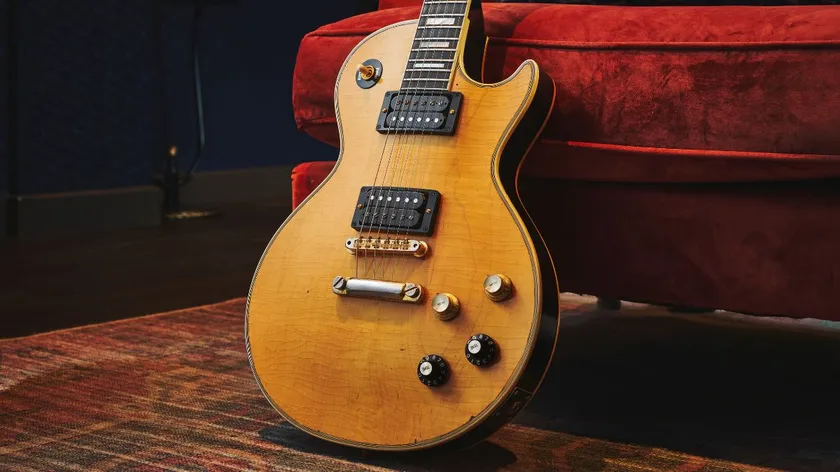


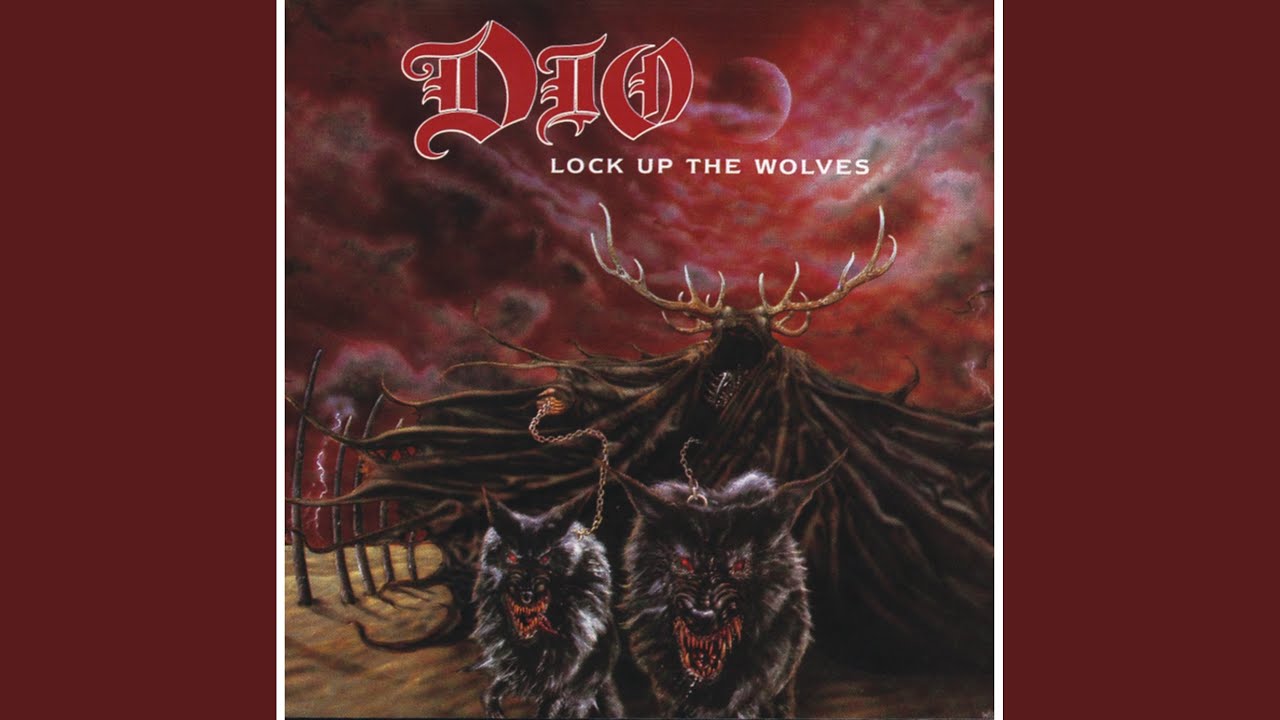
Rowan Robertson was 17 when he got the gig as Ronnie James Dio’s guitarist. When he hit the studio to record 1990’s Lock Up the Wolves he was a co-writer on every single track. “When we started the writing process I told Ronnie, ‘I don’t know if I can do this.’ But he said, ‘Trust me – you can.’”
Dio’s confidence came from the reason he’d chosen Robertson as Craig Goldy’s replacement. “He liked my rhythm tone,” Robertson says. “I know he liked the way British players played, so that was a big thing in my favor.”
The new boy was comfortable enough to avoid emulating his predecessors, Goldy, Vivian Campbell and Ritchie Blackmore. “Strangely, I didn’t feel any pressure,” he says.
“Ronnie told me, ‘There will probably be people at the gigs who won’t like you for replacing Viv’ – but I barely ever saw that. As for replicating the songs live, the ones that sat most easily with me were Ritchie’s ones.
“Ronnie only ever said one thing to me about sounding like anyone he’d played with before; and that was, ‘Tony Iommi used to vibrate the chords with his left hand.’”
Dio was in his 40s when Robertson joined, but the pair felt felt a kinship. “Ronnie wanted a partner in crime and bandmate to hang with – which he certainly got!” the guitarist says. “But being that I was so young, he must have felt an obligation to watch over me, which he did, too.”
After the release of Lock Up the Wolves, Dio rejoined Black Sabbath, and Robertson formed Violet’s Demise with former Lynch Mob voice box Oni Logan. Neither move worked out, but when Dio reformed his namesake band, he didn’t call Robertson, instead soliciting the services of Tracy G.
“Nothing stands out as better or worse for me, playing-wise,” Robertson says of his one-and-done Dio record. “I wouldn’t change anything because I did the best I could at the time.”
How did you end up on Ronnie James Dio’s radar?
I was reading in Kerrang! and Metal Hammer that Dio needed a new guitarist. I was a huge Steve Vai fan and I’d read that Steve got the gig with Zappa at 18. I thought, “I’m almost over the hill – getting too old! I must get this gig!”

I made a cassette tape on my four-track Tascam recorder. I put Dio’s song The Last in Line on track one, and recorded my solo over it on track two. Then I recorded some unaccompanied shredding. My dad called out from the kitchen and said, “I’d be surprised if you don’t get an audition off of that!”
I sent the tape to Phonogram in London, who sent it back to me, saying they weren’t interested. So I resent it, this time to Dio’s fan club in America, with a Polaroid of me doing my best Kerrang! pose in my house.
Wendy Dio called me some months later, after I’d given up hope. She asked how I’d feel playing in front of 20,000 people. I acted very confidently – but after the call I was very nervous. My dad told me I was getting a free trip to America to play with my heroes, and that calmed my nerves.
Ronnie auditioned me twice in LA, then told me to go back to the UK, pack my things and come back to start writing for what became Lock Up the Wolves.
What gear did you use for that tape?
I used my Squier Strat, which I’d modified myself in woodworking class, putting a humbucker in and a Kahler locking tremolo. I played through my brand-new Marshall Jubilee 25/50 head into a 2x12 cab – my first Marshall. I later let go of it and regretted it!
What happened at the LA audition?
It was at The Alley rehearsal rooms on Lankershim Boulevard in North Hollywood. Before we started playing Ronnie said, “I really want this to work,” which was great to hear.
We played through the hits like Stand Up and Shout, Last in Line and Holy Diver. I sneaked a look over at [bassist] Jimmy Bain, who was smiling and enjoying himself. I thought, “That’s a good sign!”
Then they threw me a curveball – they told me to play over these changes: E5, C5 then C#5 played slowly. I played through Ronnie’s Marshalls, which I think were probably the same ones used on their early records: two full stacks of JCM800s. I’d never played through a wall of amps like that before.

After the second audition, how were you told the gig was yours?
Larry Morand – who’s now the guy behind the Monsters of Rock Cruise and many other things – was Ronnie’s personal assistant at the time. He said, “I’m not supposed to tell you this, but you got the gig!”
Once you joined Dio, how did your life change?
It was total culture shock going from a sleepy village outside of Cambridge in safe little England to catching the end of the hair metal heyday in LA. Larry got me a Jackson endorsement and one with St. Louis Music, who gave me some Alvarez acoustics and a Crate practice amp.
Ronnie would say that the best tone ever comes from a Marshall, a cable, and a guitar
What kicked off the sessions for Lock Up the Wolves?
I don’t remember the first song we wrote, but I do remember I’d come up with the chorus riff to what became Born On the Sun when they’d sent me home after the audition, telling me to write riffs. Jimmy wrote the opening riff to that one, as well as some other great parts on the record, as did Ronnie himself.
Once you hit the studio, what gear did you have at your disposal?
I had good-quality stuff: Marshall, Charvel, and Boss pedals. Ronnie would say that the best tone ever comes from a Marshall, a cable, and a guitar. It was basic classic metal, so those were the correct tools for the job. I tried other things here and there – a Kittyhawk preamp or an A/DA or something – but it would always come back to the Marshall.
How did Hey Angel come about?
There’s actually a video on YouTube of that being recorded. The riff was written when Ronnie had left the room at Audible rehearsal studios, which was opposite Sound City. Vinnie Appice played that open beat, and I jammed something, which in my mind was a cross of Stand Up and Shout and [Ozzy Osbourne’s] Miracle Man. When Ronnie came back in his ears must have perked up at what we were jamming.
What do you remember about Lock Up the Wolves’ reception, considering grunge was kicking off?
It just sort of fell into the abyss. I don’t think it’s a very commercially viable album anyway; and it was overlooked, especially as it was released at the time the industry was changing.
Take us through the shelved second record.
It’s funny how these rumors persist – there was never a second album written! All that happened was I went to Ronnie’s house a few times to knock about some riffs in his studio. That tape is long gone, sadly.
At the time he’d have been still considering rejoining Sabbath but he wouldn’t have made his final decision yet. When Wendy told me the news, I don’t remember feeling much of anything. But I would have loved to play for him on another recording – I could have brought so much more of interest to him, I feel.

Your next band, Violet’s Demise, failed to really launch. What happened?
Our album was going to be released. The record company sent us back into the studio to find a single, which we couldn’t find. They said, “We’ll edit a track for a single.” Oni said, “No, you’re not editing it!” They said, “OK, you’re dropped from the label then!”
Considering the chemistry you two shared, were you surprised that Ronnie went with Tracy G after he left Black Sabbath again?
I wouldn’t say surprised. He may have been interested in me, but I was getting ready to release the Violets album anyway. He never asked, is all I know. Tracy had that crushing rhythm style also, which gave [1993’s] Strange Highways its heaviness. Tracy’s a lovely guy and an awesome player.
There’s one full song, a really great one, which never made the Lock Up the Wolves album
What led to you replacing Craig Goldy again with Dio in 2001, and why was that cut short?
I don’t know why they asked me to do the tour. It was canceled, I was told, because there were concerns about safety – 9/11 had just happened.
Since 2014 you’ve been with Bang Tango. How did you get the gig, and where does your rig stand now?
I did a few tours with Joe Leste and now with Kyle Kyle also. They can call on me any time to do gigs with them. The last ones I did a few years ago also included Jason Walker, my friend from Vegas.
Those early Bang Tango albums were really high-quality, I think. My rig is the same as always: Superstrat or hard-tailed Gibson-style, Marshall, extra gain pedal for when you need it, sometimes some modulation, delay, and maybe a bit of wah.
Is there any unreleased material with Dio? is there a chance you’d work with Wendy to put it out one day?
There’s one full song, a really great one, which never made the Lock Up the Wolves album. Wendy said some years back that the sound quality is too low to release it. With AI, it may be possible now to clean it up. Another thing on the to-do list!
How do you look back on some of the hard luck you faced after getting such a huge break?
No regrets at all. I did my best, and I feel so fortunate.
And what advice would you give to a young player getting their first real shot?
Imagine meeting yourself from the future and getting a good slap in the face as he tells you, “Don’t overreact to this!’”

