

The market for both used and new guitars has had a few rollercoaster moments in the past few years – most notably during lockdown – and while things have steadied quite a bit, professional traders, private buyers and sellers alike are all still trying to figure out what the new normal looks like.
But amid the settling dust, some clear patterns have emerged – while there are always timeless skills that can help you buy your dream guitar or sell gear fairly and quickly.
One man who’s well placed to advise is Cyril Nigg, Data Science Leader with Reverb.com – the huge online marketplace for music equipment. We sat down with him to examine the anatomy of a good guitar deal in 2026.
What models currently seem to offer the best deals on the new guitar market, in your opinion?
That’s a good question. I try to break it down into a few different price points. So when we look at the sub-£500 mark, there’s the PRS SE series – I think those are fantastic guitars, especially for the price. Working at Reverb, I tend to focus more on the used market and really I’ve only bought a few new guitars in the last 10 years.
One of them was the PRS SE CE 24 with the twin humbuckers. I helped my father-in-law buy it. He’s a big Santana fan, and he wanted to get something new. When you just compare [it with] the quality of instruments at that price point, it’s pretty hard to beat.
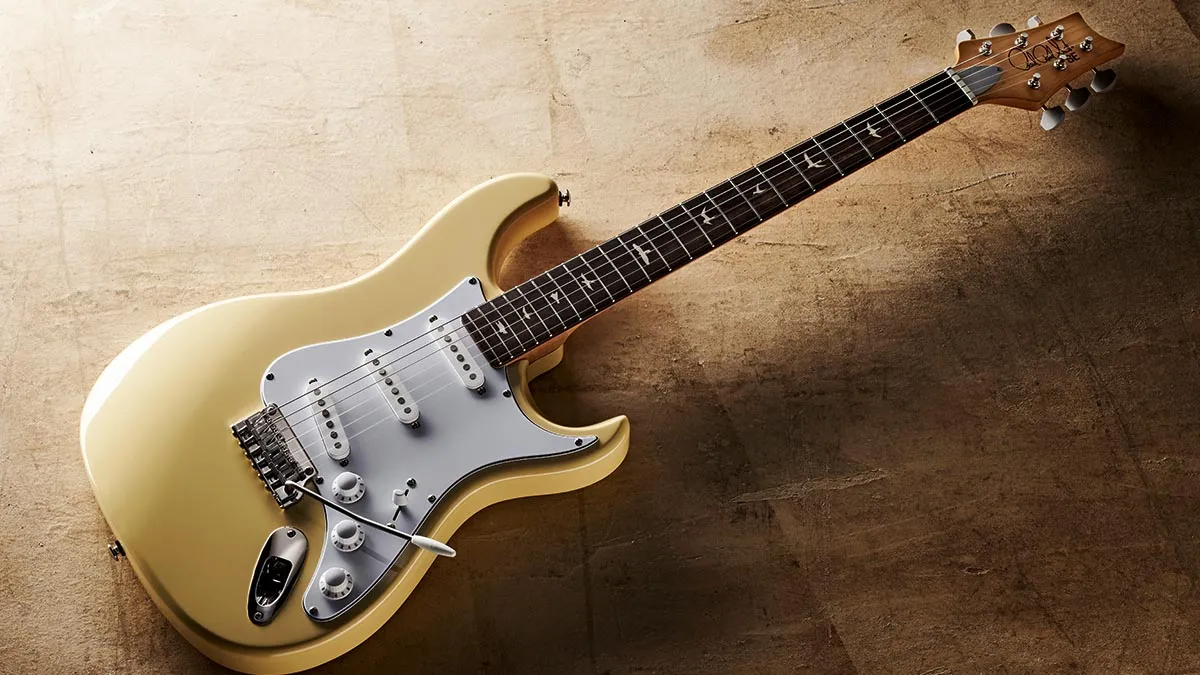
Staying with that line, the SE Silver Sky is also a great guitar if you want that S-Style configuration – they’ve been one of the best sellers on Reverb as well for the past four or five years since it was released.
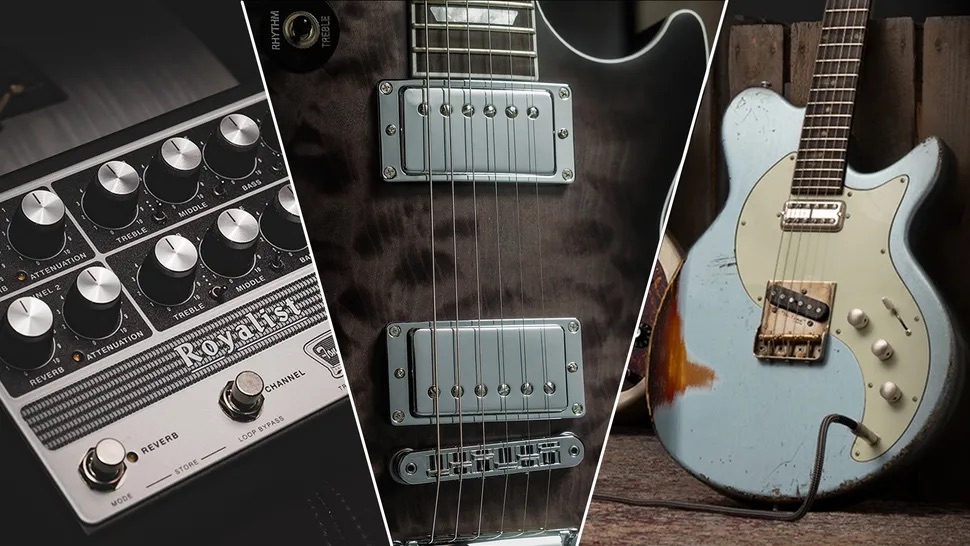
If you go a bit higher in price and think about new, more innovative shapes that don’t look like they were designed in the ’50s or ’60s, Reverend makes guitars like the Charger or the Double Agent – which is kind of like a variation of the Charger – that are really cool guitars for just under that $/£1,000 price point and offer a kind of Tele-meets-Gibson design in an offset body.

What used guitars do you think sometimes get overlooked but offer really incredible features or quality for the money?
The SE Silver Sky is also a great guitar if you want that S-Style configuration – they’ve been one of the best sellers on Reverb as well for the past four or five years since it was released
There are a few models that stick out. One is the early 2000s Gibsons, particularly the Juniors and the Specials. You can get those for under 800 pounds – still a pretty good deal and they have a nitro finish that ages nicely [even in just 15-20 years], and they feel good. In a similar way, the Fender Highway One series from the early 2000s – the Telecasters in particular – look and sound great.
One of the things I like about them is their really thin satin nitro finish. I’ve had one for 20 years and it just ages like a [Custom Shop] Relic in a cool way rather than like someone just took a screwdriver to the guitar to chip some of the finish off! And those ones are typically good deals, too. You can definitely get those for under 800 bucks in the States. Moving a little bit later on, the 2012 American Standard Strats were using the Custom Shop Fat ’50s pickups and they are great guitars and usually well-priced.
What mainstream guitars from the past 20 years tend to hold their value well?
Signature models have done really well, kind of across the board. We have a Reverb price index where we track and aggregate individual model prices over the past six or seven years, and when we were going through it the signature models have held their value the best.
The Johnny Marr Jaguar was a good example, even the EVH Wolfgang. Maybe you consider that a signature model. I’m also thinking of the Epiphones, such as the Tom DeLonge ES-333 and Joe Bonamassa Firebird – those have held their value really well, as has Fender’s John 5 Telecaster.

Some of these guitars have basically doubled in value between 2019 and, you know, where we are now. Of course, during the pandemic a lot of the prices went up, but then they tended to come back down.
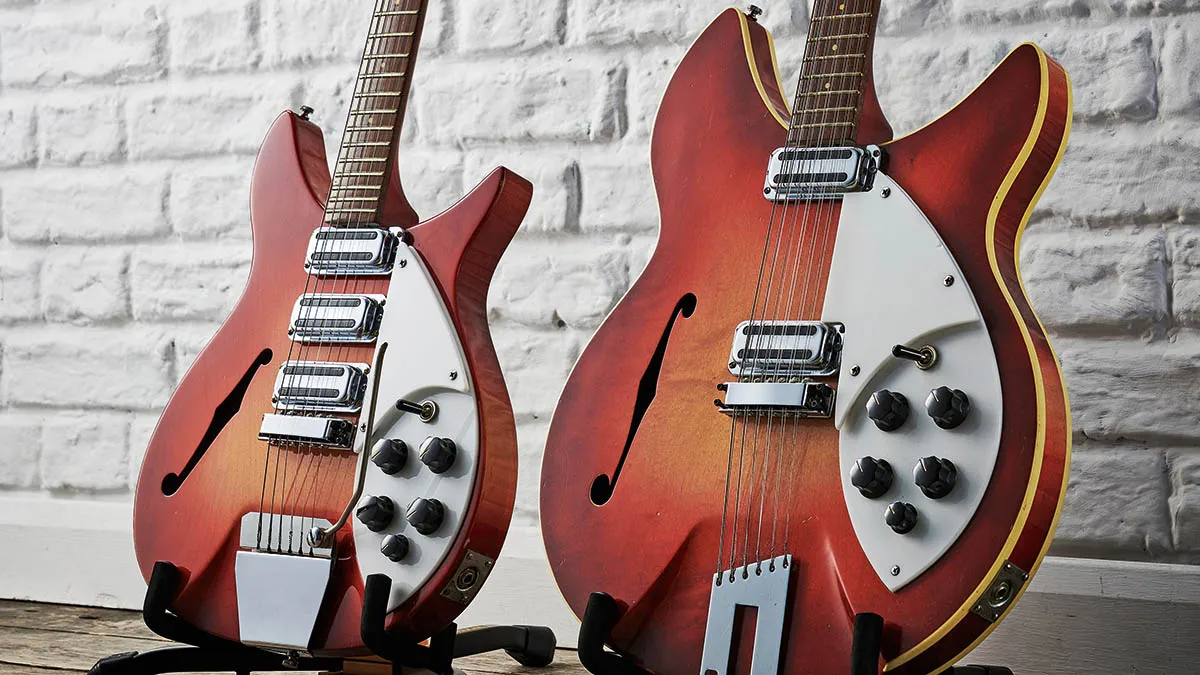
But the signature models have just stayed a bit more elevated compared to some of the other more standard models. The other ones [that seem to hold value] are Rickenbackers in general. They’ve been pretty consistent, especially the 330, 660, 620 and, on the bass side, the 4003 – that’s kind of like a perennial bestseller on Reverb.
What mainstream guitars of the past 40 years are going up in price?
That’s probably similar to the models that tend to hold their value. So the signature models and some of the Rickenbackers, especially with guitars from the ’90s, those are getting almost into ‘vintage’ territory, especially from the viewpoint of younger buyers.
For them, it’s kind of like the equivalent of what ’60s and ’70s guitars were when we were in high school. And then there’s also some guitars made in Japan – not Fenders necessarily but the Grecos, Tokais and Edwards brands – I think the word has kind of gotten out that they’re high-quality instruments.
We’ve all bought the occasional guitar online that hasn’t quite lived up to expectations when it arrived. What tips do you have for buyers to resolve issues successfully?
It depends on the issue, but typically I’d recommend contacting the seller before taking any other action but do it in a timely manner. If you’re buying the guitar on Reverb or another [online marketplace] platform, it helps to keep the messages on the platform so you keep documentation of what the interaction looks like. And, of course, you want to be respectful when you’re reaching out.
Our sellers are typically either musicians themselves or independent music stores, so a lot of times they’ll help you fix it, if it’s something like an issue with the action – maybe you just need to adjust the string height on the bridge or something. Ultimately, when you buy a guitar you just want it to work. But there’s a lot of ways to come to common agreement and, if you’re on Reverb, we also have our Buyer Protection [scheme].
So if there is an issue, especially within seven days of delivery, our Customer Experience team will work with the buyer and the seller to reach a fair resolution – which could be a return, could be a refund. The key thing is to provide photos and a clear description of what’s wrong and maybe reference how the listing potentially differed from what you received.

How would you go about assessing whether a price asked for a used guitar is fair for the condition, age, make and model?
As you get more into vintage guitars, you need to find out if it has all the original parts and the original case
Again, this will depend a bit on the instrument. You kind of have this [really broad] range, so you might be talking about an original ’52 Blackguard Tele versus a ’70s Mustang bass versus, I don’t know, a 2023 Fender American Professional Strat. But in general, you’re going to see more variation with older, more unique instruments. There are a few things that are always helpful – first, look at a price guide. Reverb, for example, has a very robust price guide.
We have thousands of items and all the transaction history [associated with them] going back historically, so you can look at sold listings on Reverb or other platforms as well. That helps you get a sense of what things are actually selling for. With some models, there’s a lot of variation, just in terms of the colour or the pickup configuration.
Also, especially as you get more into vintage guitars, you need to find out if it has all the original parts and the original case. That’s obviously going to impact the value. You can also look at a vintage guitar price guide, especially if you’re looking for [something really classic] like a ’52 Blackguard, or a pre-war Martin for example. It’ll at least give you a general sense of what prices are.

If you’re looking at something made more recently, or just looking at the used version, understanding the brand-new price will also help you price it. Typically, used instruments [in good condition] will sell for 30 per cent lower than what that guitar goes for new.
How much do buyers care about case candy, hang tags and things like that?
It really depends on how distinct the guitar is. If you’re talking about a Fender Custom Shop Tele and it’s got the ashtray [bridge] cover and maybe a cool strap that came with it or, to give a newer example, one of the Gibson Back To The Future ES-345s that had a bunch of [movie-themed] stuff in the case, like the digital wristwatch… that’s going to be very desirable.
But if you’re just talking about a Fender Standard Strat that’s made in Mexico, but you don’t have the Allen wrench and the little bag with the polishing cloth, I don’t think people are going to care that much.

How about advice for sellers – what are the key things to do in order to get a guitar sold on an online marketplace? Particularly in terms of how you photograph and describe it…
With the descriptions, try to be thorough. Disclose anything that might be a blemish, quirk or defect. But it can also be good to have fun with the description and tell a little bit of the backstory
On the photo side, taking a wide range of pictures is helpful. You want to get all the angles – a full length, a close-up… making sure you capture any details, especially dings or imperfections. Photographing it in natural light will also help a lot. Nowadays, you don’t need fancy equipment, you can just use your phone – most smartphones take beautiful pictures. It’s about putting yourself in the buyer’s place – what would you want to see on the guitar? Try to take those pictures.
With the descriptions, try to be thorough. Disclose anything that might be a blemish, quirk or defect. But it can also be good to have fun with the description and tell a little bit of the backstory. I think there are times when that can be part of the attraction of buying a used instrument.
For example, I bought a ’64 00-18 Martin six months ago and the story behind the guitar was really nice. It was from a seller in Pennsylvania and she got it as a gift from her mom when she was in high school, after seeing Joan Baez. She put it under her bed and didn’t play it for 60 years.
And when I got it, it still had the original strings on it, which, when you know the story, there’s something a little sweeter about that versus just buying it and you don’t know anything about the guitar.
How about tips for being a good seller who gets great feedback?
There’s a saying that ‘disappointment is the distance between expectation and reality’ right? And so along those lines, having good photos and descriptions is really the first step. So when a buyer actually gets the instrument, it is what they expected, it’s based on what you’ve described as a seller. And then you have two other things.
One is on the communications, so you’re making sure you’re responding promptly – and if you’re shipping it out, just giving the buyer some updates on where it is, giving them the tracking information is always a good idea.
And then the last thing is just packing and shipping it properly and promptly. Once people have purchased something, then they get excited. They want to get it as quickly as possible. So I always encourage people to ship guitars as soon as they can.
- For online price guides, used gear listings and more visit Reverb.
- This article first appeared in Guitarist. Subscribe and save.

