


Want to trade up to your dream guitar? Or simply buy a keeper for a great price?
From traditional guitar shops to online auctions, having some key principles in mind can save (or even make) you money and, most importantly, get you a guitar that lights a fire under your playing.
We join the experts to find out how…
1. You Really Should Try It
Guitarist writer and veteran guitar restorer Huw Price says, “If possible, try a guitar in person and test it out. Compare it with other guitars, because as tempting as the online prices often are, and even if the specs are the same, two guitars that come off production lines next to each other can sound very, very different.
“So if possible, try the guitar out in person. And if you can’t, if you’re buying online, make sure you’ve got a right of return.”
2. Lose It If You Don’t Use It
Chris Turpin, guitarist and frontman with Ida Mae and Mirador, is also a producer with an enviable working collection of guitars, which he has painstakingly traded for over years. He says it pays to be brutally honest and get rid of gear that doesn’t see regular use.
“If you haven’t used it in a year-and-a-half to two years, trade it with something else, because you’ll make someone else much happier [if they can have that] piece of gear they’ve been looking for,” he says, “and it’s going to better serve you as something else. I know it’s a lot of faff to sell little bits and pieces, but just do it – turn it into something.”
3. Beware Fretwear

“There’s no getting away from fret wear,” says Julian White, veteran guitar trader and owner of high-end guitar store World Guitars. “And these days it’s very expensive having something refretted – to find someone to do it properly, that is.”
This is especially true of maple-fretboard guitars, which also need a clear topcoat sprayed on again once the fretwork is done to make good any cracks caused by removing worn frets.
“A refret like that can add 500 quid to the price of your secondhand purchase,” Julian says.
4. …But Don’t Be Too Concerned About Refrets and Resets

“When I first got involved in vintage-guitar dealing about 15 years ago,” says long-time Guitarist contributor Rod Brakes, “it seemed that popular opinion was changing regarding vintage acoustics with reset necks. Whereas some people would turn their noses up at the very notion that a guitar had been made more playable by a skilled luthier, others wouldn’t pull the trigger if it hadn’t been worked on.
“It was quite polarised, though I would say opinion has now swung more towards the latter. After all, most people want to enjoy the guitars they buy. Refretted vintage guitars, too, are increasingly becoming more accepted, and as long as the job’s been done well, a refret isn’t likely to knock a big percentage off an instrument’s value. It makes all the difference to playability.”
5. Traditional Auctions Can Offer Security
“Obviously we are a specialist in the area,” says Luke Hobbs of bricks-and-mortar guitar auctioneers Gardiner Houlgate. “The advantage of coming to us to buy guitars is that we’re acting as a middleman, which makes the mechanics of selling guitars easier, but we are also vetting [authenticating] things, so it’s quite a safe way to buy.
“If you’re buying from a private seller, you might not always have 100 per cent confidence in the person you’re buying from and even many online marketplaces can suffer from fraudulent listings.”
6. Don’t Be Too Sentimental

Mirador’s Chris Turpin says that while some guitars are genuine lifelong keepers, it’s healthy to let stuff go. “You can’t put a value on early guitars that have really done a lot with you, that you used on shows that were milestones in your own career, or creative explorations, or family life… those are a big deal.
“Don’t get rid of those ones. But don’t be overly attached to every single thing that you’ve bought just because it was a necessary stepping stone – be mercenary in getting rid of three guitars, five guitars, to get one incredible piece. Do it, and I promise you, by the time you sell each of those guitars, if it sat in a dusty corner not being used, you’ll probably be quite happy that it’s gone.”
7. Haggling Is Rare These Days
Julian White of high-end guitar retailer World Guitars, says, “I get offered a lot of part-exchange. Some people are sensible and realistic and realise I’ve got to resell [the part-exchanged guitar] and pay card charges and make a couple of quid on it. But some people don’t realise that at all, and they’ll say ‘Well I paid two-and-a-half grand for it, so I want to get close to that back’, which you have to say ‘no’ to.
“Likewise, with haggling it’s fine to ask but I wouldn’t automatically expect it. After all, you don’t go to the supermarket, put all your shopping through the till and then say to the cashier, ‘Oh £200, that’s quite a lot. How would you feel about £150?’”
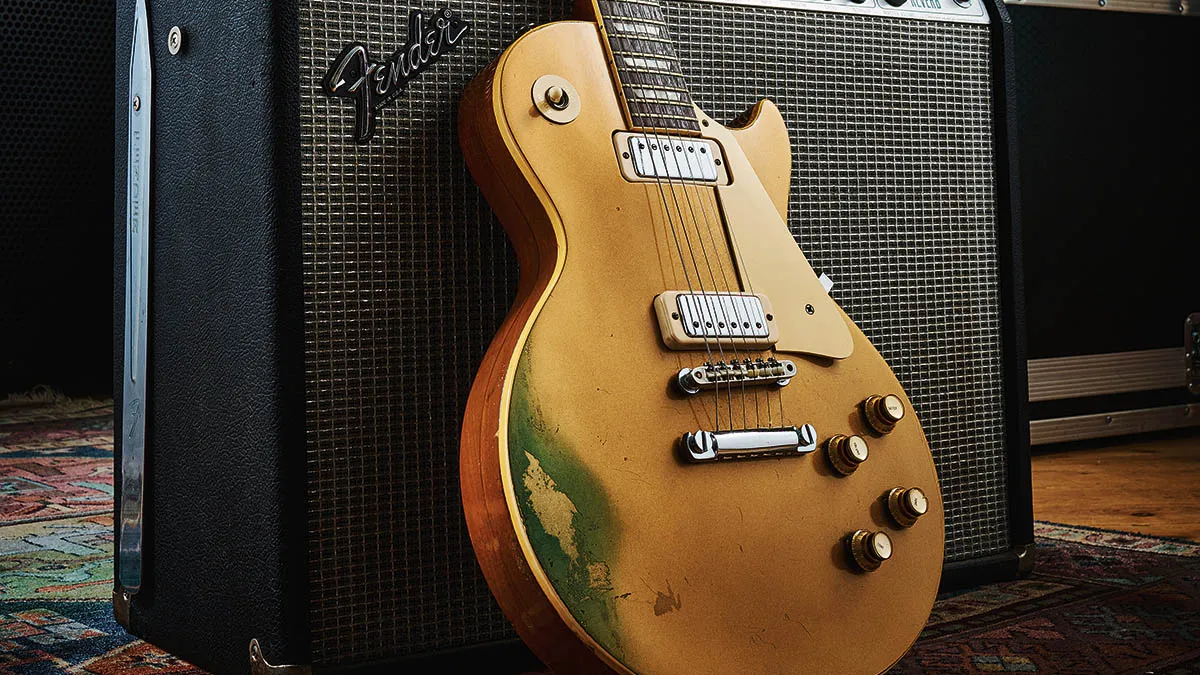
8. Consider Bad Refins Carefully…
“I think bad refins can be hard to deal with,” says guitarist and producer Chris Turpin of Mirador.
“I know a lot of people will buy bad refins [on otherwise decent guitars] to get them refinished, but it’s a lot of investment in time and effort to decide how much you’re gonna like the guitar at the end. So one thing I always look out for is how a refin feels, because there’s something in the finish of those old guitars, with them being so thin that can be quite dramatic in how it affects the tone.”
9. …But Don’t Dismiss Good Ones
“It used to be that refinished vintage guitars were worth half as much as their original-finish counterparts,” says former vintage guitar trader Rod Brakes, “though that’s changed in recent years. What’s more, they’ve tended to increase in value over time. Players also love refins for anxiety-free playing, as regular wear doesn’t significantly affect value.
“If you buy such a guitar, you then have the option to refinish it again in the exact colour of your choosing – complete with ageing, if that’s your preference. The same can’t be said of an original vintage guitar, and professionals would likely raise their concerns about devaluing it. You might even love the refinish and decide to keep it that way.”
10. Don’t Overlook Signature Models

“One thing that’s good for investment – and always has been – is artist-associated instruments,” says Luke Hobbs of Gardiner Houlgate. “Not necessarily owned or autographed by artists, but things like signature models, because quite often they get discontinued or they get released in very limited runs. I was asked to do a valuation on one of the Mark Knopfler Les Pauls [the 2016 ’58 replicas].
“The first 50 were aged and signed, another 75 were aged but not signed and then the last 75 they made were VOS – something like that. Anyway, someone contacted us with one of the first aged-and-signed run and that was a guitar that originally sold for around £10k. But they’re changing hands for between £30,000 and £40,000 now.”
11. Quality Never Goes Out Of Style

As many seasoned traders have observed in the past, the secret to selling is buying. Which is to say a secondhand high-spec instrument by a major maker, when in good condition, is one of life’s more solid bets – both as an instrument to enjoy and as something that will hold value and be straightforward to resell.
“A secondhand Core-line PRS, for £2,500, is a lot of guitar for the money,” says Julian White of high-end retailer World Guitars. “You could buy one of those £2,500 things [quasi-boutique new guitars by less-established makers] that’s only ever going to be worth £1,500 secondhand. But I think your money’s much better off buying a secondhand, better-quality guitar in the first place.”
12. Don’t Forget The Buyer’s Premium

At live auctions nearly all auction houses charge a ‘buyer’s premium’ – a percentage of the hammer price added to the final price paid by the buyer.
“Experienced auction buyers come with a spreadsheet of what a hammer price will add up to with the buyer’s premium added on top,” says Luke Hobbs of auction house Gardiner Houlgate.
“So they’ll know that a £100 winning bid with the premium added will total £126.40, including VAT. And that [sliding scale of buyer’s premium additions] carries on through the entire range of increments, right up to tens of thousands of pounds.
“Having a spreadsheet with it all set out means they don’t get carried away. The buyer’s premium can catch people out – for example, if you buy a guitar for £5,000 you’re looking at at least another grand on top.”
13. What A Good Guitar Shop Should Do For You

Julian White of World Guitars, says: “Almost every new guitar needs a setup because they are set up [to compromise settings] to ship to a range of different countries in different climates and need to be playable out of the box – if it goes to a cold country, the action will drop, if it goes to a hot country, the action will get higher.
“A good shop looks at every guitar they have in stock, sets them up, restrings them and makes sure they work as they should. A good shop should restring the guitars they put on sale, whether new or used, setting them up for you to perfection.”
14. Try Selling On Consignment
Rod Brakes, former owner of Vintage ‘n’ Rare Guitars in Bath, says selling guitars on consignment – where a guitar shop presents your guitar for sale and takes a reasonable cut of the proceeds – can be a ‘goldilocks’ solution for sellers.
Buyers invest in instruments from trustworthy experts because they’ve been accurately assessed, which means confidence and peace of mind
Rod Brakes
“The benefits of buying and selling vintage guitars on consignment via reputable dealers are often underappreciated,” says Rod.
“Buyers invest in instruments from trustworthy experts because they’ve been accurately assessed, which means confidence and peace of mind. You needn’t worry about conducting an appraisal, researching specs, establishing value, taking photographs, writing descriptions, creating listings, handling inquiries, wrestling with packaging, paying shipping and insurance, dealing with after-sales, or any other time-consuming responsibilities.
“Dealers typically charge around 10–20 per cent for consignment, but then they regularly achieve prices 10–20 per cent higher than private sales. All you need to do is deliver the instrument, sign the agreement, and wait for a phone call.”
15. Try The Jerry Donahue Tap Test

Many different methods have been proposed to test how resonant a guitar you intend to buy is, but this one from Jerry Donahue – as told by Guitarist restoration expert Huw Price – brings a little musicality to proceedings, especially if you have an ear for intervals.
“Jerry used to suggest tapping the body – specifically on Telecasters and Stratocasters – and try to establish what the note is [even a knock on wood has a pitch]. And then tap the neck and try to establish what the note of that is, then see if they’re in unison or in harmony. If they’re a third apart or a fifth apart, you’re probably going to have a guitar that will resonate nicely in music in a way that’s pleasing,” says Huw.
16. Scarcity Changes Your Options

“If you’re shopping for a brand-new PRS Custom 24 that’s available in 10 different shops, you might go and find the shop where it’s the cheapest,” says Julian White of high-end retailer World Guitars.
“But it’s no good coming and looking at a Luxxtone, for example, where there’s only two in the country, and be like, ‘Oh, well, this is the one I want’, but then walk away because you can’t get anything knocked off the asking price.
“Are you really going to pass it up for the sake of a £150 haggle? Because you’re not going to find one anywhere else, you know?”
17. Boutique Quality Versus Big Brands

“Big brand names can be safer [in terms of holding their value] for obvious reasons,” says Luke Hobbs of Gardiner Houlgate. “Gibson, Fender and Martin would be the main three. But then, on the other hand, if you want a fantastic guitar with the potential of buying it at a very good price point, you could go down the boutique builder route.
“We get lots of boutique builder guitars in the auction that may ask four or five thousand pounds on a commission basis, if you’re getting one made by them. But then in the auction, you could be looking at somewhere between £2,000 and £3,000 for [that type of] instrument, so you’re getting a lot of guitar for the money.”
18. Losing Your Head Will Cost You
“You really need to do your research, know exactly what you’re buying and set your limit accordingly,” says Luke Hobbs of Gardiner Houlgate. “Do market research [on what a guitar is likely to be worth] before you go for it.
“When we had our first few auctions during lockdown, people were getting really carried away – probably because they were bored – and in some cases were paying more in the auction for guitars than they could buy them at retail and then paying postage on top. And it was just crazy. So it’s about preparation really.”
19. Wider Events Can Affect Value

“The Black Strat is a prime example,” says guitar auctioneer Luke Hobbs.”You’ve got the [Custom Shop] Relic and the NOS version. And when Gilmour’s original Black Strat sold the first time for $3.9m in 2019 it coincided with when Fender stopped making the replica model and prices rocketed.
“We actually have a David Gilmour Signature Stratocaster Relic coming up in the next auction, so I was price-checking it and again, the market has shifted upwards, because suddenly the original is the most valuable guitar that has ever sold at auction [following the recent Jim Irsay sale, where the Black Strat sold again for a record $14.5m]. And that does have an effect on the market.”
20. Condition Counts For A Lot

“From a good investment point of view,” says guitar auctioneer Luke Hobbs, “condition is everything. The best condition pieces – whether it’s a vintage or a rare modern piece by one of the big names – the better the condition, the easier it is to sell on. And then what you class as collector’s grade or museum-grade pieces will always fetch a premium. The best always does.”
21. Doer-Uppers Have Their Limits
“Be realistic about what you can upgrade and how much better you can actually make a guitar,” says guitar restorer Huw Price. “I think that’s key, because a lot of people waste money on upgrades that aren’t really ever going to transform a guitar. If it’s not good enough to start with, then it’s not good enough.
“Take pickups, for example. They’re like microphones. You can have the most fabulous vintage valve Neumann or AKG mic but if you stick it in front of a [terrible] acoustic, all you’ll end up with is a really great, pristine recording of a really bad-sounding guitar!
“Pickups are the same – they work with the information they’re able to pick up. If it’s not inherent to the guitar, even the greatest set of pickups isn’t going to magic it out of nothing.”
22. Keep Original Parts

Modding guitars is popular but be sure to keep any original parts, says Cyril Nigg of online marketplace Reverb.com.
“If you’re modifying or your guitar is getting into more of that ‘player grade’ territory – if you swap out pickups or a bridge or tuners – throw the originals in the case, if you think you might want to sell the guitar in the future. I think when potential buyers are making that purchase decision, having the original parts is always helpful.”
23. Beware The ‘Sunk Cost’ Trap
Guitarist and producer Chris Turpin says occasionally it makes sense to cut your losses. “People hold on to things, because perhaps they overpaid for it or they bought it because they got a good deal, but it wasn’t the thing they really wanted. So then it kind of hangs around because it’s a sunk cost, so it has to stay. That can be crippling!
“Get rid of those [instruments], I would say, even if you make a loss on certain things – if you’re not using it and it’s taking up psychological or playing space, get rid of it. If selling it is a means to getting that dream guitar or closer to that piece of equipment but you have to take a slight hit on a trade, take a hit on a trade.”

24. Be Willing To Ship
“I always tell sellers not to be afraid to pack and ship a guitar,” says Reverb.com’s Cyril Nigg. ”It’s often easier than people think. And it really opens up the potential buyers that you have to make a sale. You can usually sell things faster and sell for a better price than if you’re just listing something locally on, say, Gumtree or Facebook Marketplace or Craigslist to name just three.
“While highly fragile, rare or valuable guitars can be a prudent exception to this rule, on the whole, readiness to ship helps you sell gear for the best price.”
25. Buy Something You Love
Amid all the advice for getting bargains or investing well, never forget the most important reason for buying a particular guitar – you ought to love it, says long-time Guitarist contributor Rod Brakes.
“I’ve met collectors who admit they rarely touch certain instruments, lest they put a mark on them. And I know players whose main concern is using a vintage guitar as Leo Fender, Christian Frederick Martin, or whoever else originally intended.
“However, I’ve yet to come across a collector with a complete aversion to playing. Nor have I met a player with zero appreciation of collectibility. And therein lies the point – you can have the best of both worlds. Regardless of budget or skill, if you want to get the most out of a vintage guitar, buy something you love. On the hypothetical desert island, there are no collectors or players – just guitarists.”
- This article first appeared in Guitarist. Subscribe and save.
