


It’s hard to imagine a world without the Gibson flat-top. But as senior product development manager, Robi Johns, reminds us, you have to wind back the dials of the time machine a full century to find the Michigan luthier on the brink of arguably its most exciting quantum leap (at least, until the electric revolution of the ’50s).
“It’s amazing to think that it’s 2026 now,” considers Johns, “and although they’d existed before that, for those in the know, the first time a flat-top appeared in a Gibson catalogue was 1926. I don’t attribute the death of the banjo and the rise of the guitar so much to the crash of the US economy. I think it was influenced highly by the development of the radio in 1919. Most people didn’t know the guitar prior to that.”
From that leap of faith, the flat-top made a perfect landing. Today, scanning the Gibson website reveals acoustics sprawling into the hundreds. And yet everybody still wants to own the models that made the legend, and the luthier’s latest cache of vintage-modern collectibles will certainly scratch that itch (for those who can afford the ticket).
As the branding implies, the three-strong Century Collection – comprising the punch-above-its-weight L-00, populist J-45 and cult-hero J-185, each with a thin satin finish – salutes that formative era when it seemed that every year heralded another stone-cold classic.
And while there are concessions to modernity, the period-correct authenticity spans from the minutiae (hide glue in place of PVC) to the freshly introduced 12-fret neck-to-body joint that gives these acoustics a striking look and feel.

First, let’s talk about that 12-fret neck-to-body joint. It was ultimately overtaken by the 14-fret format, but what are the selling points of that earlier design?
Number one, it’s more comfortable. I mean, this is hypothetical – I’m not sure everyone would agree with that. But it’s a little bit closer to the player. As you know, there’s a [standard] scale length to the instrument, which is 24.75 inches for short scale and 25.5 inches for long scale. But when you get rid of a couple of frets and move the neck into the body, you have to move that bridge further out to make that 24.75-inch scale length.
It’s more than a theory. I’ve noticed over time that moving that bridge into the widest part of the lower bout just opens up the sound even more. It’s much more responsive, more resonant, more vocal-sounding – it just sounds better.
That’s why we went to the 12-fret Century Collection models. We wanted to make these amazing, early-designed guitars sound as beautiful and resonant as possible. And the 12-fret neck-to-body accommodates that, by virtue of its construction.

It’s common to hear pre-war necks described as ‘baseball bats’. But the Century Collection models have adopted the more modern Gibson SlimTaper.
Yeah, it’s much more comfortable for the player. Although the theory might be with some people that the more mass of a neck [the better]. Like, the 1928 models and the 1942 J-45 had some really big V necks.
Now, some people like the V neck because of the way they can put their thumb over the top of the fingerboard. The resonance of that neck is something that can be attributed to a better-sounding instrument. The lighter neck works for us beautifully.
However, some people say that the heavier neck transfers more of the vibration. There’s more vibration going down that neck; it’s like a giant wooden tuning fork, if you will. And it’s vibrating into the body, which is why that dovetail is so important to transfer that into the body.
These three Century Collection models look stunning, from the subtle finish to the old pre-war Gibson logo on the headstocks.
Well, [it’s] the vibe of these guitars – and I say ‘vibe’ in the sense of the allure of the style of the guitar, and the simplicity of it, and the size of it. We put a light satin finish on them, which makes it sound even older because the old finishes kinda dissipate over time and therefore the body resonates even better. So we were very pleased.

Let’s look at the individual models, where they fit into Gibson’s history and how you’ve approached them for this new collection. Starting with the L-00…
Well, the L-00 was an evolution, it seems, from the Nick Lucas Special and the L-1. It’s a little bit elongated instead of round. That came out in 1932 – in my opinion, to supply the American market with a really nice, relatively affordable (at the time) acoustic guitar made by a manufacturer, with mahogany back and sides. The Nick Lucas Special was more expensive.
The L-00 became one of the more long-term sustained models that we do. One of our most popular small-bodies today is the L-00, still. A lot of people like the L-00 because it’s really comfortable to sit with. And it’s so resonant, with that 12-fret body and its bridge pushed out. It’s very popular with blues players – a very focused sound.
The construction is virtually identical to what was happening in the 1920s or 1930s. That can be identified in two ways: we still use the dovetail joint, and we still use organic hide glue to bond that neck to the body.
Nowadays, it’s PVC glue, typically, but in those days we used hide glue and we still use that. And we do that on our Custom Shop models so they sound even more authentic because of the bond between the hide glue and the wood – which is much more molecular than PVC glue.

With the next model, we’re moving on a decade, with the iconic J-45.
“We had already developed the J-45 body. But it wasn’t called a J-45 in 1934: to compete with our competitors, who were building bigger guitars at that time, it was called the Jumbo. This was the first round-shouldered Gibson acoustic. And it eventually turned into the J-45 by 1942.
“The J-45 is so versatile. You can use it for blues. You can use it for rock. It’ll growl at you if you hit it hard. But it can also sound nice and warm and balanced if you play it lighter. You can fingerstyle it. So that round-shouldered dreadnought rose up from the 1930s, and by 1942 it became the J-45 – and it stayed and it’s our biggest seller.
“My hypothesis is that the J-45 became embedded in society not just by virtue of its sound but because we saw it in the broadcasts of the early ’60s. I was just at the edge of that. And I have to attribute it to the Brits coming to America in the ’60s with all this amazing music. I remember Donovan playing a J-45 on his legendary songs.”
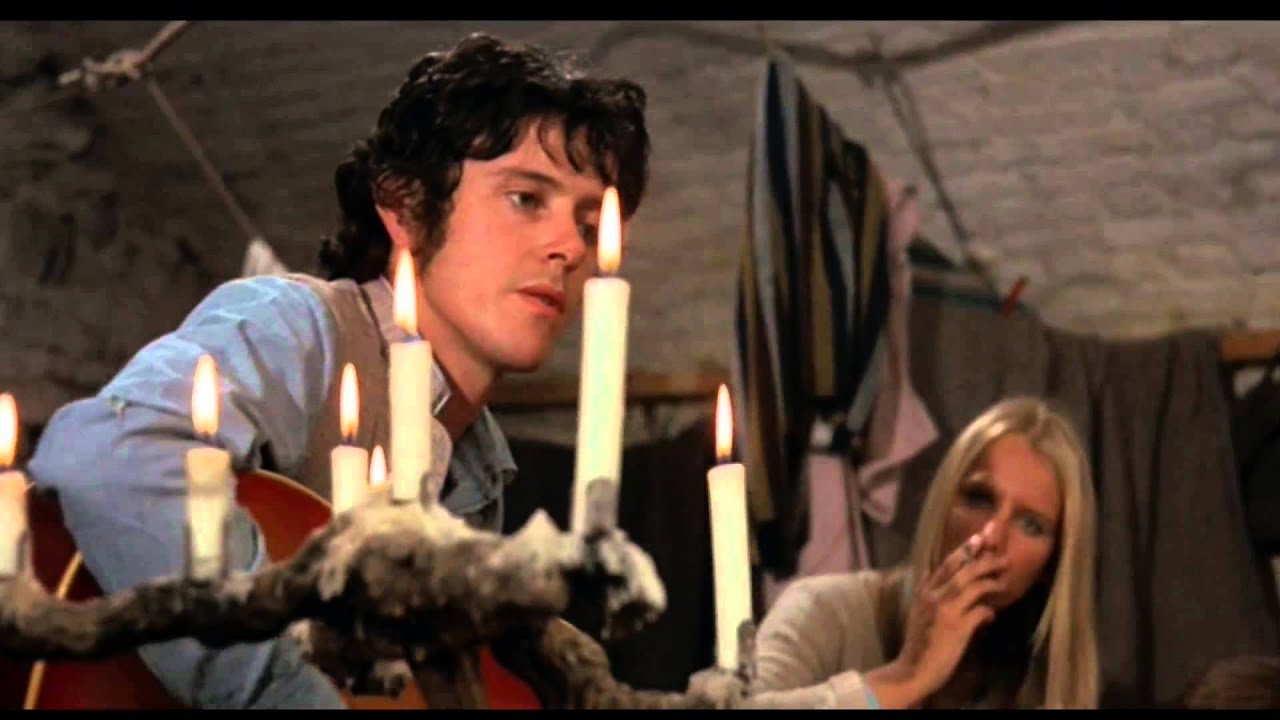
There’s a Beatles connection with that model, too, isn’t there?
Yeah. What did The Beatles use on the orchestration of Love Me Do, one of their first recorded songs? An acoustic guitar. And that acoustic guitar looks like a J-45 because it was a J-45, with a single-coil pickup, called the J-160E at that time. I think The Beatles had a lot to do with the exposure of the J-45 – even though it was a J-160E, which was the J-45 design.
That J-160E is still popular because of George Harrison and John Lennon – and rightfully so
In 2026, we just re-released the J-160E in our core line-up. And it’s still revered. It’s kinda retro for young people playing modern music. They say, ‘Oh, that’s kinda cool.’ It’s a very distinctive acoustic-electric sound: not fully acoustic, a little bit of both. That J-160E is still popular because of George Harrison and John Lennon – and rightfully so.
Moving on another decade, we’ve got the J-185, which is probably lesser-known relative to the Hummingbird, Dove, J-45 and so on. It’s almost a bit of an unsung hero, isn’t it?
Yes. It was released in 1951. From my perspective, the J-200 became quite famous from the 1930s on as the big, extravagant model. You know, Elvis played it.
It was the biggest thing available, the most pronounced. But the J-185 is actually just a one-inch-smaller version of the J-200: the J-200 was 17 inches across, the J-185 was 16-inches across with the exact same proportions.

So now you could have this J-200-looking guitar, beautifully balanced looking, pretty big sound but one inch less depth. And the idea was that it was a wonderful rhythm guitar. You have a little less bottom-end, which makes it very balanced in the lows, mids and highs – but the J-200 has more depth.
And then, in the early ’60s, the Everly Brothers wanted to use the J-200 as a [signature] model. But Gibson wisely said, ‘No, let’s leave that alone. Use this body instead, it’s a little bit smaller but it’s very balanced.’ So they used the J-185 body to create what was the Everly Brothers model. Without that low-end – and due to the fact it had warm lows, mids and highs – it became an excellent rhythm guitar.
But the other connection is that the body mould that was used for the original L-5 jazz guitar was also used for the J-185. That was 16 inches across, too, so we had that available. With the flat-tops, we didn’t want to get much bigger than 17 inches. I think that might have been risky.
We did do the Super 400 [in 1934], which is 18 inches across – but that was an archtop. So, anyway, I like to say that the J-185 Century Collection model has all these connections to our history.

How has the popularity of the J-185 ebbed and flowed over the years?
When we first started this Gibson plant in Bozeman, Montana, in 1989, I was the only one here in sales and marketing because it was all builders. I was getting calls from the UK, from the wonderful artists there – George Harrison’s group and Eric Clapton’s group. They were working together doing some unplugged things. And what were they interested in? The J-180 and the J-185.
That’s a fact. That’s what they were talking about. That’s what they wanted. I remember that vividly. It was the J-185 that all the artists were talking about, saying, ‘It was off the market for so long. Thank you for building it again, Gibson.’ That’s what I heard on the phone.
And that wasn’t just coming from the Brits. There were American artists contacting me, too. I remember Jackson Browne calling me up because he’d heard a rumour that we were building the J-185 again.

Are there more Century Collection models coming down the line?
The Century Collection is limited to the models that reflect more of what was happening during what is typically called the Depression era
We have a few models prototyped, but what’s really happening is that our historic models – which started 100 years ago – are a part of our Custom Historic line-up in our Custom Shop, where we replicate as much as possible the sound, the feel and the look of those models back when they were first released. So what you’re really seeing is an extension of our historic revival of these models, going back to 1920.
You know, we have a 1942 J-45, a pre-war Super Jumbo 200 like the original, a 1942 Southern Jumbo, a 1960 Hummingbird – which is when that model appeared. And that was made popular from The Rolling Stones playing a Hummingbird back in the day. So when people ask me, ‘Why did these models become famous?’ I always like to say – it’s your fault! It was [because of] the popularity of British music in the ’60s onward and the love that the British artists had for American blues and jazz. And, therefore, the interpretation of that coming from England is indelible.

But, yes, we are going to continue this resurgence of the historic models. The Century Collection is limited to the models that reflect more of what was happening during what is typically called the Depression era.
We wanted to capture the love of those old original models that came out closer to the beginning of the broadcast industry. Gibson grew out of that – which is why those models became so famous.
- “The lower mids and bass vibrate through your body – it’s tone you can feel”: Gibson J-185 Century 12-Fret and J-45 Century 12-Fret review
- This article first appeared in Guitarist. Subscribe and save.

