

Sometimes, there are so many reasons to mourn a departed star that what should be headlines are reduced to footnotes.
Over her seven-decade career of many colours, Dolly Parton was everything, to everyone: a singer-songwriter, actress, activist, author, sex symbol, chef, philanthropist, businesswoman and theme park impresario – not to mention one of the rare public figures able to reach across modern America’s bitter Democrat-Republican battlelines.
Socially, politically, culturally, Dolly’s thumbprint and spreading ripples are such that even the most lavish tributes paid to the country star – who died last month aged 80, after a short battle with cancer – could only scratch the surface of her formidable musicianship, and her underrated talents as a guitar player, in particular.
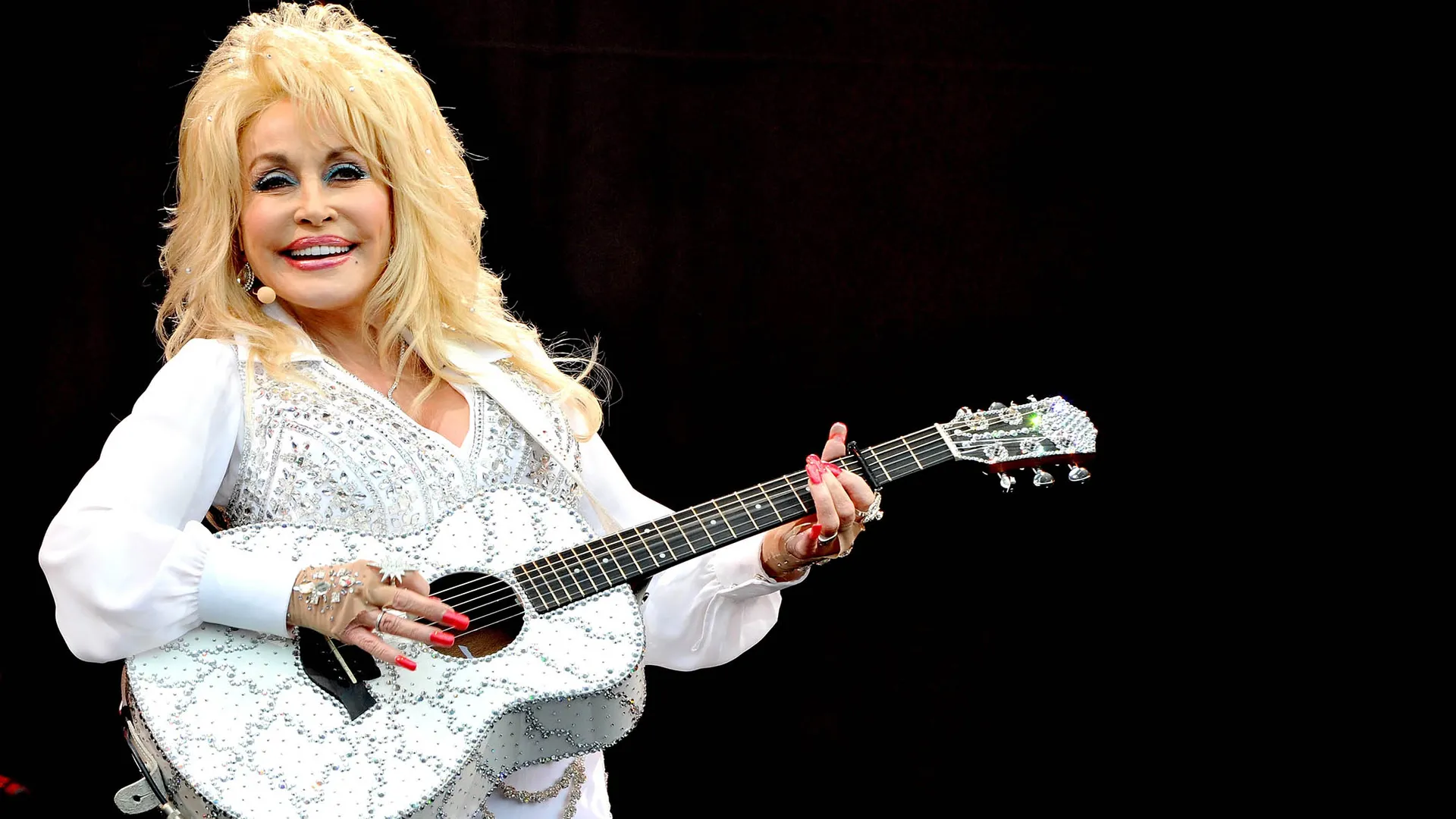
Few would describe Parton as a guitarist first and foremost (and it’s true that most of the final album parts were played by studio sessioners such as Jimmy Colvard, Chip Young, Wayne Moss and Kent Wells). Yet the bulk of her original songs began life with a guitar on her lap, while Dolly rarely took the stage without a three-quarter-sized (and occasionally rhinestone-studded) acoustic, the five-foot-nothing singer favouring the equally diminutive Martin 5-18 Terz or a custom Taylor GS Mini.
Factor in Dolly’s incredible fretting-hand style, and it’s no wonder that serious instrumentalists – including Slash, Steve Stevens, Richie Sambora and John Mayer – paid tribute as the sad news broke, with Jack White (whose most famous band, The White Stripes, covered Jolene in 2000) summing up the mood of the guitar community with his two-word salute: “Instant sainthood.”
Sparks Of Colour
That glittering future seemed unthinkable when Dolly Rebecca Parton was born on 19 January, 1946. Released in 1971, her classic Coat Of Many Colors – its self-penned lyric telling of a little girl mocked at school for wearing a garment sewn by her mother from a “box of rags” – was a true account of a rural Tennessee childhood that the singer herself described as “dirt poor”.
As the fourth of her sharecropper father’s 12 children, Dolly had few material possessions, but the musical family kept a few instruments around the house, and welcomed a flash of glamour whenever her uncle, the country songwriter Bill Owens, came calling.
“He used to come to our house all the time, when it was time to eat on Sunday or when he needed a place to flop,” she wrote in her 2020 book Dolly Parton, Songteller: My Life In Lyrics. “Uncle Bill had this big ol’ red Gretsch electric guitar and he was good. He kind of fancied himself that he was going to be a star.”
No doubt, it was Owens’ early offering that sparked his niece’s preference for small-bodied guitars. “When he saw how serious I was about my music, he gave me his little Martin guitar,” she told Reverb.
“It was my treasure. My plan was always – when I got rich and famous – to have it fixed up. But the loft burned out of our house and burned up my guitar, so I only have the neck of that one. But I have collected little Martin guitars all through the years. I have some classic little guitars, especially the baby Martins.”
Writing songs was instantaneous, but that first Martin bit back, she wrote in Songteller. “I remember, I got these deep old blisters and calluses from practising. Oh, it was so painful trying to learn. I kept saying, ‘It hurts’. And [Uncle Bill] kept saying, ‘No, you’re going to have to learn’. You gotta wait until those ol’ calluses harden until you won’t feel it anymore, and that’s when you’re going to be serious. You can’t cry and complain about that.”
While her circumstances meant she understandably never learnt to read sheet music, Parton could feel her way around a dizzying array of instruments, including banjo, violin, piano, harmonica, recorder, saxophone, dulcimer and autoharp. But as the singer told Music City News in 1967, on most of these, she considered herself a dilettante.
“Guitar is the only thing I can do a really good job at. I’ve been playin’ guitar enough to know everything I played – just straight chords – since I was eight. I’m really not a master on guitar. I just play my own songs and I don’t play any lead. I’ve always fooled around on the guitar, but I started playin’ on the shows when I started singin’ in Knoxville when I was 10 years old.”
Those aforementioned shows – as the guest of Tennessee radio star Cas Walker – set in motion an early career that was at first frustrating, with Dolly miscast as a pop puppet. But she never forgot Johnny Cash’s encouragement when she begged him for a support slot at Nashville’s Ryman Auditorium in 1959 (“He looked at me as if he was thinking, ‘You know, this kid is really serious’”).
Having been hired in 1967 as the latest female co-host for The Porter Wagoner Show, she emerged from the nudie-suited country star’s shadow with her own string of hit singles on the RCA label – and wrote 1974’s I Will Always Love You as a kiss-off to their sometimes volatile partnership.
As Parton once admitted: “Every time I’m on stage, something will remind me of something I learned from Porter – something he said or sung.”
Independent Ways
Parton’s first solo single to top the country chart – 1971’s Joshua – announced her writing talent, but in a 1984 encounter with Interview magazine, she hinted that her creative wellspring was practically bottomless. “I’ve published 3,000 songs. Since I was five years old, I’ve been writing songs. I started playing guitar when I was seven, I started making up stuff before I could write.”
As for Dolly’s left-hand fingering technique – born from necessity when she started wearing inch-long acrylic nails – it called to mind the old quote about the theoretical impossibility of a bumblebee taking flight (but doing so anyway).
To make fretting feasible, she combined open tunings and barres with a deft plucking pattern rooted in the ‘thumb and flick’ style of Maybelle Carter. “I figured out a way to do it,” she told Chet Atkins in one televised duet. “Cos I’m so sissy. I like the nails. So I’m not going to give them up.”
As Dolly told The Graham Norton Show many years later, she made some concessions, removing and filing down her talons for writing purposes.
“The [right-hand nails] work great as picks, there’s no problem with this hand – but these [left hand] are the ones I have a problem with. I’ve learnt to do open tuning, mostly, when I’m writing and stuff. But if I’m really serious about it, I just have to saw ’em down.”
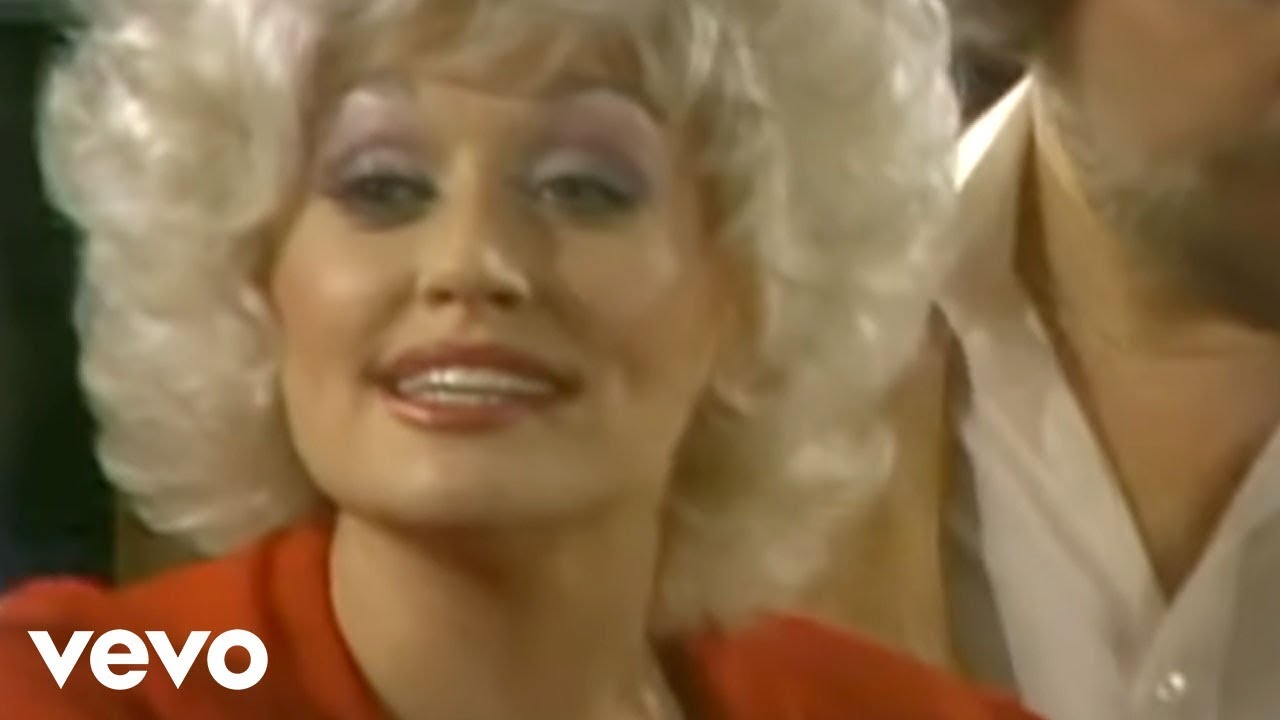
But as she recalled in a vintage interview with Playgirl, the 1980’s ode to office drudgery 9 To 5 (from the comedy film of the same name), wouldn’t have existed without them.
“I was writing it on the film set, just clicking the rhythm with my nails. I had my guitar there. I figured it out in my head. It all came at once. The rhythm is like the sound of typewriters, when the little bell rings and the telephone’s ringing.”
Meanwhile, if 9 To 5 was the most upbeat of Parton’s signature tunes, her most-streamed song, 1973’s Jolene, was perhaps the ultimate tear-streaked country lament, supposedly inspired by the red-haired bank teller who flirted with her husband, Carl Dean (“It was a running joke between us. I was saying, ‘Hell, you’re spending a lot of time at the bank. I don’t believe we’ve got that kind of money’”).
As Dolly told The Guardian in 2014: “The thing I remember most was all the musicians when I came up with the little guitar lick, the Jolene lick, saying, ‘Damn, that’s so good. That’s the coolest little lick’.
“I remember all the guys learning to play it and everybody thinking how cool a rhythm it was. It was a little out of the norm for the things we’d been doing up to that time. I remember everybody in the studio just loving that song.”
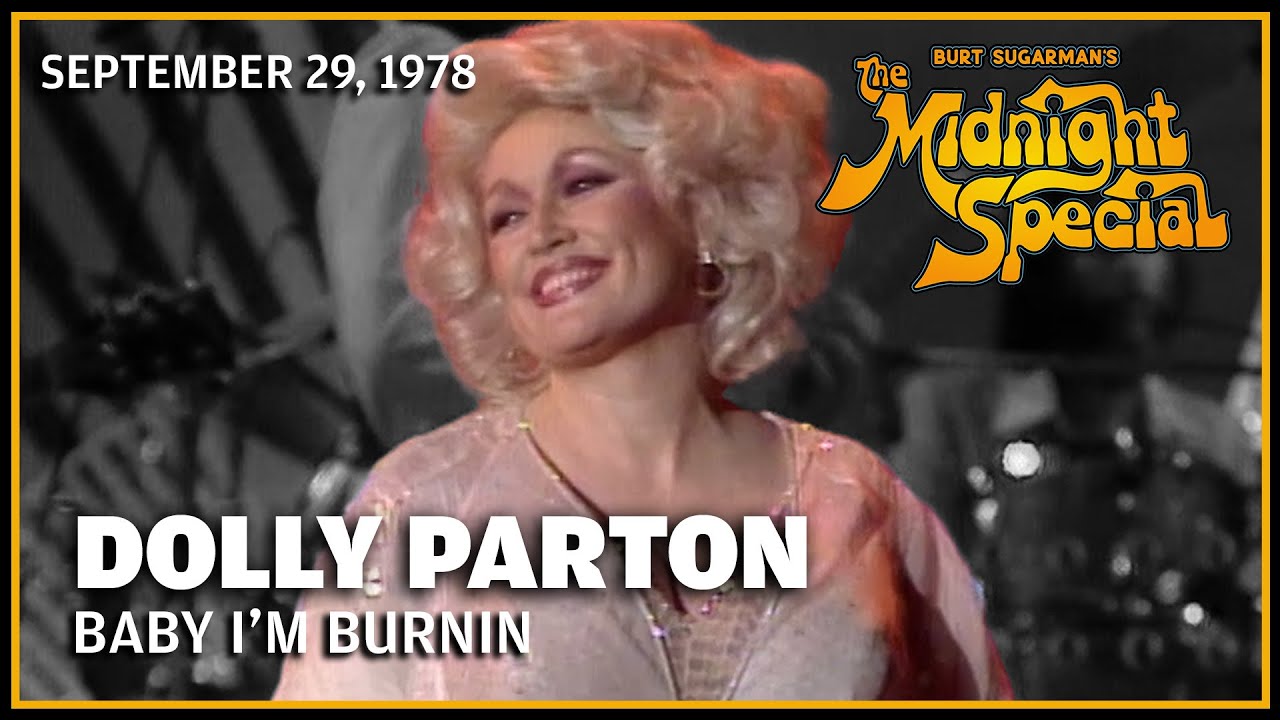
By then, Dolly’s status was such that she could call on the best session men (Wayne Moss and Chip Young tracked the Jolene guitar parts you hear on the record). Yet she always gave her players a creative steer, even if that meant offering Jeff ‘Skunk’ Baxter some sweetly baffling advice on Baby I’m Burnin’ (from 1978’s Heartbreaker album).
“I was working with my Roland guitar synthesizer,” the Steely Dan and Doobie Brothers legend told Guitar Player, “and Dolly said, ‘Can you just make it, like, reds and greens and sparkles?’ So I thought about it for a second, and then with one hand I played as many notes as I could while the other hand was working the Roland’s [pitch] transposer, slapping it back up and down. She was going, ‘Yeah, yeah, that’s it. Whee!’”
Enduring Influence
In later years, Parton’s affinity with guitar players was evidenced again on what turned out to be her swansong album, 2023’s Rockstar (whose A-list guests included John Fogerty, Peter Frampton, Joan Jett, John 5, Chris Stapleton, Sheryl Crow and Paul McCartney). Nobody, it seemed, was Dolly-proof. “I’ve always been a fan,” Warren Haynes told Blues Rock Review this year, having appeared on I Want You Back.
“She was kind of the exception to the rule for me back growing up, when I didn’t really love a lot of the artists that she would be compared to. Somehow I always really liked her songs. So when she announced she was going to do a rock record, I thought, ‘Oh, that’s really cool’. And then, when I got the call to be part of it, I was just all smiles, y’know, it was a fantastic experience.”
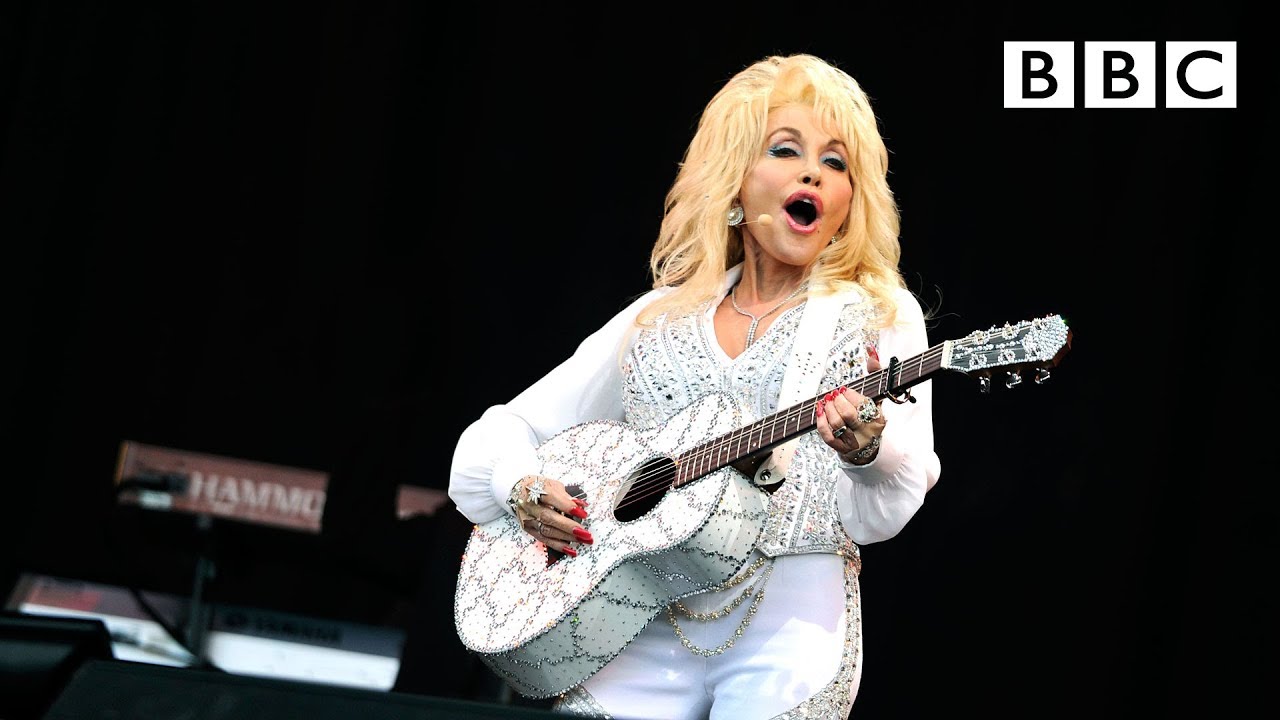
There’s no doubt that ‘guitarist’ should be added to Dolly’s dazzling array of hats worn. But perhaps it was that unique ability to unite the warring factions of the music world, and beyond, that should win out as her greatest gift to us.
In viperous times, just for a heartbeat, the passing of the country queen – who steadfastly refused to talk politics in interviews, and whose charity drive to improve children’s literacy chimed with practically everyone – seemed to tap our common humanity.
“I was having lunch by myself this afternoon at Nate ’n Al’s (not exactly a bastion for country music) when the news broke of Dolly’s passing,” posted Joe Bonamassa on X. “All of the conversations I overheard consisted of people commenting on what a wonderful human being she was. It was perspective we all need especially in the music business.
“There was no mention of her 11 Grammy awards, honorary Oscar, countless ACM or CMA awards nor of the 100,000 million records she sold over a seven-decade career. It was about the person she was, how she always gave back and remembered her roots. A true unifying force and someone irreplaceable by all standards.”
- This article first appeared in Guitarist. Subscribe and save.

