

“I wanted you to know I wasn’t AI,” jokes L7 frontwoman Donita Sparks as her video camera flicks on for just a few seconds. And Sparks – who co-founded the band alongside fellow guitarist Suzi Gardner in Los Angeles in 1985 – is nothing but authentic.
The story of throwing a tampon into a crowd of muddy misogynists at Reading Festival in 1992 is well documented. L7’s arrival on the international alternative-rock scene was a welcome shock to the male-dominated establishment, proving that the sludge-heavy sound and ferocious riffs of the day didn’t belong exclusively to the boys.
After their original run ended in 2001, Sparks helped put L7’s history in focus by archiving photographs and footage online. That renewed interest helped bring about the 2016 documentary L7: Pretend We’re Dead – and, eventually, the reunion of the band’s best-known lineup.
Now on their Last Hurrah farewell tour, they’re navigating an emotional final chapter, following the death of longtime bassist Jennifer Finch from aggressive brain cancer in July. “Her doctors were hoping she could do some of these shows,” says Sparks. “Over the summer, the cancer moved swiftly and the whole thing escalated into a cascading shit show of the American healthcare system.”
Alongside ex-drummer Dee Plakas, former bassist Janis Tanaka has returned to the lineup. Sparks has noticed the focus she’s brought to the tour. “Where L7 wing it sometimes, Janis is very pro. Every night before we play, she’s got her headphones on, running through the songs.”

You’re out on the final L7 tour. How are you feeling about the shows so far?
The finality is starting to hit me. The emotion becomes overwhelming at times. I can hold it together until I get backstage – but every once in a while, there’s a little weepiness. We’re doing meet-and-greets for the first time to supplement the tour. People are saying how long they’ve followed us. One woman said, “You’ve taken me from puberty to menopause!”
Jennifer’s memoir Shooting Up and Making Out is due to be published in January. She shared a couple of chapters with the band before she passed. What did you make of them? How have you found preparing for this tour with everything that’s happened?
I have different recollections of some things, but nothing was egregious. The scope of this tour is bigger than we’ve ever done. I didn’t have much time to reflect on – or even, quite frankly, to grieve – what was going down in real time because I had so much to do. My mantra was, “Move the ball forward every day.”
The thing about us is that we’re real people. We’ve got other cancer survivors in the band currently. This is life; other bands have lost members. Jennifer quit the band in ’96. We had Gail Greenwood and Janice Tanaka after her, so we’ve lost her before. But this is a huge fucking loss.
You released Smell the Magic on Sub Pop in 1990. What was it like being part of that underground scene as it grew into a major movement?
There was a lot of excitement. Different areas in the US had their own labels, like Alternative Tentacles in San Francisco and Amphetamine Reptile in Minneapolis. All these bands were on the same circuit. We’d crash with the same people in every city.
Sub Pop did well, mainly because of Nirvana and Soundgarden. When they signed us they said, “You’re in the inner circle of Sub Pop now.” Everyone got huge, except for Mudhoney! There was so much hype, especially in the UK. We’d show up to a club and instead of saying “L7” it would say “Sub Pop Artist” or “Sub Pop’s L7.” It was like the label was getting bigger than the bands were.
Seminal album Bricks Are Heavy was recorded with Butch Vig, following his work on Nirvana’s Nevermind. How did his production change the songs?
We always had a very powerful sound on stage. You can’t put that in a bottle. Producers and engineers would go to an L7 show, after they worked on our record for months, and be like, ‘What the fuck?’
Butch was great because he encouraged our melodic stuff. When we started, we wanted to play hard music sans melody because we were tough cookies; then melody came in. Nirvana and the Pixies gave me more confidence to throw my musical roots into the stew. I love a lot of ’50s/’60s pop; I love a lot of country.

As Keith Richards says, “A lot of bands rock, few roll.” At first, L7 rocked. Then we got rolling, too. Our songs got better, like Shove. Suzi thought it was too sing-songy. I had to fight for that.
You’ve described the musical split between you and Suzi Gardner as David Bowie versus Ozzy Osbourne. How do those influences come through in your respective guitar parts?
Suzi’s leads are a bit more freeform and blues-based and mine are a bit more surf-based. I use a lot of half-steps. I love Dick Dale – I love that Middle Eastern flair that he threw in.
Even though the band is wrapping up touring life, we’re still going to release music
L7 have a lot of ingredients in a very basic recipe. When people post themselves playing our songs online, they’re always wrong because they’re going to the chord they think should be there. They’re not getting the nuances of our songs. Suzi once stayed with some musicology grads from UCLA, who broke down the songs and said, “What is up with these chord changes?”
L7 performed at Gloria Steinem’s Voters for Choice benefit in 1995 alongside Pearl Jam and Neil Young & Crazy Horse. What are your memories?
We met Neil Young that night. I remember Pearl Jam asked us on stage because they were singing Rockin’ in the Free World, but I fucked up my verse by one line!
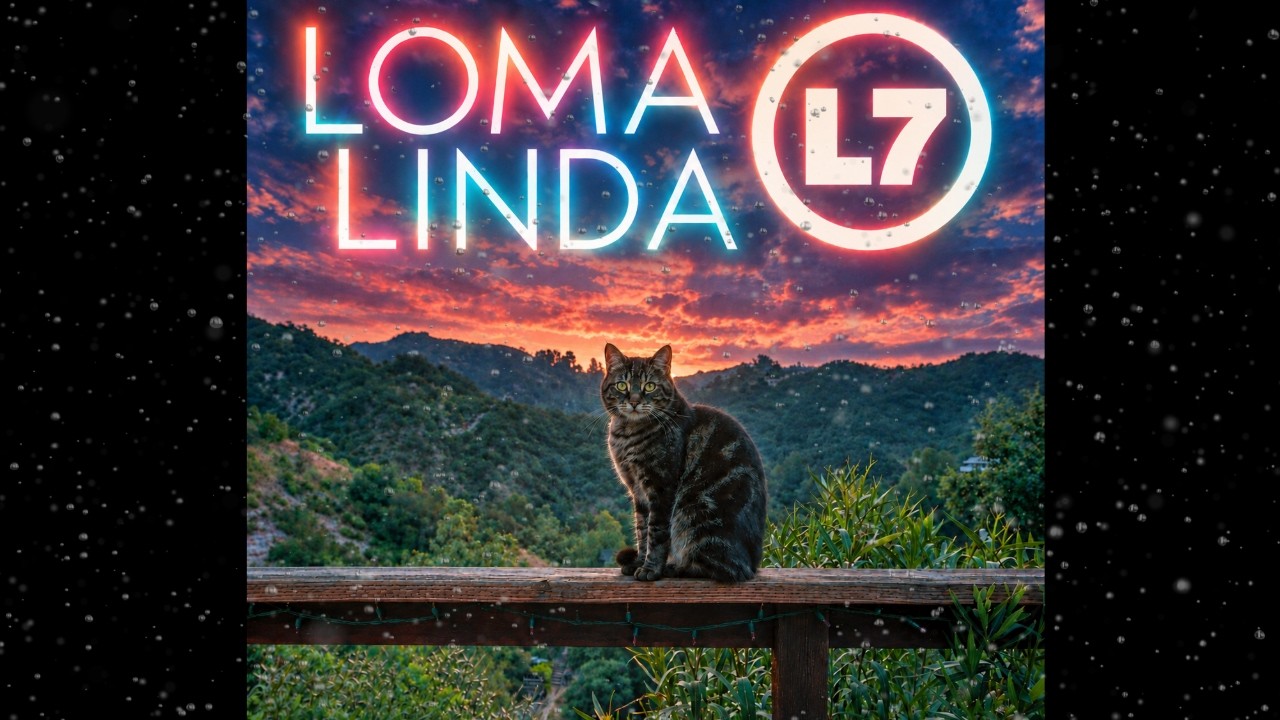
You’ve just released Loma Linda, which dates back to a 2003 demo featuring Janis. Are there plans for more material?
Even though the band is wrapping up touring life, we’re still going to release music. We’ll also be touring the UK and Europe in 2027. After we announced The Last Hurrah in the US, a shit ton of people in the UK were like, ‘What about us?’ We’re going to do South America and Australia, too.
What gear are you taking out on the tour, and how has your rig evolved over the years?
Suzi and I are currently playing Blackstar St. James 50-watt amps. They’re small and lightweight. It’s like, ‘Oh my god, finally an amp I can fucking carry myself!’
My favorite guitar to play is the 1963 Gibson Melody Maker; it’s got great action and a thinner neck. Suzi plays a Melody Maker, too. But my look is a Gibson Flying V – I need a tremolo bar for a lot of songs.
- L7’s Last Hurrah tour continues across North America until mid-November. New single, Loma Linda, is out now.

