


Prika Amaral evolved from a self-taught guitarist learning riffs on her father’s acoustic to the driving force behind Nervosa’s explosive thrash/death metal sound. She’s built her career on instinct, persistence and individuality.
Formed in São Paulo in 2010, Nervosa rose from the limitations of the Brazilian underground – where broken gear, high import taxes and scarce resources were the norm – to become a global force in metal.
Through lineup changes, relentless touring and six studio albums, Amaral has remained the band’s creative core, expanding her role in recent years to include lead vocals.
Her philosophy remains the same as it was on day one: play what you feel and make it your own.
What first made you want to pick up the guitar?
The first riff that really hit me was Metallica’s Seek and Destroy. I remember thinking, “This sounds fun to play.” I don’t know why, but that idea stayed with me. I already loved the sound of guitar, so I picked up my father’s acoustic and started learning by myself.
I loved learning riffs but I hated playing full covers. It felt boring to memorize everything. As soon as I understood chords, I started composing my own music – even if it wasn’t good. It didn’t matter. The act of creating was what inspired me.
How has being self-taught shaped your playing?
I never had access to lessons. Because of that, I developed habits that aren’t “correct.” My posture is wrong and I hold the pick in a weird way, but it works for me!
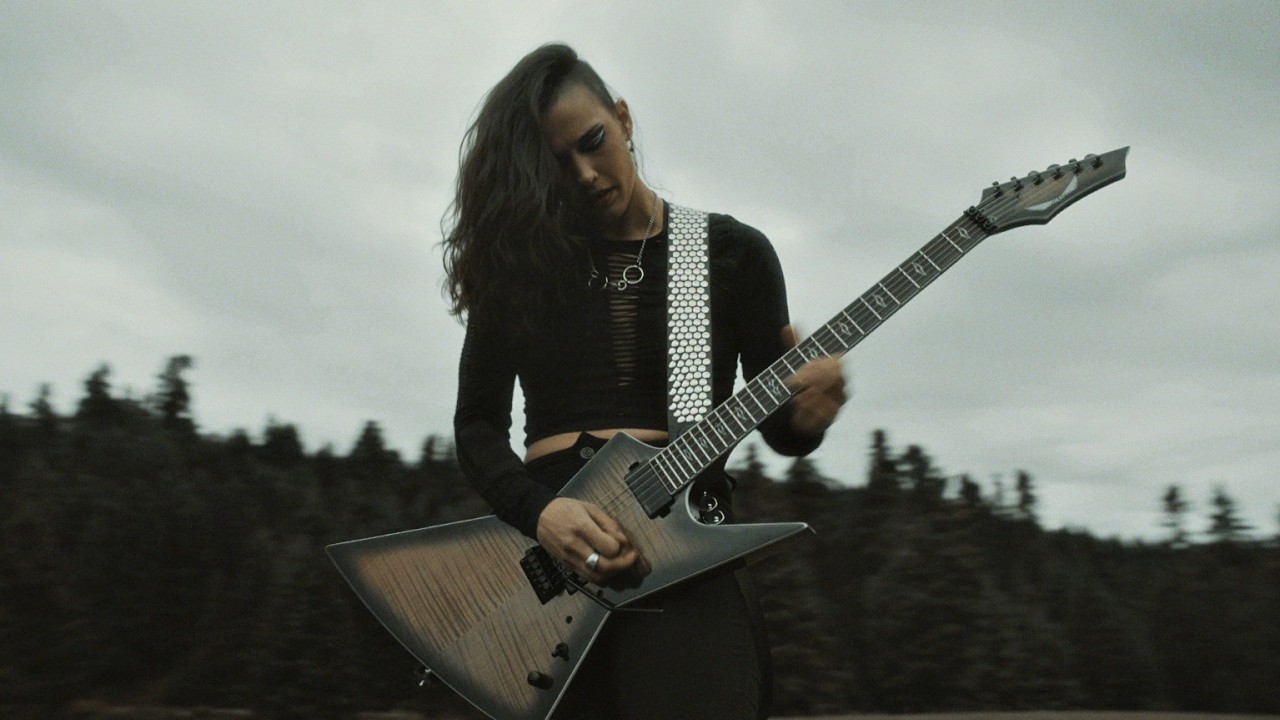
At first it was painful; but over time I developed my own technique. That taught me a big lesson – it doesn’t matter exactly how you play, it’s what you feel and what you express. Standard techniques can help you reach things faster, but different doesn’t mean wrong.The biggest lesson was accepting everything about how I play.
You moved to São Paolo in 2007, where you formed Nervosa in 2010. What were the biggest challenges facing a metal band in Brazil?
Being a musician in Brazil or Latin America is difficult for economic reasons. People don’t always have the money to go to shows, so the scene struggles.
Importing instruments is also very hard. Taxes can be around 70 percent, so you end up paying almost three times the standard price for a guitar. It’s also very common for venues to have old or broken equipment.
Things improved when the band started growing and touring more internationally – especially in Europe, where the support is very different. I realized it would be better if I moved there, to do more for Nervosa and take advantage of the opportunities.

But I have great memories of starting out because of how I approached everything. I was always focused on what I could learn and how I could grow, celebrating even small victories. I wasn’t focused on what was wrong – I was focused on what was good. That mindset made everything feel positive.
You’ve had a longstanding partnership with Kramer guitars. What makes them such a strong fit for you?
I’ve spent 11 years working with Kramer, with the same model of guitar, the Nite V. Some Flying Vs fall because of the body balance, but when I started to play the Nite V, I fell in love – the shape is very comfortable. The guitar is not falling down.
I didn’t want to be a singer, but I realized it was best for the band. Once I committed, everything changed
Also, it’s very durable. I did probably 40 tours and I never had a problem with the neck or anything. I keeps its tuning insanely well. When I take my guitar out of its case to play after traveling, it’s still in tune. It’s insane. It’s my favorite guitar on the planet.
What does the rest of your rig currently look like?
I have a Line 6 Helix plugged into my Pedrone amplifier with my Mesa/Boogie cabinets. The strings on my Nite V are Dunlop 060-010, tuned to C standard. I love the combination of technology and analog; I think this pairing provides definition and power of sound.
You took over lead vocals in 2023. How was that transition?
It was really intense at first. I didn’t want to be a singer, but I realized it was the best thing for the band. It felt like a huge responsibility; I was scared. But once I committed, everything changed. The fans liked it, the shows went well and it became natural.
I’d always done backing vocals, so I think I was already a singer – I just didn’t believe it yet! Now I feel comfortable and I really enjoy it. I’ll never leave guitar; it’s part of me.
In 2021 Helena Kotina became Nervosa’s second guitar player. How has that impacted your songwriting?
It changed everything. Being the only guitarist comes with limitations. I always wanted a second guitarist because it gives you more freedom. Now I can share ideas, build things bigger, and explore more layers.
On the new album I only recorded one solo – the rest were done by Helena. Since I’m also singing now, I’m more focused on lyrics and vocal lines.

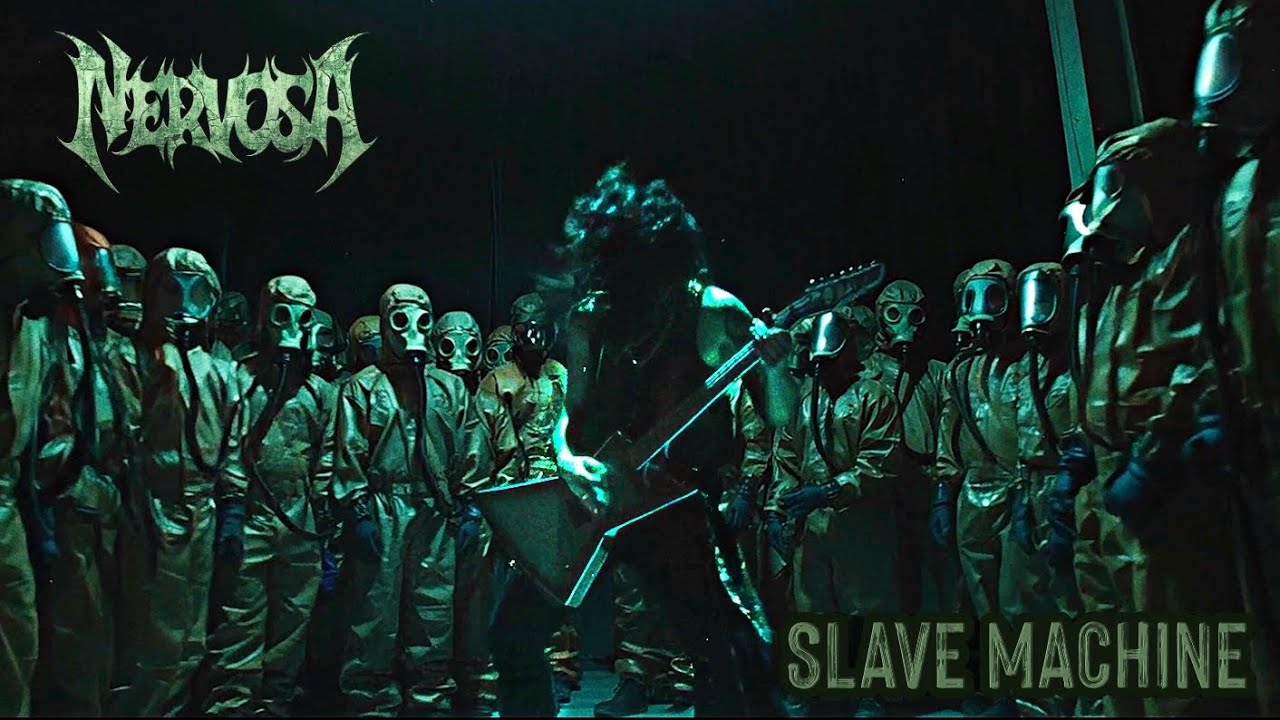
What’s the core lyrical message behind your new record Slave Machine?
It’s about how modern systems control us: social media, algorithms, work structures. These things affect our mental health more than we realize. We talk about depression, comparison, addiction – not just to drugs, but to things like validation and online attention.
Social media isn’t all bad, but we need boundaries. The title track really says it clearly: we’re losing ourselves to these systems, and we need to realize that.
I love Mark Farner from Grand Funk Railroad. I’m crazy about ’70s rock in general
Who are your biggest guitar influences?
In metal, definitely Dimebag Darrell, Alex Skolnick, Gary Holt, Kerry King and James Hetfield. Hetfield influenced me a lot, as a guitarist and later as a singer.
Outside metal, Jimi Hendrix is the biggest genius for me. And I really love Mark Farner from Grand Funk Railroad. His riffs, his songwriting, everything. I’m crazy about ’70s rock in general; that era fascinates me.
What advice would you give to young women wanting to play metal guitar?
Don’t compare yourself to anyone. Be yourself and trust what you’re doing. There’s a lot of pressure now to follow strategies, especially on social media. It can work for a period – but it’s not going to get you far, and it can take you away from who you really are. Authenticity is what really matters.
You will face challenges, but that’s part of the fight. We’re here to change things, not run from them. Fight with respect, and don’t give up.
- Slave Machine is on sale now.
