


Anyone who witnessed the emergence of Squeeze in 1978, with their galloping, octave-laden single Take Me I’m Yours, will recall a band whose intricate music and witty lyrics set them apart.
Similarly great tracks followed, including Cool For Cats, Up The Junction, Pulling Mussels, Tempted, Another Nail In My Heart, and Labelled With Love. Guitarists will have noticed Glenn Tilbrook’s canny solos that wove through his chords with melodies that sounded like no-one else.
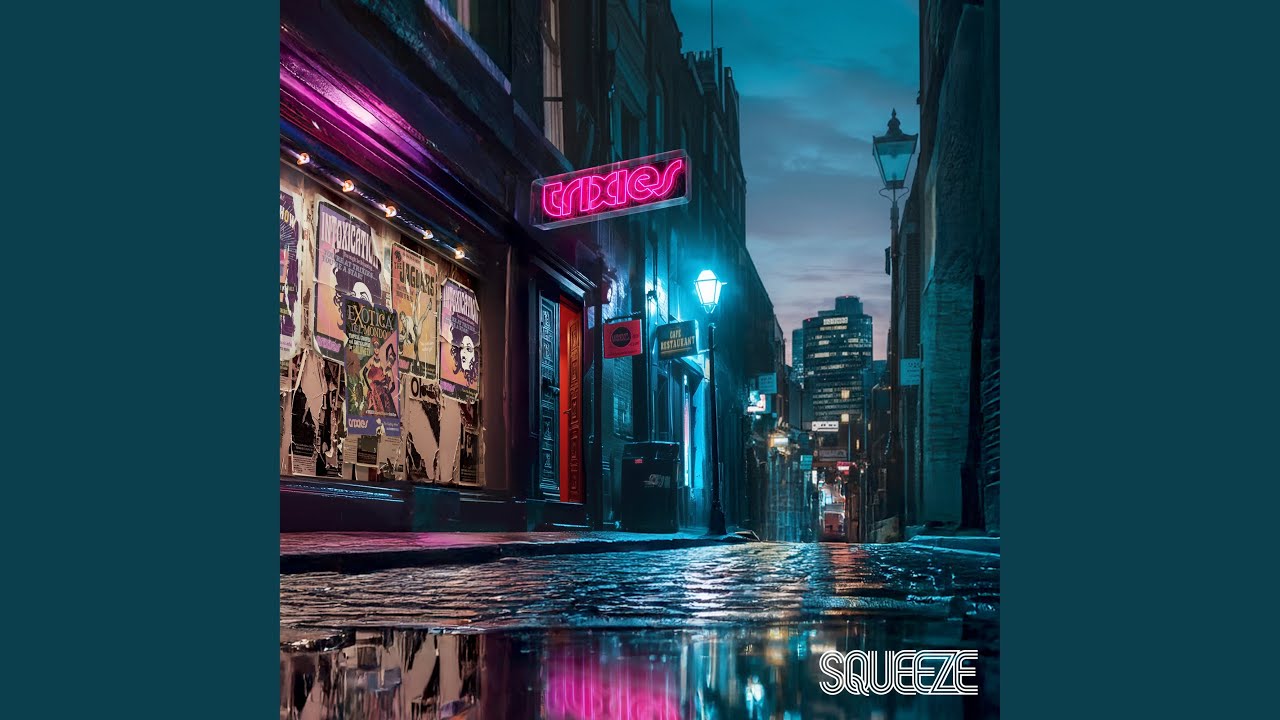
Tilbrook and Squeeze lyricist Chris Difford recently discovered an entire album that they wrote prior to the hits, but about which they confess “we weren’t good enough to play yet”.
“Obviously, we brought all the knowledge we have now to the table,” Tilbrook tells us, “but these are very much the songs that we wrote then. The only difference is I can teach them to the rest of the band. Back then, I didn’t even know the names of the chords.”
Chris adds: “Before I met Glenn I was reading Damon Runyon books, which had these funny, poignant short stories set in the ‘30s and ‘40s in New York. There was one about a nightclub and the characters that inhabited it. That inspired me to write a load of lyrics about what I imagined a nightclub to be – but in Soho in the 1960s.”
The band convened at Tilbrook's South East London studio, along with original Squeeze pianist Jools Holland, who played an identical piano to the one on which Tilbrook composed the tracks. Guitarist met there with Glenn to discuss the new album, take a look at his guitars, and delve a little into Squeeze’s fascinating five-decade history.

Trixies feels like the next in the Squeeze lineage, rather than a 50-year-old throwback.
I’m astounded at how mature it was. And I think that when Squeeze were first successful, we essentially had to dumb down to fit in with what was going on. I was just absorbing everything that was around me, and almost every song on Trixies I can trace back to something.
The ingenuity of the songs compared with what else was around reminds us of what groups like 10cc or XTC were doing.
I remember [at school] there was a program with 10cc talking about how to make a record. It was when they were cutting The Dean And I. I knew about studios, but not quite how it worked. They were doing guitar overdubs and then he did a harmony [Eric Stewart and Lol Creme harmonized the guitar fills].
It’s like, ‘Oh, that’s amazing!’ So yeah, all that stuff was sinking in. But chord-wise, I got such a lot from Paul McCartney and Stevie Wonder. Stevie Wonder had a massive impact on my writing. You can hear that in What More Can I Say. It doesn’t sound like Stevie, but that’s what it is.
When your single Take Me I’m Yours came out, it sounded like nothing else at the time.
Well, [it sounds like ] what came a bit later. I was listening to Kraftwerk. I had a fascination with that, and that’s how Take Me was written. That was the last in a series of songs that I wrote, the first of which was Why Don’t You, which is on Trixies. I had a few songs that went like that. I was such a sponge.
Listening to Trixies next to the hits, the connection is obvious. It’s like you’ve recorded these old songs just as you would have done.
That was such an important thing. That first time we heard Jools [Holland] play, when he was in the band, was when we got the RMI piano [Rocky Mountain Instruments Electra-Piano]. So I found one in America and brought it back. And I thought on Trixies we’d use it again. Back then we couldn’t afford more keyboards, but the noise the RMI made was charming.
I think there’s also an element of Cabaret, the film about the German nightclubs of the 1920s, and that all fed into the idea of what Trixies was
Does one dare describe Trixies as a rock opera of sorts? After Tommy, The Village Green Preservation Society, and so on, many would have stayed shy of doing that.
Chris was into The Kinks and I absolutely got that it was stuff I hadn’t heard. I think there’s also an element of Cabaret, the film about the German nightclubs of the 1920s, and that all fed into the idea of what Trixies was. Plus you have authors like Damon Runyon and Raymond Chandler influencing what it might be. Musically, of course, it had nothing to do with that. It was about processing 1974 music into what we could do.
Have people suggested the next move is to turn it into a musical?
That’s definitely a thing we could do. It would play very well there. The songs will stand up with or without us. One of the good things about Trixies is that there are enough characters. It’s not a definite story. It doesn’t have a beginning or an end. So all of that is open for interpretation.
Your guitar solos are intricate and clever, weaving around the chords.
At heart, I’m a blues guitarist, but I’m also not interesting enough to do that very much. Early on, I was really influenced by the solo in The Carpenters’ Goodbye To Love [played by Tony Peluso]. And also Maria Muldaur’s guitarist, Amos Garrett.
When I worked with John Wood [producer: Cat Stevens, Nick Drake, Fairport Convention], I mentioned how I wanted to construct solos, specifically talking about Amos Garrett.
He said, ‘Well, I worked with Amos and he’d drop in every three seconds if he knew what he wanted to get.’ And I was like, ‘Oh, I can do that?’ So one afternoon I did the solo in Another Nail In My Heart. I knew it had a journey in a certain direction, so I was just finding each bit and then learning it. And now that’s part of the song and I will always play that same part.
But in solos like that you turn that bluesiness into a pop style.
Well, my dad took me to see Joe Pass play at Ronnie Scott’s. It was great – and also really embarrassing because he insisted on dragging me up to meet him. But Joe was very gracious. I was, like, 15 or something, but I learned a Joe Pass solo by slowing the record down and literally figuring out how it went.
That taught me so much about positioning. It seemed to me there was only one way you could do it, and that was the way he’d done it. If I tried it another way I’d just get stuck. I came to Wes Montgomery through Jimi Hendrix, and I play quite a lot of octave stuff because it’s a beautiful and expressive way of playing.
So it was just what I listened to growing up. Before I met Chris, and even after that, Jools and I would get pub gigs, like the Morden Arms in Greenwich. So that gave me some fluency because we were playing a lot of rock ’n’ roll and blues songs. So I learned that I could work my way around a song and create tunes for it.

When Squeeze emerged, artists such as Elvis Costello, The Police, and The Stranglers all hung to some degree on the coat-tails of punk. Squeeze had a bit of that, too – a little of the attitude but also a ton of musicality.
I think I’ve written maybe two songs that started out as tunes. But I prefer it with Chris giving me the lyrics because it’s the way we’ve worked since I was 15
Our first album [self-titled, 1978], which John Cale [The Velvet Underground] produced, doesn’t sound much like us to me. The Cool For Cats album [1979] is our first one that really was how we were as a band. It was exciting and it was adventurous as well.
I remember we played at the Nashville Rooms, us and XTC, one night. They were so good and the first other band that I thought were really doing something different. We also played with Joe Strummer, but The Clash came more from a rock ’n’ roll side than we did. We came from a melodic rock ’n’ roll thing.
Compositionally, does Chris give you the lyrics and you write the music?
Very much so. I think I’ve written maybe two songs that started out as tunes. But I prefer it with Chris giving me the lyrics because it’s the way we’ve worked since I was 15. I think I’d written about eight songs before I met Chris, then suddenly I had lyric after lyric.
I’d grown up getting record songbooks, and I’d learn songs from those. The ones I didn’t know, I’d just make up tunes for. So I was unwittingly practicing for what I would later do.

There is a lot of guitar playing on Trixies. Is it all you?
It’s all me, except that Melvin [Duffy, Squeeze’s second guitarist] played nylon-string on You Get The Feeling, slide guitar on The Jaguars, and various others throughout the album.
Do you come up with your guitar parts first, or get the basic track down and then find something to fit?
Well, last January I had a few weeks in the studio by myself, trying to figure out if anything else needed to be done. I remember working on the solo for The Place We Call Mars. I knew it was something like it ended up being, but I didn’t know what that was until I hit on it. And then, for the actual solo, I’m inverting the wartime song We’ll Meet Again.
It’s not that tune, but I thought it was appropriate for the song’s scenario of destruction and science fiction. It’s parody, and I think it’s serious, but it also makes me laugh that I could get that in. Actually, I did the same joke twice, once vocally and once on the solo in Good Riddance: that was the Jackson 5’s I Want You Back.
What gear did you use in the old days? A wooden Mesa/Boogie combo atop a Marshall 4x12 springs to mind.
Yeah, I used that for years. It was a great amp and I’ve still got it. I eventually went back to Voxes at some point. I also had a 1959 Strat that I bought off the guitarist in Steeleye Span. It was my first proper guitar and it was a beauty.
I used just that on at least the first two records. But it got nicked out of the back of the car in Liverpool. I’ve never had a Strat like that since; it was just one of the things that plays perfectly.
I played Strats all the way through the first iteration of Squeeze and into Difford & Tilbrook. When I got the B-Bender Tele in 1986 that’s when I swapped – it’s been a big part of my playing ever since.

What can you tell us about the guitars on Trixies?
That 1966 B-Bender Tele is the go-to for tracking and overdubbing. Do you know of a guitarist called Ross McGeeney [guitarist in a Byrds-influenced band called Starry Eyed And Laughing – see ‘Neville’s Advocate’, issue 535]? Well, when I met Ross he had the black B-Bender Tele. Ross and I did a few casual gigs together, like at the Albany in Deptford.
It was great hearing him play. But also I’d seen a guy in Las Vegas, just playing in the casino in a corner, and he had a two-way bender – one going that way and one the other way.
He also had two palm benders, and he could play it like a pedal steel. I’ve never seen anything like it, so I was really intrigued by that. I don’t use the bender a lot, but it’s a great tool to be able to bend the string up and down like that.

And the black Strat?
That’s early 80s or late 70s. I bought a few guitars when we were first out in America. I tried to get guitars as soon as I could afford them, so whenever I was in America I’d have a look and see what was around.
There’s so much I didn’t know about arrangements and stuff. It took me a while, but I’m there now
The cutaway Martin nylon-string looks interesting.
What a wonderful guitar. I’m really all over nylon-string guitars at the moment and now I just want to use that all the time. It’s completely new. There’s nothing old about it, but I love the way it sounds.
Is it like a cutaway version of Willie Nelson’s?
Yeah. I saw Willie Nelson when we were touring with Elvis Costello in America in 1981. I went with Elvis and our bass player and we saw Willie Nelson at Caesar’s Palace. And because it was Elvis, we had a table right by the stage. And oh, what a player. I mean, Willie Nelson is another massive influence. You can’t replace that.
So how do you feel about Squeeze today, from creating Trixies all those years ago up until the band you are now?
We’re in such a good place now. It’s definitely the best it’s ever been. I know in my heart and soul we are at a different level now. We’ve got eight members, we can do proper backing vocals and do it live. And there’s so much I didn’t know about arrangements and stuff. It took me a while, but I’m there now.
- Trixies is out now via Sony/BMG
- This article first appeared in Guitarist. Subscribe and save.

