


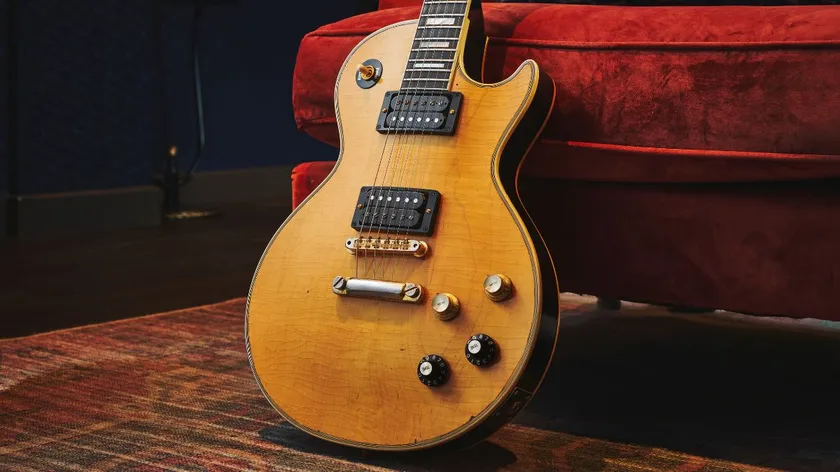


Marshall Crenshaw is a bit of a Felix Ungar when it comes to songs. Throughout his five-decade career, he’s specialized in tidy, impeccably crafted guitar-driven pop rock songs brimming with hooks and devoid of so much as a hint of clutter.
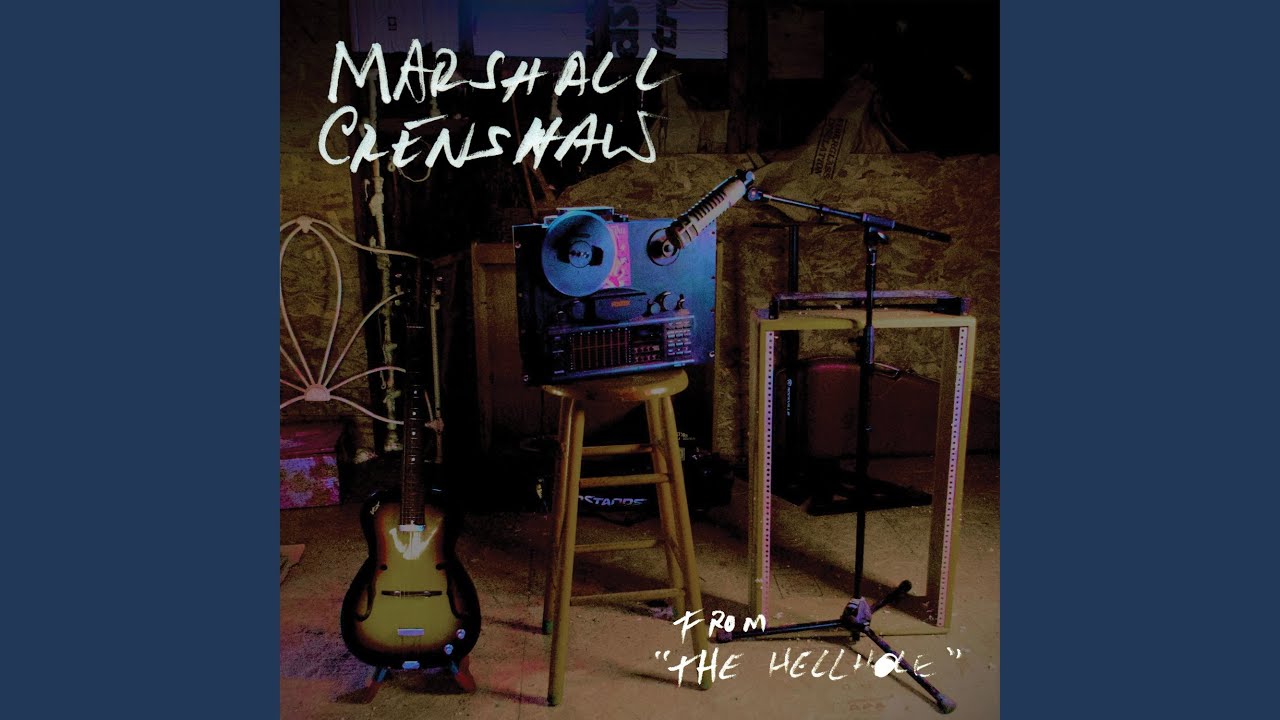
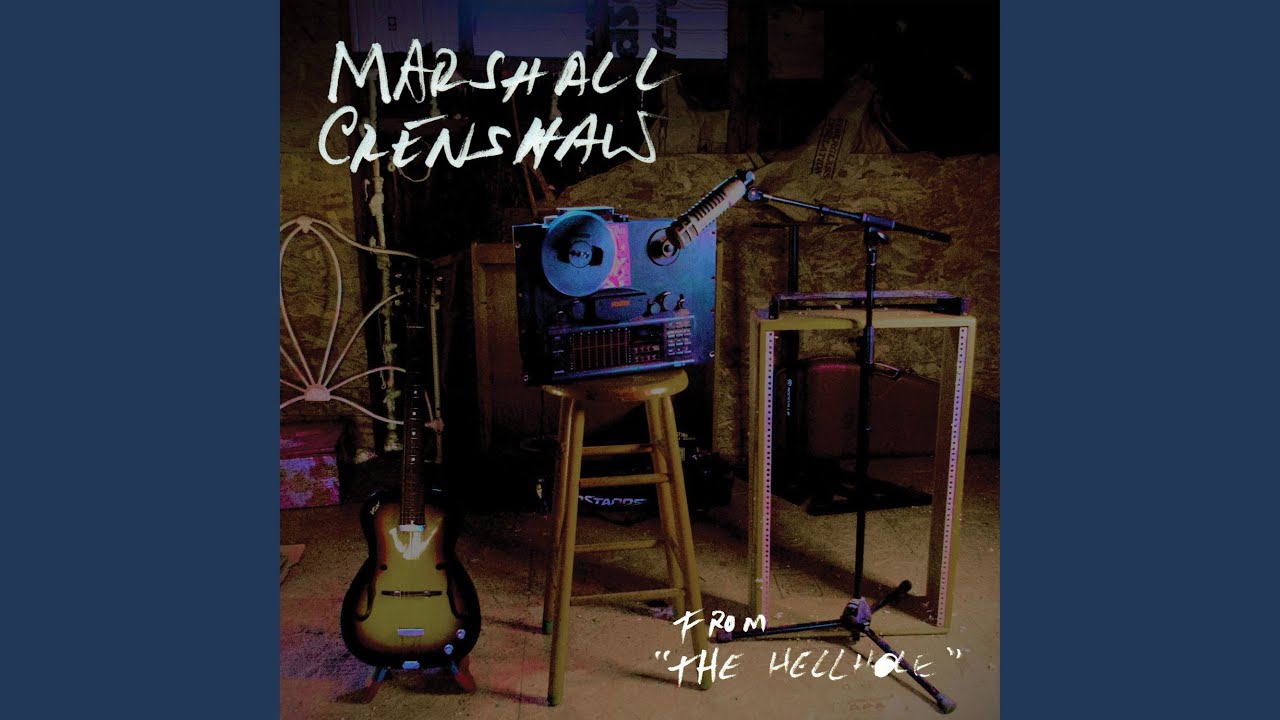
In his everyday life, however, he’s an Oscar Madison. His latest album – a collection of tracks culled from six EPs that he sold direct to fans via a subscription service – is called From the Hellhole, so named for his home studio in upstate New York that was, in his words, “a giant mess.”
“I’m not kidding; the place was a dump and was 10 years overdue for a cleaning,” he says. “My wife got a dumpster and we filled it up – twice. You never know how much junk you accumulate till you start throwing stuff out.”
The personally curated 14-song set includes 11 or the 18 tracks from the limited-edition EPs Crenshaw issued between 2012 and 2016, but there’s also three deep cuts, among them a striking demo of Walkin’ Around from the 1991 album, Life’s Too Short, on which the guitarist’s solo is bigger and bolder than on the polished studio version.
“I hadn’t listened to that demo in years and years, but when I dug it out I was struck by its energy,” Crenshaw says.
Any male singer who covers the Carpenters’ classic Close to You treads on dangerous ground – how to deliver unvarnished sentimentality without falling into a vat of treacle (or sounding like Rick Moranis in Parenthood)? But Crenshaw rises to the challenge, delivering a warm and intimate, goo-free vocal performance that hits an emotional bull’s-eye dead center.
![[They Long To Be] Close To You - YouTube](https://img.youtube.com/vi/WCm2lMyccMY/maxresdefault.jpg)
“It took me something like 400 takes,” he says. “I would do part of it one day, then another part the next day. I was inspired to do that song after seeing Todd Haynes’ student film about Karen Carpenter; he did the whole thing using dolls. Karen was a beautiful singer, and her life story was such a bummer. I wanted to pay tribute to her and a song I always loved.”
As far as music that’s shaped me, Detroit’s baked in really hard...Probably 50 percent of what I know about music came from Detroit Radio and that environment
Crenshaw honors his Detroit roots on a rude and ripping rendition of I Just Want to Celebrate, a track made famous in 1971 by Rare Earth, one of the few white rock bands signed to Motown.
“As far as music that’s shaped me, Detroit’s baked in really hard,” he says. “That's where I spent my whole life until I was 23. Before that, I hadn’t been west of the Mississippi River. Detroit is a real culture hotbed, especially during those years.
“When I lived there in the 1950s and ’60s, there wasn’t anything that people would describe as suburban culture; it all came from the city. Probably 50 percent of what I know about music came from Detroit Radio and that environment.”

One rarely, if ever, sees “Marshall Crenshaw” and “funky guitar licks” used in the same sentence, but I Just Want to Celebrate offered the guitarist the perfect opportunity to bust out the wah pedal and go badass.
“It was fun to use a wah on that,” he says. “Those pedals take the music in such crazy directions. You can even use one like Jimmy Page, so it’s like a tone control. You find this spot and it makes a wild, mid-range noise. Then you take your hands off the strings and the guitar just goes nuts. That stuff is always cool.”
Let’s go back a bit, to your early days in New York City. Before you and your band signed with Warner Bros., were other labels sniffing around?
Every label in town was looking at us, and every publisher in town wanted to sign me. Finally, there was a bidding war between RCA and Warner Bros. RCA offered more money, but I went with Warners because I liked going to lunch with the people at the label. I just thought it was a cooler place and more fun. I liked the people, especially my A&R person, Karen Berg.
New York City was the place to be back then. There was so much energy that could lift you up, and at a certain point it was directed toward us. It was exciting.
I had two of my songs on WNEW – Robert Gordon’s version of Someday, Someway, and my single, Something’s Gonna Happen, which I recorded for a label called Shake Records. It was pretty unusual for a local talent to get on WNEW, but Meg Griffin became a fan of mine from playing the Robert Gordon single. After that, we were unstoppable.
During those days, how driven were you to have hit singles?
I always wanted to have hit singles. I thought the hit single was the highest manifestation of rock as an art form. It was the ideal. All the records I've loved the most over the years were singles. Around 1970 or ’71, I couldn’t listen to FM rock radio anymore; it had become something I couldn’t identify with.
I happily went back to the AM dial and picked up on CKLW, which is a legendary Top 40 station. Their playlist was really eclectic and always fun to listen to. Sometimes a song would cross over from the FM station, but it would be edited with all the extra crapola thrown away.
A good example of that is a record I dearly love: (Don't Fear) the Reaper by Blue Öyster Cult. I had bought the single and loved it, and then one day I heard the FM version with the instrumental thing in the middle, and I was like, “What the fuck is this?” AM took everything and made it concise. The same thing happened with Edgar Winter’s Frankenstein. You heard the tight version on AM, but on FM you’d be like, “This is going on for a while.”
The range of excellent stuff on AM during that time was incredible: Willie Mitchell, Maurice White… You’d hear Aretha Franklin and all those songs that she wrote herself.
There was a record I really loved called Trapped by a Thing Called Love by Denise LaSalle. Then there was I Can't Stand the Rain by Anne Peebles that was better blues than you’d hear on the FM station. I just thought that singles were higher quality stuff. They were always by thing.
Do you find it easier – or creatively more fulfilling – to make records at your own pace now that you're not on a major label?
It is easier. Once I wasn't on a major label anymore, I had autonomy, for better or worse. I'm not going to knock the fact that I got to work with great people when I had a major-label budget. I’m grateful that I crossed paths with that particular group of brilliant people.
Nowadays I have a different group of amazing people, and it's more informal. You have people over and they do their thing. Maybe you have dinner, and then you say goodbye.
That's how I did it when I started doing my own music way back when. It was me and my TEAC four-track. All of those recordings I made back then led me here.
Quite a few artists have gotten their masters back and recut their early songs. Would you ever do so?
No, but the truth is, I did try it once on the advice of an attorney – this was before I had control of the U.S. copyrights of all my Warner Bros. records. He said, “If you recut this stuff and somebody wants to use Someday, Someway in a movie, you can pitch ’em the version you did yourself and get all the money.”
I tried to redo all those things, but they didn’t have the emotionality of the original records. What I did the first time can’t be duplicated or recaptured.
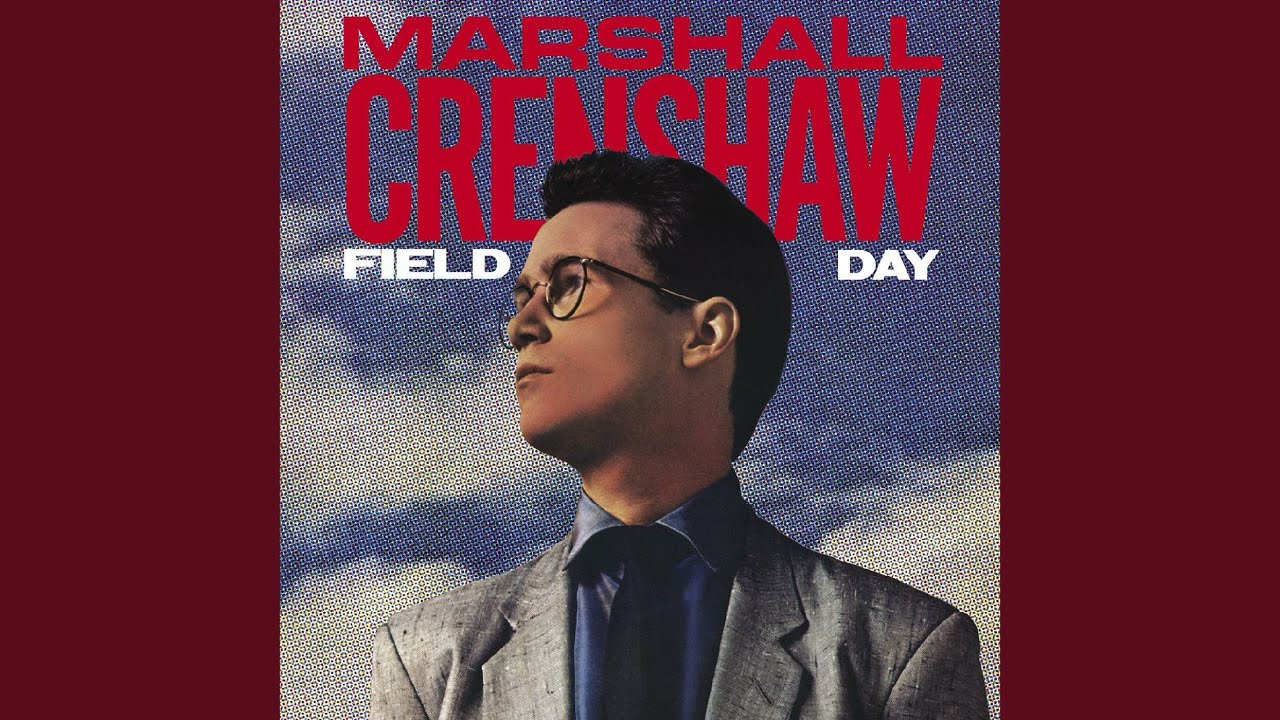
Some people might want you to rerecord Field Day, an album that was grossly underappreciated, I feel.
Thank you. I feel like it's in a good place, the way people perceive it now. I don't have any complaints about it. It's mostly been acknowledged lately as being a great album, and all this stuff people said about it back then, where are they now?
You’ve always been a fluid guitarist – it never looks like you’re working too hard. Do you practice much to keep your chops up?
I do. I think that's the thing that I'm most devout about, my guitar playing. As you get older, if you don't use it, you lose it, and I'm fighting against that. A friend of mine gave me one of these tools to exercise my fingers – trumpet players use them.
There’s some real resistance to it. Each morning, I do two minutes with it. Then I have exercises I do in which I stretch all my fingers out. I do that along with chord exercises. All in all, I probably practice an hour each day. I’m always aspiring to be better.
Creatively speaking, do you ever get in a rut? If so, how do you try to break out of it?
I’ve hardly written any songs since I did the EPs. The last one was in 2015, I think. I did co-write a song for an episode of that short-lived HBO series Vinyl. It was a Christmas song, but it was a grim, world’s-gonna-end kind of song. I haven’t written anything since then. I just don’t do it anymore.
Do you think youth plays into songwriting? When you’re young and hungry and you have so much you want to say – that kind of thing?
Yeah, you can have that part of your life – “I’m gonna make my mark on the world. It’s do or die!” You can't sustain that all your life, of course. I could write songs again if I decided to.
I mean, I had the usual kinds of problems doing it, like just getting over the fear of writing a crummy song. I always had to get past that. I could do it again. Sometimes it's a good time to find a new way to approach it.
Are you a crazy guitar collector? How many guitars do you think you own?
I keep it limited to the tools I use. I have about 20 guitars, and each one does a particular thing. I remember I saw this picture of a guy on his front lawn, and he had, like, 200 Vox AC30s in a big stack, and I just thought, “This is infantile.” Like, what a child – “I want more, I want more!”
I remember I saw this picture of a guy on his front lawn, and he had, like, 200 Vox AC30s in a big stack, and I just thought, “This is infantile.” Like, what a child
On a typical morning, you get up, you do your finger exercises. What guitar do you first pick up?
Usually it’s whatever guitars I'm going to use for my next gig. This morning I’m going to play some live tunes for a radio station, so I’m playing acoustic.
I have a Martin 12-string from 1969 or ’70. It’s not an expensive one from that time. I had an expensive one for a minute, but it was too bright-sounding.
My other acoustic that I was just playing is a Dana Bourgeois that I got ages ago. It's a dreadnaught style with a cutaway, and it’s just great. Like I said, I try to keep guitars I actually need. If you’re going to just keep guitars around and not play them, what’s the point?
- From the Hellhole is out now via Yep Roc.
- This article first appeared in Guitar World. Subscribe and save.

