


Innovation Week: From the first solidbody breakthroughs of the 1950s to today’s digital rigs, guitar innovation has never really stopped.
This list looks at some of the most innovative products to reshape the instrument, its amplification and the way players create sound.
Some were radical leaps, others clever refinements, but each changed what guitarists could do and pushed the instrument somewhere new.
1. Mass-produced Modular Solidbody Guitar

Leo Fender was not trying to make history, he was trying to build a guitar a working musician could repair without much fuss. A solid slab of wood cut down on feedback problems that plagued hollow body guitars, and a neck you could unbolt with a screwdriver made repairs and mass production painless. Earlier electric guitars and solidbodies existed, but this particular combination is the one that stuck, and most of what follows on this list was built on that same practical foundation. That serviceable design helped make swapping parts and customizing an instrument part of guitar culture.
2. Humbucking Guitar Pickup

Single coil pickups had one persistent problem, they picked up hum from nearby electrical equipment just as readily as they picked up your strings. Seth Lover at Gibson and Ray Butts at Gretsch both wired two coils together so their hum canceled out while the string signal stayed intact. The PAF and the Filter'Tron don’t sound much alike, but they share the same clever trick under the hood. The humbucker delivered a thicker, smoother voice that became a sound players wanted in its own right.
3. Fuzz Pedal

Before the fuzz pedal existed, that gritty, broken sound was just something that happened by accident, a blown speaker or a faulty console channel. Glenn Snoddy and Revis Hobbs heard that accident and figured there was a market for it. The Gibson Maestro FZ-1 packaged that distorted character into a simple stompbox, and a few years later the Rolling Stones used it on their hit song Satisfaction and turned it into a phenomenon. This kickstarted the widespread adoption of the fuzz pedal. What began as a happy accident soon became a new color guitarists could summon from a pedal.
4. High Gain Guitar Preamp and Master Volume

Randall Smith at Mesa Boogie was trying to solve a relatable problem, guitarists wanted their amps to sound pushed right to the edge, but not everyone can play at stadium volume in their living room. His answer was cascading gain stages together and adding a master volume knob to tame the power section. It let players dial in real, singing saturation at apartment friendly levels, and it laid the groundwork for essentially every high gain amp built since. For players, gain could become part of an amp’s core voice instead of simply more volume.
5. Digital Amplifier Modeling

For most of guitar history, if you wanted a specific amp's sound, you needed to actually own that amp, or know somebody who did. Line 6 treated an amplifier's behavior as something a processor could simply recreate. Their AxSys 212 combo amp released in 1996 got that idea rolling, but it was the small, oddly shaped POD released two years later that put digital modeling within reach of anyone with a desk, letting players scroll through decades of amp history. Just as important, one compact rig could suddenly cover sounds that once required several different amplifiers.
6. Floyd Rose Locking Tremolo
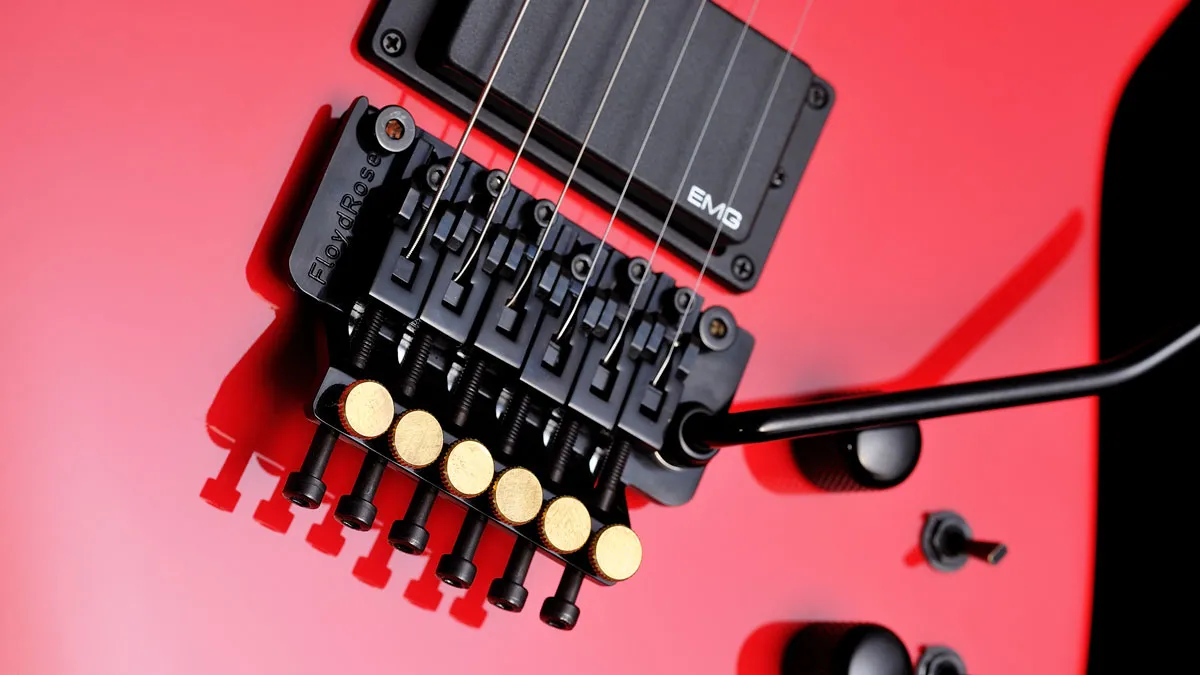
Dramatic whammy bar dives were technically possible before Floyd Rose came along, they just came with a real cost, your guitar would rarely stay in tune afterward. Rose's system clamped the strings at both the nut and bridge, so the slippage causing that trouble stayed contained. Restringing takes more patience now, but players gained a whole vocabulary of extreme vibrato moves, from subtle shimmer to violent dive bombs. Locking tremolo systems are now standard on many guitars today.
7. EchoSonic Amp
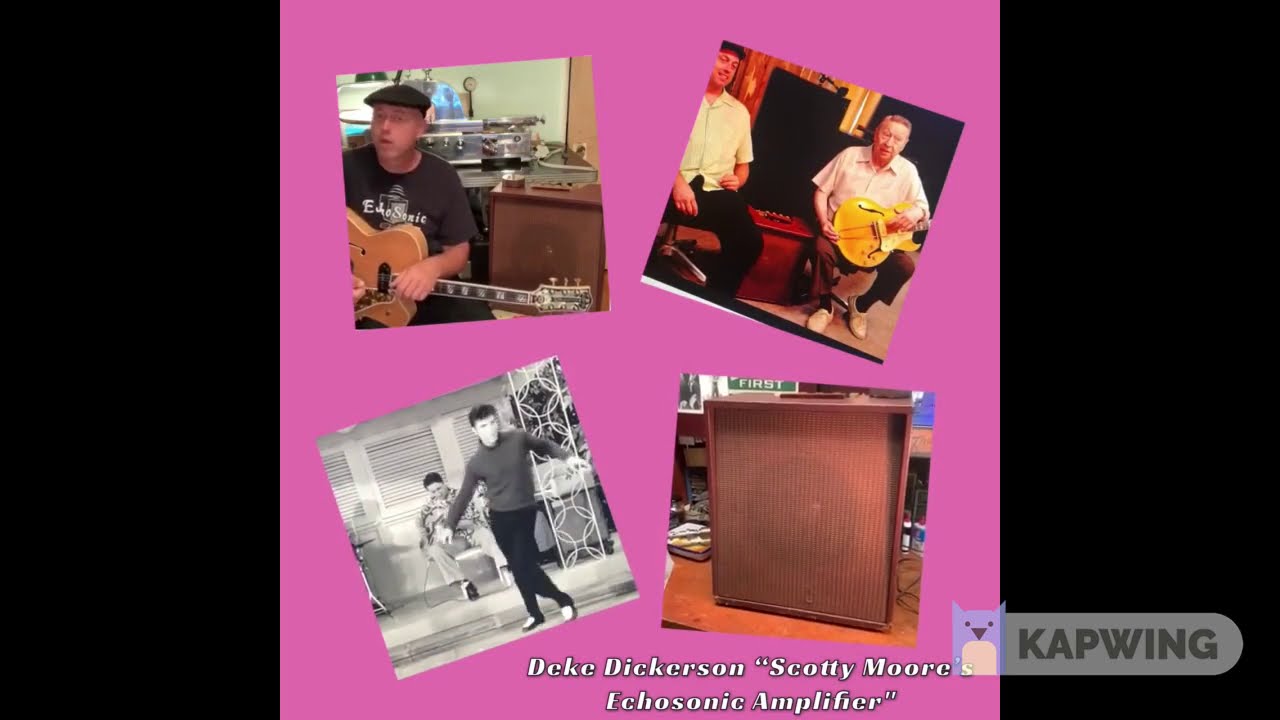
Tape echo had already proven itself in the recording studio back in the 1950s but it took Ray Butts to build one directly into a guitar amplifier and hand the effect to guitar players. Scotty Moore bought one of Butts' EchoSonic amps in 1955, and used it to get that warm, repeating slap back sound all over Elvis's earliest recordings. A guitarist no longer needed an engineer down the hall for that texture when they could create it themselves. That marriage of amplification and echo helped make effects feel like part of the instrument itself.
8. Wah Pedal
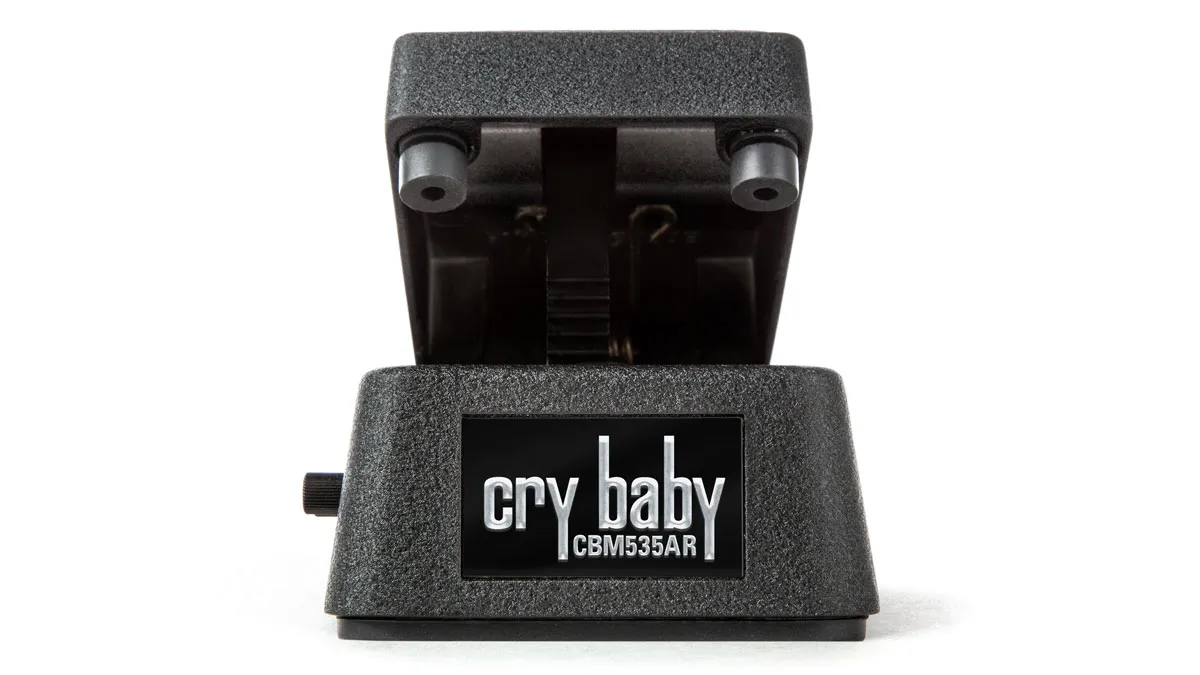
The wah gave guitarists a way to make their instruments talk, cry and occasionally throw a tantrum. Rocking the pedal shifts which frequencies get emphasized, giving notes a vocal quality and rhythm parts some extra attitude. Brad Plunkett’s work at Thomas Organ gave us the familiar design, and Hendrix and Clapton wasted little time showing what it could do. Work it through a solo or leave it parked for that nasal snarl. The wah pedal remains one of the most popular guitar effects in history.
9. Two Point Synchronized Vibrato

The Stratocaster vibrato turned pitch bending into something any guitarist could put to work. Its spring loaded bridge made subtle shimmer, chord dips and expressive bar work easy and intuitive, helping define everything from surf guitar to later rock styles. It was a remarkably effective design, but it was never built for the kind of extreme abuse players would eventually throw at it. That weakness would ultimately set the stage for Floyd Rose and the locking trem. It helped turn the vibrato arm from a novelty into a part of a player’s vocabulary.
10. Amplifier Profiling and Captures

Traditional amp modeling gave players a menu of digital recreations chosen by the manufacturer. Kemper flipped that idea around by letting guitarists profile their own amps, sending test signals through the real rig, measuring its response and creating a digital version that could be stored and recalled anywhere. That idea helped push digital guitar rigs into a new era. Today, systems such as Neural DSP’s Quad Cortex and IK Multimedia’s TONEX can capture real amps and pedals, while Fractal’s Axe FX and Line 6 Helix Stadium continue pushing increasingly sophisticated component based modeling. What once required racks of gear can now live in one floorboard.
11. Eventide 910 Harmonizer
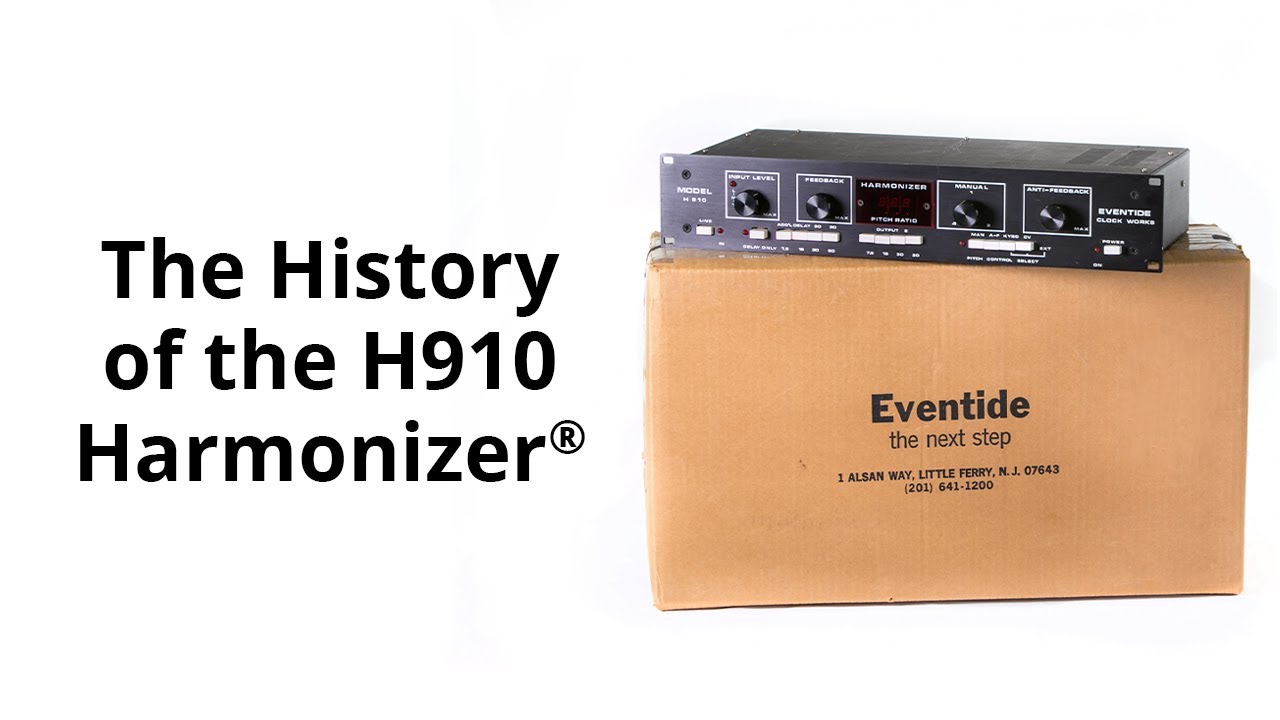
The Eventide H910 Harmonizer did something that still sounds unbelievable on paper, it took a guitar's pitch and shifted it up or down in real time, without the player touching the strings any differently. It had a slightly alien quality at first, and honestly still does, but that strangeness was the appeal. Years later, the DigiTech Whammy brought a simplified version of the same idea to a foot pedal, so pitch dives no longer required an actual whammy bar. That opened the door to harmonized leads, strange textures and pitch effects that grew increasingly adventurous.
12. Boss DD-2 Delay
![Boss DD2 Digital Delay Japan | Demo [NO TALKING] - YouTube](https://img.youtube.com/vi/ByomulNwF94/maxresdefault.jpg)
Digital delay was once the kind of technology you expected to find in a studio rack, not on the floor in front of a guitar amp. Early units were large, expensive and well beyond the reach of many working players. The BOSS DD 2 changed that by packing digital delay into a standard compact stompbox. Suddenly guitarists could get clean, repeatable echoes from something that fit on a pedalboard and did not cost a fortune. More than just convenient, it helped make digital delay a practical everyday effect for players everywhere.
13. Spring Reverb

Spring reverb puts a little room ambience in your amp, courtesy of a few vibrating metal springs. Your guitar signal drives the springs, and a pickup converts their vibrations back into an electrical signal. Alan Young’s compact Hammond design helped bring the effect to guitar rigs, with Fender and Ampeg offering it by 1961. A twist of a knob could now add a little depth or the big, splashy, dripping sounds that became a surf guitar staple. It also proved that ambience did not have to come from a studio or effects unit.
14. Analog Electronic Chorus
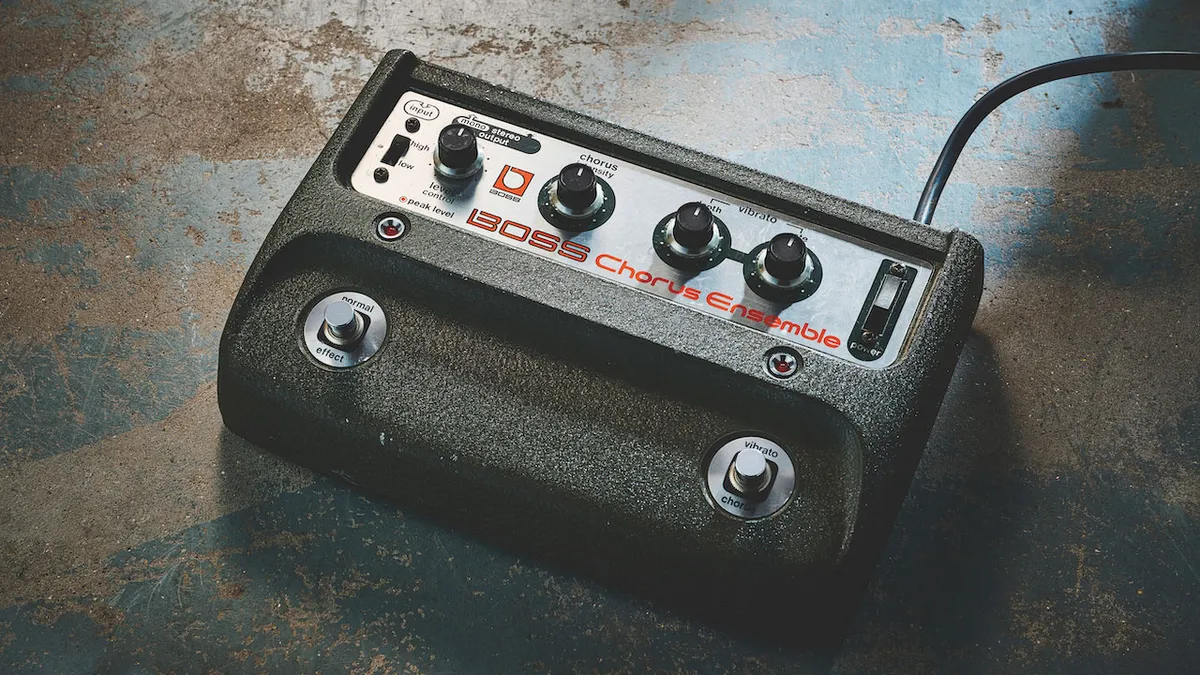
Analog chorus became a defining guitar effect in the mid 1970s, first appearing in Roland’s JC 120 Jazz Chorus amplifier in 1975 before Boss put the idea on the floor with the CE 1 in 1976. Using bucket brigade circuitry, chorus slightly delays a copy of the guitar signal, gently shifts its pitch and blends it back with the dry sound. The result is that familiar sense of width, shimmer and movement. By the time the CE 2 arrived in 1979, chorus was well on its way to becoming an essential guitar effect.
15. Friedman/Synergy IR Load

Friedman’s IR Load combines a reactive load box, attenuator, IR cabinet section and stereo reamplification in a single rack unit, but the most interesting part is Synergy’s machine learning power amp technology. It analyzes the connected speaker cabinet and adjusts its response in real time to recreate the sag, compression and harmonic movement of a cranked tube power section. That makes the IR Load unusually flexible, whether you are taming a loud head, recording direct, running silently or using it as the heart of a powerful stereo stage rig.
16. Guitar Synthesizer

What if the instrument in your hands was not really a guitar at all, but a controller for an entirely different world of sound? Roland’s GS 500 guitar and GR 500 synthesizer, introduced in 1977, let players use familiar strings, frets and picking technique to trigger sustained synth textures, bass like voices and sounds that had previously belonged mostly to keyboard players. Guitarists could suddenly approach electronic music without abandoning the physical feel of a guitar, opening the door to a completely new vocabulary of tones and helping establish the guitar synthesizer as a serious creative tool.
17. Active Guitar Pickup Systems

Passive pickups are largely at the mercy of whatever cable and pedals sit between the guitar and the amp. Rob Turner’s idea with EMG was to build a small preamp into the pickup itself, buffering the signal before it ever left the guitar. The result was a cleaner, more consistent output regardless of what came next. Metal players embraced it, but so did players like David Gilmour. The tradeoff is a battery, and despite the reputation, active does not automatically mean louder or heavier.
18. Tube Amplifiers
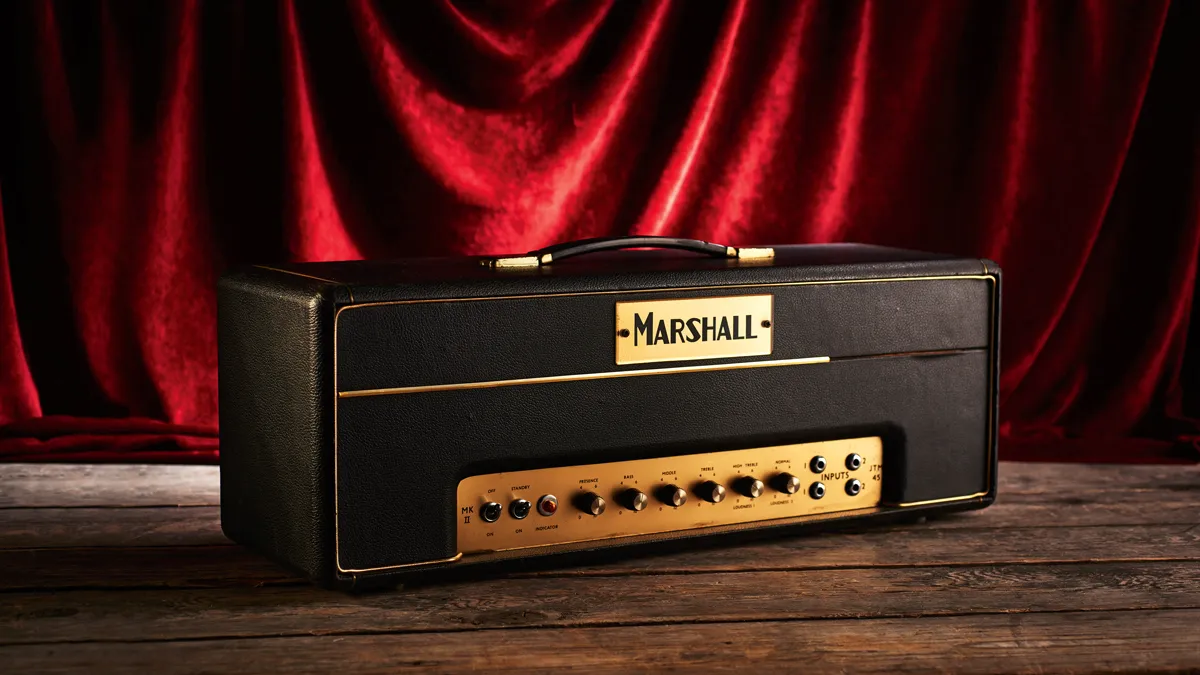
Tube amplifiers helped establish the electric guitar’s voice, from ringing clean tones to the roar that would define rock. Their vacuum tubes amplify the signal, while pushing the circuit hard can introduce overdrive, compression and rich harmonics. Although the technology predates the 1950s, designs such as Fender’s tweed Bassman and Marshall’s JTM45 helped make those qualities central to guitar playing. Changes in picking attack and guitar volume could reshape the sound, making the amplifier an extension of the player’s technique. That interaction helped turn distortion into a musical tool, shaping generations of blues, rock and metal.
19. Guitar Wireless Systems

Before practical wireless systems came along, a guitarist’s freedom onstage was limited by the length of the cable. Ken Schaffer’s wireless system changed that, giving players room to move without giving up reliability or tone. AC/DC, Kiss and David Gilmour were among the early adopters. There was an unexpected bonus too. The system added a slight tonal character of its own, enough that players came to love it. Decades later, builders still make preamps and pedals designed specifically to recreate that signature Schaffer sound.
20. PLEK Machine
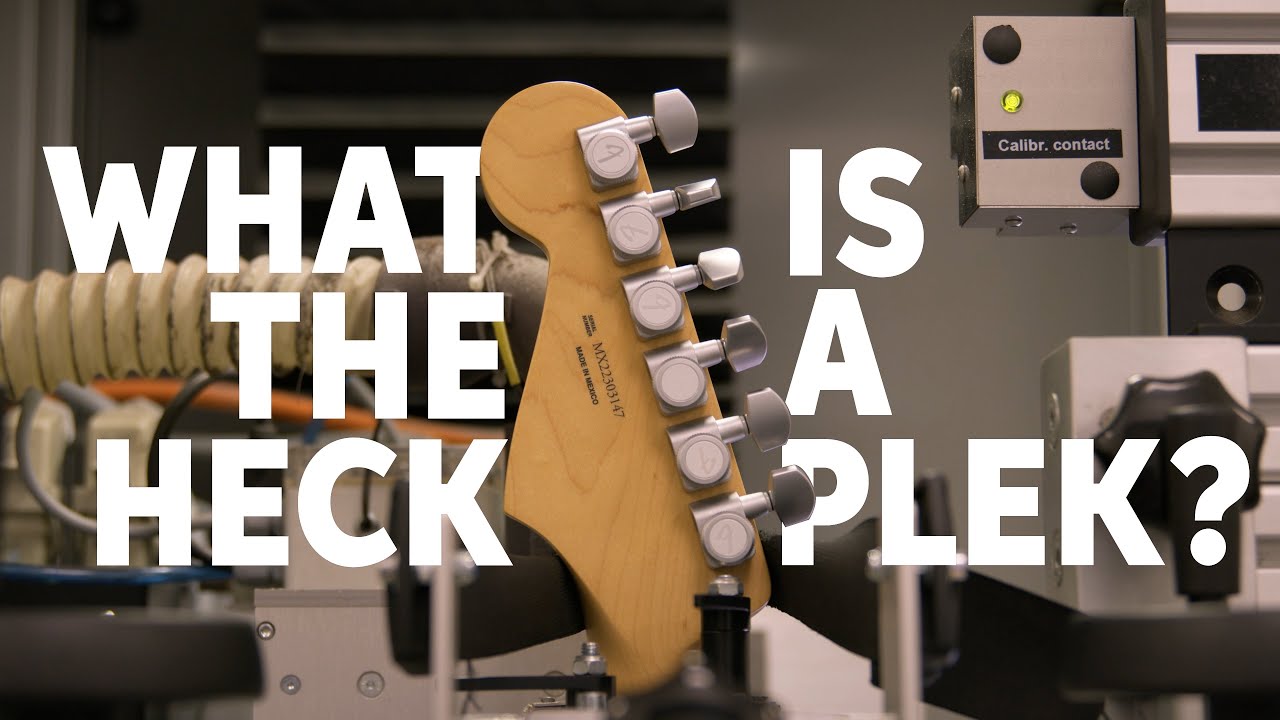
Developed in Germany, the computerized Plek machine scans the neck and frets under real or simulated string tension, then uses that information to guide precise fret leveling and crowning. A skilled operator decides what needs changing and can preview the results before any metal comes off. The payoff can be lower action, cleaner bends and fewer buzzing notes. It gives builders and repair shops a repeatable way to get more guitars playing at their best. For manufacturers, that repeatability means setup quality can be measured, documented and reproduced more consistently from guitar to guitar.

