Guitar World Verdict
If you think about it, the Big Muff Pi is kind of like the Godzilla of fuzz pedals. It’s huge, unstoppable, and has enough gain to level a city. Okay, sure, it takes up half your pedalboard, but with tone this good, who cares? If you want to sound like a guitar legend and don’t mind sacrificing space, I think the Muff’s atomic roar is worth every inch.
Reasons to buy
- +
Legendary sound
- +
Dynamic and versatile
- +
Easy to dial in
Reasons to avoid
- -
Far too big for most pedalboards
- -
Some variants have more features
You can trust Guitar World Our expert reviewers spend hours testing and comparing guitar products so you can choose the best for you. Find out more about how we test.
What is it?
Electro-Harmonix likes to describe it as a “distortion/sustainer,” but the rest of us think of it as a fuzz pedal, and arguably one of the most important. This massive stompbox may have launched way back in 1969, but it’s still being used today by a list of guitar legends that reads like a who's who of the greatest ever to strum a six-string.
The humble Big Muff helped David Gilmour get comfortably numb, disarmed Billy Corgan, and was there when J Mascis defined the freak scene. It’s a staple of alternative music, and as such, it’s had more variations than you can shake a Jazzmaster at.
Over the years, transistors were swapped out, and the circuit was tweaked, refined, and improved to evolve alongside the players who used it. Today, there are a whopping 11 options to choose from in the current EHX catalog, all based on the various versions through the pedal's long and storied history – and that’s not counting the boutique clones and copies that have used the Muff as inspiration.
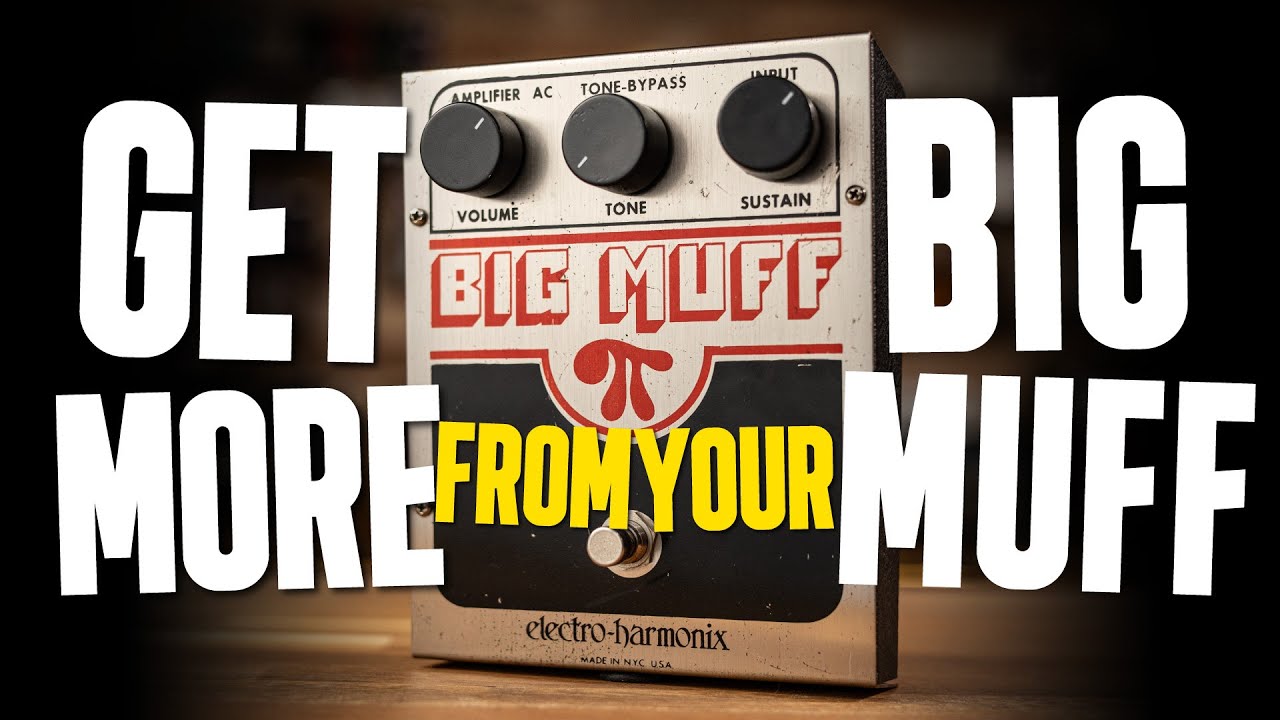
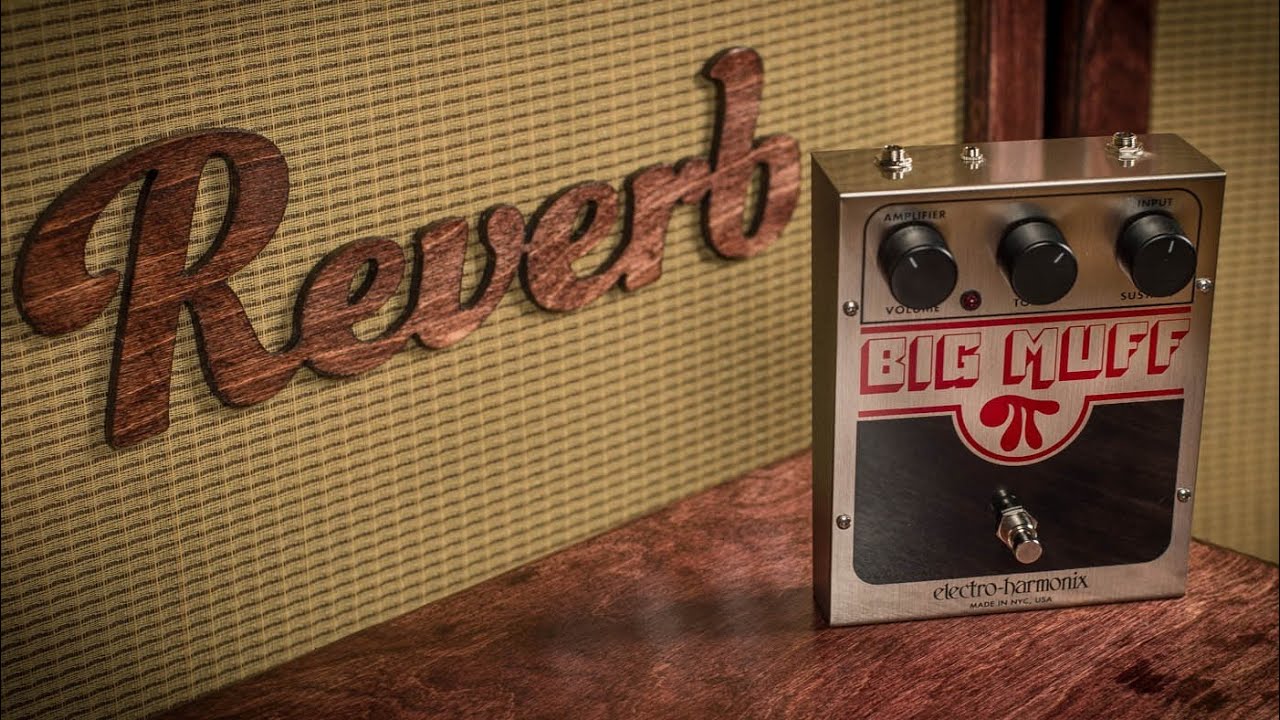
Today, I’m looking at the iconic Big Muff Pi. For most players, this is the most classic version of the Muff, at least from a visual point of view. Standing proud in its over-the-top, giant enclosure, the pedal relies on a classic 4-stage silicon transistor circuit to create its famous singing sustain and crushing distorted harmonics.
The unit features a basic three-knob layout with dials for Volume, Tone, and the gain knob labeled as Sustain. It's true bypass and can run on a 9V battery or a pedalboard power supply.
The Big Muff is pedal royalty at this point, and with a long list of famous admirers, it certainly doesn’t need to prove anything to anyone. That said, today I’m going to take a closer look at the stomp that defined good guitar tone for so many, see how it holds up today, and see whether it’s just nostalgia or has a place on modern pedalboards.
Specs

- Launch price: $101 | £75 | €89
- Type: Fuzz
- Controls: Volume, Tone, Sustain
- Features: Quad-transistor fuzz with true bypass switching
- Connectivity: 1/4" input and output
- Bypass: True bypass
- Power: 9V
- Dimensions: 140 mm x 75 mm x 175 mm
- Weight: 450 g
- Options: N/A
- Contact: Electro-Harmonix
Build quality

Build quality rating: ★★★★☆
Right, first things first, this pedal is massive. Like, seriously big. Fun fact: it’s called the Big Muff because it was larger than Mike Matthews’ compact original Muff Fuzz, which predated this one by a few months. Well, it certainly lives up to the name.
Is it totally impractical by today’s pedal standards? Absolutely, but I don’t care one bit. I’ve always thought the Big Muff was a cool-looking pedal, and the ginormous and unwieldy enclosure is a lot of the appeal. From a build point of view, it’s a pretty lightweight pedal; in fact, it feels almost like there’s nothing inside it, but that’s not to say it feels cheap. Far from it. It feels solidly put together and well made with smooth controls and a firm but satisfying footswitch.
I’ve gigged many versions of the Big Muff, from this one to the Little Big Muff, the Nano, and even a Russian one, and I can reassure you that they always hold up to the harsh rigors of stage life. Genuinely, I’m yet to break one, and I’m not exactly light on my feet when I’m stomping around on stage.
Usability and features

Usability and features rating: ★★★★½
There’s really no bad setting, and you can quickly find usable tones without endless tweaking
With just a trio of dials, this pedal works just like any other three-knob drive pedal – and it’s not exactly difficult to dial in. In a world of complex modern pedals, I think the control layout here is refreshingly simple; even pure beginners can get a usable sound with very little fuss. The three knobs of Volume, Tone, and Sustain are clearly labeled and large enough to grab mid-song if you wanted to make on-the-fly adjustments on stage.
Obviously, the volume knob controls the overall output level, allowing you to match or boost your signal to sit perfectly in a mix. The Tone knob is a sweeping EQ that shifts the pedal’s voice from dark and woolly to bright and biting; use this dial to season the high-end to taste.
Of course, the Sustain knob is where the magic happens. Turning it up increases the gain, and adds more clipping and saturation, pushing the fuzz from a subtle sizzle to the classic, roaring Big Muff wall of sound. I’d honestly say the interaction between these controls is very intuitive. There’s really no bad setting, and you can quickly find usable tones without endless tweaking.
Sounds

Sounds rating: ★★★★½
I don't think it’s hyperbolic to say the sound of the Big Muff Pi is instantly recognizable. It's thick, saturated, and loaded with sustain. Personally to me, this is the archetypal fuzz tone – it’s at least the fuzz sound I’m the most familiar with.
There’s something about the huge, creamy, and harmonically rich tone that flatters both chords and single-note lines, and I just can’t get enough of it.
I don't think it’s hyperbolic to say the sound of the Big Muff Pi is instantly recognizable
Sonically, the pedal delivers a massive low end with smooth highs, but the mid-range is noticeably scooped. This lack of mids is perhaps both the Big Muff’s calling card and, for some, its Achilles heel.
Many players love the scooped sound, but others think it lacks definition, and well, that’s a fair comment. It can sound a little unfocused, and when playing in a band, it can be easily lost in the mix.
Playing a Gibson Firebird through the Big Muff into a mid-focused amp like my beloved Vox AC30, I found that pairing helped balance the pedal’s inherent lack of midrange. This amp’s natural pokeyness added focus and punch, letting the Muff’s character shine through without sounding too hollow.
Stacking the Big Muff with other pedals opens up even more tonal possibilities. Placing a transparent overdrive in front can tighten the lows and bring the mids forward, while running it after modulation and delay can create lush, swirling shoegaze soundscapes.
I found that the pedal responds really well to different guitars and pickups, but always retains its unmistakable Muff-y identity.
Verdict

What truly sets the Big Muff apart is its versatility and enduring appeal
The Big Muff is a stone-cold classic in my eyes. You certainly don’t get to enjoy 57 years on the pedalboards of iconic players unless you sound the part, are dependable, and easy to use – and well, the Big Muff Pi ticks all three boxes.
Its instantly recognizable voice, massive sustain, and rich, creamy fuzz have inspired generations of guitarists and shaped the sound of countless records.
Despite its undeniably bulky enclosure, which is sure to frustrate anyone trying to maximize pedalboard real estate, the payoff in tone is more than worth the inconvenience.
The straightforward three-knob layout is refreshingly simple, allowing you to dial in everything from smooth, singing leads to thick, wall-of-sound chords with minimal effort. While the classic mid-scoop can make it tricky to sit perfectly in every mix, it’s also a key part of the Big Muff’s character, and a clever amp or pedal pairing can overcome this small limitation.
What truly sets the Big Muff apart is its versatility and enduring appeal. Whether you’re chasing Gilmour’s soaring solos, Corgan’s alt-rock crunch, or J Mascis’s fuzz-drenched riffing, the Big Muff delivers in spades.
Yes, more feature-packed or compact fuzz pedals are on the market, and some variants offer greater flexibility, but none capture the iconic sound and spirit of the original quite like the Big Muff Pi. If you want classic fuzz in its purest form, this pedal remains the gold standard.
Test |
Results |
Score |
|---|---|---|
Build quality |
Oversized but solidly constructed, the Big Muff Pi feels lightweight yet durable enough for heavy gigging. |
★★★★☆ |
Usability and features |
Its simple three-knob layout makes dialing in great fuzz tones quick and intuitive for players of any experience level. |
★★★★½ |
Sounds |
The Big Muff Pi delivers thick, creamy, and harmonically rich fuzz with signature scooped mids and endless sustain. |
★★★★½ |
Overall |
Despite its size, the Big Muff Pi remains the definitive fuzz pedal, blending iconic tone, simplicity, and reliability. |
★★★★½ |
Also try
Hands-on videos
Reverb
That Pedal Show