


José Arredondo might not be a household name, but to generations of guitarists, his name was synonymous with great tone. During the ’80s and early ’90s, a line of players beat a path to his workshop in L.A.’s San Fernando Valley after Eddie Van Halen dropped his name in guitar magazine interviews.
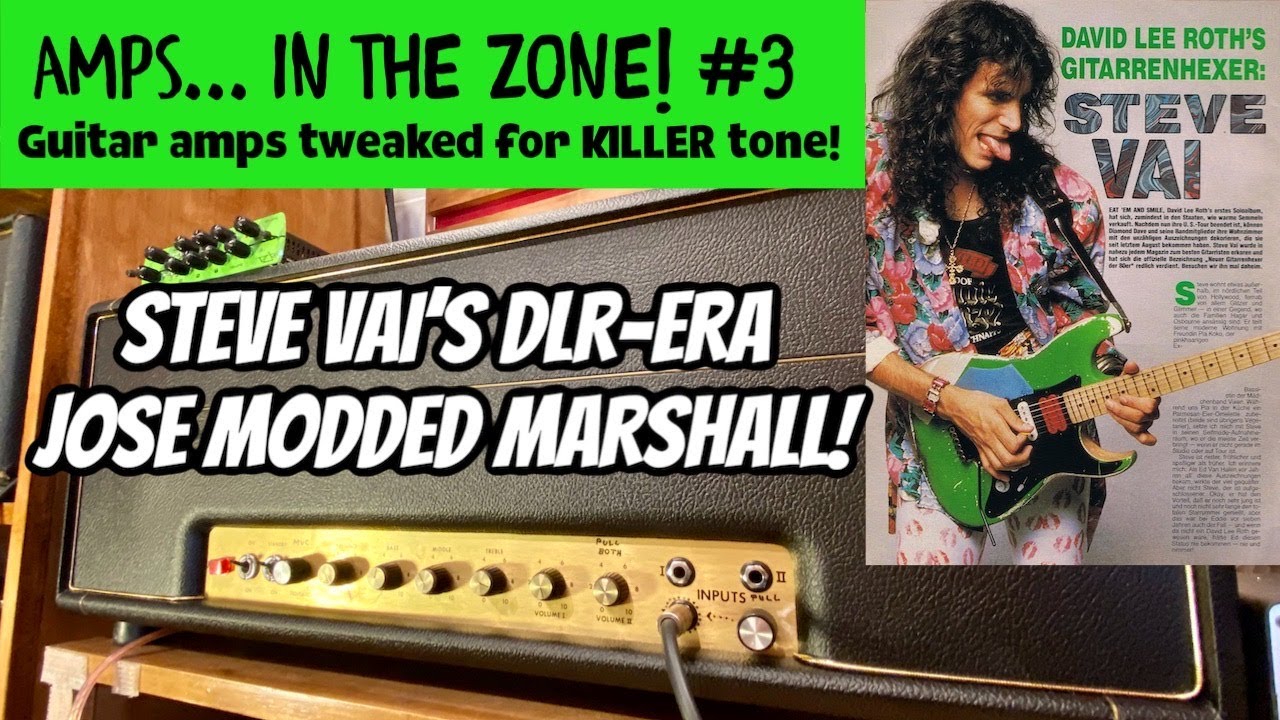
Arredondo modded Marshalls for James Hetfield (who played through a José-modified Marshall on Kill ’Em All and said it was his favorite amp), John Sykes (who used a José-modded Marshall on the best-selling 1987 Whitesnake album), Mick Mars (Mötley Crüe’s Dr. Feelgood), Steve Vai (David Lee Roth’s Eat ’Em and Smile), Peter Frampton, Steve Lukather, Steve Stevens, Akira Takasaki and countless others.
For many years, biographical information on Arredondo and details of his work were a mystery, which only made his urban legend grow. Other than a brief profile that appeared in the August 1988 issue of Guitar Player magazine, articles about him were scarce.
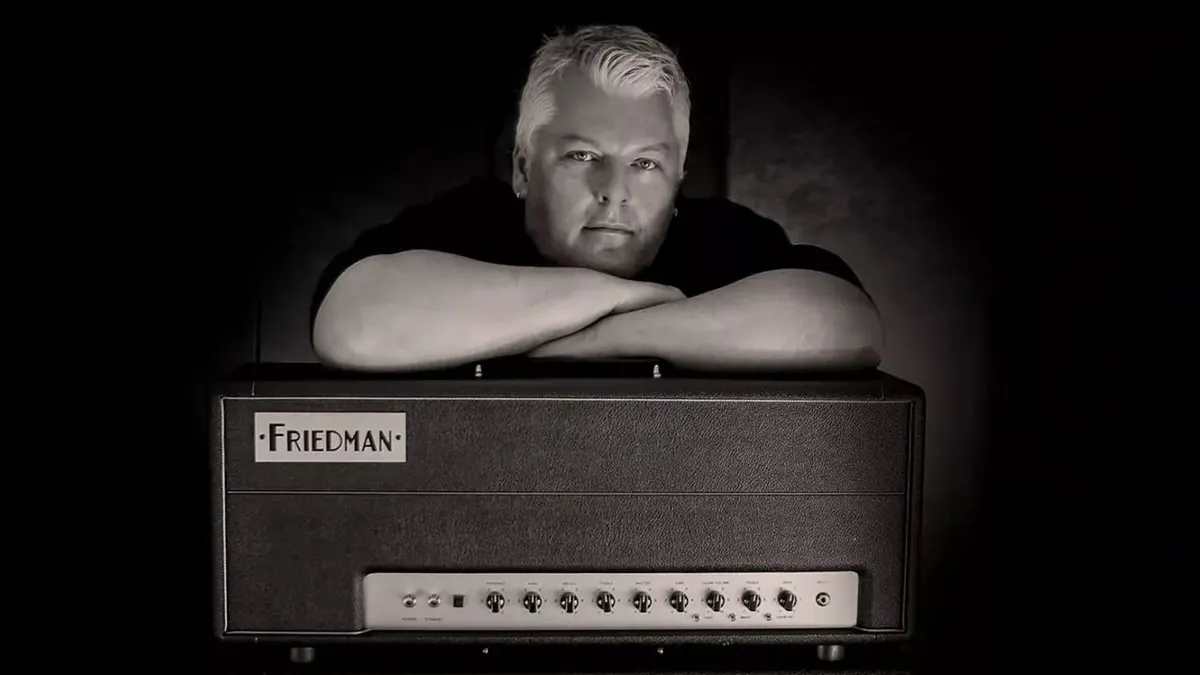
As Dave Friedman started becoming a great amp wizard in his own right, he chased down examples of José’s modified amps and researched info about his high-gain designs and technical nuances.
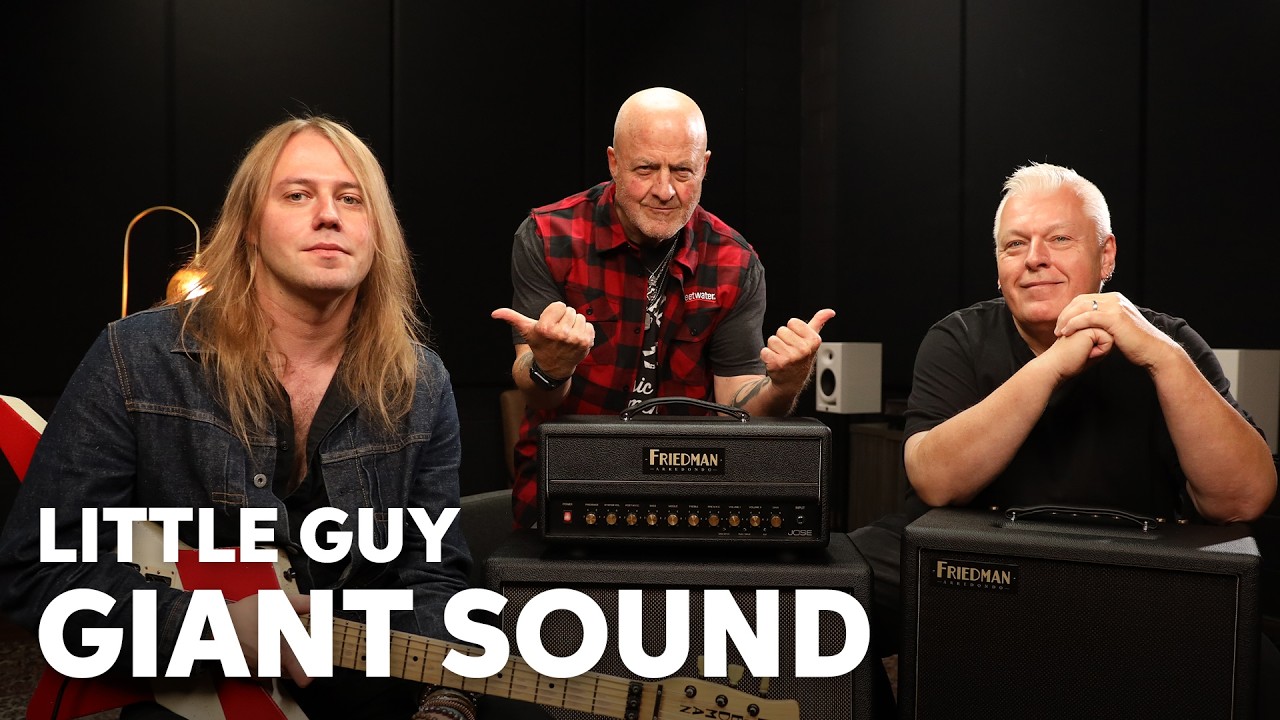
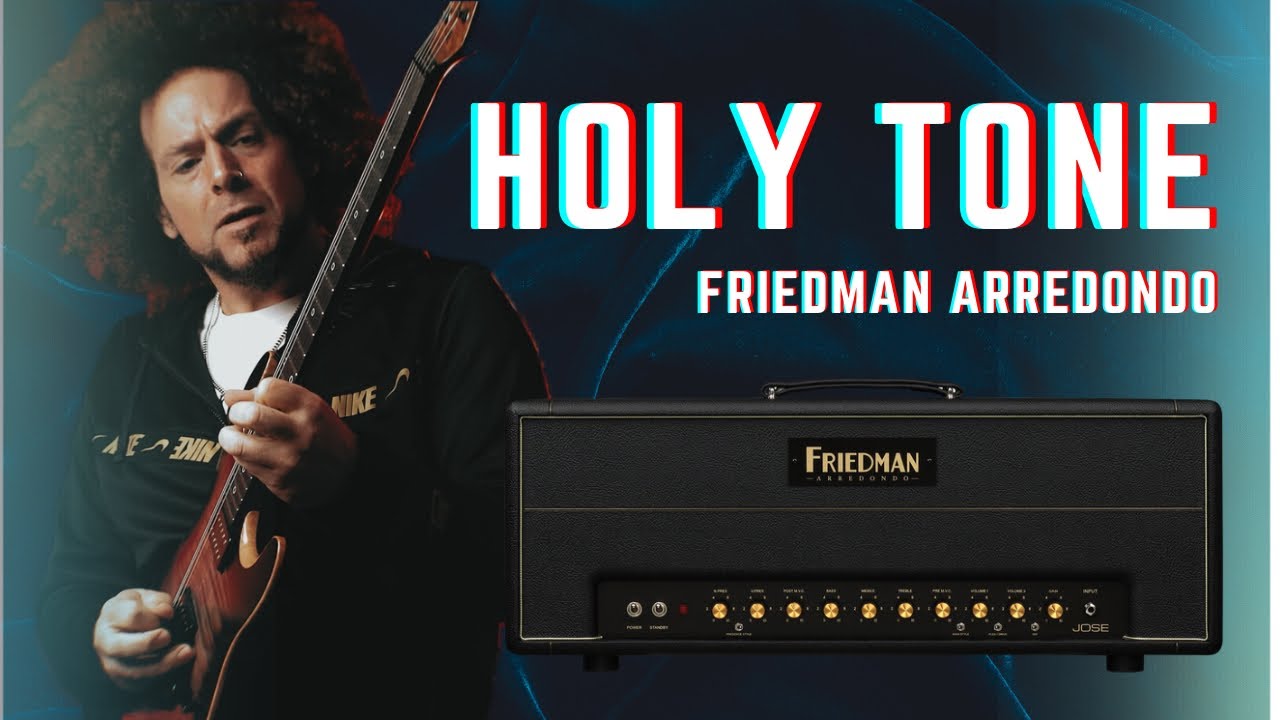
Eventually Friedman became somewhat of a José-ologist. His knowledge recently culminated in the Friedman/Arredondo Jose amplifier, which he developed with the Arredondo family’s blessing.
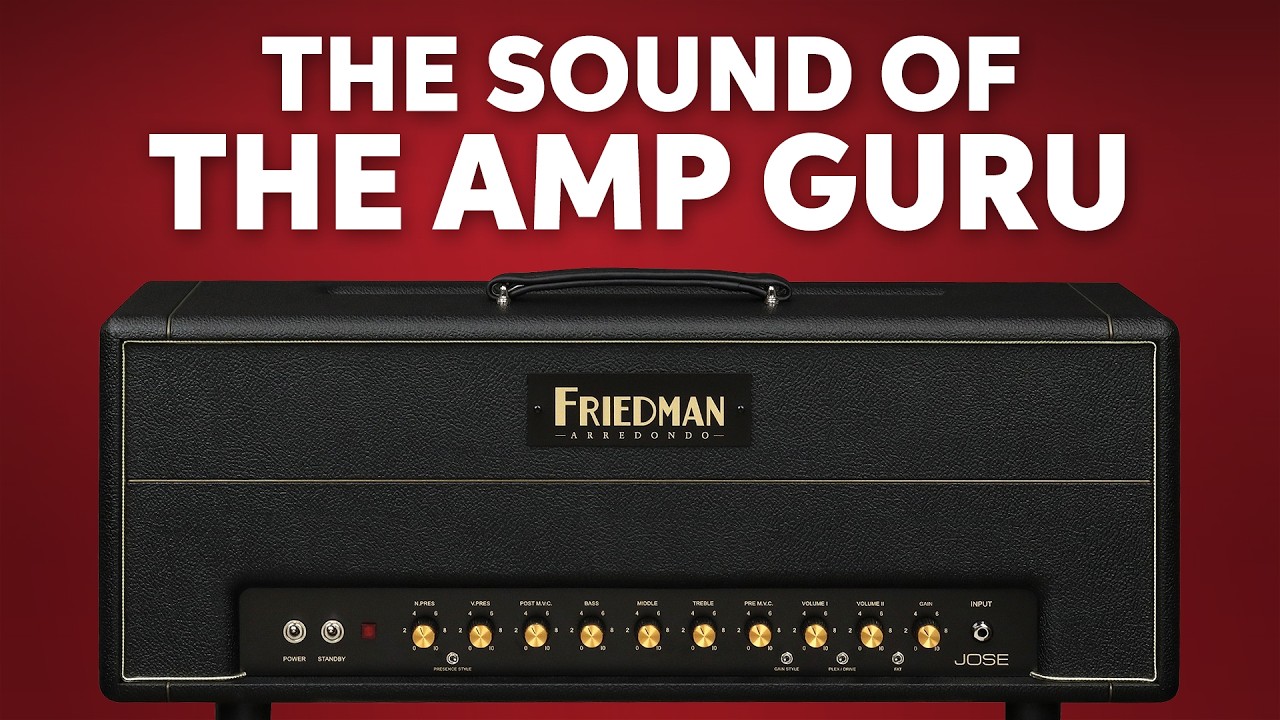
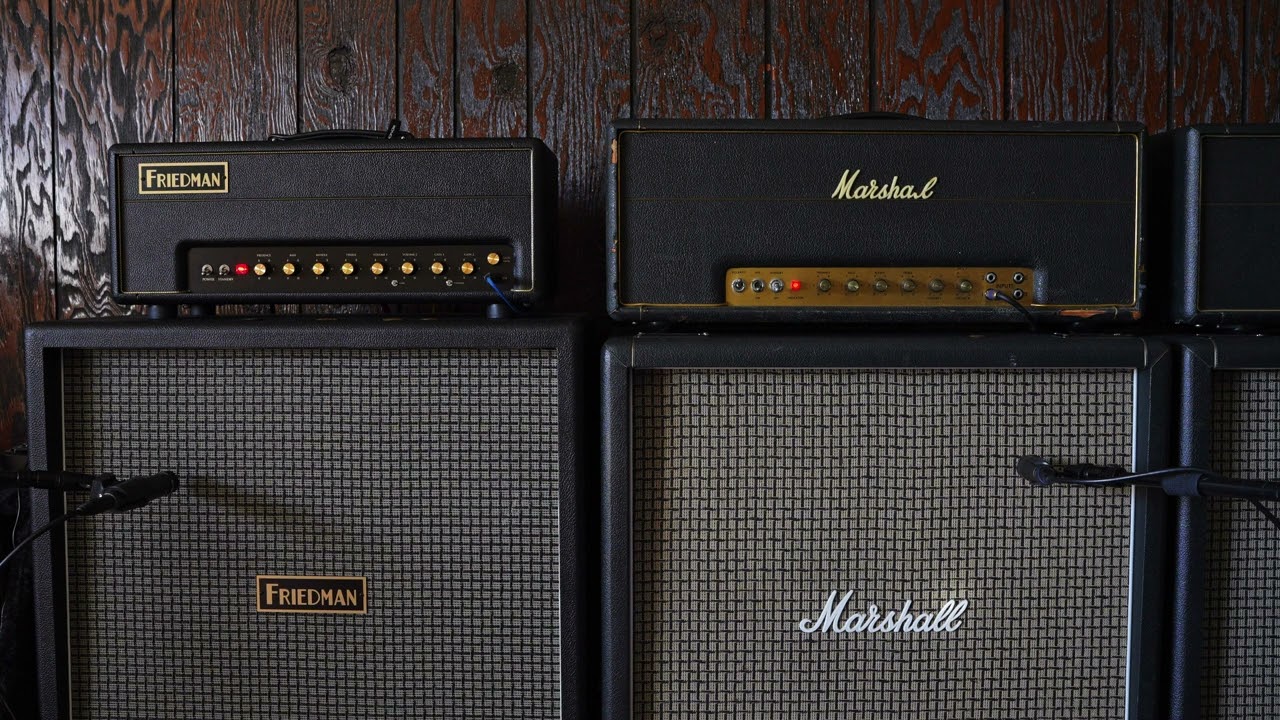
The Jose amp combines several of Arredondo’s acclaimed innovations in one amp. A wonderful tribute to the man and his tones, it’s also the closest you can get to a José-modified Marshall in modern times without spending a small fortune.
This is how a humble, elusive man from Chile became the amp tech to the stars and changed amp design forever.
In the ’80s, nightclubs lining West Hollywood’s Sunset Strip attracted countless kids who wanted to make it in the rock music biz. Hair metal bands competed for major label deals and great guitar playing ruled as guitarists studied at GIT (Guitar Institute of Technology) by day and played gigs at night. In 1987, Dave Friedman arrived in L.A. as an 18-year-old aspiring guitarist chasing rock star dreams.
Over the Hollywood Hills in the nearby San Fernando Valley, a variety of amp techs including Arredondo, Lee Jackson, Paul Rivera were performing hot-rodded high-gain modifications on amps from their workshops to meet the needs of this new generation of metal players.
Arredondo was already an experienced amp tech and designer well before he launched his own business. During the mid ’60s, Arredondo worked for Thomas Organ, where he reportedly helped develop the Vox Super Beatle amp. Later, he worked for Ampeg as a Service Manager, which led to him working on amps for the Rolling Stones and going on tour with them in 1969.

Most players first learned about Arredondo from guitar magazines. When Eddie Van Halen cryptically mentioned “José, an old guy from Argentina (sic) who knows a lot of tricks and does stuff for me” in his April 1980 Guitar Player magazine cover story, curious guitarists started seeking this mysterious tech.
When Ed eventually confirmed Arredondo’s identity in the mid-’80s, the tech’s business went through the roof.
So many customers flocked to Arredondo’s Arrco Electronics shop on Van Nuys Boulevard in Sherman Oaks that he relocated his business to the three-car garage at his home to maintain a more private profile and select clientele. Visitors recall seeing stacks of amps with names like Yngwie Malmsteen, George Lynch, Jake E. Lee and Adrian Vandenberg on the service tags.
“Everybody talked about José,” Friedman says. “Eddie, Mick Mars, George Lynch. He was a pioneer of what are now considered modern-style amps and modern-style gain, and he was definitely the best amp tech in Hollywood at the time.”
Shortly after Friedman arrived in L.A., he landed a job with Andy Brauer Studio Rentals, which catered to the top studio musicians and pros. Here he became acquainted with leading techs like rack guru Bob Bradshaw and amp wizards that included Reinhold Bogner, Bruce Egnater, Steven Fryette and Mike Soldano.
Arredondo also did some repair, maintenance and occasional modification work for Brauer, and Andy gave Dave José’s phone number.

Although amps with master volume controls became increasingly common during the ’80s, the holy grail was to get the heavy, overdriven sound of a fully cranked non-master volume Marshall with its power tubes blazing, but at a lower volume.
“My favorite kind of sound is a cranked-up, old Lead-spec Plexi,” Friedman says. “I was always going after that sound; I just wanted to find a way to do it with a master volume and get that sound at a lower volume.”

When Friedman first met José, he brought over a 100-watt Marshall JTM “black flag” Plexi – a rare and valuable 1967 model. Arredondo installed his three-in-one mod, which Friedman says “added a gain stage with three distinct structures in the front, like boosting a four-input Marshall, but with a regular JCM100-style (Marshall Model 2555 Silver Jubilee) master volume added between the EQ and power amp.”
Friedman also had Arredondo put an extra gain knob in the back of the amp so it would look stock from the front.
“That was his basic mod, and frankly, that was enough gain,” Friedman continues, noting that Arredondo generally didn’t do modern-style high-gain mods, even though his modded Marshalls have produced some very heavy tones, like those heard on Kill ’Em All and Dr. Feelgood.
“He only did a few higher-gain mods. People have gotten way out of hand with gain, but most pros that other players are emulating actually use settings where the gain is backed way off.”
Adding to José’s legend and mystery was the fact that many guitar players tried to keep their gear specs top secret. A few boutique amp builders (most notably Howard “Alexander” Dumble) and pedal designers (like Bill Finnegan of Klon Centaur overdrive fame) were equally secretive, covering their circuits with black epoxy so nobody could reverse engineer or copy their work.
Friedman recalled José “never covered anything up,” but at the time Friedman was still new to amp technology, and he wouldn’t have known what José was doing anyway.
Eddie Van Halen was the player most closely associated with José. The two first met in the early ’70s when Ed’s father drove him to Arredondo’s shop to have José repair the guitarist’s 1968 Marshall Super Lead amp. However, there’s some debate over whether José actually modified Ed’s amps or simply repaired and maintained them. Ed eventually admitted that it was the latter.
“I told people that José Arredondo modified my amp to throw him a bone and help him out,” Van Halen told Chris Gill, author of Eruption: Conversations with Eddie Van Halen, in 2007. “José made most of his money by doing modifications to people’s amps, but he never did anything to my amps other than re-tube them, set the bias and replace things that blew, like the transformers.
“For years people thought that I had my amps hot-rodded, but they were stock. My Marshall had no line output or master volume. In a funny way I feel a bit guilty about telling people about José’s mods because I lied, but a lot of people dug them. I don’t own any of those modified amps. All of my Marshalls are stock 100-watt heads.”
Friedman, who has seen the inside of numerous Marshall amps that Van Halen owned, including the guitarist’s “number one” 1968 100-watt model 1959 Super Lead, confirmed that Van Halen’s Marshalls were basically stock.
“Eddie didn’t really have modded amps. José serviced and tweaked them. He would change the impedance selectors to heavy-duty selectors that improved reliability.
Eddie didn’t really have modded amps. José serviced and tweaked them. He would change the impedance selectors to heavy-duty selectors that improved reliability
“He made some slight tweaks in the circuit and would set the bias a certain way for the Variac Ed used so he wouldn’t blow up the output transformers. He provided Ed with matched sets of tubes so the amps would operate more efficiently, and a variety of other things like that.”
In 1989, while they were recording the Black Album, Metallica guitarists James Hetfield and Kirk Hammett, along with producer Bob Rock, hired Arredondo to modify some Marshall heads.
Hetfield was already a big fan of Arredondo’s work – his favorite amp was a José-modded Marshall that he used to record Kill ’Em All, and he was crushed when that amp was stolen in 1983. The theft of that amp inspired the song Fade to Black.
Unfortunately, Hetfield was lukewarm about his modified 1973 Super Lead, feeling that it sounded nowhere near as good as Rock’s José-modded Marshall (Hammett never received his amp back from Arredondo, who died before the work was completed).
Hetfield tried to use the amp on several subsequent Metallica albums but never bonded with it. When working on Metallica’s latest album, 72 Seasons, producer Greg Fidelman hired Friedman to work on Hetfield’s José-modded amp, which Friedman says, “needed a lot of love. Once I fixed it, they liked it so much they used it on the album”.
It’s hard to estimate how many amps José modified. If you can find an original, it won’t come cheap. They rarely come up for sale, and a street-price guesstimate starts between $15,000 and $20,000, with celebrity-associated amps going for considerably more. Richard Fortus owned the José amp that Mick Mars used on Dr. Feelgood, and he reportedly sold it recently for $45,000.
With Friedman’s Jose amp, you can get a Marshall-style amp loaded with faithful reconstructions of Arredondo’s innovations for $3,799.
Friedman conceived his José tribute amp many years ago, but he wanted the family’s endorsement before he went ahead with production. Eventually he was introduced to José’s daughter Marisol, who gave the project her blessing.
Once Marisol gave the okay, it took Friedman about 34 months to finalize the amp’s design and bring it to market.
I didn’t reinvent the wheel with this amp. I made it as a tribute to the man and his sounds
The Jose model is a 100-watt head with four EL34 tubes featuring several of Arredondo’s most iconic mods in one amp. Details include a three-way “Gain Style” switch, a Fat switch and two switchable global Presence controls, which provide a choice of vintage or modern presence tones.
“It’s a loving tribute to José, who never made a production amp, so I’ve made it for him now,” Friedman says. “I didn’t reinvent the wheel with this amp. I made it as a tribute to the man and his sounds.”
In the mid-’80s, Arredondo and Van Halen planned to go into business to manufacture an amp designed by José. A few prototypes were allegedly built, but Van Halen eventually opted to develop the 5150 with Peavey instead.
Arredondo passed away September 16, 1994, nine days before his 71st birthday. Although José was a private character who never sought fortune and fame, he probably would have been pleased to know that his innovations and tones have lived on.
“I would hope it would bring a big smile to his face because he had such a great smile,” Friedman says. “He was a warm, friendly, wonderful individual once you got to know him.”
- For more on the Jose Series, head to Friedman Amplification.
- This article first appeared in Guitar World. Subscribe and save.
