


Back in April, it was announced that Traffic founder Dave Mason – the man who famously penned late-’60s classics like Hole in My Shoe, Feelin’ Alright? and Here We Go Round the Mulberry Bush – had passed away at age 79.
There was, however, a lot more to his career than his work in Traffic, given his collaborations with some of the biggest names in business, from Paul McCartney and George Harrison to Eric Clapton and David Crosby.
He was with Jimi Hendrix, Noel Redding and Mitch Mitchell at Olympic Studios in London on January 21, 1968, for example, and ended up playing 12-string on All Along the Watchtower, as well as providing backing vocals for Crosstown Traffic at another session for the trio’s third and final studio album, Electric Ladyland.
A few months later he was in the same studio adding shehnai and percussion to Rolling Stones hit Street Fighting Man. He even had Michael Jackson guest on his 1980 solo track Save Me and became an official member of Fleetwood Mac for a brief spell in the ’90s.
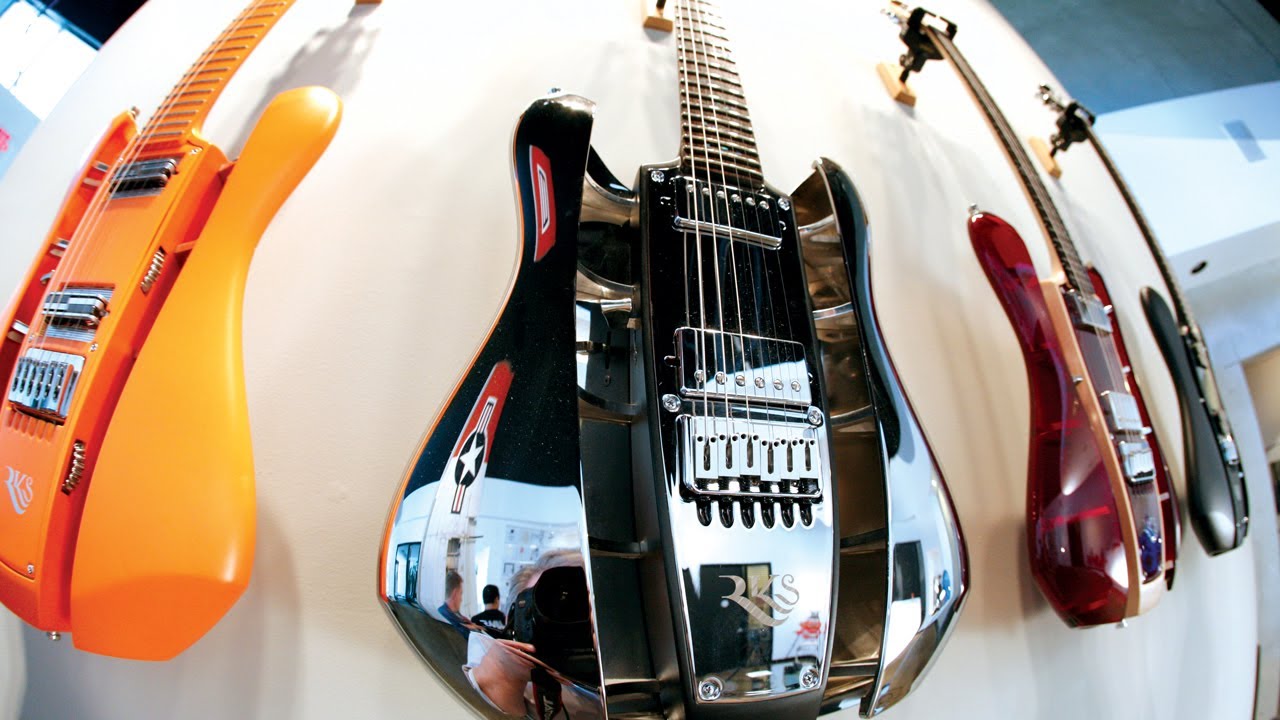
Then there’s his work as a guitar builder, having co-founded RKS Guitars in 2004 with industrial designer Ravi Sawhney to focus on electric guitars made out of sustainable materials. The modular designs feature a neck-through wooden core integrated with conductive metal ribs and interchangeable body shells made from Tenite, a cellulose-based plastic, to reduce tonewood by 66 to 80 percent.
The company won awards for its cutting-edge designs, living up to its promise of reducing deforestation while also increasing personalization, with Bloomberg Businessweek hailing their work as “the most radical change in electric guitars in almost 50 years.”
These instruments ended up in the hands of household names like Keith Richards, who once referred to his guitar as “a fucking impressive device,” as well as Mick Jagger, Ron Wood, Don Felder, Johnny Depp and more.

In this interview, Mason’s business partner, Ravi Sawhney, pays homage to a man whose list of achievements cannot be overstated.
You worked very closely with Dave. He must have had no shortage of stories.
He collaborated with so many notable musicians and was so respected by those around him. There were so many stories. He and Jimi used to hold court every Sunday at an Indian restaurant in London. Whoever was in town would show up. It didn’t matter who you were – every Sunday you could go hang out with them. Sometimes the Beatles would turn up, sometimes Led Zeppelin, sometimes Clapton.
There were so many stories. He and Jimi used to hold court every Sunday at an Indian restaurant in London. Whoever was in town would show up
What did he tell you about playing 12-string on All Along the Watchtower?
I’ve heard different versions, but from what Dave told me, there was a party being thrown by a friend who had an advance copy of Bob Dylan’s John Wesley Harding album. Jimi was there, and when he heard All Along the Watchtower, he flipped, saying, “Come on, Dave, let’s go record this!” They went to the studio not long after.
It was all spontaneous. Dave played 12-string and Jimi and the band did their parts, but that’s why Dave continued to perform that song live. He and Jimi were joined at the hip. They were together every day, which is why he was at all of Jimi’s recording sessions whether he was playing or not.
You must have been excited to start a guitar brand with him in 2004.
Dave is the only musician I know who did something beyond his music in this way. All the credit to Les Paul and Paul Reed Smith, but they were never inducted into the Rock and Roll Hall of Fame for creating songs that got played all over the world, or got to work with Jimi or George Harrison.
Dave actually taught George slide and, in return, George taught Dave sitar, which you can hear on some Traffic recordings. He was a big part of music history. He didn’t have to do this company with me. He just wanted to carry on innovating.
What was he like to work with?
He was a big personality in music, but with design there was no ego, just pure focus. We had this philosophy of bringing everyone in. It didn’t matter where the great ideas came from. He’d come into the office three times a week to make sure everything was on track. If anything was wrong he’d point it out.
Even if we told him our machines were technically perfect, he’d know when a neck was a 10 thousandth of an inch too thick – the size of three hairs stacked on top of each other! I correlated that to surgical levels of precision.
After years of prototyping, we evolved a novelty guitar into a real player’s guitar. At NAMM, musicians working for other brands would come over to our booth on their breaks. Coming up with our own sustainable line of open-ended hollow-body instruments was a huge boost to Dave’s career.

What’s the future looking like for RKS Guitars?
RKS is still in production on a custom basis. When I closed the factory because I couldn’t run all the different businesses, a gentleman named Paul Janowski took it over and built his own factory where he makes custom versions. Guitars aren’t just about what you hear; it’s about what the resonance makes you feel. Carlos Santana speaks a lot about this, saying how music changes your vibrations on a molecular level.
We reinvented the guitar and got our patents. We wanted to make every musician more than they were before they picked up our guitar. That’s how you know you’ve delivered something. These guitars double Dave’s legacy. His music will live on and on, but people will be creating new songs and changing the world with these guitars forever.
- Find out more at RKS Designs.
- This article first appeared in Guitar World. Subscribe and save.

