

Guitar World Verdict
Cort has gone out on a limb to create a beautiful-looking, fierce-sounding rock and metal guitar that is familiarly spec'd, but different enough to stand out. Despite the occasional reminder that the guitar was built on a budget, in the all-important tone and playability departments, no corners have been cut, and it actually performs beyond expectations.
Reasons to buy
- +
She’s a beauty.
- +
Great playability with an Ibanez-style neck.
- +
High-quality pickups.
Reasons to avoid
- -
This review example suffers from neck dive.
- -
A few hardware specs feel less premium.
- -
A coil-split would increase its appeal.
You can trust Guitar World Our expert reviewers spend hours testing and comparing guitar products so you can choose the best for you. Find out more about how we test.
What is it?
Cort’s massive Indonesian factory makes a hell of a lot of electric and acoustic guitars year on year. Strandberg, Squier, Ibanez, and PRS SE guitars are all built there, and it's having a huge impact on market affordability. With the KX500 Pale Moon, Cort itself is showing off the kind of boutique-looking rock and metal machine it can make for a cent under $900 – with even more tempting street prices to be found in the UK and mainland Europe.
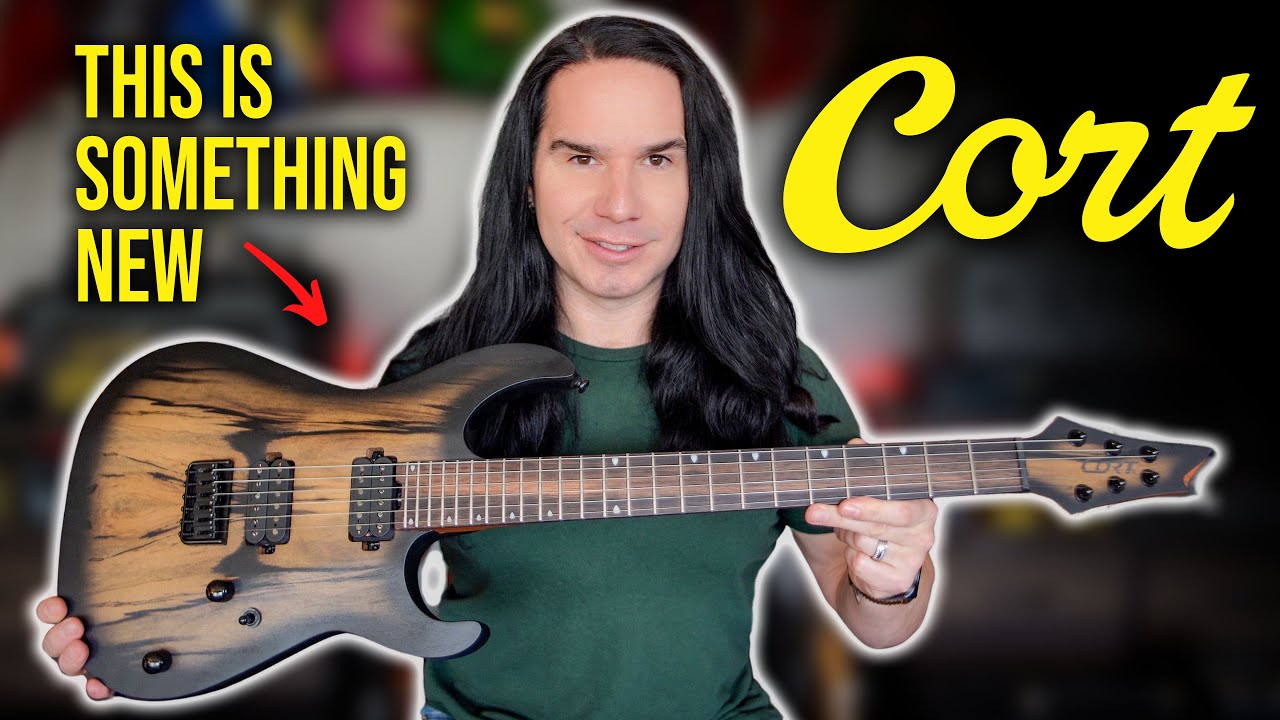
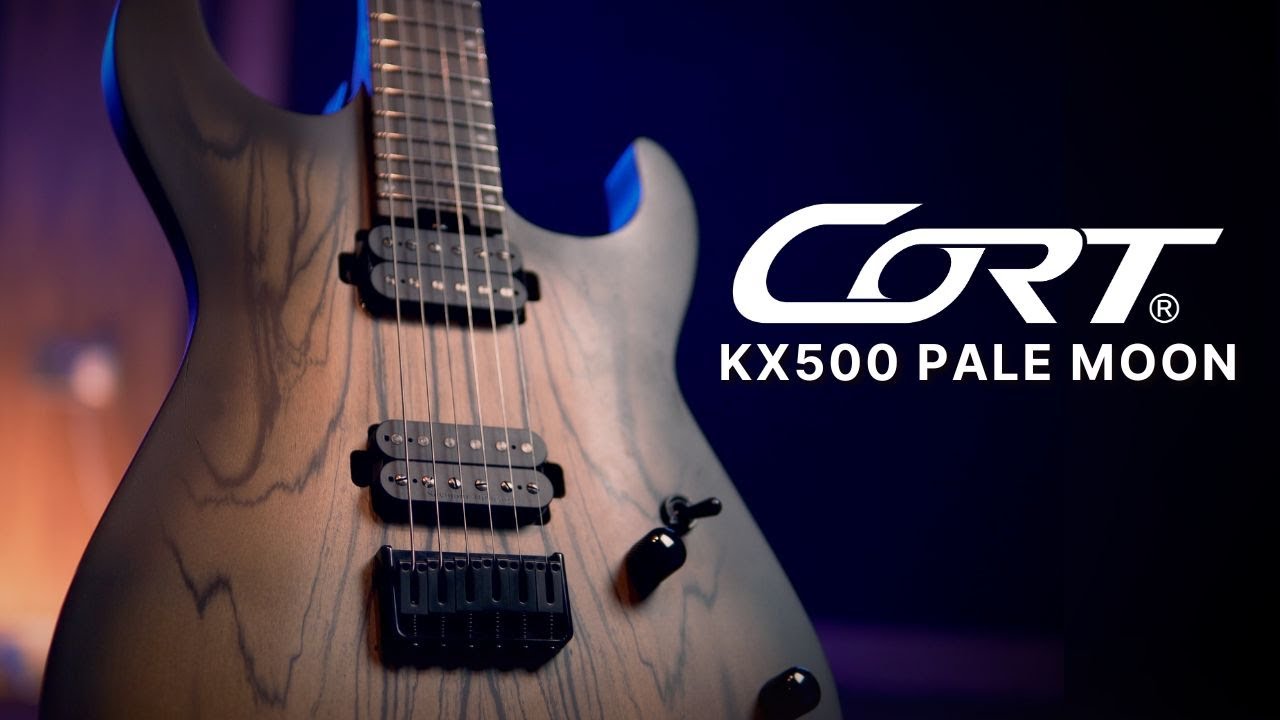
Naturally, the striking pale moon ebony top is the first feature to catch the eye. Beneath that is a mahogany body, which pairs with a five-piece roasted maple-and-walnut neck, topped with macassar ebony and 24 stainless-steel frets.
Its hardtail bridge and locking tuners are Cort-branded, but the South Korean firm has gone with the tried-and-tested, fabled Seymour Duncan Sentient and Nazgul humbucker partnership to ensure—it hopes—it looks as good as it sounds.

It sits at an interesting price point. It’s more expensive than, say, Harley Benton’s well-spec'd budget builds, but still remains under the $1K threshold with room to breathe, meaning it gets some solid specs without tipping the scales. Furthermore, it also makes it more likely to appeal to more serious – rather than solely beginner – players.
The KX500 Pale Moon is a build that looks to go toe-to-toe with Ibanez’s Iron Label series and Jackson’s X and Pro Series guitars. It’s a contemporary-minded axe, with those humbuckers giving a touch of, not vintage, but an established industry staple when it comes to its tones.
Elsewhere, a truss rod adjustment wheel shows Cort continuing to establish that setup as its new normal, and the KX500 gets a streamlined control system with one Volume and one Tone dial, plus a three-way switch.
So, it’s a guitar that seems to step out of the ‘keep things cheap’ bracket, without going too far, while also looking more premium than its price point might suggest. But can the KX500 Pale Moon eclipse its biggest rivals?
Specs

- Launch price: $899.99 / £699.99
- Made: Indonesia
- Type: Six-string electric guitar
- Body: Mahogany with pale moon ebony veneer top
- Neck: Five-piece roasted maple and walnut, D-shape
- Fingerboard / Radius: Macassar ebony / 15.75"
- Scale length: 25.5” (648mm)
- Nut/width: 1 11/16” (43mm)
- Frets: 24 jumbo, stainless steel
- Hardware: Cort hardtail and locking tuners, two-way adjustable truss rod wheel
- Electrics: Seymour Duncan Sentient & Nazgul humbuckers, 1x Volume, 1x Control, three-way switch
- Weight: 2.81kg / 6.19lbs
- Left-handed options: No
- Options: KX507MS seven-string multiscale ($999) and KX500 Baritone ($929.99)
- Finish: Natural Black Burst matte open pore
- Case: No
- Contact: Cort
Build quality

Build quality rating: ★★★★☆
I’ve been an advocate for the quality of guitars Cort’s Indonesian factory churns out for a while now. I feel it’s a real shifting needle in the industry, proving that guitars made outside the US and Japan aren’t as bad as the narrative makes them out to be. The Cort KX500 Pale Moon is almost the perfect example.
Starting with the finish, even if it's not really your thing, you have to admit that it’s a striking guitar. There are wood grains dotted about the body's matte open-pore finish, giving it a smoothness that makes the grains stand out in a really nice way. I’ve always liked when a guitar looks and feels like it’s made from wood, and this does it really well, especially at the rear, while the burst finish stops it from becoming too busy for the eye.
The neck has a nice hand feel, too, with its D-profile and two thin walnut stripes wholly reminiscent of Ibanez’s Wizard necks. It’s just got a little more curvature, which I like; it’s comfortable and shaped so I can really dig in if I want, or put my foot on the gas and shred.

There are no glaring blemishes; every contour is smooth, the neck joint is solid, with welcoming access to the higher frets, and the pick-shaped inlays are a nice touch as they underscore Cort’s ambition to be different without getting too weird.
The same goes for the small contour at the top of its headstock; it’s a nice touch, and for a mahogany-bodied guitar, it doesn’t weigh all that much at 2.81kg.
Admittedly, the bridge looks a little bog-standard in the impressive context of the woods, like it was a bit of an afterthought. A lack of a split coil is a little disappointing, too. Many guitars at lower price points now offer them, and with Cort positioning itself as an affordable brand, it feels like an opportunity missed in the bid to heighten its appeal.
Playability

Playability rating: ★★★★½
As I’ve said, the Ibanez-like radius, but with a little more curve, makes for great playability. I’ve never quite gelled with flat neck radius, but this D-shape neck carve with the 15.75" radius actually nails the balance between super-thin shredder and something a little more Charvel. Gliding across the strings is easy and very enjoyable.
I don’t need to fight it or familiarize myself with it; it’s plug-and-play
At no point do I feel this is a guitar that needs taming. For a short period, I almost felt it was too easy to play and lacked personality. That’s because I don’t need to fight it or familiarize myself with it; it’s plug-and-play. I see now that is why I thought it lacked something.
That being said, the incredibly flat fingerboard – there’s no compound radius here – won’t be for everyone. From my experience, at least, it isn’t immediately noticeable because of how it plays, but it is a design feature that once again aligns it with Ibanez-style builds. It makes it a mean shredder.
Again, with the finer details, I feel the pickup switch and Volume/Tone knobs are placed in a good sweet spot. I'd say they’re out of the way of most people’s picking hand arcs, but not so far away that you need to hail a cab to get there. It’s just a shame the switch itself feels quite flimsy.

The KX500's leg carve is fairly cozy, and my right arm sits atop the body with ease, but, as I have unfortunately experienced with Corts before, the neck dive is real on this test example. That means that, having the guitar on my lap while I type – as I am doing now, or when searching for a tab online, etc. – I need to consciously hold it in place with my right arm.
Yet, to my surprise, that’s barely an issue when playing standing up. There’s a small drop from where I position it, but otherwise it holds in place.
While there are a few elements with the guitar that leave me a little disappointed – such as the pickup switch, bridge, and neck dive issues – I’m so happy that the playability has escaped any sense of financial compromise. Parts can be replaced; the guitar itself is so easy to play. For an off-the-shelf instrument, that’s the most important thing.
Sounds

Sounds rating: ★★★★½
Given its assembly of dark woods, it’s no surprise to me that the guitar sounds like it was forged in shadows. That means that, while chords bloom well, with clear distinction between the notes, there is an inherent darkness to its sound.
It's most notable with lead tones, where brightness really has to be dialed in with the EQ. For comparison, plugging into my prog rock rig – the Neural DSP Archetype Tim Henson Pink amp with a Charvel Tele featuring Fishman Fluence pickups – it’s noticeably different. Don’t get me wrong, I really love the earthiness of the passive pickups, and they sound excellent, but I find that amps and settings need to be tailored for the guitar quite specifically. It’s not a deal breaker, though.
Chords are a little grating with the bridge pickup, but it also gives leads a pleasing thinness that makes my licks sound full of bluesy emotion
What I do find, though, is that when I really dig in and snap at a riff, it does have a decent twang to it, even in lieu of a split coil – especially if I move my hand closer to the bridge. This leaves me in a funny place. It both helps eradicate the need for a split-coil and highlights just how much Tele-like spank I could get out of it if it had one. Still, an aftermarket mod isn’t going to drain my savings.
Its clean tones, meanwhile, are spotless. Chords are a little grating with the bridge pickup, but it also gives leads a pleasing thinness that makes my licks sound vulnerable and full of bluesy emotion. That's a decent trade-off.
The middle position is where chords are at their best. The bottom end adds a little growl, with a subtle top-end bite that ensures they cut through the mix. In the neck position, the warmth of the sound marries really well with the guitar's darker nature, but passing notes on the E and A strings do seem to push the amp, even when it's a moderately dialed model of a '60s Fender black panel amp.
Their heat does necessitate extra-light picking at times, but in a heavier context, they knock it out of the park
They're packing heat, which can at times get in the way of more subtle playing. Adjusting the pickup height would be a logical step here, but then, when playing heavy riffs is so much fun, I'm currently accepting the small sacrifice.
Seymour Duncan Sentient and Nazgul pickups are a modern classic pairing, and they make perfect sense on this guitar. Clearly aimed at rock and metal players, they’re well equipped to excel in high-gain situations, but aren’t so one-trick that I daren’t play them clean.

They’re plenty dynamic too, responding to the weight of my pick attack and position in a way that makes them feel very alive. As I say, their heat does necessitate extra-light picking at times, but in a heavier context, they knock it out of the park. I’m not sure there’s a set of pickups better suited to this guitar.
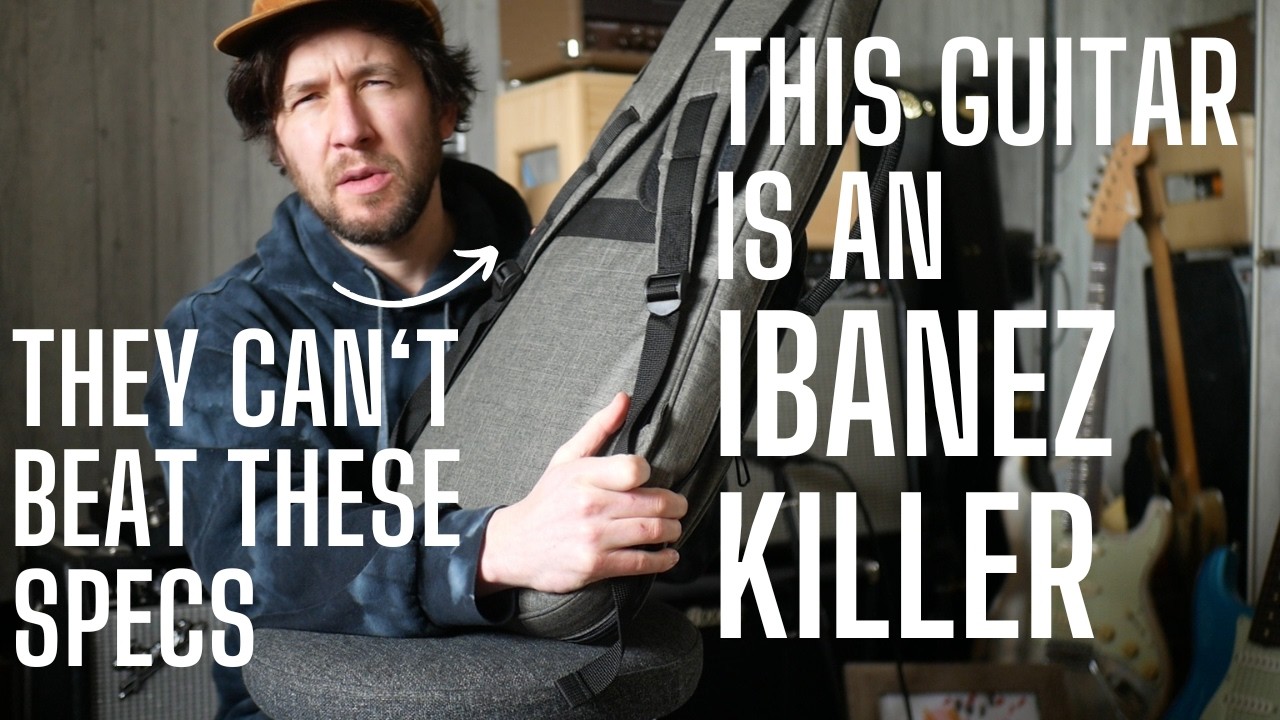
I’ve seen one YouTuber brand the Cort KX500 Pale Moon as an “Ibanez killer”. Sure, that makes a great, snappy headline, but it does feel a touch hyperbolic. For a few hundred dollars more, I’d perhaps still rather invest in an Iron Label guitar than this, but what I feel Cort will sweep up here are the players without that extra wad of notes. It’s a mighty fine alternative for how it sounds, looks, and plays. Perhaps ‘Ibanez maimer’ is a better phrase.
Verdict

Cort might not be the sexiest name on the heavy music guitar market, but the KX500 Pale Moon certainly gets the holy trinity of an electric guitar right. It's competitively priced, looks and sounds great, and plays remarkably well. Having big-brand, industry-leading pickups helps ensure its value goes beyond the surface-level aesthetic of that striking top, and it's well put together.
Industry-leading pickups help ensure its value goes beyond the surface-level aesthetic
There are small details that remind me this guitar has been designed with some constraints in place to keep its price point comfortably below $1K, and therefore put it in a solid place in the market. The rather perfunctory bridge lets the standards slip, although it performs to a decent enough standard, and the pickup selector feels cheap. Sitting down, the neck dive is an issue, but when standing up, I'm thankful it isn't.
And I'm a big fan of that neck; it's slim with a nice curvature, and, coupled with a very flat fingerboard, it makes shredding effortless. Ambition and execution are almost in perfect harmony.
Guitar World verdict: Cort has gone out on a limb to create a beautiful-looking, fierce-sounding rock and metal guitar that is familiarly spec'd, but different enough to stand out. Despite the occasional reminder that the guitar was built on a budget, in the all-important tone and playability departments, no corners have been cut, and it actually performs beyond expectations. When it comes to value for money, it's those operating in the shadow of the biggest names that are pushing the needle, and it's we, as players, that get to reap the rewards.
Test |
Results |
Score |
|---|---|---|
Build quality |
The striking Pale Moon top isn't there to distract from poor buildsmanship; it's very well made. But the neck dive and lack of coil-split are the main downsides. |
★★★★☆ |
Playability |
The effortless of its playability is this guitar's standout feature, with other key details accounted for. |
★★★★½ |
Sounds |
It takes a delicate touch to keep it clean, but when going gung-ho, it's brilliantly vicious. |
★★★★½ |
Overall |
Very hard to fault for the price, and it's looks really seal the deal |
★★★★½ |
Also try
Hands-on videos
Cort
John Nathan Cordy
Guitar Max