


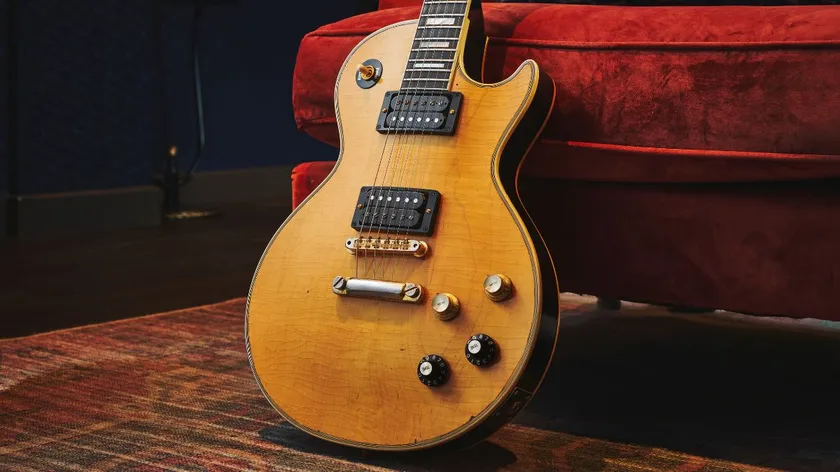


Gibson Les Paul Standard sunburst reissues are perennial favourites for players and collectors alike. But how do you find a good one for a great price? We ask Julian White of high-end guitar shop World Guitars for his insider tips.
If you’re looking to buy a used ’Burst reissue, is there a ‘sweet spot’ year in terms of features, price and tone, based on what you’ve had in over the years?
Look for ones built from 2013 onwards. That was the big changing point for R8s and R9s. Gibson changed a lot of things and they became much, much better guitars, with new pickups – it was the start of the Custombuckers.
They completely rejigged everything, really, and started doing rolled edges on the fingerboards. It was a big change from the previous years. And that’s when all the excitement started – we sold a lot of those guitars in those first couple of years, 2013 and 2014.
Did that hot streak continue past 2014?
Come 2015 they stopped doing normal R8s and R9s because that was the year that True Historic came out. So they downgraded the normal ones with a short-tenon [neck joint] but these only lasted a year because they were essentially downgraded.
But after 2015, when they finished doing the True Historics, they went back to normal R9s, so that’s just something to be aware of if you want a long-tenon neck joint example.

And what about ’Burst reissues from just before the sweet-spot year of 2013?
So people were a bit funny about the 2012 model, because they used two-ply finger boards – it didn’t make any [functional] difference at all but sometimes you do see a two-ply fingerboards on the ‘Burst reissues from that year. The rosewood is two pieces laminated together.
What about the True Historic models that were the flagship reissues in 2015?
The True Historic models are the most accurate and the best [that Gibson have made], in my opinion. We sold a lot of them, and we saw a lot of them, and they were all brilliant. And, still to this day they haven’t topped that.

Double-carved necks, double-carved tops, thinner, hand-sanded finish, thinner headstock veneer… they had slightly different fret wire, which was vintage-correct. To my mind, they’ve never been bettered.
In 2017 they started using all the True Historic plastics on everything, which was nice, but they didn’t do all of the other True Historic things
Are there any other year-specific features to look out for on ’Burst reissues?
In 2017 they started using all the True Historic [vintage-correct] plastics on everything, which was nice, but they didn’t do all of the other True Historic things. The rolled fingerboard edges on the 2017 guitars were nice – we sold a lot of those instruments.
Going back to 2016 specs, ‘R’ serial numbers were still being produced then. So it would say R9 [if it was a ’59 reissue] but the second number after the 9 would denote the year of manufacture. So R9 (or 8 if it was an R8) and then the second number, which followed that, was the year in that decade the guitar was built in.
- This article first appeared in Guitarist. Subscribe and save.
